
Reality Labs, a Meta company to Develop the Metaverse, Lost USD 2.9 Billion During the First Quarter of 2022

0

The losses generated by Reality Labs, the entity in charge of developing the metaverse for the Facebook environment, surpassed more than 50% of those registered during the first quarter of last year, which were already over USD 1.8 billion.

Facebook’s parent company, led by Mark Zuckerberg, Meta Platform Inc, recently revealed its balance report for the first quarter of 2022, which presented that its direction for the development of the metaverse ended up in losses registered at USD 2.9 billion for this period.

A Concerning Balance for Meta Reality Labs

The entity in charge of developing the protocols linked to the metaverse is Reality Labs, an address generated by Facebook / Meta to start progressing in this area, which will be the focus of its line of business. The report details that losses caused by the entity surpassed more than 50% of those registered for the first quarter of 2021.

However, the company also increased its revenue margin during this quarter approaching approximately USD 695 million, surpassing by 7% the USD 534 million generated for that same quarter in 2021. Despite everything, this spread does not seem to be successful enough, as the balance report reveals significant losses in this sector.

A crucial aspect to highlight is that much higher expenses would get projected for 2022 at a general level and that Reality Labs is one of the directions that will need more capital.

The report highlighted expectations of 2022 spending to be in the range of $87-92 billion, down from the previous outlook of $90-95 billion. Spending growth in 2022 should get primarily managed by Family of Apps, followed by Reality Labs.

The focus of Reality Labs is the development of virtual and increased reality items and services, with which users can execute various activities at work, entertainment, and communications levels.

Therefore, it is one of the directions in which the greatest expectations of the active company of Facebook get spotted since their great bet for the future connects directly with the metaverse. They will invest vast amounts of capital to make it possible.

Wrong Expectations in the Short Term

These negative results run in parallel with the USD 4,000 million disclosed in losses by the financial director of Meta, David Wehner. He revealed these figures in an earnings report issued in February for shareholders. He highlighted that a good part of that capital got invested in recruiting employees, R & R&D services, and the cost of certain items.

Although the vision is more positive in the long term, there are many concerns about the costs and adjustments that the company must apply to assume the expenses that will come before having an item already active.

The Meta team would take almost half of the profits of any item traded in the metaverse. This action points directly at transaction fees since the collectibles get produced by the community members, generating discontent among these for the high commissions that it would mean for them to carry out commercial operations.

By: Jenson Nuñez
Bitcoin Miners Will Build their Own Electrical Infrastructure to Power their Equipment

Riot Blockchain focuses its efforts on infrastructure with a capacity rate registered at 400 MW. The company intends to obtain land, get the site ready and install electrical substations.

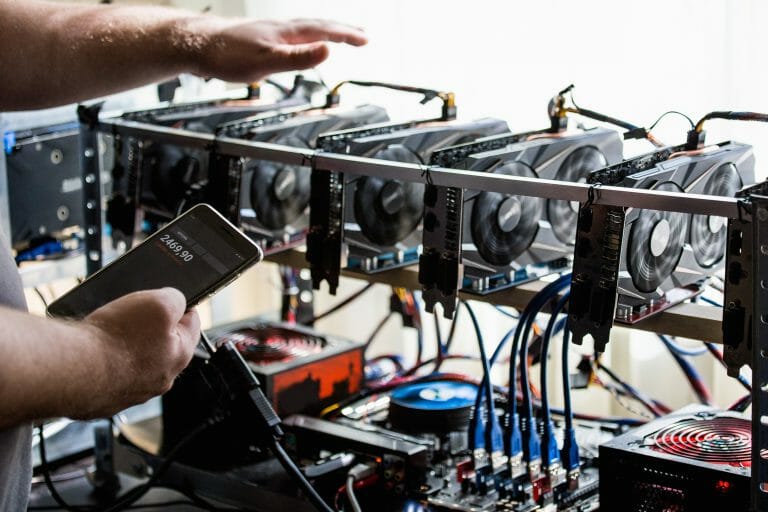
Since its arrival, Bitcoin mining has been an operation that depends directly on its power grid status. A mining company located in the United States of America went to extend its fields and will create an electrical infrastructure, through which they will take even more advantage of the energy they implement to mine bitcoins.

Riot Blockchain, one of the most prominent Bitcoin mining companies worldwide, brought such a plan to light. According to the proposal they made, they try to build a data center with a capacity rate registered at more than 1 GW of power. It is an adaptation of their systems to take energy in a better and more secure way.

During a press release, Riot, located in Texas, United States of America, revealed that they started developing an expansion of their activities; building an infrastructure capable of transmitting enough electricity to carry out Bitcoin mining massively.

This plan got built as a method to abandon less effective practices and improve the use of available electrical energy to mine Bitcoin in a way that causes the most negligible impact on surrounding communities.

The origin of this energy source remains unclear, but Riot highlighted that they will take advantage of the electricity that goes through the Navarro Line, with a voltage registered at 345 kV and which got spotted 380 meters from where the infrastructure will be.

A Project Divided into Stages

The project will reach its completion in stages. In the first round, installing a mining farm with an initial 400 MW power capacity is intended. This action will take place on just over 1 square kilometer plot. Hosting and immersion-cooled mining operations will begin there, scheduled for July 2023.

Riot highlighted that this first stage will generate at least 270 direct jobs and bring positive economic improvements to Navarro County. According to the company’s research, an expense of USD 333 million would be the amount to complete this first stage of this project. These funds will get injected during the current year, 2022, 2023, and the first quarter of 2024.

Once the installation of the first stages reaches its completion, the strategy will continue its course, and the capacity will increase to 1,000 MW or 1 GW.

According to Riot CEO Jason Les, Riot’s developed capacity will reach 1.7 GW, consolidating the entity among the most significant Bitcoin mining operations worldwide.

Large Power Plants

Riot’s project, which includes a plant with a tremendous amount of energy to mine Bitcoin, can get compared to the power of various power providers worldwide.

The Riot complex in Navarro will count on more power than a nuclear reactor at the Palo Verde plant based in the US, one of the most prominent power sources in the North American region. In general, each reactor counts on a capacity of 1,270 MW, for 3.8 GW.

The fact is that Riot proposes a complex that, in itself, could bring energy to an entire region, but its power will serve to generate bitcoins.

By: Jenson Nuñez

The President of the Central African Republic Explained that Mathematics is the Language of the Universe

0

After announcing that Bitcoin is already legal tender in his nation, the President of the Central African Republic expressed his support for the currency.

The news about Bitcoin becoming legal tender in the Central Africa Republic got confirmed by the government. The Central African Republic (CAR) is now the second nation, after El Salvador, to transform into Bitcoin legal tender. The president’s office reaffirmed the information after approving the legislation regulating digital assets days before, which had different media interpretations.

Likewise, President Faustin-Archange Touadéra himself went to Twitter yesterday to reinforce his support for Bitcoin and consolidate his stance on the mother cryptocurrency, comparing it, in its universal scope, with mathematics.

The president’s tweet, with more than 7,600 “likes” so far, had responses of all kinds, from those who saw him as a crazy president to those who asked him for more backup so that the asset’s price goes back to high peaks.

Likewise, the president expressed his excitement at the number of positive responses to his announcement yesterday about the adoption of Bitcoin.

As can be seen, it is an official statement from the office of President Faustin Archange Touadera that gives the information. The statement highlights that the National Assembly approved and signed a policy issued by the Minister of Digital Economy, Gourna Zacko, and the Minister of Finance and Budget, Calixte Nganongo.

The statement also adds that this legislation sets up a legal and regulatory framework for digital assets. And it explicitly says that Bitcoin (BTC) got set to be legal tender alongside the Central African franc, CFA, the country’s fiat currency.

Several Twitter users shared the official press release, written in French and signed by the cabinet director, Obed Namsio, who described the decision as historic.

According to Namsio, the Central African Republic is the first nation in Africa to transform Bitcoin into legal tender. This movement positions the Central African Republic on the map of the most visionary and improved nations in the world; the representative made these statements according to a report by Le Monde.

However, access to technology in the African nation is still a privilege for a few. The Central African Republic, without access to seaports and with a situation of extreme poverty affecting its region, has a population of 4.83 million citizens, of which only about 11% have access to the Internet.

The world still has to see what international organizations think about the initiative, such as the International Monetary Fund and the World Bank, both against the adoption of BTC in El Salvador.

By: Jenson Nuñez

Bitcoin Pulls Back to Nowhere near $40,000 as Dollar Strength Hits 20-Year High

The dollar money index breaks resistance and reaches its highest level since 2002, to the detriment of practically everything.

Bitcoin (BTC) attempted again to break above the $40,000 mark on April 28, as Wall Street opened to a twenty-year high on the strength of the dollar.

Data from Cointelegraph Markets Pro and TradingView showed that the BTC/USD pair reached a high of $39,883 on Bitstamp before momentum ebbed, causing the pair to lose $800 in no time.

Traders had anticipated what they saw as a relief bounce, with the implication that the subsequent rejection would cause the downtrend to continue.

The main recommendation was to operate with caution on the day.

“BTC is currently consolidating on this falling wedge. In the event of a breakout, I would be targeting $42,000. It is good to wait for confirmation first if you decide to take the trade IMO,” popular Twitter account Daan Crypto Trades argued.

“Only a strong breakout and recovery of $40,600 would make me see higher targets,” added his colleague, Crypto Ed.

The DXY is now in a “Parabolic Rally”

With little movement in Bitcoin, the focus was fully on the US dollar, which continued to outperform itself as the dollar currency index (DXY) hit its highest levels since 2002.

“DXY’s parabolic rally does not bode well for risk assets like stocks and Bitcoin. Until the rally cools down, playing defense is the way to go,” commentator Benjamin Cowen warned.

Others agreed that DXY was now “parabolic”, while trading guru Blockchain Backer saw similarities between the current setup of the dollar against other currencies and the immediate aftermath of the crash of various assets following the start of the COVID-19 pandemic in March 2020.

A change in the dollar’s trajectory should be good for Bitcoin, the theory goes, with Cointelegraph contributor Michaël van de Poppe forecasting that it will do “very well” under such circumstances.

Analyst: The Dollar Will Fall Apart in the Next “Great Currency Crisis”

Meanwhile, the rising dollar raised concerns about repercussions in other economies.

If lack of stability enters the scene, volatility could again hit risky assets that are already at the mercy of central banks’ anti-inflation policy. Ironically, the spark could be Japan, where the central bank continues to print money.

“Whatever path the yen takes from here, chaos will follow,” Brent Johnson, CEO of Santiago Capital, predicted on April 27.

“If capital flows back into Japan and pulls back to the support line, it’s a rug pull on funds allocated to the rest of the world. If it continues to fall, it puts pressure on the PBOC to drop the yuan as well. Neither of these options is good…”

The Japanese yen also traded at 20-year lows on April 28.

“What do Keynesian investors do in a crisis? They rush to dollars thinking they are safe,” added Alasdair Macleod, head of research at precious metals trading firm Goldmoney.

“Almost every investor and money manager has been brainwashed into thinking like this since the Nixon shock. This morning the JPY decline accelerates.”

Macleod saw what he called a “major currency crisis” coming, which would gobble up dollar strength “next” as the fate of the yen, euro and sterling followed.

By Audy Castaneda

According to Research, Bitcoin Adoption in El Salvador got Low, and 60% of Citizens Avoided Using Chivo Wallet

0

An investigation determined that 60% of Salvadoran citizens stopped using Chivo Wallet after acquiring the USD 30 bonus the government gave during its launch. Only 20% of the entities in the country accept Bitcoin.

Even though Bitcoin got recognized as legal tender in El Salvador almost one year ago, the flagship digital asset is still far from becoming the most used exchange alternative among Salvadoran citizens.

Recent research revealed by the National Bureau of Economic Research (NBER) of the United States of America brought some information regarding the status of adoption of Bitcoin in the Central American nation, and the widespread use of Chivo Wallet, the digital Wallet encouraged by the national government to boost the use of Bitcoin.

The research determined that few citizens have used Chivo Wallet recently. Specifically, its use decreased since the government gave away the bonus of USD 30 in BTC for users who downloaded the app.

The study highlighted that among those who have downloaded the app, more than 60% did not carry out activities in Chivo Wallet after spending their $30 bonus. In addition, most users who used Chivo after paying the $30 bonus do not use the application constantly.

Use of Chivo Crumbled down after Bonus Distribution

Although at least 70% of the Salvadoran population knows about the existence of the Bitcoin wallet encouraged by the government, and among them, 78% claim to have tried to download it, the use of the application still seems to be scarce and to have decreased significantly.

According to the research, most wallet app downloads coincided with the $30 bonus promotion, with no downloads detected in 2022.

At the same time, the investigation maintains that it found “no evidence that the Chivo app served to pay taxes or send remittances on any significant scale,” both of which are widely encouraged by the Salvadoran administration. It also explained that 75% of Salvadorans in the survey would never have used the app.

Intending more general adoption of Bitcoin, the NBER researchers determined that cash is still the most widely used payment procedure in the nation. More than 50% of citizens use only cash to pay their expenses. Also, more than 70% of those surveyed are unbanked people, and almost 90% of them do not use mobile banking.

Although, the study determined that the use of Chivo Wallet could crumble down in front of other payment procedures. Citizens who downloaded the application lowered their use of cash by 10%, while their net use of debit cards crumbled down by 11%.

Salvadoran Companies have not Accepted Bitcoin Either

Despite what other reports contend, the NBER investigation finds that cryptocurrency has not been widely adopted by businesses either. While almost all companies accept cash as payment, only 20% of them accept Bitcoin. Of the few digital currency sales, only 4.9%got paid through Chivo Wallet.

As far as the companies that receive digital currency are concerned, most companies do not hold coins in BTC. 71% of Bitcoin sales get transformed into dollars and then withdrawn in cash, 17% get converted into dollars and housed in the Chivo Wallet, and only 12% got housed as Bitcoin within the Chivo app.

By: Jenson Nuñez

BlackRock Launches Blockchain Industry ETF Offering Exposure to the Cryptocurrency Sector

The world’s largest asset manager has launched a Blockchain ETF, offering clients greater exposure to cryptocurrency and Blockchain-related companies.

BlackRock has officially launched a Blockchain-focused exchange-traded fund (ETF) that offers investors exposure to the cryptocurrency and Blockchain industry without the need to own digital assets directly.

On Wednesday, the world’s largest asset manager, which currently manages approximately $10 trillion in assets, added the Blockchain and Tech ETF (IBLC) to its iShares product line.

The $4.7 million ETF does not directly own cryptocurrencies or digital assets itself but instead tracks a number of international companies involved in the sector.

The ETF consists of 41 separate holdings, with the largest of these being US-based cryptocurrency exchange Coinbase, which accounts for 11.45% of the fund. Big Bitcoin (BTC) miners Marathon Digital Holdings follow it closely, with 11.19%, and Riot Blockchain Inc., accounting for 10.41% of total holdings.

As a sign of its readiness for future acquisitions, the ETF currently has a healthy cash position of 9.15% in USD.

Three Permanent Transformations Driving Growth

In conjunction with the launch of the new ETF, BlackRock released a report outlining three main areas of the market that are undergoing permanent change.

The report acknowledges that Millennials, now at their peak spending years, are and will be for several decades to come, “essential drivers of the global economy. Consequently, these groups’ unique needs and preferences, such as early adoption of decentralized finance and prioritization of sustainable products, may be set to surge.”

It is also worth noting that, “with Blockchain technology, consumers are acquiring independence not historically afforded by marketplace dynamics: crypto assets empower users by offering financial inclusion to the unbanked and allow users to regain control over the $150 billion annual market for their personal data.”

The document details how bullish BlackRock is on the cryptocurrency industry, stating that while most of the attention directed at digital assets focuses on price and volatility, the real value of Blockchain has yet to be realized fully: “We believe that the broader opportunity – leveraging Blockchain technology for payments, contracts, and general consumption – is still priceless,” the document reads.

The document also draws attention to the adoption of central bank digital currencies (CBDC), noting that 87 countries are currently in the process of exploring this technology, “which could drastically reduce marketplace frictions, democratize access to financial markets, and optimize monetary policies.”

Cryptocurrency ETFs are growing in popularity among institutional investors as a way to gain exposure to the cryptocurrency industry.

Debates over a spot Bitcoin ETF have reignited after a recent Nasdaq survey revealed that 72% of 500 financial advisors surveyed would be more willing to invest their client funds in a spot fund than one based on futures.

As Bloomberg analyst @EricBalchunas posted on Twitter earlier this month, “New Nasdaq survey of financial advisors (who control $26T in assets) finds 72% of them would be more likely to invest in crypto if a spot ETF were available. Also of advisors currently investing in crypto, 86% plan to increase investment and their ideal allocation is 6% of port.”

By Audy Castaneda