The Panamanian Crypto Law Proposes these Uses for Cryptocurrencies in the Territory

The Panamanian crypto law will allow the state to issue its own digital asset and create a wallet. The government plans to digitize the identity of citizens and develop a CBDC through blockchains.

The National Assembly of Panama recently approved the law to regulate the use of crypto assets as payment in that territory in the third debate.

The Panamanian parliament thus concluded the necessary phases for the Executive to review the law, considering the first debate held on April 22nd.

The legal document advances the objectives it pursues and the legal provisions among its first articles. It establishes that people can only use nine cryptocurrencies in the Central American country. In addition to Bitcoin (BTC) and Ether (ETH), they include XRP, Litecoin (LTC), XDC Network (XDC), Elrond (EGLD), Stellar (XLM), IOTA, and Algorand (SOMETHING).

Citizens will be able to pay for goods and services with cryptocurrencies when the president of Panama approves the law in the next 30 days. However, the document does not convert Bitcoin into legal tender, as El Salvador did last year and the Central African Republic did recently.

It is relevant to remember that the law does not mention stablecoins, although they are among the most widely used worldwide. In 2019, those assets reached the highest daily and monthly trading volume.

The law also highlights that Panama will be able to venture into issuing its own digital asset. They would hire a provider that ensures the creation of digital wallets so that natural and legal persons can make payments and exchange cryptocurrencies safely. However, they do not clarify whether they will use blockchain technology to create a central bank digital currency (CBDC).

Using Cryptocurrencies for Paying Taxes and Fees

The citizens and companies based in Panama will be able to pay taxes, fees, and other fiscal obligations with crypto assets. As the law guarantees technological adequacy, Panamanian agencies and institutions can receive payments directly or through a payment agent.

Cryptocurrency users usually wonder whether they have to pay taxes for holding and trading cryptocurrencies. The Panamanian crypto law explains that the taxpayer will undergo a capital gains treatment regarding the sale of crypto assets with underlying value. Consequently, the tax calculation on the profits obtained will have a fixed rate of 4%, according to the legal document.

The law states that the transfers of negotiable documents, securities, and crypto assets will be exempt from paying that tax.

Tokenized Precious Metals and Real Estate Must Have a Physical Backup

The 9th article of the law states that natural and legal persons may use cryptocurrencies to represent securities and other assets. Securities issuers are private companies or states that seek to finance themselves through a public offer on the stock market by issuing debt or capital securities.

Those entities will be able to use blockchain or crypto assets to represent those securities and other assets, including precious metals and real estate.

Concerning the tokenization of minerals, there must be a 100% physical backup deposited in security vaults that meet international standards in Panama or another territory.

By Alexander Salazar
Many Central Africans Do Not Yet Know What Bitcoin Is

Several people claimed they ignore what cryptocurrencies are and have no Internet access. The Central African president expressed his optimism about the adoption of Bitcoin as legal tender.

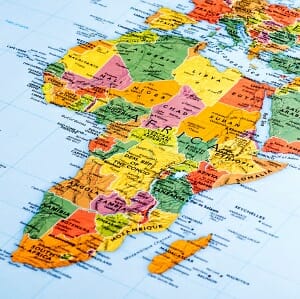
The approval of the law to make Bitcoin (BTC) legal tender in the Central African Republic occurred a few days ago. Inhabitants of that nation are beginning to give their testimonies about the pioneering cryptocurrency.

In that country, less than 8% of the people have access to the Internet, and only 14% have electricity at home. For those reasons, the use of cryptocurrency might not become massive, at least in the short-medium term.

Dina, a greengrocer who possibly represents most Central African inhabitants, claimed she did not know anything about Bitcoin. She also told the news television network France that she did not have access to the Internet.

Jordy, a young Central African introducing himself as a student, also showed his ignorance about Bitcoin. He said that he did not have any idea about the crypto asset.

The 10th article of the law drafted by President Faustin-Archange Touadéra establishes that all providers of goods and services must accept Bitcoin as payment.

To the relief of Dina and many other merchants without Internet access, the Central African Bitcoin Law provides for exceptions. Article 21 excludes those having no access to technologies that allow transactions in cryptocurrencies from the obligation to accept Bitcoin.

Bitcoin Allows for Financial Inclusion and Opens Up New Opportunities

Those Central Africans who understand the matter more clearly are usually optimistic about adopting Bitcoin as a currency. Mahamat Selim, an economics student, believes that the crypto asset has considerable potential for the region.

He explained that there is no financial inclusion in the traditional banking system. That situation excludes many people that need to access a bank to request a loan and make other transactions, which is neither easy nor cheap.

The Minister of State, Obed Namsio, also expressed himself in favor of the adoption of Bitcoin as the official currency. The politician said this represents a decisive step toward opening up new opportunities for his country. In addition, he highlighted the unanimous approval of the law.

President Touadéra is also optimistic about adopting Bitcoin as legal tender. That 65-year-old mathematician considers that Bitcoin will allow the Central African Republic to change from being invisible to becoming recognized and appreciated.

The Adoption of Bitcoin Still has a Long Way to Go

Central African inhabitants still have a long way to go on their recently-started Bitcoin journey. The adoption includes promises of ATMs and a trust fund to ensure the conversion to fiat money, as happened in El Salvador in 2021. The general lack of knowledge of Bitcoin is also present in the two countries.

However, the differences become evident as El Salvador already had small but active Bitcoin communities when the president announced the law. In addition, the economic and social situation in the Central American nation is much better than in the Central African Republic.

No group of Bitcoin evangelists has yet expressed their willingness to educate Central Africans about the cryptocurrency. However, that did happen in the case of El Salvador.

For all the above reasons, the Bitcoin path in the African country will be long and hard. It is a matter of time before seeing how this story unfolds to see whether the hopes of Touadéra, Namsio and Selim come true.

By Alexander Salazar

Nepal Confirmed Bitcoin Ban and Obstructed Cryptocurrency Websites and Apps

A notice from the national telecoms regulator indicates the Bitcoin prohibition applied by the Nepalese administration earlier this year.

Nepal, the South Asian nation famous for being the birthplace of the world’s tallest mountain, Everest, is obstructing crypto websites and apps to strengthen its prohibition on Bitcoin.

The Nepal Telecommunications Authority (NTA) revealed a notice this week warning the population that getting into digital assets-related activities could be considered illegal.

According to the report, the regulator specifically spoke about the prohibition on the use of Bitcoin and other digital currencies and online gambling. The NTA highlighted that websites, applications, and online networks linked to crypto activities got banned, whether operated or managed within the nation.

The Nepalese agency, which determined in the notice that the country has registered an increase in operations with digital currencies, described the activities with said assets as “illegal and criminal.”

The entity also warned that those involved with digital assets and its activities could deal with legal punishments, which according to some reports, could include severe penalties such as imprisonment.

Other Countries with Absolute Restrictions on Bitcoin

According to a study made back in 2021, various nations decided to stop or obstruct all economic activity around the use of digital assets. China was perhaps the most highlighted case in 2021. In September of the previous year, the Central Bank of that nation labeled as illicit any activity, behavior, or operation linked to bitcoin and digital assets.

Since 2018, when the first report got revealed, only one country has included bitcoin on its blocklist, China, which got included on the list of nations that banned the use of digital assets. However, the group of regions that executed implicit prohibition rules experienced an increase from 15 to 45 at the time.

Many proposals also got applied to set an adoption on bitcoin and other digital assets, as in El Salvador. In that Central American nation, in September 2021, the law got approved that turned bitcoin into legal tender.

Perhaps the most evident demonstration of this situation is the advances in regulatory procedures of Latin American nations, such as Paraguay, which developed new rules to favor the adoption of digital currencies. According to some enthusiasts and experts on the subject, this situation is also the case in Costa Rica, a nation that has an optimal regulatory ecosystem for adopting bitcoin.

By Jenson Nuñez

The Price of XRP Is Testing a Relevant Support Zone Again

The sideways behavior may be a break to continue in the bullish direction, but it is still unclear whether this will happen. Although the trend is bearish, which favors the sellers, the price of XRP has already had significant bullish momentum.

The bearish tide of the markets is affecting the Ripple cryptocurrency (XRP) significantly. Its price is now testing a support level that it should hold to avoid dropping further. The following analysis provides information on where the value of Ripple might head next in the coming days.

XRP is trading at around USD 0.624 and has accumulated a 0.6% gain over the last 24 hours. Its trading volume is above USD 2.44 billion, and its market capitalization is about USD 30.02 billion. It occupies 7th place in the cryptocurrency ranking, according to CoinGecko.

There is little strength to prevent the bears from putting pressure on the price of XRP. That may be because the resolution of the lawsuit against Ripple by the SEC may not occur until 2023.

Brad Garlinghouse, the CEO of Ripple, recently predicted that the case would end sooner or later. However, the revelations on April 22nd have caused hopes to collapse.

In addition, the bearish trend in the risk asset market is exerting further pressure on this cryptocurrency. It has had a hard time struggling to make its holders happy in the last few months.

The Technical Analysis of the Price of XRP

The XRP/USD monthly chart shows that the price is above a large support zone at around USD 0.60.

As the medium-term/long-term trend remains bullish, the sideways behavior over the last few months may be a break to continue that direction.

However, it is still unclear whether this will happen. It is more likely that the price will lose its immediate support at USD 0.61 to allow for a significant corrective process. If that happened, the ground would be clear for a minimum of USD 0.41.

Before thinking that the price will resume the higher trend, it must break through the resistance at USD 0.81. In that way, it could begin to reach increasingly low lows.

The daily Analysis of the Price of XRP

The daily XRP/USDT shows that the trend is bearish indicating that the short-term odds are on the sellers.

However, it is also possible to see that the price of XRP has already had significant bullish momentum. That means that it might need to make a relevant rally.

The above analysis indicates that the value of XRP is trying to hold the support at USD 0.62. That level might serve as a floor to allow for a respite before dropping further. If the price broke through the resistance at USD 0.65, that would confirm that this would happen in the short term.

By Alexander Salazar

According to Charles Hoskinson, It will Be challenging for the US to Regulate Digital Assets Properly

According to Charles Hoskinson, the labeling made by the US to categorize each digital asset makes it very difficult to find a possible regulation for digital assets.

IOHK/IOG CEO and lead Cardano developer Charles Hoskinson determined this week that the regulatory system in the US is weak to handle the improved nature of digital assets and that they would not be ready to regulate digital currencies effectively.

Difficulties in the Regulation Procedures Regarding Digital Assets in the US

Hoskinson’s highlights arrived during a phone talk at the Digital Assets and Cryptocurrency Summit held by the Financial Times, where the figure in charge of Cardano highlighted the struggles that regulatory agencies in the US went through, mainly due to the explosion of popularity that these assets have both in local and international environments.

Hoskinson expressed that the regulations operate by category in the US since some regulations work with securities; others focus on essential items, and the rest points to things that can get labeled as assets. From this point, the regulatory entities start to construct the study for each case. Still, many digital assets can receive two or more of these categories from their usability.

In that sense, Hoskinson spoke about the case of Bitcoin, which can get labeled as an asset because it already met that status in El Salvador, or it can get described as a valuable product like gold. Here, the struggles for the regulators rely on properly labeling the asset and consequently detecting the legal treatment that would work with this digital asset. They must make sure that all the guidelines work with all the things that could get done with the asset.

The Expectations about Blockchain and Smart Contracts

Hoskinson briefly spoke about the potential of Blockchain and smart contracts, highlighting various uses that could bring many advantages from these new technologies.

Among those uses highlighted, the director in charge of Cardano spoke about the ESG standards, which got executed by the biggest centralized bodies worldwide to set up criteria for the environmentally friendly nature of the activities attached to these projects.

Hoskinson highlighted that Blockchain and smart contracts could open new doors to standardize these definitions, procedures, and measures attached to compliance in a more transparent way.

On the other hand, Hoskinson also explained that business processes could become way more reliable if supported by Blockchain and digital assets, as this stance would not require the intermediation of external parties.

In this sense, he backed up his stance by bringing Bitcoin to the table, and the most prominent use case was the fact of enabling the exchange of value between peers without external parties interfering in the process.

Smart contracts rely on decentralization beyond digital assets because the systems don’t get attached to conditions linked to extraordinary moments.

By: Jenson Nuñez

Extreme Fear does not Affect Traders Who Predict a Significant Rise in the Price

0

A metric indicates that there is still extreme fear in the cryptocurrency market. However, the purchase of BTC and the bullish sentiment growth are leading to a considerable price rise.

After reaching USD 40,300, the price of Bitcoin (BTC) suffered a pullback to USD 38,400. It has been moving in that band for almost two weeks, which causes fear in the market. However, the growing demand and the bullish sentiment reported by analysts suggest there could be a sharp rise.

After the value of BTC hit its 2022 high of USD 48,000 in late March, it fell back. That fueled extreme fear in those that believed the rally marked the end of a correction season. The Fear & Greed index indicates that this sentiment continues, which may determine the value of Bitcoin in the coming days.

If the fear in the market motivates traders to sell their holdings, the price of Bitcoin may drop further. However, it would cause the cryptocurrency to rise in value if investors buy because they consider it cheap. Various specialists favor the latter situation as they see that this is already happening.

Trader Alberto Martin believes it is an excellent time to buy Bitcoin since it is below USD 40,000, which he finds too cheap. He is among those who predict that BTC will reach USD 100,000 this year. Analysts like TechDev, Willy Woo, and Crypto Rover, who warn that demand and holding are at all-time highs, share that bullish sentiment.

Those experts say that the price does not yet reflect the strength of the buyers since it shows enough stability. That happens despite multimillion-dollar purchases by investors with more than 1,000 BTC, known as whales. The movements of those long-term holders imply a considerable weight in the market.

The Price of BTC Remains Stable Despite Rising Demand

In 2022, the price of Bitcoin has had very low volatility in contrast to previous years. Although that situation does not allow traders to receive returns, it attracts institutional investors seeking further stability. Jurrien Timmer, the director of the financial company Fidelity, has explained that. He has described the cryptocurrency as boring due to its perceived value accumulation over time.

Given that context, analyst Crypto Rover told those bored with the Bitcoin price action that massive volatility will come after this monthly breakout. In the mid-2021 market, he commented that the BTC bullish sentiment is growing, although there is no evidence in the price, as validated by TechDev.

On-chain analyst Woo considers that the current buying level of Bitcoin resembles that of late 2020. At that time, high demand fueled the significant rise in its price from USD 10,000 to USD 60,000. For that reason, they predict that there could be a sharp increase soon.

The current stability of the BTC price could break upwards if the buying force exceeds the supply of coins. The growth in adoption at a global level would encourage the bullish trend. For example, the regulatory measures in countries like Cuba and Panama and the legalization in the Central African Republic are determining factors.

However, some analysts like Eduardo Gavotti, Tom Dunleavy, and Willy Woo find this prediction very uncertain. They warn that the pioneering cryptocurrency is acting as stocks do. Bitcoin has maintained a correlation with those assets, which are susceptible to the global economic context of uncertainty. Investors should be careful due to the war between Russia and Ukraine, rising inflation, and supply complications.

By Alexander Salazar