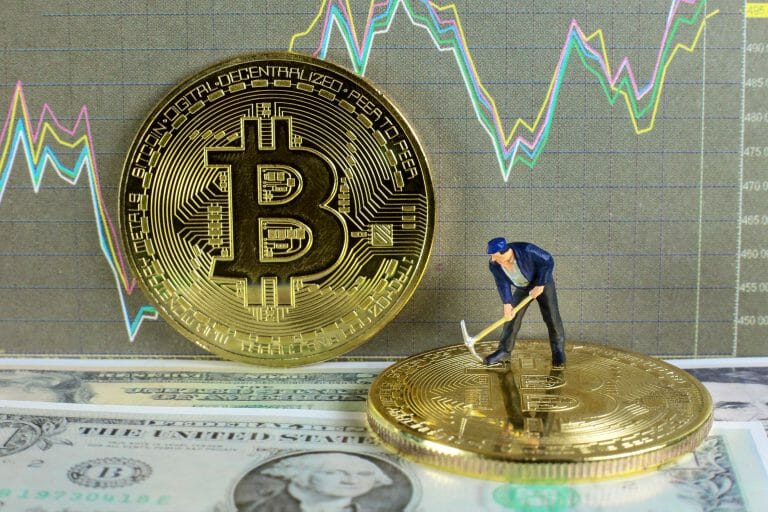
Peter Schiff Criticizes Cryptocurrencies and Recommends Selling Bitcoin Holdings

The American stockbroker thinks it is disadvantageous to hold Bitcoin in the long term due to the risks of losing everything. He also said that LUNA is practically useless, as it lost its 1:1 parity with the US dollar, falling to 62 US cents.

Leading cryptocurrency critic Peter Schiff, the president of Euro Pacific Capital, recently recommended selling before the Bitcoin market collapses. He noted BTC is still trading above USD 28,000 and said it was a bad idea to hold it in the long run.

In addition to macroeconomic factors, there is also a debate over the use of Bitcoin as a reserve currency. However, the concerns in the crypto market reached critical levels after the stablecoin TerraUSD (UST) lost its peg with the US dollar.

That has been crucial for Bitcoin, as the Luna Foundation Guard is buying Bitcoin to strengthen its UST reserves. Terra seeks to reach USD 10 billion in Bitcoin, of which it has accumulated the equivalent of around USD 3.5 billion.

The sell-off in tech stocks and Bitcoin accelerated as the Dow Jones dropped by more than 1,000 points. In addition, the Nasdaq 100 index recently fell by 5%, its worst daily performance in the last two years.

The price of Bitcoin recently dropped to lows around USD 26,350.49, not seen since 2020. BTC is 61.7% below the all-time high of USD 69,044.77 that it reached in November 2021.

Peter Schiff Believes It Is Time to Sell Bitcoin

The price of cryptocurrencies in the market has been moving for some time, alongside the stock market, particularly tech stocks.

Several experts consider that investors that support technology companies also bet on cryptocurrencies. For that reason, risky assets like BTC and tech stocks are the first investors liquidate when market fears rise.

Peter Schiff took the opportunity to remind cryptocurrency fans and the companies that have invested in Bitcoin about that connection.

Schiff told his Twitter followers that USD GLXY-T dropped by 20%, USD BITF by 16.5%, and USD HIVE by 13.5%. He explained that this is not the expected behavior of the stock market. He referred to cryptocurrency-linked companies like Galaxy Digital Holdings Ltd, Bitfarms Ltd, and Hive Blockchain Technologies Ltd.

The American stockbroker also warned that it was time to sell since there was a high risk of huge losses. He stated those who did not do so could not blame anyone but themselves for what might happen.

Schiff Considers the LUNA Token Practically Useless

Another warning issued by Peter Schiff has to do with the current situation of LUNA, the digital token of Terraform Labs.

LUNA tanked by 99%, eliminating nearly USD 22 billion of market capitalization gains over the last week.

Schiff stated that LUNA is practically useless, as over USD 50 billion in market capitalization gains quickly disappeared.

The stablecoin UST, developed by Terraform Labs, lost its 1:1 parity with the US dollar, falling to 62 US cents over the past week.

LUNA is trading at around USD 0.000388 and has accumulated a 609.4% gain over the last 24 hours. While its daily trading volume is above USD 5.08 billion, its market capitalization is about USD 2.77 billion, according to CoinGecko.

By Alexander Salazar

Regardless of Congestion on the Network, Bitcoin Transaction Fees Remain Below USD 1

Although the number of waiting blocks decreased, the same did not happen with pending transactions. It is crucial to educate users about the use of Bitcoin at times like this.

Despite how congested the Bitcoin network is, transaction fees remain below 3,300 satoshis, equivalent to USD 1.

The Bitcoin mempool, the waiting room where transaction blocks wait to become part of the blockchain, became overcrowded in the past few days.

The miners of the Bitcoin network recently operated at full speed amid more than 50,000 Bitcoin transactions lined up. Although, the number of pending transactions increased by 16 %, the number of pending blocks went from 115 to under 100.

All that happened on the Bitcoin network, but the cost of transaction fees rose by only 3.3%. That has allowed paying with BTC to remain cheap compared to the costs of some centralized money transfer services and other cryptocurrency networks.

The fees for Bitcoin transactions range from 13 satoshis per byte (sat/vB) to 23 sat/vB. Computer scientist Murch says that transactions whose rates are equal to or greater than 14 sat/vB can receive confirmations in a few minutes. For that reason, making a payment with BTC can cost less than USD 1.

It is relevant to remember that a vB is the unit used for measuring the weight of a Bitcoin transaction. The adjustment of the fees for sending transactions depends on their importance and urgency, as miners first confirm the ones with the highest costs.

The Reason Why Fees Are Currently So Low

It is not the first time there has been congestion in the Bitcoin mempool due to pending transactions. The most recent case occurred between June and July 2021, when the dramatic drop in hash rate led to congestion on the network.

At that time, the mining power of Bitcoin declined after the Chinese government banned cryptocurrency mining. Between April and July 2021, the Bitcoin hash rate fell by 60%, and the cost of transaction fees averaged 80 sat/vB.

It took 2 hours and 19 minutes to mine a block, but the average should have been 10 minutes per block. The mempool accounted for more than 70,000 transactions waiting, 40% more than today.

One of the differences that have kept fees so low is the amount of hash rate. The mining power of Bitcoin fell to 82 EH/s in early July 2021, with the network difficulty at 19.93 T. The current difficulty adjustment is higher by just over 50%, but the Bitcoin hash rate is three times as powerful.

The fees for Bitcoin transactions have not skyrocketed, indicating that people are not overpaying to use BTC. Besides, wallets, exchanges, and websites have been introducing various tools to simplify the calculation and configuration of Bitcoin fees.

Bitcoin is trading at around USD 29,542 and has accumulated a 1.5% loss over the last 24 hours. Its daily trading volume is above USD 25.63 billion, and its market capitalization is about USD 563.37 billion, according to CoinGecko.

By Alexander Salazar

Bitcoin Miners Row against the Current Difficulty on the Rise and Profitability on the Downside

0

Bitcoin mining difficulty and hash rate hit all-time highs. The current hash price of $0.12 TH/s/d is the lowest in the previous year.

The poor advantageousness of this action has not overpowered Bitcoin miners; this event generated a new record in the difficulty of BTC mining.

Bitcoin mining difficulty achieved new positions after approaching 31.2 trillion. Its previous value was 29.7 T, implying growth of at least 5% from its last adjustment.

The Bitcoin mining difficulty accommodation is a procedure that intends to set up a balance on the production of blocks in the network. This procedure automatically achieved every 2016 mined block, a job that requires at least two weeks to reach its completion.

If the standard hash rate on the network is too high, raise the difficulty, but the mining difficulty would approach decaying levels if the standard hash rate is low. The Bitcoin network intends with this action to keep a standard of 1 mined block every ten minutes.

The Hash Rate of the Bitcoin Platform is also Reaching New Peaks

 According to the numbers presented by Braiins, the Bitcoin hash rate has become a high peak once again and registered at 228 exa hashes per second (EH/s). This situation represents a fast recovery after the slight decay it presented days ago.

The Lower the Hash Price, the Higher the Hash Rate

Contrary to hash rate and mining difficulty, Bitcoin mining profitability is down. Bitcoin’s hash price today is $0.12 per tera hash per second per day (TH/s/d). This situation means that an Antminer S19 model ASIC miner should mark daily gross earnings valued at $11.40, although these earnings might oscillate according to the energy cost.

Variations might apply control over the flows in the hash price, the difficulty that mining implies, commissions per transaction,, and the cost of Bitcoin in the market.

The increase in the difficulty of mining led to a drop of more than 50% in hash cost in March. The current hash cost is the lowest registered in the last year.

The most curious thing about this drop in hash price is the behavior of Bitcoin miners, who have been gradually increasing their hash rate instead of sending it to low status.

The increase in mining capacity when profitability is low has happened before. In other moments when the network has faced similar situations, the workers’ response to the first digital asset has been the same.

In the statistics studied in September 2021, the Bitcoin hash rate kept increasing while the mining profitability had crumbled down by more than 25% in a month.

Regarding the mining pools, which gather the processing power of all the individual miners in different operating groups worldwide, there were essential changes in their ranking or positioning since our last Noti Hash.

According to BTC.com, there were two significant movements in the position of the mining pools. Specifically, the F2Pool collection rose from fourth to second place in processing power, with 23,376 Penta hashes per second (PH/s). Also, the BTC.com pool rose from seventh to sixth place, displacing the Foundry USA pool.

By: Jenson Nuñez

According to the Central Bank Governor, the Chilean Digital Peso Should Function Online and Offline

0

At an event, the Governor of the Central Bank of Chile opened up her thoughts about the possibilities of a Chilean CBDC.

The central bank digital currency based in Chile would have the need to receive offline payments. Chile’s central bank governor Rossana Costa highlighted this information at an event held in Switzerland by the Bank for International Settlements.

The senior official offered a policy file on the issue later this week but said that no decisive move got made on whether to handle the digital parallelism of the Chilean peso. Costa stressed that the CBDC should carry out its online and offline activities, adding that the technology to achieve this goal is not necessarily effective today.

Costa added that the system should allow authorities to follow the transaction later while protecting personal data.

The official also highlighted that the CBDC would have to exist and be a convertible currency to work with cash and commercial banks to become a safer currency. She added that the pilot projects could get executed after further debates with the public and private areas in the nation later this year.

Other Regions Supporting These Ideas

Also, in jurisdictions such as the European Union (EU), officials consider balancing the ability to lead discreet cash-like transactions with the need to follow illegal finances.

These regions consider bringing more private payment methods for small acquisitions; Ghana also considered making its CBDC available offline.

Other users think the main issue is a waste of time and that central banks should focus their efforts on areas where payments are now a challenging task. At the same BIS event, Ravi Menon argued that existing payment networks are enough to address the needs of regular citizens.

What the BIS Says about this Situation

A recent BIS survey highlighted that nine out of ten central banks consider creating their virtual currencies due to competition from Bitcoin but are grappling with design issues to confirm safe access and privacy.

International standard setters have widely supported moves to issue CBDCs but show concerns that central banks could lose their control over the situation.

Tobias Adrian, current director of the International Monetary Fund’s Monetary and Capital Markets Department, expressed that citizens may have incentives to get their money out of their financial system in many nations with weak institutions.

Most nations have some form of capital controls in place, and there is both direct and anecdotal evidence that crypto-assets serve as tools to play that role.

The IMF recently said that nations should set an expand on their laws to ensure that procedures such as restrictions on payments abroad include cryptocurrencies. At the end of last year, the Central Bank of Chile revealed the creation of a team of 25 people who would study the possibility of making the digital peso and its consequences.

By: Jenson Nuñez

Bukele again Buys the Dip, Adding 500 More Bitcoins to the Government Reserves

The Nayib Bukele administration has bought more than 2,300 BTC in the name of El Salvador. Amid a bearish crypto market environment, Bitcoin is trading at around USD 31,205.

Bitcoin (BTC) holders adopt the slogan Buy the dip when the price goes down. Following that rule, the Salvadoran government recently bought more cryptocurrencies to increase the reserves.

Nayib Bukele, the president of the Central American country, said that El Salvador had just bought the dip. He reported that they had acquired 500 BTC at an average of USD 30,744 per unit. That is equivalent to an investment of just over USD 15 million.

El Salvador now has over 2,301 BTC, as its previous purchase of 410 BTC had raised its global holdings to 1,801 BTC.

The Salvadoran president took advantage of the recent drop in the price of Bitcoin, which has affected the rest of the crypto market. When writing this article, the pioneering cryptocurrency is trading at around USD 31,205.

In that way, Bukele repeated the same economic move he made in January when he purchased Bitcoin at the dip. He took advantage of that situation to buy the above 500 BTC to increase the government reserves.

It is impossible to verify how much Bitcoin is currently available to the Salvadoran government. The president reports the purchases, but there is no official information about the address where the coins are resting.

The Salvadoran Government Has Bought BTC for Months

In December, the Salvadoran president made the last purchase of Bitcoin of that year, acquiring about 21 BTC. At the time, the holdings of the Central American country reached 1,391 BTC.

In November 2021, Bukele bought 100 BTC, bringing the government reserves close to 1,230 BTC. On September 7th, the Bitcoin Law entered into force, and the pioneering cryptocurrency became legal tender. One day before, El Salvador had acquired 400 BTC, the first of several purchases that its government would make.

Bukele takes advantage of each drop in the BTC price to buy more coins and include them in the government reserves. He has used them to invest in the country, which has allowed him to defend his acquisitions.

Bitcoin City Is a Surprise amid a Bearish Crypto Market Environment

The Salvadoran president, Nayib Bukele, recently posted images of the urban planning of Bitcoin City. Amid a sharp drop in the price of Bitcoin, that post takes the members of the ecosystem by surprise.

There has been a state of emergency for over a month, and more than 26,000 suspects have gone to jail. For that reason, Bukele had not commented on Bitcoin and its adoption in El Salvador.

Those are the first concrete comments and actions on Bitcoin from the Salvadoran government for a few months. It is relevant to remember that the launch of the Volcano Bonds has been long in coming. However, Finance Minister Alejandro Zelaya said that they were waiting for the price of Bitcoin to increase to issue them.

By Alexander Salazar

US Charges against CEO of Crypto Mining Company for A Deceive Registered at $62 Million

0

The company conducted out a pyramid archetype where the funds got split into the directors’ accounts, who took advantage of the capital to fulfill their wealthy pleasures. The authorities alerted that this scam is prevalent, and they suggested potential investors be very attentive.

The US Department of Justice legally charged Luiz Capuci Jr, who played a role as CEO of the crypto mining and investment entity “Mining Capital Coin.” They filed fraud charges against many investors, thousands perhaps, whom he deceived for at least $62 million in suspicious business offerings.

The CEO of Mining Capital Coin, Caught in the US

In a press release revealed by the DoJ last Friday, the charges against Capuci arrived after diverting funds from users to their accounts. He encouraged investment in “trading bots and would execute thousands of financial operations per second and gather profits for the users who dare to invest their capital in the entity.

The DoJ alleged that Capuci carried out some pyramid scheme in which investments capitalized by new entrants got sent to pay off older ones, encouraging them to bring in more relevant numbers of users in exchange for items such as iPads, and Apple Watches; offering an expensive Ferrari to the member who achieved the best ranking to obtain the alleged benefit of the entity.

After gathering the capital, Capuci just sent funds to his private wallets and to that of some people included in the scam. They obtained luxury properties and supported expenses to keep having a wealthy lifestyle and show off their bonanza to attract more unaware victims.

People Did not Read the Signs

Under the management of Capuci, Mining Capital Coin offered an investment structure that relied on different edges. A legal complaint issued with the US Securities and Exchange Commission (SEC) details that the solidity of the proposal was crypto mining packages with profits per day registered at 1%, which got paid weekly through the same network.

The team behind Mining Capital Coin explained that the financial gains would be in Bitcoin. They executed sudden improvements that resulted in harmful actions against investors, demanding, for example, that withdrawals got made in Capital Coin, the company’s native currency that had zero commercial value.

Other worrying signs arrived when the alleged annual memberships expired since flaws came to light while processing the requests. In most cases, the victims got required to purchase more investment packages so they would not lose the capital caught in the network.

The fraudulent procedure worked by Mining Capital Coin has been active since January 2018, for which the scam managed to harm more than 65,000 unaware victims. The authorities alerted that this modus operandi is an everyday action, so they warned possible interested parties to consider the alert before risking their investment, waiting for such promises to get fulfilled.

Regarding Capuci, he goes through charges of wire fraud, securities fraud, money laundering on an international scale, and other criminal behaviors. He would be about to spend at least 45 years in prison if the court found him guilty of all the legal charges against him.

By: Jenson Nuñez