El Salvador Improved in the Inflation Index despite the Fall of Bitcoin

El Salvador became the nation with the third-lowest inflation in the region in April. Meanwhile, bitcoin is still far from El Salvador’s purchase price.

While inflation is expanding its tentacles worldwide, El Salvador handled it and managed to slow down its rate between March and April. It even reached one position among the area’s nations regarding low inflation rates.

Salvadoran’s year-on-year inflation rate went from 6.7% to 6.5% from one month to the next, as observed in comparing the reports for both months from the Central American Monetary Council. This information got highlighted by the central banks of the Central American nations, in parallel work with the Institute of Statistics and Census of Panama.

According to this information, no other nation in the area achieved to minimize the inflation rate. However, two stood at levels lower than El Salvador’s: Guatemala and Panama, with 4.6% and 3.7%, respectively in the April period.

This situation makes El Salvador rank as the third economic system with April’s lowest year-on-year inflation rate in Central America. The country rose to one place by overtaking Costa Rica, which reached the third spot in March and had a sudden relapse in inflation in April.

President Nayib Bukele revealed through Twitter that an opposition media outlet in his country confirmed the situation through the news. He labeled the event a sign that the Salvadoran response to a worldwide crisis was more significant than expected.

Criticism of Bukele abounds in the press and among local economists, particularly economically and with greater emphasis since the adoption of bitcoin as a legal tender a few months ago.

Bitcoin Would be a Problem

Ricardo Castaneda, the coordinator of the Central American Institute for Fiscal Studies (ICEFI) study center for El Salvador and Honduras, is part of this trend that criticizes the adoption of bitcoin as legal tender.

Quoted by First Report, Castaneda explained that, although the country’s financial struggles didn’t get caused by the adoption of bitcoin, the digital asset became part of the problem.  Indeed, bitcoin’s drop from its all-time highs last year (now more than 50% off the $69,000 mark) has affected the country’s investment in digital assets.

Bukele’s bitcoin portfolio is experiencing many unexpected losses. However, it cannot get labeled a loss until those bitcoins get revealed as being sold below their purchase cost.

Furthermore, criticism of bitcoin adoption has come from everywhere, regardless of the cryptocurrency’s performance in the market space. The International Monetary Fund and other entities have stood against the procedure of the Salvadoran government, although the latter has remained firm in its commitment.

By: Jenson Nuñez

MicroStrategy CEO Predicts that the Bitcoin Price Will Reach above USD 1 Million

Saylor is one of the most optimistic about the future of Bitcoin, which he has repeatedly referred to as the future of money. The executive commented that the cryptocurrency is a monopoly in monetary networks that he buys when he has US dollars.

American businessman and investor Michael Saylor recently spoke about the future of the price of Bitcoin (BTC). Furthermore, the CEO of MicroStrategy said that he would continue to buy and hold Bitcoin despite the sell-off in the market.

Saylor noted that there is no price target but that he expects to buy Bitcoin at the top forever. In addition, he predicted that the price would reach above USD 1 million, so they need to be very patient.

The community knows Saylor as a Bitcoin bull, as he is one of the most optimistic about the future of Bitcoin. On several occasions, he has stated that he believes that the creation of Satoshi Nakamoto is the future of money.

How Michael Saylor Reacts Amid the Bearish Market

The CEO of MicroStrategy commented that Bitcoin is the monopoly in monetary networks that anyone can acquire. For that reason, he pointed out that he buys the cryptocurrency when he has US dollars.

Michael Saylor said that investors sold Bitcoin alongside other risky assets such as stocks. The US Federal Reserve (Fed) increased interest rates, leading to the sale of riskier assets or those with skyrocketing valuations.

The American executive believes that this will be an excellent opportunity for the industry. He envisages that there will be a recovery as people receive more education and feel more comfortable.

Regarding the collapse of TerraUSD (UST), Saylor stated that regulators would speed up the regulation of stablecoins. However, he thinks Bitcoin will be the ultimate winner.

Saylor noted that institutions would invest large sums of money when people realize why Bitcoin is the best. At that point, no one will have to struggle with that massive explanation of why the pioneering cryptocurrency is different from the other 19,000 tokens.

Andrew Kang, the new CFO of MicroStrategy, said that he would not change his strategy to buy and hold Bitcoin in the long term. Despite the recent liquidation of the digital asset in the market, he pointed out that they have no intention of selling their holdings.

Saylor Thinks that Lightning Is the Future of Payments

The Lightning Network allows Bitcoin to expand its ability to process transactions more efficiently. For that reason, Michael Saylor believes it is the future of payments.

The billionaire investor explained that an ethically, economically, and technically sound base layer (Bitcoin) would be necessary to make payments and transactions rapidly. However, billions of operations will need to go to a second layer like the Lightning network.

Bitcoin is trading at around USD 29,540 and has accumulated a 1.5% gain over the last 24 hours. While its daily trading volume is above USD 12.86 billion, its market capitalization is about USD 562.50 billion, according to CoinGecko.

By Alexander Salazar

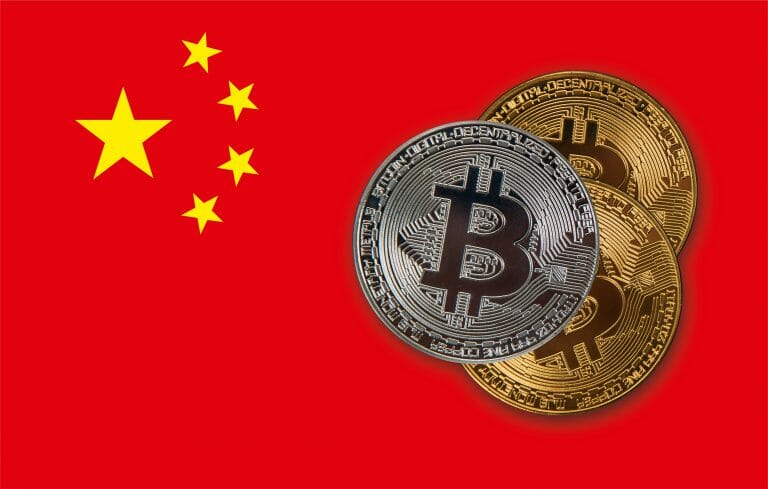
Although Beijing Bans Bitcoin Mining, the Activity Grows Clandestinely in China

Chinese clandestine miners use various means to hide their operations from the authorities and circumvent the ban. China is once again one of the world’s leading players in Bitcoin mining, second only to the United States.

Despite the ban by the Chinese government, the Bitcoin (BTC) miners of the Asian country have not given up.

In 2020, cryptocurrency mining in China accounted for between 67% and 75% of the total hash rate of the Bitcoin network. However, that nation’s share plummeted to zero between July and August 2021, when the government imposed the ban.

The Chinese government totally banned cryptocurrency mining throughout the territory. For that reason, thousands of miners fled to countries like the United States, Canada, and Kazakhstan, which borders China.

However, clandestine cryptocurrency mining groups have since emerged to circumvent the Beijing ban.

A research study by the Cambridge Center for Alternative Finance (CCAF) concludes that Bitcoin Mining in China has recovered rapidly. The study indicates that China accounted for 21.11% (30.47 EH/s) of the total hash of the BTC network in September 2021, following the ban.

According to the study, underground miners use various means to hide their operations from the authorities and circumvent the ban. They include access to off-grid electricity, geographically dispersed small-scale operations, and the use of VPN services.

Cambridge data indicates that China is once again one of the world’s leading players in Bitcoin mining. It only precedes the United States, which represents 37.84% of the total hash rate of the BTC network.

Why the Chinese Government Persecutes Cryptocurrency Miners

In contrast to fiat currencies, cryptocurrencies like Bitcoin are decentralized assets. A distributed network of computers, rather than central banks, is responsible for processing transactions and minting new cryptocurrency units.

So-called miners must validate a transaction with BTC to allow its execution. That process requires complex calculations to solve a mathematical puzzle whose difficulty will increase as more miners join the blockchain.

The validation process involves high consumption of computing resources from computers that require a lot of electricity.

China struggled with severe power shortages in 2021, leading to many power outages. Although the Asian country is still heavily dependent on coal, it is investing in renewable energy to become carbon neutral by 2060. That has led Chinese authorities to see cryptocurrency mining as a potential obstacle to achieving that plan.

Bitcoin mining occurs through the Proof of Work (PoW) protocol, producing high energy consumption. The BTC network consumes 204.50 TW/h of energy, equivalent to the electricity used in Thailand.

Bitcoin is trading at around USD 30,000 and has accumulated a 5.6% gain over the last 24 hours. While its daily trading volume is above USD 56 billion, its market capitalization is about USD 750 billion, according to CoinGecko.

Chinese clandestine cryptocurrency miners risk that the authorities may seize their equipment. In September, the latter confiscated 10,000 machines in Mongolia at one of the farms that allegedly ceased operations.

By Alexander Salazar

Bill Gates Reiterates Bitcoin Skepticism and Said It Has Zero Product Value

The wealthy and renowned chairman highlighted that he does not have digital assets in his portfolio because they do not have what it takes to meet his investment requirement.

Billionaire and Microsoft co-founder Bill Gates had maintained a distant stance on Bitcoin for some time now.

Gates has commented that it is too speculative and not very supportive of climate issues due to its high energy consumption. Although, without letting too much fanaticism shine through, he has also recognized that crypto-assets and their tech background could be positive for countries under development and emerging economies.

Things do not seem to have become different since 2015 when the leader assured us that Bitcoin “is not the future.”

In an (AMA) session held on Reddit, Gates invited netizens on the online forum to talk to him about his book How to prevent the next pandemic, the work of his foundation, and other topics of interest The developer also revealed information about the AMA round to his nearly 60 million Twitter followers.

Among the round of questions and consults that the American scientist attended, a user invited him to open up about his current stance on Bitcoin and digital assets. Gates once again affirmed that he did not own any virtual currency and discussed that the reason is willing to invest in more valuable products, hinting that Bitcoin and other digital assets do not fit this criterion.

No Sympathy for Bitcoin

Gates had already highlighted last year during an interview for CNBC’s Squawk Box that he did not own Bitcoin, preferring to take a distant position regarding the asset. He then spoke with Bloomberg that the digital currency was only for “sophisticated” investors, like Elon Musk, recommending that the general public should have a distant stance regarding the crypto space.

Although more modest, his ideas remain in parallel with those he expressed in 2018, when he highlighted that Bitcoin was one of the craziest things to put an investment.

Gates, one of the wealthiest investors globally, has also joined the group of critics who negatively point out the energy consumption that Bitcoin applies in its activities.

The crypto space has been under tremendous pressure due to criticism over the carbon footprint of proof-of-work mining, which is seen in digital assets such as Bitcoin. Other billionaires have also openly revealed their rejection of the flagship digital asset, including Tesla CEO Musk.

The computer scientist who co-created Microsoft is not the only wealthy man skeptical about the new asset class. Other anti-crypto figures include Wall Street legends Charlie Munger and Warren Buffet, the latter standing out as perhaps Bitcoin’s greatest antagonist.

By. Jenson Nuñez

Following the Collapse of UST, DeFi Apps on Terra Suffer Millions in Losses

Funds held in DeFi apps on the Terra network have fallen by USD 140 million in value locked. Do Kwon, the co-founder of Terraform Labs, announced that he would seek additional external funding to make TerraUSD collateralized.

Although the future of Terra (LUNA) looked bright, the mechanisms that should have maintained its stability failed to do so. That situation led the DeFi apps on the Terra network to lose USD 28 billion.

Supporters of the TerraUSD (UST) project, a stablecoin pegged to the US dollar, hoped it would revolutionize traditional payment systems.

However, that hope waned in a few days as investors panicked and tried to withdraw their money. That caused a vicious, self-enforced bank run whose collapse bankrupted many investors and brought down the entire crypto market.

Jake Chervinsky, chief policy officer at the Blockchain Association, said this had been one of the worst weeks for cryptocurrencies. The official of the non-profit organization stressed that everyone would remember that situation for a long time.

The Price of DeFi Apps on Terra Also Suffer Losses

The price of LUNA collapsed at the same time as UST in what analysts describe as a death spiral. Investors liquidated their digital assets before the algorithmic stabilizer could take effect. The value of the sister token fell from around USD 86 to just 0.00013 US cents.

LUNA has plunged by around 100%, falling from over USD 80 per token. In that way, it has destroyed about USD 28 billion of market capitalization in days.

In addition, data indicate that funds held in DeFi apps on the Terra network have plummeted by USD 140 million in value locked. For example, the lending protocol Anchor (ANC), which had more than USD 17 billion, locked up just over USD 106 million.

Other Terra apps have seen similar percentage declines, like Lido (LDO), which fell by USD 10 billion. Meanwhile, Astroport (ASTRO) and Mars Protocol (MARS) experienced an improved reduction in Total Value Locked (TVL).

Terraform Labs Announces a Revival Plan to Rebuild UST

Do Kwon, the co-founder of Terraform Labs, the company behind LUNA,  announced a revival plan. He said that the company would seek additional outside funding to rebuild TerraUSD for collateralization. In other words, they would use reserves to back it instead of relying on an algorithm to maintain its 1:1 peg to the US dollar.

Changpeng Zhao, the CEO of cryptocurrency exchange Binance, criticized the proposal of Kwon to reverse user transactions of his tokens. In addition, the executive said that a fork would not add any value to the Terra network.

However, Vitalik Buterin, the CEO of Ethereum, supports the proposal of Terra to prioritize the compensation of small investors. He considers that this would allow them to clear 99.6% of wallets and make their users feel better.

UST is trading at around USD 0.064297 and has accumulated a 12.6% gain over the last 24 hours. While its daily trading volume is above USD 283.54 million, its market capitalization is about USD 744.39 million. It occupies 8th place in the cryptocurrency ranking, according to CoinGecko.

By Alexander Salazar

Do Kwon Might Have Dissolved the Terraform Labs Korea Corporation before the Collapse of LUNA

The Korean Supreme Court Record Office stated that Kwon triggered the liquidation of two subsidiaries before the collapse. Those decisions have raised suspicions due to their potential correlation with the financial destruction of LUNA and the stablecoin UST.

The collapse of Terra (LUNA) amid the fall of the rest of the cryptocurrencies has taken a significant turn. Legal documents reveal the liquidation of two South Korean offices and the dissolution of the Terraform Labs Korea corporation before the crash.

The Supreme Court Record Office of the Asian country provided information on the above case. They pointed out that Do Kwon triggered the liquidation of two subsidiaries and an entire company before LUNA collapsed.

During a general meeting, shareholders agreed to dissolve the Busan and Seoul headquarters, which they did on May 4th and 6th.

The moment of those decisions has raised suspicions within the cryptocurrency community. Its potential correlation with the financial destruction of LUNA and the UST stablecoin on May 10th is the reason for that.

Central Bankers from Various Countries Visit Bitcoin Beach in El Salvador

El Salvador continues to celebrate its crypto adventure, showing off the beach town of El Zonte to 44 central bankers and financial delegates. The latter are learning about financial inclusion and the use of Bitcoin in the Central American country while enjoying that trip.

El Zonte, or Bitcoin Beach, is the home of Bitcoin in El Salvador, an iconic destination for enthusiasts of the pioneering cryptocurrency. The movement that led the government to proclaim Bitcoin as legal tender in 2021 happened precisely there.

The US Congress Introduces Bills to Regulate Cryptocurrencies

After careful evaluations, the US Congress developed its plan to regulate cryptocurrencies and other digital assets. The legal ambiguity of digital assets has concerned the authorities of several leading economies. The recent collapse of Terra (LUNA), which caused the crypto market to lose USD 15 billion, has made them think about the need for regulation.

For fear of cryptocurrencies, Congress introduced 50 bills and resolutions on regulation, blockchain, and CBDC. They made that decision after several months of speculation on the subject. However, they did not include the bill on stablecoins and the policy covering the regulation of digital assets.

According to Forbes, many approved bills deal with paying taxes on crypto assets. Republican and Democratic senators introduced the Virtual Currency Tax Fairness Act in a bipartisan draft law.

Americans Want to Receive Payments in Cryptocurrencies for Exercising in the Metaverse

Fitness website FitRated recently surveyed 1,001 Americans about blockchain-related fitness technology. More than 80% of the respondents said they would feel more motivated to exercise if they received payments in cryptocurrencies for their efforts.

The consultation revealed that 40% of people would cancel their membership in a physical gym for one in the Metaverse. In addition, 81% of the respondents would choose to stay fit if they received incentives in cryptocurrencies.

By Alexander Salazar