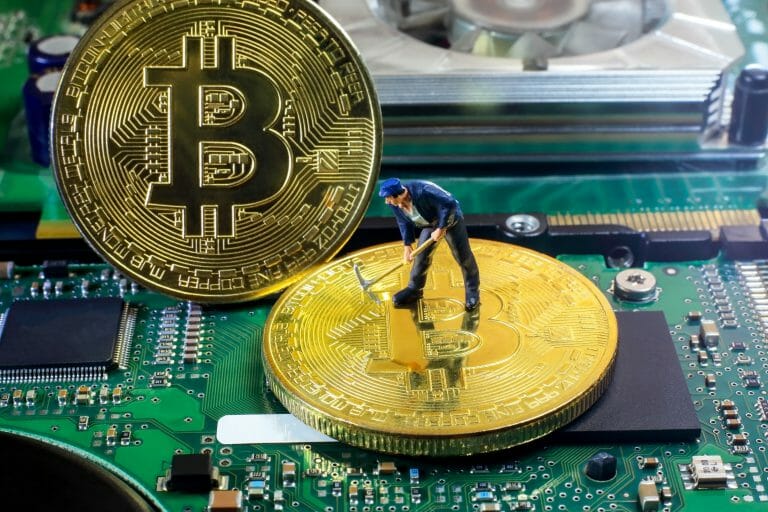
Bitcoin Miners are at “Risk of Going Under” if Profitability Keeps Crumbling Down

0

A bearish market, electricity costs, and other struggles with the supply could minimize the hash rate. They expect that the Bitcoin hash rate will reach new highs of 280 EH/s by January 2023.

A couple of months ago, people used to think that by the end of the year the Bitcoin (BTC) hash rate would surpass 320 EH/s due to the high participation of miners in the platform. But the bear market changed everything again with the rise in energy costs and flaws regarding the supply chains, situations that forced the projections to suffer a new cycle of corrections.

According to Hashrate Index, a Bitcoin mining analytics firm, the milestone of computing power greater than 300 EH/s looks further away every day. Mining income margins get weaker and weaker, and bitcoin price crumbles down to the $30,000 range.

The firm also highlights that after approaching the historical maximum of 229 EH/s a few days ago, the Bitcoin hash rate crumbled at least 10% to return to 207 EH/s in a weekly moving standard. According to experts, this situation happened even though, so far in 2022, the hash rate reached a peak registered at 19%.

Hashrate Index representatives indicated that the hash price is also falling. This figure is the amount miners receive for each tera hash introduced in the network. It crashed by 50% in 2022 to return to 2020 levels due to the pandemic.

The group also opened up about the difficulty of mining, which reached stages never experienced before. This situation could slow down the expansion of transaction processing power on the Bitcoin platform, according to Hashrate Index experts.

About the Damage the Miners Cause

The firm sustained that the increase in gas prices, renewable energy, and the dismantling of the minimum energy demand caused a rise in the electricity markets of the United States of America and the European region, to the damage of mining activity, which exists focused on electrical energy consumption.

While they maintain that Bitcoin miners can work under the energy crisis, there are others who “are at risk of going under as the hash price continues to crash down.”

Regarding supply chains, they highlighted that these are still recovering from the harmful impact of COVID-19 on logistics and supply/demand.

The Most Prominent Mining Entities will not Grow, and the ROI will Lengthen

Hashrate Index points out that the large mining companies will not experience growth so fast this year because of this particular situation. In addition, they suggested that the return on investment (ROI) could double for miners whose activities started last year. If the ROI had a launch schedule planned for 2022 or 2023, it would now get postponed to 2024 or 2025.

According to the firm, this results from carrying out deals using 2021 profitability, 2021 interest rates, and 2021 ROI models.

Specialists highlighted that the increase in interest rates in the United States of America, registered at 1%, makes it harder for miners to support their ASICs or systems the same way they did the last year.

By: Jenson Nuñez

Mirror Protocol, Defi Platform Based on the Now Terra Classic, under Hacking Attack

The protocol focused on the old Terra is the victim of a series of hacking attacks that put user funds in danger.

Mirror Protocol, a decentralized finance (Defi) protocol focused on the old Terra blockchain, now named Terra Classic, is under a hacking attack that puts millions of dollars in digital assets from users of the now-vanished ecosystem in danger.

According to a report brought by The Block, the hacking attack permitted malicious actors to steal at least $2 million so far. The hack got reported on Twitter by “FatMan,” who highlighted that if the vulnerability does not get fixed, all the tokenized asset pools will be in real danger.

Mirror under Hacking Attack

As The Block explains, the Mirror protocol gives users the possibility to go long or short tech stocks using synthetic currencies (or tokenized stocks). It works on the old Terra blockchain, now Terra Classic, which got replaced by a new one after the recent crash of its stablecoin TerraUSD (UST) and its parallel token LUNA, now named Luna Classic (LUNC).

Mirror Protocol also has versions of other digital assets, such as mBitcoin for Bitcoin, another currency seeking to reach the same price as the flagship cryptocurrency.

Many huge protocol pools got already emptied by now. According to the Mirror Protocol website, the tokenized asset pools of Bitcoin, Ether, and Polkadot got already depleted. The collection for the token representing Galaxy Digital shares has also got finished.

An Apparent Breach in the Oracles

FatMan told The Block that he analyzed various transactions to wrap up the attack, which, according to him, has generated losses registered at $2 million. The error appears to get triggered by an oracle. In this case, the prophets receive data linked to the price of shares and certain digital assets.

The Block expressed that the most significant issue is that most of the validators running nodes on the Terra Classic chain are running an old version of the price oracle. As a result, these nodes send the Mirror Protocol inaccurate data about the LUNC price.

FatMan urged to fix this problem as soon as possible, but he expressed despair in the social network because of the lack of answers from developers linked to this project. The protocol team in question has not made any further statements about this worrying situation.

By: Jenson Nuñez

Bitcoin Mining May Have Generated USD 1.5 Million in Profits for Kazakhstan, but they Restricted It

The government introduces a bill to increase electricity fees for Bitcoin miners operating in the country. Disconnecting most mining companies from the electrical system has prevented them from receiving most of the expected amount.

Kazakh may have earned over USD 1.5 million from Bitcoin (BTC) mining in the first quarter of 2022. However, they stopped receiving the funds as they restricted the activity.

The Kazakh government stated that Bitcoin mining would have added 652 million tenges (KZT) to the state budget. That amount of money is equivalent to just over one and a half million US dollars.

They said that energy payment would have allowed the money to reach the state coffers. They explained that electricity is the primary fuel for the mining equipment to conduct their operations.

The government specified that 12 regions of the Asian country would have contributed to the payment for Bitcoin mining. They would have made the above amount of money accessible to the State.

The Kazakh Government Has No Access to the Money Left by Miners

Miners left a significant amount of money, but the Kazakh government does not have full access to it due to restrictions against the activity. It seems that they missed the opportunity of profiting from Bitcoin mining.

The government highlighted that they had disconnected most mining companies from the electrical system to guarantee energy security. That has happened since October 2021, so the state budget has not received most of the expected amount.

In March, the government dismantled nearly 100 allegedly clandestine Bitcoin mining farms to minimize the energy crisis.

They also said leading miners chose to disconnect their equipment and leave Kazakhstan amid increased regulations and state surveillance. In addition, they pointed out that political instability directly affected the global hash rate of the Bitcoin network.

The Government Discusses a Bill to Raise Electricity Fees

The government noted that they are discussing a bill before the Parliament of the Republic of Kazakhstan. The draft law establishes an increase in the fee imposed on Bitcoin miners, which could hinder the development of the activity.

Electricity for miners costs KZT 1 (equivalent to USD 0.0023) for each kWh consumed by a farm, according to the government of Kazakhstan.

A raise in the electricity rate would affect the operators since that would add to the low profitability of Bitcoin mining. The activity has been in the red for weeks and at unseen levels since 2020.

The Increase in Electricity Rates Impacts their Hash Rate

Kazakhstan has welcomed many miners fleeing China after the ban on the activity, but they sought to counteract the trend. As a first containment measure, they decided to apply an increase in electricity rates.

For that reason, Kazakhstan went to third place after being the country with the second-highest enabled hash rate.

The Asian country is home to 13.22% of the global hash rate, a drop of 5% since the migration of Chinese miners began in September. According to Cambridge University, they remain a leading mining country, although they are now behind the United States (37.84%) and China (21.11%).

However, the more restrictions the Kazakh government imposes, the less likely they will see the funds left by the mining industry.

By Alexander Salazar

RSI Indicates that the Bitcoin Price Has Reached an Oversold Zone

Now, it is a better moment for those trusting in the long term to buy Bitcoin than when it was worth around USD 50,000. The price would resume the bullish trend if it strongly breaks through the descending line on the monthly chart.

Although a dominant short-term bearish direction continues to affect Bitcoin (BTC), several metrics have shown positive signs over the last week.

According to on-chain data analytics platform CryptoQuant, indicators tracking supply and demand have continued to give bullish signals. The reserves on exchanges have remained neutral in an area of lows not seen for three years. In the case of the Bitcoin whales, metrics have also been positive this week.

However, technical oscillators and market sentiment have been predominantly bearish for BTC following the short-term tide. The futures market is still overheating, with a leverage ratio close to its all-time high.

BTC is trading at around USD 30,635 and has accumulated a 4.5% gain over the last 24 hours. While its daily trading volume is above USD 26 billion, its market capitalization is about USD 583.89 billion, according to CoinGecko.

RSI Indicates that the Bottom of the Bitcoin Price Is Close

The Bitcoin historical Relative Strength Index (RSI) modeled by analyst PlanB Renowned analyst PlanB shows the price in an oversold zone. It has only reached that level at bearish market bottoms like those in 2020, 2018, and 2015.

The current moment is undoubtedly a better opportunity to buy than when the value of BTC was around USD 50,000. Those trusting in the long term could see the current price as a great opportunity.

However, it is impossible to confirm that the value of Bitcoin has already reached the bottom. RSI reveals that there have continuously been lower lows with each bearish cycle as the historical volatility reduces. For that reason, it might still be necessary to see more blood before thinking that the price has reached its lowest point.

Prediction of the Bitcoin Price Based on the Weekly Technical Analysis

The review of the daily chart shows that the price of Bitcoin remains locked in a sideways range, slightly tilted toward the downside.

Given that the previous trend is bearish, there will likely be more selling in the short term. If the upcoming support level at USD 26,281 stays close, the next one to visit is USD 22,719.

That would change if the value of BTC strongly breaks through the descending line on the monthly chart. That scenario would indicate a significant respite in the price, but it would be irrelevant if it does not exceed USD 40,000.

Besides a significant support level, a divergence in the RSI allows the bullish scenario to have part of the odds in its favor. It is just a matter of time for the price of BTC to increase until generating profits for its investors.

Since its beginning, Bitcoin has proven able to recover from the worst crises to resume its previous all-time highs. Besides, renowned analysts have recommended buying the cryptocurrency when its price has dropped and waiting until it increases.

By Alexander Salazar

The Bitcoin Price Consolidates despite Being in the Red for Two Months in a Row

Although Bitcoin might close May in the red, it has sightly recovered from its low of USD 25,000. Amid the decline in the price, JPMorgan told its clients that BTC should be worth at least USD 38,000.

Besides an imminent close of May in the red, Bitcoin (BTC) recently set a record of nine consecutive bearish weeks. However, the behavior of its price has remained stable for more than two weeks. In that period, the price has unsuccessfully tried to break through resistance at USD 30,000.

The relative price stability maintains a level close to USD 29,000 and has tested the 200-week EMA only once this year. That curve is a support level for the price that currently marks USD 27,140, while Bitcoin is trading at around USD 29,014.

The Bitcoin price recently set a negative record of 8 consecutive weeks to the downside. However, it has slightly recovered from the low of USD 25,000 reached on May 12th. Over the last week, it has accumulated a 3% loss, indicating that it could record another week in the red.

Bullish and Bearish Traders Are at Risk of Losing Money

In a recent liquidation of positions for USD 349 million, most were short positions. The settlements took place due to a slight rebound in the price of the pioneering cryptocurrency. Traders seemed to be expecting a further drop in the value of Bitcoin, but a rise took them by surprise.

After that, the scenario was quite the opposite, as higher liquidations of over USD 427 million corresponded to long positions. No one is a winner at that stage of the Bitcoin cycle, as both bullish and bearish traders may lose their funds.

There Might Already Be a Recession in the United States

Peter Schiff, the founder of Euro Pacific Capital, believes there is already a recession in the United States that will be worse than in 2008. After growing for four consecutive quarters in 2021, the gross domestic product (GDP) dropped by 1.4% in the first quarter of 2022.

There would have to be a new drop in the GDP in the current quarter to confirm the recession. The economist explained that the crisis underway would be worse due to a much higher public debt.

Fortune Includes Coinbase among the 500 Highest-Earning Companies

For the first time, a cryptocurrency company has entered the list of the 500 highest-earning American companies in the business magazine Fortune. This unprecedented event occurred amid the current global market landscape and the tail end of the COVID-19 pandemic.

The Coinbase exchange occupies 437th place on the list led by Walmart, Amazon, and Apple, considering their income in 2021. That was an excellent year for the platform, which had revenue of USD 7,839 million and a market capitalization of 41,670 million.

Investment Bank JPMorgan Considers that Bitcoin Should Be Worth More

American multinational investment bank JPMorgan told its clients that the fair price of Bitcoin should be USD 38,000. The financial institution predicts that Bitcoin and the overall cryptocurrency market will recover. They say that digital assets should replace real estate as an alternative asset class in investment portfolios.

BTC is trading at around USD 30,635 and has accumulated a 4.5% gain over the last 24 hours. While its daily trading volume is above USD 26 billion, its market capitalization is about USD 583.89 billion, according to CoinGecko.

By Alexander Salazar

Indian Official Highlighted that Cryptocurrency Consultation Paper Is Ready

A government official expressed that India already has the consultation file on the regulation of digital assets ready.

Inflation in India should reach lower levels in the coming months. The Indian administration is ready with its consultation file regarding digital assets, economic affairs secretary Ajay Seth told the news during an event in India.

Seth expressed that a global consensus on digital assets needs to get approached. India would look at regulations applied in other nations before deciding how it would execute its regulative procedures.

Also, in this year’s annual budget, the government highlighted that it would tax profits generated through digital currency investments at 30% and activated a policy in March. In addition to the hefty capital gains tax, the legislation also imposes a 1% deducted at source (TDS) tax on every digital currency transaction, regardless of whether they include a gain or loss and crypto gift taxes.

India and Regulative Procedures

For quite a few years, India got divided between prohibiting and setting up regulation laws aimed at digital assets. It has made clear the requirement for more control over these items.

During the last year, the problem regarding regulation has been winning over prohibition procedures. The process of regulating the use of digital assets in India has been an ongoing struggle since the pandemic started; however, recent news from an official source highlight that there has been some apparent movement regarding these matters.

Ajay Seth, India’s economic affairs secretary, told reporters that the inflation rate in the nation should start to crumble down in the coming months and that the Indian administration is ready with its consultation files focused on digital assets.

Alongside this situation, and although the administration promised in this year’s annual budget that it would apply a 30% tax rate on profits generated through digital assets investments, the nation has yet to elevate the procedure to the stature of enacted law.

More Concern Regarding Regulations in India

In particular, last week, after the crash of Terra (LUNA) and the TerraUSD (UST) stablecoin, The central bank, and the Reserve Bank of India, warned its citizens against investment in the crypto market.

RBI Governor Shaktikanta Das highlighted the recent fall in the value of the digital asset market and the requirement for a regulatory framework around digital currencies.

However, Nirmala Sitharaman, India’s finance minister expressed in April that the move about whether or not to regulate digital assets would not get rushed. He explained that the government would take its time moving in that direction. In February, regulatory agreements got reached by the Central Bank and the Ministry of Finance of the Asian region.

By: Jenson Nuñez