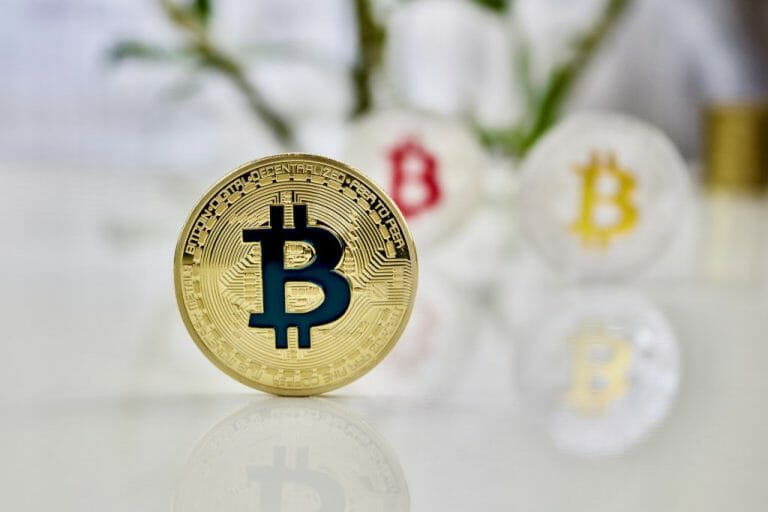
Bitcoin Might Become the Substitute of Cash as a Means of Payment

One of the obstacles to adopting Bitcoin and other cryptocurrencies remains the lack of knowledge. Forty-seven of the people surveyed believe that their countries will run out of cash within the next few years.

Consulting firm Economist Impact conducted a global study on fear and preferences for Bitcoin (BTC) and other cryptocurrencies. They determined that crypto assets have become a more usual form of digital payment in both developed countries and developing countries.

The survey indicates that respondents prefer Bitcoin and other cryptocurrencies (13%), digital currencies issued by technology and financial companies (12%) and a digital currency issued by the government (9%) to make payments.

John Mitchell, CEO and co-founder of Episode Six, said it is a social step toward digitization. He said that new ways to make transactions would emerge while payments and finance would continue to evolve.

The consulting firm sought to explore how much consumers trust digital payments and determine the obstacles for digital monetary functions to predominate.

Economist Impact surveyed people in the US, the UK, France, South Korea, Australia, Singapore, Brazil, Turkey, Vietnam, South Africa, and the Philippines. They interviewed 3,000 people, including users and investors, in January and February, of who around half (53%) were men and the rest women (47%).

The End of Cash May Be Near in Some Countries

The consulting firm also asked consumers on several continents about their position on the future of cash.

Forty-seven percent of the respondents think their countries will run out of cash within 3 to 5 years. Eighteen percent said their nations would become cashless, as digital payment methods will predominate over physical ones within 1 to 2 years.

Meanwhile, 13% believe that their country will always have cash, a decrease compared to 2020 when 28% had the same position.

Mitchel explained that it is necessary to move toward a cashless society, which has been evident during the pandemic. He considers that the reasons for that are convenience, speed of transactions, inclusivity, and efficiency over fiat money.

Executives Think that Regulations Hamper the Use of Bitcoin

The study not only focused on people who use cryptocurrencies but also included entrepreneurs from various countries.

Forty-one percent of the respondents believe that regulations hamper the adoption of cryptocurrencies for institutional investments or corporate treasury.

However, the report highlights that just 35% of institutions see market confidence or understanding of digital assets as an obstacle, compared to 47% in 2021.

Tobías Adrián, financial advisor and board member of the International Monetary Fund, considers the private sector relevant regarding innovation in digital money. He expressed that he does not think the central bank should be the one defining the technological frontier of payment systems.

Bitcoin and other Cryptocurrencies are Necessary to Businesses

The consultation also suggests that 85% of the investors agree that digital currencies like Bitcoin can help diversify a portfolio or treasury account.

Eighty-seven percent of the respondents agree that establishing an international regulator for digital currencies is necessary.

Some of those surveyed think that Bitcoin and other cryptocurrencies are a currency to settle transactions, while others see them as assets to store value.

In that regard, the study showed that 41% see them as usual currencies, representing an increase of 34% compared to 2021. In addition, 30% of the respondents see them as a combination of digital currency with a valuable asset.

By Alexander Salazar

Kenyan Energy Company Lures Bitcoin Miners with Geothermal Power

The country’s leading electricity producer has launched a general invitation to Bitcoin miners who want to take advantage of its renewable energy facility near the capital Nairobi.

Kenyan energy company KenGen has appealed to Bitcoin (BTC) miners to come forward and purchase its excess renewable energy capacity.

KenGen claims that 86% of its power is generated from renewable sources, mostly geothermal from underground heat sources in the Great Rift Valley. Local media outlet The Standard reported that KenGen has space in its new Olkaria industrial park, near its flagship geothermal power plant, that could be rented out to Bitcoin miners.

KenGen’s acting director of geothermal development, Peketsa Mwangi, said his company was ready and willing for miners to call Kenya home:

“We will have them here because we have the space and the power is close by, which helps with stability.”

Despite his enthusiasm, there have yet to be any reports of miners wanting to go to Kenya.

About KenGen

The Cambridge Bitcoin Electricity Consumption Index (CBECI) suggests that the East African nation currently hosts no known Bitcoin mining operations, but appears to be ideal for miners due to the estimated potential capacity of 10,000 megawatts (MW) of geothermal energy in the region.

KenGen is currently running at a maximum generation capacity of 863 MW, after installing another geothermal power plant in April, according to Kenyan financial news media Capital FM.

Benefits for Kenia

By inviting miners to the country, KenGen can accomplish several goals at once. It can increase the environmental sustainability of miners, which has been the subject of much scrutiny around the world. Mining consumes 119.5 terawatt per hour (TWh) a year, more than the Netherlands, according to the CBECI. Only 31 countries consume more energy.

It may also drive demand for further development of KenGen’s power grid to increase total supply and reduce cost. Kenya currently ranks 12th among the countries with the most expensive electricity in the world, where a kilowatt per hour (KWh) costs about USD 0.22, according to Statista.

The high cost of electricity in the country may be due to its rate of electrification. In 2020, only about 70% of the population had access to the centralized network, according to the World Bank. Energy grid tracker Energypedia says the high cost of connecting to the grid in Kenya is a “major obstacle” to its expansion.

The Kenyan government could also enjoy increased revenue through miners’ fees and even taxes. The government of Kazakhstan, for example, is poised to collect up to $1.5 billion in revenue from miners over the next five years, even though it only raised $1.5 million in the first quarter of 2022.

Kenya enjoys an especially high cryptocurrency adoption rate due to its peer-to-peer transaction volume.

The Central Bank of Kenya (CBK) has been exploring its options for a central bank digital currency (CBDC) since last year. In February, the CBK stated that the advantages of using a CBDC were lower fees and faster transfer rates.

By Audy Castaneda

Over 200,000 BTC already Stored in Bitcoin ETFs and other Institutional Products

Now more than ever, Bitcoin ETPs now have more BTC under control on behalf of clients.

Bitcoin (BTC) investment vehicles are posting “huge” inflows this month, a further sign that trader appetite for BTC exposure is on the rise.

Data from tracking firm Arcane Research released this week shows that Bitcoin exchange-traded products (ETPs) now have a record BTC under management.

“Happier Days” for Bitcoin ETPs, as Buyers Flock in

Despite the fact that the price of BTC does not attract buyers more than 50% below all-time highs, not everyone feels risk-averse.

According to data from Arcane, Bitcoin ETPs have seen a flurry of interest from institutional investors both this month and last.

In total, Bitcoin ETPs, which include products like the ProShares Bitcoin Strategy exchange-traded fund (ETF), now have 205,000 BTC under their control, a new record.

“While May’s rally was strong in ETPs, June has seen even happier days!” Arcane analyst Vetle Lunde told his Twitter followers while raising the numbers on June 2: “The first two days of June have seen gigantic net inflows on Purpose, 3iQ Coinshares, and BITO, pushing the global BUM to a new all-time high of 205,008 BTC.”

In the first days of June alone, more than 7,000 BTC flowed into ETPs, almost as much as in all of May, which, in turn, saw an impressive increase of 9,765 BTC.

“There are already massive inflows of BTC into Bitcoin ETFs in June,” reacted Zhu Su, co-founder of asset manager Three Arrows Capital.

Little reprieve for GBTC

Last month, Cointelegraph reported on Grayscale’s ongoing battle to turn GBTC into a Bitcoin spot ETF.

I should be recalled that, according to data from the on-chain monitoring resource Coinglass from May 13, the Grayscale Bitcoin Trust (GBTC) is trading at a discount of almost 31%.

Amid continued market volatility this week, GBTC has seen its nascent recovery fall short of fruition so far. The so-called GBTC premium, which was a discount in practice, has reached quite low levels.

By mid-May, it is noteworthy that GBTC shares were trading almost a third below the spot price of Bitcoin.

Overall, however, GBTC has long been trading at a discount amid attempts by Grayscale to turn it into an exchange-traded fund (ETF).

The Purpose Bitcoin ETF, the first Bitcoin spot ETF to launch globally, meanwhile had $1.294 million in assets under management as of June 3, data from on-chain monitoring resource Coinglass confirmed.

However, the prospects for the Grayscale Bitcoin Trust (GBTC) are bleak.

According to data from Coinglass, GBTC continues to trade at a record discount to Bitcoin’s spot price, currently down 28.68% as of June 3.

By Audy Castaneda

Vitalik Buterin Shows Support for the Governance Structure of Optimism and OP Gas Proposal

The Ethereum co-founder has often advocated for the projects to move away from coin voting in DeFi and DeGov, as it will allow smaller holders an opportunity to truly participate in governance.

Ethereum co-founder Vitalik Buterin has shown support for Optimism’s new governance structure, noting that proposals such as the use of the OP token for gas fees show “explicit representation of the interests of non-token holders.”

Ethereum’s layer 2 scaling solution deployed the first round of its long-awaited OP token on June 1 as part of its new governance project the “Optimism Collective.”

Optimism’s new governance structure involves two parties called “Token House” and “Citizen House”. The first is made up of OP governance token holders and the second is made up of non-transferable “soul-bound” citizenship NFT owners.

While it is unclear whether Buterin fully agrees with the June 2 proposal to use the OP governance token for gas fees, or is simply glad such discussion is taking place, he noted on Twitter today that, “Optimism explicitly has goals *other* than just “make OP go up”, and the only way to do that long-term is with explicit representation of non-token-holder interests.”

Token House and Citizen House

The two parties have mostly different goals: Token House handles project incentives, protocol enhancements, and treasury funds, while Citizen House focuses on retroactive funding of public goods.

The duo also share governance decisions on network parameters and the granting of new citizenships to Citizen House, something Buterin seems to appreciate in this case.

According to Optimism, the number of members in the Citizen House will grow over time, and the “mechanism of distribution of the citizenships will be determined by the foundation with the contribution of the Token House”.

On several occasions, Buterin has expressed his opinion that the cryptocurrency sector needs to “move beyond coin voting” into decentralized finance (DeFi) or decentralized governance (DeGov), as there is a risk that holders with large amounts of tokens dominate the voting process. Buterin argues that this can often lead to a short-term focus of whales approving proposals that seek to drive up the price of certain assets.

Such a method can result in small holders and platform users having no say in the governance process, or what Buterin describes as a lack of interest from non-token holders.

Community’s Mixed Feelings over OP’s Gas Proposal

As for OP’s gas commissions proposal, which was brought to the Optimism Governance forum yesterday for ideas and feedback, community sentiment seems mixed.

While many offered brief, sharp comments of agreement, generally noting that it would make the OP more useful, other comments clearly stated why they were against the idea.

One member, Kethic, stated that, “I don’t think that’s a good idea. Burning voting power into a governance structure seems counterproductive.”

Meanwhile, user Vrede stated that: “Optimism is EVM equivalency. Accepting OP tokens as gas means giving up EVM equivalence. Also, Optimism has to pay fees to the Ethereum mainnet in ETH. How will OPETH conversion be handled?”

User Massedai said that, “this is a premature change in a system that has not yet started to function in the way that Optimism intended”, further suggesting that the project seeks to provide value to the token through “the profitability of the ecosystem and not of quick moves to try to drive up the price of a token.”

By Audy Castaneda

Due to their Money Movements, Terra and LUNA Company are Under the Magnifying Glass

0

Do Kwon could have created a front company to make money movements easier. That other company is presenting itself as a “blockchain consulting” company.

Terraform Labs would have irregular assets for USD 4.8 million through a shell company. After a journalistic investigation, this conclusion was reached by the television network KBS, from South Korea.

According to KBS, the founder of Terra, Do Kwon, would have transferred 6,000 million won to an entity focused on “blockchain consulting” in Seoul’s capital.

After investigating the matter, KBS maintains that this consulting company (identified as “K”) would be a frontal entity. His true goal would be to make some financial activities easier for Do Kwon’s entity.

Accusations Denied

However, the CEO of “K,” Mo Kim, denies the accusations of being a subsidiary of Terraform Labs. He explained that they made the previous contact with Terra developers on occasion, but he said they are just working as a consulting entity.

This argument appeared to be suspicious to KBS reporters. One developer, who remained unidentified, said that Company K was an entity that carried out its activities under a name borrowed from Terra. According to South Korean media, this informant would have been part of the Terra project.

Also, other anonymous sources confirmed to the South Korean media that both entities worked in parallel as the same entity.

The possible identity of company “K”

An Internet forum user, well known in the Terra user community and identified as FatMan, said that company “K” is Kernel Labs.

He justifies this statement with the theory that “Terraform Labs is furiously trying to step away from that company. As per the sample, mentions of Anchor and Mirror (Terra’s 2 DeFi protocols) got removed from the Kernel website on May 18.

Kwon Might Be Sitting on the Dock

After the crash of terra USD (UST) and Terra (LUNA), cryptocurrencies of the Terra ecosystem-affected investors began the group to confront Do Kwon legally.

Even the South Korean state itself could become a plaintiff. Deputy Yoon Chang-Hyeong, a member of the Political Affairs Commission of the National Assembly, proposed summoning Do Kwon to Parliament.

At the moment, the only procedure applied has been a “clean slate.” On May 28, the network got re-released under the name Terra 2.0. So far, it is unknown what direction this blockchain will take since it will no longer receive support from native stable coins.

By: Jenson Nuñez

How Bitcoin is Helping Guatemalan Communities Strengthen their Economic System

0

Bitcoin gains prominence in El Paredón, a town abandoned by the traditional financial system. Two teams work to boost the economy around Lake Atitlán.

In Guatemala, there have been conversations regarding balance and economic evolution. These subjects seem to come from areas that found new procedures for 1% of the population and not so for the 70% dealing with financial vulnerabilities and poverty.

However, a big event will come along with the arrival of Bitcoin, with three tourist communities intending to emulate the experience of El Zonte in El Salvador, whose Bitcoin Beach project is boosting many opportunities for those with more economic vulnerability.

One of these sectors is that of El Paredón, a beach located in Escuintla in the municipality of Sipacate, which distances itself various miles from Guatemala City.

A team managed by Juan Fonseca encourages a circular economic structure focused on bitcoin. Their goal is for the digital asset to be increasingly received in the region. They think that economic evolution is only possible to the extent that the active crypto gains greater acceptance.

Last year Fonseca detailed the actions taken by Nayib Bukele until the day that El Salvador highlighted that bitcoin as legal tender, through regulations well-received by Congress. It was the day the Salvadoran president cited the town of El Zonte as the use for his Bitcoin new policy in his country.

Bitcoin Represents a New Beginning

Fonseca talked about El Paredón, describing it as a paradise, famous for having ideal weather and waves for surfing, which he considers the perfect features to attract tourists and investors. But at the same time, behind its natural attributes, there is a region that lacks financial structure, and this problem can rely on the decentralized bitcoin network with a valid asset worldwide.

With a strong focus on this matter, and more than three months ago, Fonseca started arranging meetings with community members to highlight his plans, and he assured them that everything had evolved in a good way.

Fonseca said they received support from IBEX Mercado, a bitcoin purchasing and selling service that intends to assist Central America in a master plan to connect to this robust decentralized monetary network.

Education as a Gateway to Bitcoin

Once the first phase comes to fruition, Fonseca talks about getting to a second level that would base its efforts more on educating the community so that they know with further details the bunch of advantages that bitcoin offers.

Two other leaders are currently working with Fonseca in its efforts to consolidate Bitcoin; one of them is Jan, who is a Dutch local hotel owner that became a pioneer in the area of accepting bitcoin payments. As part of the team, he is a critical player in talking to other business owners about their moments with the crypto pioneer.

There is also Jhonny, who has lived his entire life in El Paredón. Fonseca describes him as a cherished person because he worked as a computer teacher at the local school. He is even recognized in the town for having helped children with an application so that they could attend virtual classes during the pandemic.

By: Jenson Nuñez