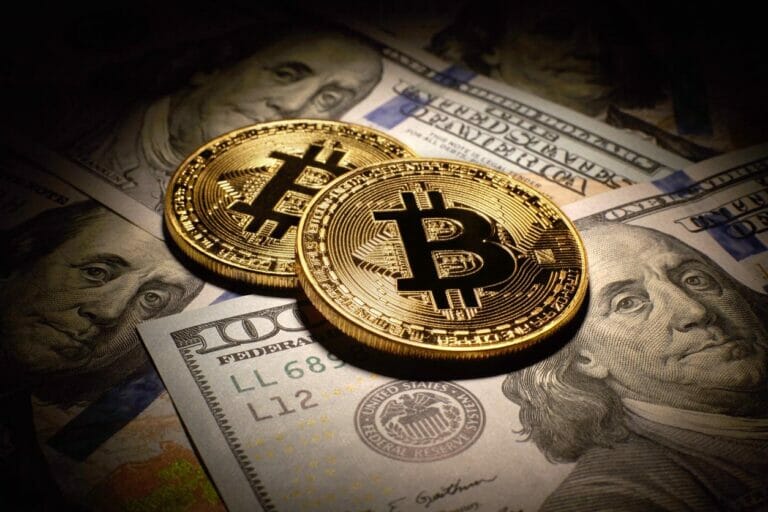
71.1% of the Inhabitants of El Salvador Stated that the Bitcoin Policy did not Bring Any Improvement to their Finances

A year after the release of a low favoring the adoption of Bitcoin by Bukele, most Salvadorans do not see any advantage in the measure the leader took to improve their finances.

Yesterday marked the first year since the president of El Salvador, Nayib Bukele, revealed that Bitcoin would become legal tender in the South American Nation.

The information arrived at the Bitcoin Miami 2021 event. Many believed this statement to be a false claim, but things took place very quickly. Only four days later, on June 9, 2021, the Legislative Assembly of El Salvador gave birth to an unprecedented law: the first policy that enables Bitcoin as legal tender worldwide.

Salvadoran Citizens do not Think the Same

Although this event is revolutionary around the globe, apparently, inside the country, there are many contrasting opinions. At least, that is how it got read in a survey applied by the University Institute of Public Opinion of the José Simeón Cañas Central American University, which led an evaluation of Salvadoran citizens under the third year of Bukele’s administration. One thousand two hundred seventy-two citizens from 14 departments played a role in the study.

The consideration that the Bukele government is making good decisions is relatively high. In the third year of administration, 68.1% of people still think he’s doing good things for the country. However, this percentage decayed since, in the first year of administration, at least 85.2% of the citizens in the study gave it a positive assessment.

 Finances do not Evolve for Good

When asked about what advantages the Bitcoin policy had brought to the family economy of Salvadorans, 71.1% of the 1,272 citizens surveyed answered that it had not brought them any benefit.

12.8% believe that this measure gave them few improvements to their economic panorama, while 8.9% are sure that the Bitcoin Law brought at least some benefits to their finances. Only 6.1% said that Bitcoin gave them many benefits.

When citizens got asked about some reasons for improving the family’s finances, the Bitcoin bonus of USD 30 appeared entirely highlighted. When the president of El Salvador revealed in June 2021 that his nation would accept bitcoin as its second national asset, along with the dollar, he promised tons of benefits and improvements to his citizens.

The adoption of bitcoin, he said, would bring back the dignity the economy previously had. The adoption would also lower the dependence on foreign currencies (the US dollar), lower remittance rates, account for at least 20% of the nation’s gross domestic product, and boost investment.

El Salvador has the potential to become the first nation to increase the transformative capacity of digital assets on a national scale.

El Salvador’s bitcoin law became a fully active policy on September 7. According to it, every merchant who is technically able to do so must receive the cryptocurrency as means of payment.

Taxes can also get paid with Bitcoin. The Chivo digital wallet also got implemented, and those who downloaded it received a starting bonus valued at 30 US dollars.

By: Jenson Nuñez

Weekly Forecast of the Bitcoin Price Indicates the Bulls Have Lost Ground again

The sellers want to break through support at USD 29,247 as a new drop might begin, leaving the ground clear for USD 26,281. An early rally could occur if the selling force is not too strong and stops above the area around USD 27,500.

The weekly forecast of the Bitcoin price suggests mixed sentiment slightly tilted to the sellers. The bulls have not been able to maintain momentum, leading the value of cryptocurrency into trouble again.

BTC is trading at around USD 31,233 and has accumulated a 4.3% gain over the last 24 hours. While its daily trading volume is above USD 26.49 billion, its market capitalization is about USD 597.12 billion, according to CoinGecko.

According to the on-chain data analytics platform CryptoQuant, metrics show a picture in favor of the bears for the short term. Indicators related to supply, demand, and whale behavior continue to hold, maintaining the long-term bullish view.

Increasingly broad sideways behavior has led leverage to reach above the prior all-time high. Besides, open interest remains at the same level as last week. Those two readings reveal a lot of activity in the futures market, which usually leads to short-term volatility and selling.

The Bitcoin Price Still Seeks to Reach the Bottom

The rejection reflected on the weekly chart creates a bearish outlook for the Bitcoin price in the short term.

The buyers do not yet seem to be strong enough to stop the bearish market in its tracks.

Given that a new drop is likely to begin, the sellers struggle to break through support at USD 29,247. That would leave the ground clear for USD 26,281.

The weekly forecast indicates that the next support is at USD 19,300. However, the scenario is not pessimistic enough to expect a drop to that level.

The bulls have tried to defend the support of around USD 30,000 to maintain control over the long-term trend.

They are very close this time, but it seems that it will suffer a breach, at least briefly. Besides, a quick search for liquidity may stop sales and mark a possible bottom.

Prediction of the Bitcoin Price Based on the Daily Chart

The daily chart review shows that the bulls maintain control but are about to lose it. If the price broke through support at USD 29,700, it could confirm that the bears want to drive it lower.

There is a relevant demand zone of around USD 27,500. There could be an early rally if the selling force is not too strong and stops above that area. Since it is now impossible to confirm that situation, it will be necessary to wait to see what may happen.

The price maintains the 8-period EMA and 18-period SMA crossed to the upside while attempting to hold them as dynamic supports. The bulls need to defend recent bullish momentum soon again to avoid a further drop in the short term.

By Alexander Salazar

Web3 Crucial to Data Sovereignty in the Metaverse

For the first time, the decentralized nature of Web3 will allow users to participate in digital economies without having to relinquish control of their data.

Wandering through the metaverse is like being in a computer game, but it will soon feel like real life. Unlike some dystopian visions of the metaverse, Advances in content generation by artificial intelligence will likely lead to a photorealistic metaverse with exact replicas of ourselves, propelling us toward a hyper-reality that blends our real and digital lives.

As technology advances, the photorealistic contents of the metaverse will be indistinguishable from physical reality. Driving this change will be powerful AI content generation algorithms that use real-world data to seamlessly recreate versions of ourselves within digital environments. The question is, as the real world expands into virtual space: How will you keep bad actors from controlling your photorealistic virtual version of yourself?

Will Our Digital Selves Be Slaves of Large Corporations?

The metaverse takes data collection to a new level and will be filled with immersive content and ever richer data streams.

As we move into a hyper-realistic metaverse, what’s at stake is the incredibly intimate nature of the data required to represent realistic versions of people, including digital copies of our faces, bodies, and voices. This is a major roadblock to developing an inclusive and user-friendly metaverse, especially when it comes to hyper-real content.

In order to bring billions of people into virtual worlds, content creators will need to use AI content generation algorithms trained on real-world data to create personalized and immersive experiences at scale. People must be willing to share their intimate and private biometric data with content creators; otherwise, the metaverse may end up being nothing more than an endless Zoom call with a bunch of legless torsos floating around.

How to Secure Your Hyper Real Identity in the Metaverse

The arrival of a “hyper real” metaverse is both an exciting and worrying prospect. On the one hand, the metaverse will create new avenues of immersion for human expression and interaction.

Therefore, the first principle in securing your hyper real identity in the metaverse is to positively assert ownership of your private biometric data. While it is up to governments to stop criminals from stealing your data and identity, you can at least use Blockchain technologies to claim your hyper-real identity and track its use by legitimate content creators.

Web3 Will Put People in Control of their Metaverse of Identity and Biometrics

In the context of today’s Internet, the barrier to identity theft at scale has been dramatically lowered, with millions of people falling victim to these attacks each year.

Although malicious actors will always be present in the metaverse, Web3 technologies can provide a set of barriers to a positive economy in which individuals can securely share their biometric data and appear as themselves in metaverse content experiences. It is essential that we create systems that allow individuals to control how they are represented in the metaverse and who has access to their biometric data.

By Audy Castaneda

Cardano Community Expects a Better 2nd Half of the Year

After a boring 1st half of the year in terms of dApp performance, the Cardano community expects a better 2nd half of the year than the previous one.

The 1st half of 2022 has been boring for Cardano in terms of dApp performance, but the community is more optimistic and expects a better 2nd half of the year according to Tomiwabold Olajide on U Today.

Cardano’s IOHK recently announced increases in Plutus script memory, as Cardano sought to address the scaling difficulties it was facing in order to achieve the performance required to support real-world applications.

On the Twitter account @cardano_whale, we can read a recent post: “I’m an optimist. Ppl told me last year “H1 2022 before Vasil will be disastrous for Cardano bc of throughput issues, after that it’s sunshine & rainbows” and I was like nah, H1 will give us dapp after dapp, issues under the hood will frustrate but won’t slow momentum & good vibes.”

However, CPU and memory parameter improvements for Plutus remain one of the 11 ways Cardano intends to scale in 2022. Other paths include block size increases, pipeline, input backing, node upgrades, storage on disk, side chains, Layer 2 Hydra scaling solution, download calculation and the Mithril solution.

According to a blog post, IOHK previously stated that it intends to bundle several code releases that include key elements of its scaling plan, such as pipeline, new Plutus CIP and UTXO disk storage, and Hydra in June and October Vasil hard forks.

On this issue, @AggelosVasilop1, replying to @cardano_whale, posted that, “I strongly believe that now is the time during this bear market or sentiment for #cardano to distinguish for its technology/fundamentals compared to other projects and be ready through its hard forks and enhancements for a historic adoption @cardano for the future and beyond.”

The features mentioned above, when combined with parameter tweaks, are intended to increase Cardano’s performance and optimize the system to support a growing number of decentralized finance (DeFi), smart contract, and DEX applications.

Right now, six dApps are currently contributing to Cardano’s TVL of $129.96 million, according to data from DefiLlama. However, the number of dApps may not be a cause for concern, as TRON, currently the third-largest DeFi platform, has seven dApps contributing to its TVL of $6 billion.

Cardano Keeps Progressing

Cardano founder Charles Hoskinson recently shared a tweet showing a 369% increase in daily on-chain transfer volume for Cardano compared to other Blockchains, which saw significant declines in this regard.

In its latest weekly development update, IOHK shares network growth statistics. Currently, 992 projects are being built on Cardano, up from 986 previously. A total of 89 projects have recently been launched on Cardano, while the number of NFT projects has increased to 5,796. For the week, Github connections totaled 2,769, while native Cardano tokens stood at 4.9 million. Also, the number of writings of Plutus was 2,769.

Cardano is trading in the early hours of this Monday at $0.5708 and the location of the moving averages, the 70-period one below the 200-period one, would give us a bearish signal.

By Audy Castaneda

Social Media Blamed for $1 Billion Losses in Crypto Scams in 2021

Nearly half of consumers who reported a cryptocurrency scam in 2021 said it started with an ad, post, or message on social media.

The United States Federal Trade Commission has called social media and cryptocurrencies a “combustible combination for fraud,” with nearly half of cryptocurrency-related scams originating from social media platforms in 2021.

Released on Friday, the report found that up to $1 billion in cryptocurrency has been lost to scammers over the year, which was a more than five-fold increase from 2020, and almost sixty-fold from 2018.

As of March 31, the amount of crypto lost was already approaching half of the 2021 figure, showing that the momentum does not seem to be slowing down.

FTC Report Highlights

The FTC found that Instagram (32%), Facebook (26%), WhatsApp (9%), and Telegram (7%) were the top platforms used for crypto scams.

Interestingly, Twitter, the social network widely adopted by the crypto community, was not mentioned despite being riddled with spam and scam bots promoting fake cryptocurrency giveaways.

According to fraud reports submitted to the FTC’s Consumer Sentinel Network, the most common type of cryptocurrency scam was investment-related fraud, accounting for $575 million of the total $1 billion figure.

The most common investment scams include cases where a consumer is contacted by a so-called “investment manager”, promising to grow their money, but only if the consumer purchases cryptocurrency and transfers it to their online account.

Other methods include posing as a celebrity who can multiply any cryptocurrency a consumer sends him or promise free cash or cryptocurrency.

The FTC also lists scams involving investment in fake art, rare gems and coins, bogus investment advice and seminars, and other miscellaneous investment scams as part of this group.

The next largest crypto-related losses come from romance scams, at $185 million, in which a love interest tries to entice someone to invest in a crypto scam.

Business and government impersonation scams came in third, totaling $133 million, in which scammers target consumers, claiming their money is at risk due to fraud or a government investigation.

In other cases, scammers have posed as border patrol agents to tell people their fiat accounts are frozen as part of a drug-trafficking investigation. These scammers tell people that the only way to protect their money is to transfer it to cryptocurrencies. They direct them to withdraw cash into a cryptocurrency ATM and trick them into sending it to the scammers’ wallet address.

The report reveals that people between the ages of 20 and 49 are the most likely to lose cryptocurrency to a scammer, with those in their 30s the hardest hit, accounting for 35% of all reported fraud losses.

The amount of lost cryptocurrencies increases depending on the age group; Median reported cryptocurrency losses for those in their 70s run as high as $11,708, compared to just $1,000 for 18- and 19-year-olds.

FTC Advice – How to Avoid Cryptocurrency Scams

An article on the FTC’s consumer advice website details a number of ways to avoid cryptocurrency scams:

Only scammers demand payment in cryptocurrencies. No legitimate business is going to require you to send crypto in advance, either to buy something or to protect your money. That is always a scam.

Only scammers guarantee profits or big profits. Do not trust people who promise you that you can make money quickly and easily on the cryptocurrency markets.

Never mix online dating with investment advice. If you meet someone on a dating site or app, and they want to show you how to invest in cryptocurrency or ask you to send them cryptocurrency, that’s a scam.

By Audy Castaneda

Lukas Enzersdorfer: “Bitcoin Does Not Serve as a Payment System but to Store Value”

The executive assures that the sharp falls in cryptocurrencies have accelerated purchases by investors who trust that their price will rise again.

Lukas Enzersdorfer-Konrad, Bitpanda’s chief product officer, is the mind behind the user experience of the cryptocurrency, exchange-traded fund (ETF), and stock investment platform. Since 2021, he has directed product development and has promoted a hub in Barcelona that has involved an investment of 10 million. From his new headquarters in Vienna, the executive shares his perspective on the future of crypto assets after the strong correction they have experienced and the collapse of the digital currency Luna and the stablecoin terraUSD, to which it was linked.

The crypto asset market has been hit hard in recent weeks. Is it a hit to your waterline?

No. There are several factors that have not only affected us but the entire technology sector. We are still seeing growth and new liquidity inflows from investors on our platform, although obviously there have been losses. Investors are waiting to see how the economic environment evolves. Governments must regulate crypto assets so they can be safely invested in

How has the reaction of crypto investors been to the correction?

Some investors have bought into market declines. Many have raised their bets on Bitcoin in the hope that the price will recover because they have seen an opportunity to enter. As it falls further and approaches $25,000, Bitcoin purchases accelerate and investors raise trading volumes. This happens throughout the market, not just on Bitpanda. It’s super interesting. I don’t think the way El Salvador is using Bitcoin is the correct one.

Many investors have lost a large part of their savings. What is your advice?

The most important thing is that users can do something about their losses. We have activated the staking functionality [an alternative to mining for the generation and validation of blocks that works as a bank deposit, offering a percentage of profitability]. With this option, the investor can receive benefits without selling. For example, if the investor has a Solana portfolio, you can receive up to an additional 4% weekly for lending the token for this service. Thus, when the next cycle arrives, the investor will have obtained capital gains.

Do you think that the strong volatility of the crypto asset market is due to cycles?

If you look at the last five cycles of Bitcoin, they are.

Will there be some cryptocurrencies that will never recover from these falls?

The major cryptocurrencies that are correlated to Bitcoin tend to move in cycles. As long as you haven’t invested in something like terra Luna you’ll be fine. Outside of the big cryptocurrencies, it depends on each currency. Some are based on smart contract ecosystems that give them a backing. Others like Bitcoin work more as a refuge. And there are some like Dogecoin that just has community and emotion-based value, so to speak.

The European Union develops a regulation on the cryptoactive sector, but alarms are growing about its role as a threat to financial stability. What role should the sector have?

It depends. If we talk about applying Blockchain technology to existing currencies, I think it could be something very interesting. But I don’t think that the way El Salvador is doing it is correct [it has adopted Bitcoin as legal currency]. Bitcoin does not work as a means of payment. It is not stable enough to be a currency of exchange, it works better to store value. Governments must regulate so that investors can invest in cryptocurrencies and with entities that are also regulated. The European Union has made a lot of progress with this, but what happened in El Salvador doesn’t seem to me to be working.

By Audy Castaneda