
The Crypto Winter Affects the Activity of the Bitcoin Whales

The whales moved 25,949 BTC from unknown wallets to exchanges and 21,270 BTC vice versa. However, those long-term holders transferred 16,251 BTC between crypto marketplaces and 13,607 BTC between peers.

Although there was a positive start, the crypto market faced an evident crisis over the last week. After the market capitalization of Bitcoin dropped by 10%, the Bitcoin whales continued to reduce their activity.

A distrust wave has emerged due to the crypto winter, leading to a reduction in transactions by the whales. While the price of Bitcoin has dropped by 5%, there has been skepticism in the overall market.

It is necessary to contextualize that activity to better dig into the status of the whales and the market as a whole. However, this is just a micro approach to one of the many factors that can influence the performance of BTC.

Daily Analysis of the Activity of the Bitcoin Whales

Over the last week, the Bitcoin whales moved 77,094 BTC, representing a reduction of 34.20%.

The predominant trend in the activity of those long-term holders was the introduction of liquidity into the market. They moved 25,949 BTC from unknown wallets to exchanges, representing 33.66% of the weekly total.

The second-highest trend was accumulation, as 21,270 BTC went from exchanges to unknown wallets, equivalent to 27.59% of the weekly total.

The transfer between crypto marketplaces was the third-highest trend, as the whales moved 16,251 BTC, representing 21.08% of the weekly total.

Finally, the whales moved 13,607 BTC between unknown wallets, equivalent to 17.65% of the weekly total. The crypto market has made the Bitcoin whales reduce their activity due to low profitability and continued price decline.

The Performance of Bitcoin over the Last Week

BTC is trading at USD 26,649 and has accumulated a 10.9% loss over the last week. While its trading volume is above USD 29.89 billion, its market capitalization is about USD 508.53, according to CoinGecko.

Bitcoin is about to break through the support set between USD 28,000 and USD 32,000. If the price fell further, a decline might harm the whales and miners, who are worried about the profitability of mining.

The rise in mining difficulty and the decline in the Bitcoin price for almost ten weeks have led them to disconnect their machines. The hash rate has dropped by 17% over the last few days, indicating that miners are turning off their equipment.

The set base price for mining is USD 22,000 per Bitcoin, but anything below USD 30,000 raises uncertainty, especially in North America. The decline has caused an increase in return on investment (ROI) times, discouraging miners.

The Cooling of the Crypto Market Continues

External factors like restrictive policies and bills conducted in the United States have contributed to the market cooling. This week, New York passed a moratorium banning Bitcoin mining in the state because of its energy efficiency.

Those policies may further destabilize the market, which correlates with leading market indexes like the S&P 500. That index suffered a 200-point decline during the week, indicating that the global markets collapsed.

Traditional markets suffer the effects of volatility and pessimistic news, while the US economy contracts to affect Bitcoin. The current market crisis indirectly hurts expectations and the market capitalization of Bitcoin.

Investors should monitor the behavior of the market, external situations, and the movements of the Bitcoin whales. That would allow having a partial perspective of the status of the market.

By Alexander Salazar
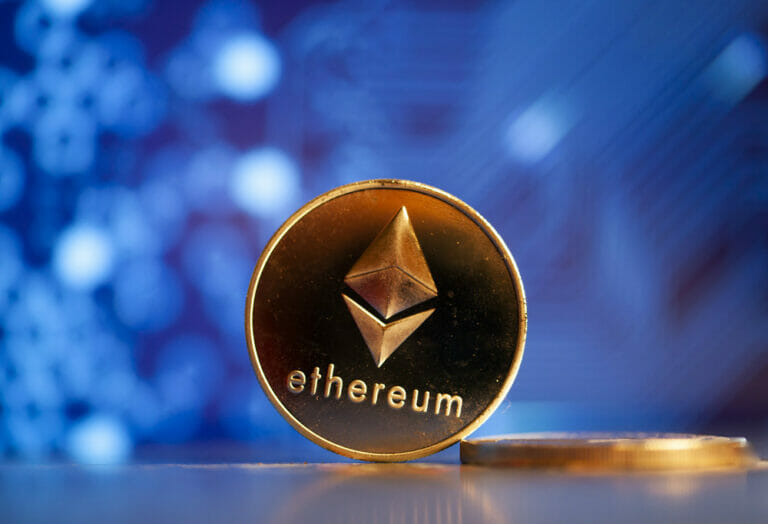
The CEO of Ethereum Receives 1 Million OP Tokens from a Hacker

The cybercriminal sold 1 million OP tokens and exchanged them for ETH while keeping 18 million OP in his wallet. He might be a white-hat hacker, as he has not speculated with those funds, but nobody knows his intentions.

Over the past week, a hacker took hold of over 20 million Optimism (OP) tokens. However, the cybercriminal moved 1 million of those tokens into the wallet of Ethereum founder Vitalik Buterin.

OP Token Hacker Might Be White Hat

A hacker took advantage of a bug on Optimism, an Ethereum layer 1 and 2 scaling solution, to steal 20 million tokens after an airdrop. However, Wintermute clarified that an accidental transaction caused the cryptocurrencies to come into the hands of the hacker.

The OP tokens, a figure exceeding USD 30 million at the time of the event, remain in the hands of the hacker. When writing this article, OP lost almost 40% of its value after the viralization of the news.

However, the most recent move of the hacker leads to believing it could be a white hat hacker. He sent 1 million OP tokens, equivalent to almost USD 824,000, to the public wallet of Ethereum founder Vitalik Buterin.

The alleged cybercriminal also sold one million OP tokens and exchanged them for Ether (ETH). The rest, adding up to 18 million OP, continues in his wallet.

The Reasons Why He Can Be a White-Hat Hacker

He is likely to be a white-hat hacker, as he still has the tokens in his wallet and has not speculated on them. However, Wintermute said that nobody knows the intentions of the cybercriminal with those stolen funds.

They commented on their blog that this operation would possibly be benevolent since the OP tokens are still in the hands of the hacker. However, they also threatened the hacker with using legal means to solve the matter if he did not return the crypto assets.

Relationship of Vitalik Buterin with the Stolen Cryptocurrencies

There are still no signs of why the hacker decided to send cryptocurrencies to the public wallet of Vitalik Buterin. However, that move by the cybercriminal might not be harmful at all to the project.

Buterin received USD 8 billion worth of SHIB tokens long ago, which he burned in their entirety. He only used 10% for donations to organizations promising to help people with COVID-19. However, that strategy aimed to reduce the number of coins in circulation.

Nobody has yet been able to confirm whether the hacker has similar plans for the Optimism (OP) coins he holds in his wallet. It is only a matter of time before there is a definitive solution to that case.

OP is trading at around USD 0.56 and has accumulated a 51.4 loss over the last week. While its daily trading volume is above USD 188.25, its market capitalization is about USD 122.15. It occupies 207th place in the cryptocurrency ranking, according to CoinGecko.

By Alexander Salazar

Tron Acquired another 1,800 Bitcoins to Support its Stable Coin, as Terra did before

0

Tron Reserve purchased at least 1,800 BTC this Saturday, following the steps of Luna with UST. The collateralization of the stable coin USDD approached 192% according to the DAO that deals with it.

Tron Reserve keeps its intention to consolidate the Decentralized USD (USDD) stable coin by acquiring bitcoin (BTC). To achieve this goal, it purchased the same amount of USD 50 million in BTC and Tron (TRX) to back up the issuance of the recently released digital asset, which keeps its parity with the US dollar.

The purchase got highlighted by the decentralized autonomous organization (DAO) Tron Reserve in a tweet. In this way, the reserves would surpass USD 700 million, although the figure of USD 669 million still makes its appearance on the official page.

The amount still includes the 14,040 BTC highlighted a week ago. Adding the USD 50 million in bitcoin purchased on Saturday, the amount would reach a peak registered at 15,836 BTC.

The amount of reserves in the stable coin Tether has changed since the last publication in this medium since it went from USD 240 million to USD 140 million.

Tron and its mission are to keep the collateralization of USDD above 130% to consolidate the stable coin as a supported token, as outlined in the white paper. This move receives the name over-collateralization.

To achieve this goal, they employ an algorithmic procedure and create a reserve that would serve only for emergencies. This reserve relies on bitcoin and other crypto-assets that allow USDD to keep parity even during unfavorable periods.

At the close of this article, the collateralization of the stable coin approached 192%, considering the situation mentioned. The current supply of USDD relies on 723,321,764 units. The first phase of the project’s roadmap, which would get enacted until October 2022, expects an issuance registered at 2,000 million USD.

Tron Acquired BTC, as Fundación Luna did with Terra

Terra, the entity that created the network of the same name and the failed stable coin terra USD (UST), also acquired bitcoins to bring assistance to its main project. However, the fall of UST and the other Terra digital asset, LUNA, could not get circumvented even with the sale of the millionaire reserves that the organization had.

The Tron model is similar to the one employed by Terra. First of all, it is also an algorithmic stable coin. This situation means that it does not count on a direct backup in other assets for its issuance, but rather it got regulated with a strong focus on algorithms that emulate the price of these.

Also, USDD got issued from the burning of TRX. The same thing happened with UST, which was broadcast by burning LUNA. The reserves, handled by Fundación Luna and Tron Reserve, include both bitcoin and other crypto actives to circumvent the loss of parity of the stable coin at times of excessive sales pressure.

By: Jenson Nuñez

Bitcoin Price Falls to Lowest Level since May, While Ethereum Market Trades Down 18.4%

Bitcoin Threatens Lowest Weekly Close Since Late 2020 as Low Weekend Liquidity Exacerbates Existing Weakness.

Bitcoin (BTC) saw further losses on June 12 as thin weekend trading volumes fueled a continued selloff.

Data from CointeleGraph Markets Pro and TradingView showed that BTC/USD hit lows of $27,150 for its sixth straight day of downside.

Analyst Compares ‘Rise’ in Risk Assets to 1929

In the closing hours until the weekly close, the pair was in danger of resuming the losing streak, which had previously seen a record nine weeks of red candles in a row.

To avoid that outcome and put in a second “green” close, BTC/USD needed to gain more than $2,000 from the current spot price, which at the time of writing was $27,400.

With support levels not changing the mood thanks to thinner liquidity during weekend “after-hours” trading, analysts feared a retest of May’s ten-month lows was due.

“Well, Bitcoin failed to hold $29,300 and started to drop a little bit more. Looking to see how the $28,500 area will react,” Cointelegraph contributor Michaël Van de Poppe wrote in his latest BTC update on June 11: “If that doesn’t hold up, $26,000/24,000 on the cards.”

Amidst the ongoing talk of “capitulation” in crypto assets, others focused on the fate of highly correlated stock markets. Mike McGlone, senior commodity strategist at Bloomberg Intelligence, risk assets more broadly may already have seen peak exuberance in the past two years.

“If the stock market continues to go down, pretty much everything will have peaked,” he told Twitter followers.

“Just a normal reversal can look like a shock and the 2020-21 risk asset pump can go down in history like 1929 and 1999.”

Meanwhile, at daily lows near $27,000, Bitcoin traded closer to its “mini” May capitulation event since that day of turmoil took place at the hands of the Terra Luna implosion.

For many, the question was therefore how to know where the true macro price for Bitcoin might lie.

“If the price hits low 20,000, you’ll see most CT asking for 10k or even lower. That will be the bottom confirmation,” argued the popular IL Capo de Crypto Twitter account.

The guesses for a generational fund range as high as $27,000 to a level of $14,000 or even lower.

Ethereum Makes Key Realized Price Crossover

Meanwhile, for altcoins, the picture was more precarious.

A look at the top ten cryptocurrencies by market cap revealed daily losses heavier than BTC/USD, with some shedding more than 10%.

Ether (ETH), the largest altcoin, fell around 7% on the day, taking the spot price below the realized price for the first time since May.

Realized price refers to the combined price at which each token last moved, and its violation puts ETH at greater risk of panic-based capitulation. Bitcoin’s realized price, at around $24,000, was barely touched during the May crash.

“With the price decline over the weekend, the Ethereum market has fallen below realized price by $1,781,” GlassNode commented on an accompanying $1,781 chart.

“This means that the market has an average unrealized loss of -18.4%. The realized price of ETH 2.0 deposits is higher at $2,404, with an unrealized loss of -39.6%.”

By Audy Castaneda

According to Mike Novogratz, Bitcoin will Be the Market Leader in October

The world economy will settle in a way that favors bitcoin, says Novogratz. Despite that, many companies in the industry may not recover from the current crisis.

According to American businessman Mike Novogratz, this crypto winter could end in October 2022. Since then, according to him, bitcoin will break away from stocks and become a leader again.

The founder and CEO of Galaxy Digital recently shared his thoughts during his role at the Consensus 2022 conference. He said he expected the economy could slow down enough to experience the beginning of the next cycle of digital assets.

Novogratz, an investor in bitcoin (BTC) and digital assets, is convinced that rates would be 5% in the US. For this reason, he hopes that digital assets can get decoupled.

BTC has some price correlation with traditional markets, particularly the NASDAQ tech stock index. In January of the current year, bitcoin and usual markets started running in parallel. More recently, in mid-May, the correlation with the S&P500 and NASDAQ indices was about to reach a new all-time high peak.

There is Some Optimism in the Air

The businessman says Galaxy will expand its tentacles, even in the face of the recession, in contrast with rivals like Gemini Trust Co, which are currently firing staff to survive the aggressive market. Instead, Novogratz expressed that he will keep hiring people and, according to him, there is no shortage of talent or enthusiasm in digital assets.

Novogratz acknowledged that he observes a bumpy road ahead for stock and crypto investors but still felt optimistic that there will be an expansion of digital assets acceptance and its real-world application. He referred to Bitcoin as a solid house of value that will keep its position as a real macro asset.

However, regarding the digital asset and equity markets, Novogratz is not betting on a V-shaped recovery. Instead, he foresees a mixture of market ups and downs and sideways moves until a new narrative rises about the macroeconomic scenario and Interest rates.

He said the US Federal Reserve’s interest rate hike to minimize inflation would generate setbacks and uncertainty in economic structures. He claimed that a battle waits ahead, and he is just getting ready to fight and win.

About Terra

Likewise, Novogratz also linked the collapse of the Terra blockchain, in which he and Galaxy were prominent investors, to macroeconomic factors but not project failures or flaws.

PwC’s annual global crypto hedge fund report showed Terra USD (UST) to be the third most popular stable coin among crypto hedge funds they surveyed in April 2022, or just before Terra fell. 49% of PwC respondents also traded the Luna token, which Novogratz immortalized with his tattoo.

By: Jenson Nuñez

Do Kwon Dismisses Allegation of Cashing out 2.7B from Terra (Luna) UST

The rumor emerged after a @FatManTerra Twitter thread shared alleged details on how Kwon, along with Terra influencers, managed to drain funds while artificially maintaining liquidity.

Do Kwon, the CEO, and co-founder of the infamous Terra (LUNA) and TerraUSD (UST) ecosystems, refuted claims that he had been paid $80 million every month for nearly three years.

Numerous unconfirmed reports surfaced on June 11, claiming Kwon’s involvement in draining liquidity from LUNA and UST before the drop to buy US dollar stablecoin like Tether (USDT).

Rumors about Kwon pulling out LUNA and UST reserves surfaced after a @FatManTerra Twitter thread shared alleged details about how Kwon, along with Terra influencers, managed to drain the funds while artificially maintaining liquidity.

The first post by @FatManTerra reads, “Some of you thought $80m per month was bad. That’s nothing. Here’s how Do Kwon cashed out $2.7 billion (33 x $80m!) over the span of mere months thanks to Degenbox: the perfect mechanism to drain liquidity out of the LUNA & UST system and into hard money like USDT.”

Kwon’s Reaction

The businessman advised the cryptocurrency community to stay away from feeding the rumor until it is proven true:

“This should be obvious, but the claim that I cashed in $2.7 billion of anything is categorically false.”

Sharing his side of the story, Kwon stated that the recent rumor that he had been paid $80 million a month contradicts claims that he still retains most of his LUNA stakes, acquired during the airdrop. Additionally, Kwon reiterated that his income for the past two years has been solely a cash salary from TerraForm Labs (TFL).

On Twitter, Kwon posted that, “To reiterate, for the last two years the only thing ive earned is a nominal cash salary from TFL, and deferred taking most of my founder’s tokens because a) didn’t need it and b) didn’t want to cause unnecessary finger-pointing of he has too much.”

Kwon told the community that “spreading the falsehood” adds to the pain of all LUNA investors, noting that, “I haven’t said much because I don’t want to seem like I’m playing the victim, but I also lost most of what I had in the crash. I’ve said it many times, but I don’t really care much about the money.”

Kwon Had Been Warned

Mr. B, a developer of Anchor Protocol, a sub-ecosystem centered on Terra, reportedly warned Kwon about unrealistically high-interest rates. Mr. B said that the platform was designed to only offer a 3.6% interest rate to keep the Terra ecosystem stable, but it was changed to 20% just before launch:

“I thought it was going to collapse from the beginning (I designed it), but it collapsed 100%,” Mr. B said.

The developer reportedly suggested Kwon lower interest rates, but the request was rejected. Do Kwon has been summoned to attend a parliamentary hearing on the matter in South Korea in mid-May.

About this case, it is worth remembering that, according to legal documents, Terraform Labs co-founder dissolved two of the entity’s locations in South Korea, as well as Terraform Labs Korea, just prior to the LUNA and UST collapse. Although the decision to dissolve the offices was made during an April 30 shareholder meeting, the timing raised eyebrows within the cryptocurrency community.

By Audy Castaneda