Is [PEPE]’s Unprecedented Journey Coming to an End? This is What the Metrics Suggest

The number of PEPE holders has increased considerably in recent days. Investors should be cautious as market indicators suggest a turnaround.

[PEPE] has once again sparked buzz in the market, especially in the memecoin niche. Since its inception a few weeks ago, it has generated enough hype to make the token a word on everyone’s lips. Messari posted a tweet on May 9, highlighting PEPE’s journey, which has amazed many over time:

“1/ Nothing brings people together quite like meme coins. @chasedevens breaks down the resurgence of speculative interest in meme coins thanks to the parabolic growth of @pepecoineth.”

PEPE, which was launched just over three weeks ago on April 14, exceeded 100,000 chain participations. Compared to the previous rise of other rapidly expanding Ethereum-based coins, Pepe’s journey was more remarkable. This was also evident when looking at the Santiment chart, which revealed a substantial increase in the number of starting PEPE.

On top of that, Messari’s tweet noted that the token was showing a similar growth pattern to the Shiba Inu [SHIB] but at a much higher rate in terms of median value per holder:

“4/ If we look at the average value per holder of @pepecoineth and @ShibainuCoin, as measured by the market cap value per holder, we see that $PEPE is displaying a similar growth pattern to $SHIB, but at a much faster pace.”

This is commendable, as it makes PEPE one of the top contenders among memecoins.

Unprecedented Increase: Will It Last?

Thanks to the hype the memecoin created, it was still trending at the #1 spot on CoinMarketCap at press time. The coin posted triple-digit growth in recent weeks. The PEPE price increased more than 85% in the last seven days. The memecoin was trading at $0.000001941 with a market capitalization of over $760 million.

Growth momentum has abated in recent days. The memecoin price alone increased more than 3% in the last 24 hours. The supply of memecoin on exchanges has seen an increase lately. This was accompanied by a decrease in supply outside of exchanges, which is a typical bearish sign.

On top of that, whale transactions increased while the crossing was taking place, suggesting that the bigwigs were selling off their assets at a profit.

PEPE Enthusiasts Should Be Cautious

A look at the rest of the metrics was concerning as well. PEPE’s network growth and daily active addresses declined. This indicated less activity and a decrease in the number of new addresses created daily.

The volume of the memecoin also decreased, indicating a lower willingness of investors to trade the token. Furthermore, its week-long price volatility dipped as well, lessening the chances of a sudden uptrend.

According to the exponential moving average (EMA) tape, the bears were tightening their belts as the distance between the 20- and 55-day EMA narrowed.

The Chaikin Money Flow Index (MFI) and Chaikin Money Flow (CMF) posted declines, raising the chances of a price decline in the coming days.

By Audy Castaneda

Nearly $95 Million in Loans Are Backed by NFTs: What Could Go Wrong?

Since Blur launched its NFT lending platform on May 1, Blend has caused an explosion in NFT lending. Users have already borrowed a staggering 51,656 ETH, equivalent to $95 million, against their assets.

Earlier this year, the new Blur marketplace made waves in the NFT sector. Recent figures suggest that its Blend lending platform could generate a similar buzz. However, there are real and serious risks in borrowing against an NFT.

Blur’s lending platform Blend has proliferated in popularity since its launch just ten days ago. According to Dune dashboard data, users have already borrowed a staggering 51,656 ETH, equivalent to $95 million, against their digital collectibles. Amazingly, more than 3,000 individual loans have been opened on the platform so far.

Blend Supports Four Collections

Blend currently supports loans backed by four collections of NFTs: Miladys, Azukis, DeGods, and wrapped versions of CryptoPunks.

Blur created a stir earlier in the year with its impact on the non-fungible token market. Shortly after launch, it overtook OpenSea, the king of NFT marketplaces, with a 53% market share. The Blur native token airdrop in Q1 2023 generated significant traction in the NFT aggregator and market, resulting in increased Ethereum NFT trading volumes.

Blend, aka Blur Lending, looks like it could do even better. Since its launch, Blur’s lending platform has quickly outpaced competitors like NFTfi, Arcade, and BendDAO, driving NFT lending volume to an impressive $67 million in just one week.

Blend loans alone represent a whopping 75% of total volume. Currently, the total number of loans accepted and refinanced is 3,045, with 922 unique lenders, according to Dune. Blend is the latest player to join the market.

However, the use of NFTs as collateral has been popular since 2021 thanks to the emergence of new platforms and the rising cost of digital assets. In more recent months, prices have been more moderate. In any case, the use of NFTs as collateral presents serious risks for lenders.

Liquidity Risk

Using an NFT as collateral is no different than using other assets to fund loans. Borrowers deposit their NFT as collateral, set the terms of the loan, and receive ETH from the lender, while the NFT remains as collateral. The borrower then repays the loan to recover the NFT. Non-payment results in liquidation and the lender claims ownership of the NFT.

However, NFT lending platforms like Blur pose a danger by allowing collectors to purchase tokens without having the necessary funds. This creates liquidity risks in the future when collection floors suddenly flatten out.

A liquidity risk arises when a borrower does not have enough cash to meet their financial obligations, in this case, the loan. Borrowing on NFTs may require a margin call to avoid liquidation. A margin call occurs when the lender asks for additional collateral to offset the asset’s value decline.

In 2022, traders were stunned after BAYC NFT prices plunged 80% in six weeks, many of them had become over-leveraged by using their apes as collateral, to borrow on BendDAO. Dozens of those who did face margin calls.

By Audy Castaneda

What Happened to Bitcoin and Ethereum Prices?

0

Simon Peters, expert cryptoasset analyst at investment platform eToro posed the following questions: What is affecting bitcoin and Ethereum prices, what is happening to transaction fees, and what is decentralized lending being used for? and shared his views on the matter.

The Prices of Bitcoin and Ethereum

Peters stated, “Bitcoin continues its path around $27,500 despite network issues escalating over the weekend and transaction fees spiking,” to this he added, “The cryptoasset was below $28,000 and peaked below $29,500 greenbacks before falling back and trading below $27,500. Bitcoin has been at or around this level since mid-March.”

Regarding Ethereum, Simon Peters said, “Ether experienced similar volatility last week, starting around $1,800 before soaring to nearly $2,000. It has since retreated back to virtually the same level at which it started. Like Bitcoin, Ether has held steady around $1,800 since March.”

Miners Stir up the Bitcoin Market

Regarding transaction fees, the expert opined, “Bitcoin miners are charging more for processing transactions than for mining new tokens for the first time since 2017, following the introduction of NFT BRC-20 ‘Ordinals’ tokens on the Bitcoin blockchain.”

The eToro analyst explained, “Transaction fees spiked over the weekend and created congestion on the network as subscriptions to Ordinals increased. The problem appears to have had some short-term impact on pricing, especially as some Exchanges have come under pressure from the activity.”

“The fact that transaction fee income is outpacing mining is also a major change. Mining will become less and less profitable as halvings advance. With the supply of Bitcoins permanently limited, mining will end up being much less lucrative than transaction processing, NFT or otherwise,” Peters remarked.

Ethereum Foundation’s Move Threatens Market Selloff

The Ethereum Foundation moved over the past weekend 15,000 Ether tokens to a Kraken escrow address, causing volatility in the market.

The eToro expert explained: “This is something the foundation does periodically. It owns about 0.3% of all Ether and funds its activities by periodically selling some of its holdings. This essentially created a small wave of panic from investors looking to transact before the tokens were liquidated in the market, sending prices down, similar to what happened earlier in 2021.”

Peters further added, “However, the token movement is like making a mountain out of a molehill in market terms. The amount amounts to about $27,508,650, a large sum in nominal terms, but only represents 0.01% of the $221 billion Ether in circulation. In essence, a correction driven by foundation activity that is largely self-feeding.”

MakerDAO launches lending protocol

“MakerDAO’s DeFi project launched a lending and borrowing network called Spark Protocol. The protocol allows users to lend and borrow major cryptoassets such as Ethereum, Staked Ethereum (stETH), Dai, and sDai,” Simon Peters commented.

The eToro analyst remarked, “The activity of lending or borrowing money is a core function of the financial services and banking sectors. Ultimately, if cryptoassets want to challenge TradFi’s dominance, they have to break this aspect of the global financial system.”

He also highlighted, “Lending allows users with assets to earn a return, while borrowing is necessary for households and businesses to afford to build their lives or invest in their businesses.

Therefore, decentralized lending can change the rules of the market game and greatly expand the scope of uses of cryptoassets.”

By Marina Meza

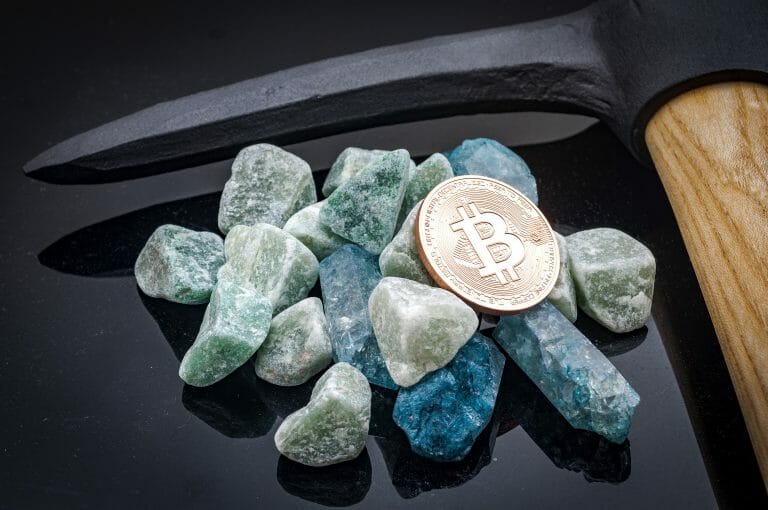
Bitcoin Mining: Ordinals Turn Rewards Upside Down

0

Ordinal’s high level of trading caused bottlenecks in the Bitcoin Blockchain, which ended up benefiting mining.

For the first time since 2017, Bitcoin transaction fees exceeded the classic mining block payout. In that sense, numerous pools reported that the reward trends received by miners were reversed. The latter happens during times of bottlenecks in the pioneering cryptocurrency’s Blockchain.

Digital mining offers two types of rewards to miners. One of them, the best known, is the release of new coins that the network delivers as a reward for processing valid blocks of transactions. Currently, the network pays 6.25 BTC for each block. The second way is through commissions that network users pay for each transaction they make. These are distributed among the miners.

Historically, and due to the low adoption of the network, the first has been the dominant one, and the second is seen as “an extra”. But now there’s an unusual change that puts transaction rewards higher than block processing rewards. Some pools like Luxor Technologies and AntPool confirmed such network behavior.

Ordinal’s Role in Bitcoin Mining Change

This atypical behavior that benefits the Bitcoin mining business has its origin in the use of Ordinals in that network. These are a new type of non-fungible tokens (NFTs) native to the Bitcoin Blockchain. They are registered in a satoshi, the smallest fraction of a BTC.

In any case, they have been gaining popularity for several months. The problem with this is that the Bitcoin network has low scalability, which causes bottlenecks that prevent the normal flow of transactions. To get transactions out of bottlenecks, people pay a higher commission, which drives up the average fee.

Those commissions are shared among the miners who include the transactions in the blocks. In this way, in times of blockages in the blockchain, the miners are the first to benefit.

A Glimpse into the Future of the Mining Business

Every four years or so, Bitcoin halving occurs. It is an automatic update of the network that aims to generate scarcity in that digital currency. To do this, it halves the rewards that the network pays to miners for each block mined. The next cut will be in 2024 when the block rewards will drop from 6.25 BTC to 3,125 BTC.

The latter means that there will be fewer coins for an increasing number of miners. This trend of halvings will continue every four years until the last BTC in the network is exhausted in the year 2140. Over the course of more than a century, it is assumed that the currency will be adopted by billions of people. Consequently, with such a poor scalability network, it is to be expected that when the last BTC is depleted no one will miss that reward mechanism.

There will come a time when the rewards will be so low that miners will only care about fee rewards. The latter suggests that scarcity and mass adoption will drive the price of the coin to a level that few dare to imagine. Probably in a few decades, a fraction of satoshi will be as expensive as a BTC now.

Be that as it may, at present, the trend is just beginning to show itself, as both the Ordinals and Pepe Coin are the current benefactors of Bitcoin mining.

By Audy Castaneda

Is Argentina Courting Collapse by Banning Crypto?

On May 4, the Central Bank of Argentina banned payment providers from allowing cryptocurrency transactions. This move, according to the monetary authority, is intended to curb the exposure of the Argentine payment system to digital assets.

Hyperinflation in Argentina is driving cryptocurrency adoption, with local exchanges seeing a high flow of Bitcoin transactions. However, the government’s response to the trends is to ban crypto adoption. The central bank’s May 4 decision has wide-ranging ramifications.

Argentina has a long history of economic instability and high inflation, experiencing hyperinflationary episodes. One of the reasons that hyperinflation may drive cryptocurrency adoption is that cryptocurrencies may offer a way for people to protect their savings and wealth from the devaluation of the national currency.

In the case of Argentina, the government has implemented various measures to control inflation, such as currency controls and price freezes. However, these measures have often failed to stabilize the economy, leading many people to seek alternative ways to store their wealth. The government does not smile upon innovation, though.

Cryptocurrency Adoption in Argentina

Cryptocurrencies such as Bitcoin and Ethereum have become increasingly popular in Argentina as a way for people to protect their savings and investments from inflation.

Last month, the price of Bitcoin hit an all-time high in the Argentine peso (ARS), with the BTC exchange rate topping 6.59 million ARS, according to aggregate price data tracked by Google Finance.

Stats are up more than 100% year-to-date. On the other hand, in March, inflation in the country shot up 104.30% on an annualized basis, after a jump of 102.50% in the previous month. To make things worse, Argentine central bank reserves have been halved to an estimated $1.3 billion since 2019.

These cases have allowed locals to reduce their dependence on the national currency. Instead, look into other decentralized safe havens like Bitcoin.

Seeking Safe Haven

Multiple reports have emerged from some cities in Argentina exploring the use of cryptocurrencies to address the economic challenges they face. In 2021, for instance, the mayor of the city of Vicente López announced plans to launch a local cryptocurrency to encourage local commerce and promote economic development.

The idea behind the initiative is to offer a local currency that can be used within the city to encourage residents to shop at local businesses instead of purchasing goods and services from other places.

Other cities in Argentina, such as San Lorenzo and Bahía Blanca, have reportedly explored the use of cryptocurrencies to address economic challenges, such as high inflation and lack of access to traditional banking. In some cases, local governments pay employees in cryptocurrency as a way to provide an alternative means of payment subject to a different level of control and inflationary pressures than the national currency.

There are challenges and risks associated with these types of initiatives, such as legal and regulatory barriers to overcome, along with concerns about the security and stability of digital money.

To conclude, while many central banks have implemented monetary measures, such as lowering interest rates and providing liquidity to banks to support economic activity and avoid a credit crunch, governments have also implemented fiscal stimulus measures, such as providing financial support. to businesses and households, to help soften the impact of the pandemic on the economy.

By Audy Castaneda

Latest Crypto News on Celo, Axelar, and Sponge

This is an overview of current and future prices, with special attention to the latest news that sees them as protagonists.

Celo is a platform that serves as a global payment infrastructure for cryptocurrencies and is aimed at mobile users.

Axelar, whose native cryptography is AXL, on the other hand, is an interoperability solution and provides the necessary infrastructure for continuous and secure communication between Blockchains through decentralized applications.

However, the new memecoin Spongebob (SPONGE) was recently launched on Uniswap, the popular decentralized exchange (DEX). Notably, on its first day of launch, the token generated over $8 million in trading volume and could offer even higher returns thanks to the growing popularity of memecoins in 2023.

Focus on Celo Crypto Price, Comparison to Axelar and Sponge

Currently, the price of Celo (CELO) cryptocurrency is $0.516274, with a 24-hour trading volume of $7,793,316. This implies a price increase of 1.43% in the last 24 hours, but also a price decrease of -10.36%% in the last 7 days.

Additionally, Celo’s daily volume is $7,793,316 over the last 24 hours, representing a decrease of -36.50%, as compared to a day ago and a recent drop in market activity. In fact, the maximum price paid for Celo is USD 9.82, recorded in August 2021. Therefore, the current price is -94.74% lower than the all-time high.

Finally, it can be noted that, with a price decline of -10.40% in the last 7 days, Celo crypto has underperformed the global cryptocurrency market, which has dropped by -3.60%, while that similar coins in the Celo ecosystem are underperforming which are up 18.20%.

Crypto news for Axelar: Integration with Sommelier

Recently, Sumiller and Axelar announced an integration that combines the best of both platforms: a new Cosmos application chain and leading Ethereum Layer-2 into a DeFi application that welcomes ecosystems.

In fact, Axelar GMP allows any information, and not just liquidity, to move between the Cosmos and EVM ecosystems, promoting consistent interoperability.

For Sommelier, on the other hand, GMP is the means to empower DeFi in the EVM world. Sommelier has already established traction with successful jumps in Ethereum, including Real Yield ETH and Real Yield USD, both of which set a new standard for market-friendly, smart, non-custodial vaults.

Additional deposits will be able to run through the combined architecture of Sommelier’s Cosmos app chain and Axelar GMP to access unique DeFi apps like GMX on Arbitrum One.

Crypto Sponge up 4000%: The Memecoin that Outperforms All Others

The SPONGE crypto is apparently taking over the entire cryptocurrency market after surpassing 4000% since its launch and creating a new wave of memecoin millionaires. In fact, the market has seen some exceptional price increases in recent weeks, particularly in the memecoin sector.

Projects like PEPPER and Wojak have risen by several thousand percent in the last two weeks, but Spongebob Token has managed to rally and replicate a 4000% price increase just four days after launch. In addition, shortly after its launch it has a market capitalization of more than $90 million.

The token has cooled slightly since its launch on the Uniswap DEX on May 4, which is to be expected after such a parabolic upward move. However, the pullback offers an opportunity for those on the sidelines to finally get involved in the new Sponge memecoin that may outshine PEPE.

By Audy Castaneda