
Gemini’s Cameron Winklevoss Teases DCG’s Lawsuit Response

0

Gemini CEO Cameron Winklevoss has strongly criticized Digital Currency Group (DCG)’s response to his lawsuit, describing it as “comic.” DCG said the Gemini lawsuit was an extension of a public relations smear campaign started by the exchange’s co-founders. Gemini seeks to attract more users to its platform with a giveaway of more than 28,000 XRP tokens in a week.

Gemini co-founder Cameron Winklevoss has criticized Digital Currency Group and Barry Silbert’s response to his lawsuit over the Gemini Earn program.

On August 11, Winklevoss described the response as “a summary written by a law student that conjures up technical legal defenses in a vacuum.”

Winklevoss Criticizes DCG for Denying Its Role in the Earn Program

In July, Gemini filed a lawsuit against DCG and Silbert over the bankruptcy of their bankrupt subsidiary, Genesis. The bankrupt lender was unable to meet its obligations to its creditors, including the Gemini Earn program, due to its exposure to the FTX collapse.

Winklevoss claimed that DCG’s explanation of its non-participation in the Earn program was tantamount to clearly acknowledging its responsibility.

On August 11, Winklevoss posted on X the following:

“Last month, @Gemini filed a lawsuit against @DCGco and @BarrySilbert for masterminding the DCG and Genesis fraud perpetrated against creditors, including Earn users. Their response filed yesterday, is filled with carefully crafted statements that are incredibly revealing.”

The exchange CEO noted that DCG’s argument, which suggests it is under no obligation to rectify allegedly inaccurate statements from Genesis to Gemini, lacks credibility when held up to scrutiny.

“You’ve got to be kidding me. When a company you own says you wrote a $1.1 billion dollar check that you know you didn’t write, yes, you have a duty to correct this,” he wrote.

Winklevoss alleged that this response followed Silbert’s pattern of evading responsibility, feigning ignorance, and exploiting technicalities to evade legal obligations. He added that the response “completely ignores the reality of the situation in a comical way.”

On August 10, DCG filed a motion to dismiss the ongoing lawsuit filed by Gemini. The cryptocurrency investment firm framed the lawsuit as an extension of a public relations smear campaign started by the Gemini co-founders.

DCG further stated that despite the corporate relationship of both companies, Gemini did not enlist Genesis as a defendant in the case. Therefore, he wants the court to dismiss all charges with prejudice.

Gemini Plans 28K XRP Giveaway

Meanwhile, Gemini is trying to attract more users to its platform by giving away 28,000 XRP tokens in a week. In a tweet on August 11, Gemini announced the launch of an XRP key program that will give away 4,000 XRP daily until August 18.

Throughout the period, the tap would open at 3:00 p.m. m. EST until the day’s allotment was exhausted. The giveaway allows people with verified Gemini accounts to claim a maximum of 20 XRP per day.

The exchange has taken steps to attract more participation by re-listing the XRP token and adding support for the XRP Ledger (XRPL) Blockchain.

Despite this, Gemini encountered minor challenges with the digital asset. Its value shot up to $50 on the platform due to liquidity problems.

By Leonardo Pérez
Senator Cynthia Lummis Backs Coinbase in Dismissing SEC Lawsuit

0

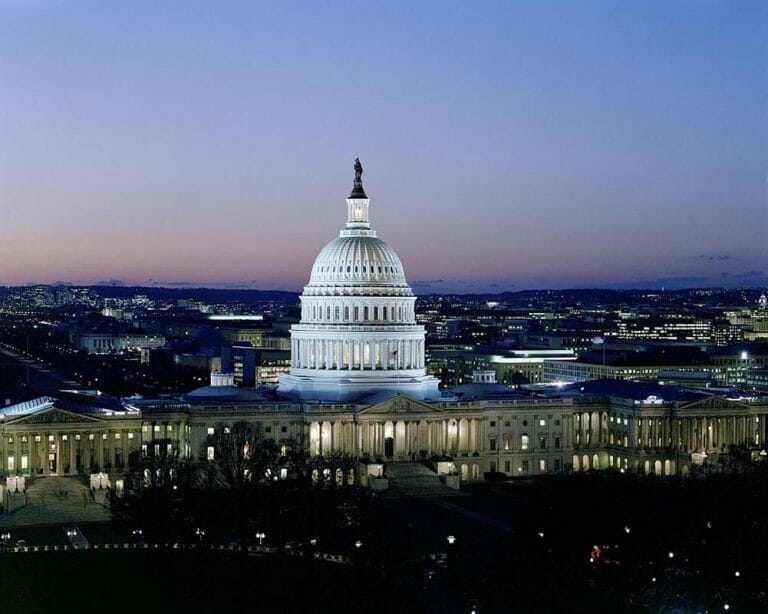
Wyoming Senator Cynthia Lummis filed a report supporting Coinbase’s motion to dismiss the SEC’s complaint, arguing that the SEC lacks authority. The brief contends that the SEC’s assertion that all crypto assets are securities exceeds its authority and contravenes the separation of powers. Lummis urges the court to reject the SEC’s interpretation of its authority and refer to Congress for proper crypto regulation.

Wyoming Senator Cynthia Lummis has pledged her support for the United States cryptocurrency exchange. Coinbase by filing an amicus curiae brief supporting its motion to dismiss the Securities and Exchange Commission (SEC) lawsuit.

“The SEC brings this enforcement action amidst debates in the halls of Congress and around the world about how crypto assets should be regulated. The Constitution empowers Congress, not the SEC, to legislate in an area of ​​such profound economic and political importance,” stated Lummis.

On August 11, Republican Representative Cynthia Lummis filed an amicus curiae brief with the United States District Court for the Southern District of New York.

Coinbase SEC Battle Continues

Amicus curiae is an individual or organization that is not a party to a legal case. However, they are allowed to help a court by offering information, experience, or knowledge that relates to the issues in the case.

Senator Lummis argued that Congress had not given the SEC any authority to regulate or classify crypto assets. “The SEC’s attempt to shoehorn a new asset class into the existing definition of ‘security,’ and thereby add it to the definition enumerated by Congress, exceeds the authority of the SEC, encroaches on the legislative power of the Congress and contravenes the separation of powers. The SEC cannot make laws through the executive branch,” argued Senator Lummis.

Additionally, the SEC’s position that crypto assets themselves are securities improperly broadens the legal definition of “security” beyond what Congress intended. Furthermore, the SEC claims that virtually all crypto assets are securities, as “It exceeds the authority of the SEC, invades Congressional legislation, and violates the separation of powers.”

The brief urges the court to reject the SEC’s novel interpretation of its authority and delegate to Congress the enactment of adequate crypto regulation.

On August 11, several cryptocurrency advocacy groups also filed amicus briefs supporting Coinbase. These included the Blockchain Association, the Crypto Council for Innovation and Progress Chamber, and the Consumer Technology Association.

The SEC sued Coinbase in early June for acting as an unregistered broker and selling unregistered securities. The firm filed a motion to dismiss the complaint on August 4. He argued that the SEC had violated due process and abused its discretion.

In an X (formerly Twitter) thread announcing the move, the Blockchain Association’s lead attorney, Marisa Tashman, echoed Lummis’s comments that “the SEC’s regulatory authority extends only to what Congress has given it.” has granted,” while highlighting the risks of the SEC’s approach to the industry:

Regulation

On August 11, Senator Lummis commented on PayPal’s recently announced stablecoin. He stated that it is “another sign that crypto assets are here to stay as part of the global financial system,” before adding the following:

“Now, Congress needs to secure America’s status as the unquestioned world leader in financial innovation by creating clear regulatory rules.”

Earlier this week, former acting comptroller of the currency Brian P. Brooks urged Congress to speed up the prioritization of stablecoin regulation.

In July, Senators Cynthia Lummis and Kirsten Gillibrand updated their cryptocurrency regulation bill in an effort to speed up the process.

By Audy Castaneda

Sam Bankman-Fried Will Go to Prison and Other Interesting News

0

This is information that investors should be aware of.

Staying informed and adapting to changes in this ever-evolving market is key to successful cryptocurrency investing. Below, the five most relevant news in the crypto world this week.

  • Sam Bankman-Fried is going to prison.
  • The Worldcoin (WLD) token loses value.
  • The fight between Elon Musk and Mark Zuckerberg has been confirmed.
  • Positions on cryptocurrencies among the main Argentine candidates before the primary elections.
  • Binance obtains a license to operate in El Salvador.

Sam Bankman-Fried Going to Prison

Federal Judge Lewis Kaplan revoked Sam Bankman-Fried’s bail, for witness tampering. Therefore, Bankman-Fried will remain in custody until his criminal trial, which begins on October 2.

Prosecutors had been pushing to have Bankman-Fried’s $250 million bail, which had kept him out of custody since his arraignment in December 2022, revoked.

Bankman-Fried is facing charges of stealing funds from FTX clients to cover losses at its Alameda Research hedge fund.

Worldcoin Token (WLD) Loses Value

The Worldcoin (WLD) token has depreciated in the past seven days due to investigations and bans by state regulators in several countries. The price fell from $2.30 to $1.73.

The project led by Sam Altman has generated controversy for its access to cryptocurrency and data security. Additionally, a security flaw that allowed attackers to become operators without legitimate credentials was reported, but has since been fixed. As a consequence, Worldcoin has taken steps to address the vulnerability.

Elon Musk vs. Mark Zuckerberg Fight Has Confirmed Venue

Elon Musk and Mark Zuckerberg have taken their social media rivalry to another level by agreeing to meet in a mixed martial arts fight.

The fight, which will take place at a location in Italy, will be managed by the foundations of both businessmen and broadcast on LiveStream and Meta. Musk said the event will be inspired by ancient Rome and all proceeds will go to Italian veterans and children’s hospitals.

Positions on Cryptocurrencies among the Main Argentine Candidates before the Primary Elections

On Sunday, August 13, Argentina begins the electoral path to elect the next president of the Nation. In the Mandatory Simultaneous Open Primary (PASO), the candidates will define who will compete in the October elections.

Leading up to PASO, the leading candidates have publicly shared their views on cryptocurrencies. Horacio Rodríguez Larreta, current head of Government of the City of Buenos Aires, expressed his belief in technology and the advancement of cryptocurrencies. Patricia Bullrich, former Minister of Security, highlighted the freedom offered by cryptocurrencies as a payment system and its usefulness in avoiding financial restrictions in Argentina.

Javier Milei, a national deputy, considers that Bitcoin is a natural reaction to the fraud of the central banks and represents the return of money to the private sector. Sergio Massa, Minister of Economy, sees the potential of cryptocurrencies in the process of modernization of the State. Juan Grabois, a social leader, suggests using cryptocurrencies to make payments in social programs and break the negative perception of their use.

Binance Granted License to Operate in El Salvador

On Tuesday, August 8, Binance received authorization from two El Salvadoran regulators to operate in the Central American country. The world’s largest exchange obtained a license as a Bitcoin Service Provider (BSP) granted by the Central Reserve Bank, and a non-provisional license as a Digital Asset Service Provider (DASP) granted by the National Digital Assets Commission.

By Audy Castaneda

Crypto Millionaires, Criminal’s New Target

0

Criminals see ostentatious cryptocurrency holders as easy targets and violent attacks have skyrocketed.

A far cry from the rocket-producing Internet memes and other videos that promise daring returns on investment, coming back to reality is sometimes difficult for some reckless investors who like to flaunt their wealth.

Macabre Assault: Millionaire Dismembered in a Suitcase

The case gave a lot to talk about. Millionaire investor Fernando Pérez Algaba was found dismembered in a suitcase. At least in part, his head was found in a backpack shortly after the discovery of his limbs in a suitcase.

Many commentators wanted to reassure themselves by mentioning the fact that the millionaire’s death certainly had more to do with his bad associations (particularly questionable creditors) than his cryptocurrency fortune. And this cannot be ruled out.

That said, the lifestyle of the Argentine, who liked to appear behind the wheel of beautiful cars and on social media, left little doubt about his financial situation. It is also quite possible that this display of wealth gave birth to envious people, jealous people, or vengeful ideas.

While the murder of Fernando Pérez is a particularly shocking case, it is not entirely an isolated matter.

Showing One’s Fortune, a Temptation to Avoid

It is worth recalling the statements made by Hasheur (Owen Simonin), the victim of an assault at his home last year, committed by one of his ‘followers’ on social networks who imagined that he could make Owen spit out some sorrel at gunpoint.

Although the story ended well, it led Hasheur to move on and take more precautions about sharing his personal information. It is obvious that his crazy success can lead to jealousy and temptations.

However, an Owen Simonin is very different from a Fernando Pérez Algaba, as while the latter liked to show off, Owen does not flaunt his success in the eyes of everyone by spending all day behind the wheel of luxury cars. However, as a successful business leader and businessman, he finds it hard to hide it.

Kidnapped by Ethers Lived through Hell

In 2017, a cryptocurrency holder goes to an appointment with one of his relatives. However, this relative knew that he had a significant amount of Ether in a non-custodial wallet at his home.

The perpetrators of the attack kidnapped the victim, forced him to transmit her telephone codes, and kindly gave him the keys to his house, all this at gunpoint, a splendid negotiating accelerator.

The kidnappers then went to the victim’s house to steal his wallet and transfer $1.8 million in Ethers to their own wallets.

The case went to the New York Supreme Court, which considered that the number of attacks related to the possession of digital assets will be closely linked to the increase in value of these same assets. In other words, the more one’s cryptos are worth, the more lust they attract.

London, Capital of Attacks Linked to Crypto

More recently, many people have noticed that physical attacks in London have increased dramatically against cryptocurrency holders. And this while knife attacks have reached a new record in the London capital in 2022.

The police and gendarmerie, as well as specialized investigative groups, are increasingly looking for profiles of Blockchain experts who can help them track down criminals.

The cases presented here should encourage you to be very careful with the people to whom your mention your own investments. Apparently, to live happily, you have to live hidden.

By Audy Castaneda

Binance Japan Trusts Liquid for KYC Verification Despite Privacy Concerns

0

Binance is set to re-enter Japan on August 14, partnering with Liquid, an authentication service, to comply with Japan’s KYC regulations. Liquid’s eKYC service, chosen for its identity document imaging and recognition technologies, will enable Binance to carry out detailed identity verification processes. Despite being a critical protocol for preventing cryptocurrency-related crime, the collection of biometric data has faced scrutiny over privacy concerns.

As Binance prepares to re-enter the Japanese market on August 14, it has revealed its partnership with Liquid, a biometric data authentication service. This collaboration aims to meet the regulatory requirements set forth in Japan to operate a cryptocurrency exchange.

According to regulations, cryptocurrency exchanges must adhere to strict know-your-customer (KYC) procedures. This involves implementing detailed identity verification processes and conducting customer due diligence to prevent money laundering.

Japan’s Tight Regulations: The Key Catalyst

Hiroki Hasegawa, CEO of Liquid, explained in the Aug. 10 statement that the eKYC service provides “superior facial recognition and identity document image recognition technologies.”

The statement highlights the adaptability of the service to different regulatory demands between nations, which is significant in the cryptocurrency sector:

“LIQUID eKYC offers top-notch facial authentication through its unique AI-based image processing capability, enabling seamless identity verification in accordance with the respective legal and security framework in each country.”

On May 28, Binance announced that it would discontinue its support for Japanese users on the global platform before November 30. This gives Japanese users time to undertake the KYC process and migrate to the compliant Binance Japan platform.

Takeshi Chino, General Manager of Binance Japan, stated the importance of the platform adhering to Japan’s strict regulatory requirements on KYC, in the following terms:

“We are excited to launch our platform in Japan in a way that is fully compatible with the strict and comprehensive eKYC solutions enabled by Liquid. Binance will continue to maintain a high level of security and compliance in Japan.”

Despite the strict regulations in place, the Prime Minister of Japan, Fumio Kishida, recently revealed that he has high hopes for the web3 industry during a conference:

“I hope that the Web3 industry will regain its focus and vitality and that various new projects will emerge,” Kishida said.

Privacy Concerns with Biometric Technology

KYC serves as a crucial protocol to prevent crypto-related criminal activities. However, the insistence on the collection of biometric data has recently come under scrutiny.

Worldcoin, the cryptocurrency project founded by OpenAI CEO Sam Altman, has come under fire for its use of iris scanning technology.

To register, users must scan their iris in exchange for free Worldcoin tokens and a unique digital identification, called a World ID. This process is implemented to ensure that users are verified as humans and register only once.

However, questions have been raised about privacy concerns and ethical considerations. Basically, Worldcoin is giving people money in order to get access to sensitive data. Rich people can choose to do it or not. Meanwhile, it has proven more attractive to people in third-world countries, including Sudan, Indonesia, and Kenya.

Kenyan authorities reportedly raided Worldcoin’s warehouse in Nairobi on August 2 and seized machines believed to contain stored data.

By Leonardo Pérez

Sam Bankman-Fried Sent to Jail: A Case of Witness Tampering

0

Sam Bankman-Fried, founder of FTX, is sent to jail for alleged witness tampering, in a case that continues to unfold.

Sam Bankman-Fried, the founder of FTX, was sent to jail Friday after a judge granted federal prosecutors’ request to revoke his bond for alleged witness tampering. Bankman-Fried was taken directly into custody from a hearing in New York and is expected to remain in prison until his criminal trial, scheduled for October 2.

SFB, 31, was arrested in December 2022 and is accused by the US Justice of seven counts that include fraud and money laundering for, among other things, allegedly diverting billions of dollars from customers of FTX for other purposes and to be able to lead a life of luxury.

Accusations and Case Details

Judge Lewis Kaplan denied Bankman-Fried’s request for delayed detention pending appeal. During his ruling, Judge Kaplan stated that there was probable cause to believe that the defendant attempted to tamper with witnesses on at least two occasions. The prosecution requested that Bankman-Fried be sent to a jail in Putnam, New York, where he would have access to a laptop with Internet access to prepare his defense.

Judge Kaplan presided over a hearing regarding the conditions of SBF’s bail after prosecutors argued that the disgraced businessman was following a “pattern of witness tampering”, and sided with them that his conduct constituted probable cause, according to CNN.

According to the judicial file of the case, to which EFE had access, the defendant’s bail was “revoked” and he was sent to “pretrial detention”, and according to the journalists present in the room, he left handcuffed to be admitted to the Brooklyn Metropolitan Detention Center (New York).

Judge Kaplan had previously imposed a “gag order” on SBF but on Friday said it was not enough to prevent him from leaking information about the case and noted that SBF has attempted witness tampering on at least two occasions, the outlet added.

Reactions and Concerns

Bankman-Fried’s arrest has drawn objections from members of the press and defense attorneys, citing free speech concerns. The defense argued that Bankman-Fried was exercising his First Amendment right and did not violate his bail conditions by speaking to reporters.

Background and Development of the Case

Since his arrest in December, Bankman-Fried had been out on $250 million bail, on the condition that he stay at his parents’ home in Palo Alto, California. The prosecution alleges that Bankman-Fried sent more than 100 emails to the media and made more than 1,000 phone calls to members of the press.

The latest incident, according to prosecutors, was the leaking of private diary entries from his ex-girlfriend, Caroline Ellison, to the New York Times. Ellison, also a former CEO of Bankman-Fried’s failed crypto hedge fund Alameda Research, pleaded guilty to federal charges in December 2022 and has been cooperating with the government.

In short, the case against Bankman-Fried, who faces various securities fraud and wire fraud charges related to FTX’s alleged multi-billion-dollar fraud, continues to unfold. The witness tampering charge has led to his arrest, and the trial is scheduled to begin in October. The story is still in development, and more updates are expected in the coming days.

The rise and fall of the very young millionaire, who made his fortune in the dazzling world of cryptocurrencies, is one of the most spectacular and exemplary cases experienced in recent years in the world of finance.

By Audy Castaneda