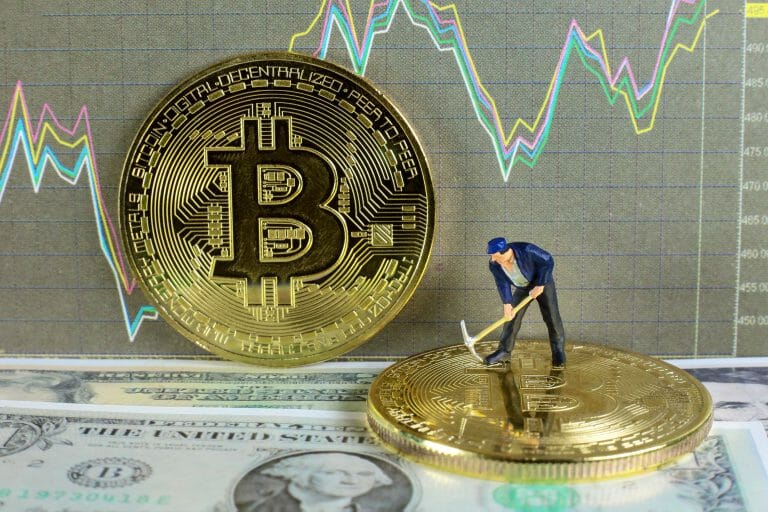
Bitcoin Mining: Only 65 Countries are Profitable to Extract 1 BTC Solo

0

Bitcoin mining’s accessible nature has changed as the network has grown in use and adoption.

CoinGecko, one of the most referenced cryptocurrency price monitoring platforms in the crypto industry, has released a new report on the profitability of Bitcoin mining based on energy costs.

The report, titled Household Electricity Costs to Mine 1 Bitcoin at Home, Around the World, looks at how profitable it is for solo miners to mine 1 BTC today.

Although most of the Bitcoin miners that exist in the network have chosen to join a group or mining pool, there are still those who do it alone from their homes.

The platform pointed out that, in addition to the investment in ASIC hardware, the cost of electricity represents the largest expense for solo miners, which affects the profitability of this activity according to the part of the world where they have their operations.

How Much It Costs to Extract 1 Bitcoin

The cost of mining 1 Bitcoin varies depending on the price of electricity in different regions. According to the report, European countries are the least profitable for solo bitcoin mining. By contrast, Asian countries offer the best profitability due to low energy costs.

CoinGecko noted that Lebanon, located on the coast of Asia, is the most profitable country to mine 1 BTC. Energy costs in Lebanon allow miners to generate 1 BTC for just $266 in energy, offering a high level of profitability.

However, while Lebanon offers a high level of profitability for solo Bitcoin miners, the average cost of energy for miners in Asia is $20,635.62 per BTC, the platform noted.

According to the platform’s analysts, in general, the average cost of household electricity needed to extract 1 BTC from the network is $46,291.24, 35% higher than the current market price of the cryptocurrency. Thus, the Asian region has the lowest average energy cost for solo Bitcoin miners.

Only 65 Countries are Profitable to Mine Bitcoin

Globally, only 65 countries are profitable to solo mine Bitcoin. Asia stands out as the region with the largest number of profitable countries for mining, with a total of 34 countries, including Lebanon, Iran, Syria, Ethiopia, Sudan, Libya, Kyrgyzstan, Angola, Zimbabwe and Bhutan.

In second place is Africa, a region with a promising future for the cryptocurrency industry, which has a total of 18 countries where it is profitable to extract bitcoins with domestic energy.

On the other hand, the American continent, mainly Latin America and the Caribbean, offers great opportunities for solo miners, hosting a total of 8 countries with a high level of profitability for mining.

Finally, in Europe there are 5 countries where CoinGecko determined that it is profitable to extract bitcoins from the network using the home network.

Some countries have completely banned crypto mining, trading and use. These restrictions, predominantly in Africa and Asia, not only impact the viability of mining, but also reflect a diverse attitude towards cryptocurrencies internationally.

Another Solo Miner Takes Bitcoin Block Reward

Recently, a new solo Bitcoin miner managed to mine a block on the blockchain network with only 1 PH/s hash rate on the network, taking with him the Bitcoin block reward of 6.25 BTC, currently valued at about $160,000 dollars.

In the report, CoinGecko highlights that solo miners, with such a small hash power, could solve a block on the blockchain once every 7 years on average, with the level of difficulty that the Bitcoin network possesses today, of 52.39 trillion.

By Audy Castaneda

Growing Demand for AI: Governments Invest in a Stable Supply of GPUs

0

Governments are securing graphics processing units (GPUs) for AI development; UK and Saudi Arabia investing heavily. Saudi Arabia and the United Arab Emirates have purchased thousands of Nvidia’s H100 chips for AI research and innovation, despite the high cost of $40,000 per chip. The UK government has committed £100m to order components from Nvidia, AMD and Intel to improve the country’s AI capability.

Governments around the world are struggling to secure the supply of graphics processing units (GPUs) needed for AI development and processing.

With the most sought-after chips in short supply, countries like the UK and Saudi Arabia are spending significant financial and diplomatic resources to secure enough GPUs for their domestic AI sectors.

Investors have pointed to Nvidia as one of the potential big winners in AI, following the viral success of the ChatGPT chatbot and other popular tools. The company’s chips excel at parallel processing, making them well-suited for training software by bombarding it with data.

Middle Eastern Governments Spend Big on Nvidia Chips

According to a report this week in the Financial Times, Saudi Arabia has bought at least 3,000 Nvidia H100 chips for King Abdullah University of Science and Technology with the intention of building a new supercomputer. The report indicates that the UAE has also invested in thousands of Nvidia chips through state-owned companies.

In those countries, governments are investing heavily to help advance AI research and foster innovation. And they need to. At $40,000 each, the H100s don’t come cheap. But they have become almost essential in the world of advanced AI development.

Few technology companies have the resources to train large AI models like OpenAI’s GPT-4. Due to their high processing power, expensive Nvidia chips are highly prized for these kinds of tasks. The GPU maker has become a key player in the contemporary rise of AI. Yet even so, OpenAI’s supercomputer contains 10,000 A100s, a predecessor of the H100.

UK AI Sector to Boost GPU Supply

In a bid to boost the UK’s AI capacity, it was reported on Sunday 20 August that Prime Minister Rishi Sunak has committed £100m of public money to order key components from Nvidia, AMD and Intel. The report notes that the government is also in advanced stages of obtaining GPUs from Nvidia.

However, in the long term, the challenge of maintaining a technological advantage is much more complex and dynamic. For countries like the UK, stockpiling GPUs is only a temporary solution to current challenges.

National Manufacturing Capacity Creation

Part of the reason graphics cards are so expensive is that the entire GPU supply chain is constrained by the manufacturing capacity of chipmakers in Taiwan. Commenting on the tensions between Taiwan and China, the Nvidia CEO said he feels “perfectly safe” in being so reliant on supplies of chip power.

Governments around the world, though, have flagged the problem as a national security concern. And many see bolstering their domestic manufacturing capacity as key to maintaining a secure supply of chips.

The UK government, for example, has published a national semiconductor strategy. Over the next 10 years, the plan calls for a billion-pound investment in the country’s chipmaking sector.

However, that number is dwarfed by subsidies in the EU and the United States, which have committed $52bn and £43m respectively to support semiconductor manufacturing.

By Audy Castaneda

Roblox Faces Lawsuit for Allowing Underage Gambling

0

The popular metaverse platform, Roblox, is facing a high-profile lawsuit for allegedly promoting gambling among children and adolescents.

The popular immersive gaming platform, Roblox, is facing a lawsuit in the United States for allegedly promoting gambling among children and adolescents. As reported by Bloomberg Law, some parents proceeded to sue after learning that their child lost money in a bet on the platform.

The lawsuit against the company was filed this Tuesday in the Northern District of California court, according to the aforementioned media. Particularly the minor would have lost money with Roblox’s native token, Robux, on a third-party gambling platform within that metaverse.

The parents’ lawsuit implies that allowing this activity violates the Corrupt and Influenced Organizations Act. In this way, they accuse the platform of profiting from the illegal betting of children and minors in general, something explicitly prohibited. This opens a fundamental chapter in the role of the metaverse in the world of access to betting.

Lawsuit Becomes Litmus Test for Roblox

This lawsuit that Roblox is now facing will allow to clarify several elements related to the bets by the metaverses. In this sense, a precedent could be created to curb the participation of third parties in immersive platforms.

“Children, who previously could not access funds to participate in online gambling, now collectively have billions of Robux at their disposal,” said the parents of the underage victim of the platform.

This episode adds to the ongoing accusations against Roblox that it is hurting efforts to create a safe internet for children. Last May, a group of lawsuits confirmed that the company violates responsible advertising laws directed at children. Last year it also received a lawsuit from the Truth in Advertising group in Federal Trade Court.

The basis of the lawsuit is that the token of the platform, Robux, has monetary value. In fact, at the time of writing, its value is $0.008777 per unit, according to data from CoinMarketCap. In any case, those under the age of 18 can use their parents’ cards to buy tokens on the platform and Roblox knows their every move, the complaint says.

Platform Could Wash Its Hands

Roblox expressly prohibits betting and gambling in its terms and conditions. According to these, “experiences that include simulated play, including playing with virtual chips, simulated gambling, or the exchange of real money, Robux, or valuables” are prohibited.

However, the plaintiffs claim that all this is called into question, considering that they allow gambling by third parties. Aside from allowing third parties to introduce gambling, it also allows its token to be used to carry out such illegal activity, the plaintiffs say.

The representative commented that “bad actors make illegal use of Roblox’s intellectual property and trademark to operate such sites in violation of our standards.” At this point, the permissibility of the company and the filters for third parties that promote illegal activities become important.

Be that as it may, the lawsuit that Roblox is facing is not the first and surely it has elements to get out legally. However, in terms of reputation, each negative episode weighs on the company.

With all this, it can be said that the issue of metaverses and the participation of minors in a safe environment is one of the issues that will go directly to the offices of regulators in the not too distant future.

By Leonardo Pérez

Announced Dollar’s End Worries Donald Trump

0

The dollar dominance may be coming to an end.

According to several experts, the US currency does not have much more time. Hegemonic for a long time in the world money market, the dollar would be doomed to certain death.

Many American politicians make fun of the thing if they don’t buy it. However, former President Donald Trump takes this perspective very seriously and gives warning.

De-dollarization, A Serious Threat According to Donald Trump

The announced end of the US dollar is not new information in itself. The news has been making headlines in the media and experts for several months. Some of the American specialists who have spoken on the subject are very skeptical as to its relevance.

Donald Trump, the former president of the United States, does not subscribe to this logic of skepticism. The former leader takes the threat very seriously. Speaking recently on the subject, the billionaire rang the bell on this risk, trivialized by current leaders.

For him, seeing the US dollar being outperformed by another currency would be a blow to the US economy. The United States could lose all the power that characterizes it just because of this evolution that redraws global geopolitics.

This, he emphasizes, is likely to happen in light of events surrounding the BRICS countries. And the efforts they provide are cause for concern when not a source of reflection.

“We should be concerned,” he said, “about seeing certain countries liquidate their oil supplies in a currency other than the dollar. Countries like France and Russia are doing the same. A bit as if oil had suddenly become the weapon that will destroy the US economy.”

Oil, The Secret Weapon to Destroy the US Dollar?

In any case, according to Donald Trump, this is what the propensity of these states to pay for their oil supplies in yuan suggests. It is a dynamic that could gain momentum as the geopolitical landscape changes.

It is precisely this worrying mutation that seems to be occurring. Recently, in fact, there was news about the desire of Saudi Arabia, like 40 other countries, to join the BRICS. Several of its countries enjoy the income from oil exploitation. He pointed to BRICS’s aggressive moves towards de-dollarization as a chief concern.

For Donald Trump, this development is likely to ring alarm bells for American politicians as the integration of Saudi Arabia into the BRICS countries would be a monumental blow to the US economy.

Such a prospect means that a substantial part of oil sales could pass under the noses of the Americans, especially if up to 90% of gross sales are away from the US dollar. Such projection could have important consequences for the United States.

Donald Trump is not the first politician to speak of the announced end of the dollar. Hillary Clinton had also given in to the same exercise and had shouted conspiracy against the United States.

In April, @TheDailyHodl posted on X that, according to US Treasury Secretary Janet Yellen, the American currency dominance is at risk as China, Russia and Iran conspire to Dump Dollar. For her, there is no doubt. If the dollar isn’t dead yet, it certainly already is.

By Audy Castaneda

$1 Billion Crypto Market Reset: Breaking Bitcoin Price Consolidation Ahead of September Market?

Market sentiment for September following the sell-off is explored through the lens of on-chain data and historical sentiment trends.

In August 2023, the crypto market experienced significant fluctuations in its volatility. Over the last 48 hours, the market witnessed a massive $1 billion sell-off, triggered by a series of bearish events.

The question arose: could this move signal the end of the protracted period of consolidation that had persisted for the past two months? Is it the new beginning of a bull market in the coming months and what factors contributed to the recent stabilization of the market?

Additionally, does the influx of buyers looking to capitalize on the market downturn indicate a possible uptrend in the coming months? Or is there a more bearish rally waiting for the market? This research dives into market sentiment for September following the sell-off.

Analyzing the $1 Billion Settlement

On Thursday, August 17, the crypto market experienced a severe downturn during the closing hours of the US trading session following news of Bitcoin being sold by SpaceX, Evergrande’s bankruptcy filing, and interest rate fears.

Both Bitcoin and Ethereum reached their lowest values ​​at approximately $25,100 and $1,550, respectively. As a result, the global market capitalization fell below the $1 trillion mark, hitting a low of approximately $996.9 billion.

However, a slight rally was seen shortly after the possibility of the Ethereum ETF being greenlit by the SEC. Currently, total market liquidation has exceeded $67 million while short positions are largely being liquidated, indicating that sellers are dumping their holdings.

Since August 17, the total liquidation exceeded $1.1 billion and affected about 200,000 merchants.

Stabilization in Bitcoin and Crypto Market: On Chain Sentiment

Netflow: After a market sell-off, Bitcoin Netflow dropped from 3,992 to -3,847. The Exchange Netflow is calculated as the difference between the inflow and outflow of BTC on the exchanges. A negative net flow currently implies a sell-off period for the Bitcoin price.

NUPL Ratio: Bitcoin’s NUPL (Net Unrealized Gains and Losses) ratio decreased from 0.29 to 0.22 after the BTC price will fall below the $28,700 region. However, when there is a trend of declining values, it means that more people who own coins are experiencing losses. This situation also suggests that there is less motivation to sell these coins at a loss, reducing the overall pressure to sell.

Some traders actually hold on to their Bitcoin despite its falling price. Among a small group of traders, there seems to be a feeling of holding on to their assets. They may be using a strategy called Dollar Cost Averaging (DCA) to take advantage of a possible future increase in value.

Long-Term SOPR Headline: Interestingly, the long-term SOPR headline was stable above the 1 level despite the recent market decline. This suggests that long-term (>155 days) holders are still selling at a profit.

Long-term holders are often called “strong hands” because they have weathered various market fluctuations and are more likely to hold through price declines. Their willingness to sell at a profit rather than panic sell during a crash demonstrates their faith in Bitcoin’s long-term potential. This can help stabilize the market during difficult times.

Traders should do their own research before making any financial decisions, as the market is currently extremely volatile.

By Audy Castaneda

Sentenced to 9 Months in Prison for Buying Cryptocurrencies and Other News of Interest

Below is a summary of the most relevant crypto news of the week.

The crypto world does not rest. Here is a brief review of the top crypto news of the week:

  • Sentenced to 9 months in prison for buying cryptocurrencies.
  • Ripple and Mastercard partner up.
  • Bitso says present in Latin America.
  • Argentina: Banco Galicia has closed an agreement with Agrotoken.
  • Fintech Crecy launches its crypto credit card in Mexico.

Sentenced to 9 Months in Prison for Buying Cryptocurrencies

A Chinese national was sentenced to 9 months in jail and fined $689 after purchasing $13,067 worth of USDT.

The citizen was contacted by another person, who transferred 99,609 yuan to him. He then moved the money to his Alipay and WeChat accounts and bought USDT from there. These stablecoins were returned to the person who financed it, thus receiving a commission of 147 yuan, only $20 for the operation.

However, the sentence is given for “concealment crime” by the Fuzhou Mawei People’s Prosecutor’s Office, accusing the subject as a facilitator of “asset laundering”.

Partnership between Ripple and Mastercard

Ripple has been chosen by Mastercard to join efforts. According to Mastercard, the alliance is being convened to help achieve a greater understanding of the benefits and limitations of CBDCs and how to implement them in a safe, seamless and useful way.

In particular, seven companies dedicated to technology are part of the inaugural group. Among them is Ripple, which will make its new CBDC platform available.

Bitso’s Presence in Latin America

“This is an important step towards our mission of making crypto useful, and it places Latin America at the forefront of cryptocurrency-based financial services.”

Next, Bitso launches a Blockchain-based “International Payments” service to boost cross-border transactions and promote economic development.

According to the statement, international payments move an annual volume close to $200 billion. This figure is equivalent to 27% of global transaction revenue, with an increase of 6% per year.

Argentina: Banco Galicia Has Closed an Agreement with Agrotoken

Agrotoken, the first global tokenization infrastructure, reached a collaboration agreement with Banco Galicia to use agrotokens as backup to grant more beneficial credits to agricultural products in Argentina.

In this case, Agrotoken seeks to tokenize agricultural products, which allows farmers and ranchers to represent and market their products more efficiently. This means that farmers and ranchers will be able to use their agrotokens as collateral to obtain loans with favorable conditions, such as lower interest rates or more flexible payment terms.

Fintech Crecy Launches its Crypto Credit Card in Mexico

Crecy, the financial technology company, announced the launch of the Mastercard credit card, backed by Ethereum. Through the Crecy card, users can spend in Mexican pesos without having to sell their tokens, with the option to finance their purchases for up to 12 months. The Crecy credit card offers a series of characteristics that distinguish it from other cards on the market. For example, the absence of annual fees.

The Crecy card offers a wide utility, since it can be used in more than 90 million establishments around the world that accept Mastercard. Another significant advantage is its average annual interest rate (APR), which the company claims is three times lower than traditional credit cards.

By Audy Castaneda