Senator Cynthia Lummis Urges Binance and Tether to be Investigated for Possible Illicit Activities

0

Senator Lummis calls for a thorough examination of Binance and Tether for alleged illicit financial activities, highlighting concerns in cryptocurrencies. The allegations against Binance include facilitating the financing of terrorism, prompting calls for action from US and Israeli authorities. Cryptocurrency advocates like Nick Neuman emphasize self-custody to avoid potential risks associated with exchanges like Binance.

Gray areas in regulatory frameworks around cryptocurrencies often open doors to illicit activities. This concern has caused Senator Cynthia “Crypto Queen” Lummis to act, expressing her concern about the role of cryptocurrencies in illicit finance, and emphasizing that the problem lies with bad actors and not the technology itself.

On October 26, the senator posted the following on X:

“When it comes to illicit finance, crypto is not the enemy – bad actors are. I sent a letter asking DOJ to finish its investigation and consider criminal charges against Binance and Tether after reports they served as intermediaries for Hamas and engaged in illicit activities.”

Differentiating between Cryptocurrencies and Bad Actors

Senator Lummis, known for her pro-crypto stance, has highlighted the importance of differentiating between cryptocurrencies and individuals or entities that use them for illicit purposes. In her letter, Lummis points to reports suggesting that Binance and Tether could have served as intermediaries for Hamas, in addition to engaging in other illicit activities.

Lummis has been a vocal proponent of cryptocurrencies in the United States Senate, arguing that blockchain technology and cryptocurrencies have the potential to revolutionize the financial system. However, she has also emphasized the need for clear and fair regulation that enables innovation while protecting consumers and maintaining the integrity of the financial system.

The senator has called on the Department of Justice to act quickly to conclude its investigation into Binance and Tether. She argues that it is crucial to address any illicit activity related to cryptocurrencies to protect consumers and preserve trust in the crypto ecosystem.

US Department of Justice Must File Charges Against Binance

Recent reports suggest that unregulated cryptoasset brokers, particularly Binance, have facilitated significant illicit financial activities. More importantly, support terrorist financing for Hamas during the recent attacks on Israel.

This is not the first time Binance has faced such accusations. Reports have historically highlighted links between Binance and illicit activities, attracting the attention of authorities and regulators. On October 16, 2023, Israeli law enforcement took action by closing over 100 Binance accounts associated with Hamas. Additionally, a May 2023 report revealed that Israeli law enforcement seized more than 190 Binance accounts linked to Islamic terrorism between 2021 and 2023:

“The fact that Binance allowed Hamas and other terrorist groups to open accounts and conduct business, even after reporting the issue, clearly shows that Binance could be providing material support to entities involved in terrorism under federal law.”

The senator’s letter highlights the importance of responsible innovation in the United States financial markets, driven by crypto assets and distributed ledger technology. However, when a handful of bad actors use these platforms for nefarious purposes, it tarnishes the reputation of the entire crypto industry.

Lummis continues to be a key figure in the debate over cryptocurrency regulation in the United States. Her recent action highlights its commitment to a balanced approach that seeks to eradicate illicit activities while encouraging innovation in the crypto space.

The crypto community will be attentive to how this situation develops and what the impact will be on Binance, Tether and the crypto ecosystem in general.

By Leonardo Pérez

CBDCs Struggle to Gain Ground Without Private Sector Cooperation

0

CBDCs, fundamentally designed to coexist with private sector financial services, face obstacles in encouraging their adoption.

The global push for central bank digital currencies (CBDCs) faces a compelling challenge: the need for private sector collaboration to ensure their widespread acceptance, Nikkei Asia reported on October 26.

According to the report, CBDCs have emerged as a potential alternative to fiat currencies and other digital currencies to increase financial inclusion and improve the efficiency of the global monetary system.

However, its success appears closely tied to strategic partnerships with existing private payment systems, a lesson learned from the experiences of China and Cambodia.

Slow Adoption

China’s ambitious launch of the digital yuan attracted considerable attention. However, despite extensive testing in 26 areas in 17 provinces by the end of 2022, the currency’s usefulness remains limited.

According to the report, most people choose to convert their digital yuan into traditional currency for daily transactions due to the lack of integration with retailers and payment systems. The adoption rate is further slowed by the absence of interest accrual and investment opportunities, making CBDCs less attractive to the average consumer.

Despite the government’s push, the digital yuan only accounted for 0.1% of the total yuan supply (approximately $1.86 billion) as of December 2022. The slow adoption rate is mainly attributed to competition from private sector digital payment systems such as Alipay and WeChat Pay, which are deeply embedded in the daily lives of Chinese citizens.

Chinese authorities have taken significant steps to integrate the digital yuan with platforms such as Alipay and WeChat Pay. Meanwhile, Nigeria’s eNaira, introduced in 2021, has also struggled to gain traction among the population.

CBDCs lack the promotional benefits that commercial banks offer. Therefore, collaboration with the private sector emerges as the key to success.

Cambodia’s Success Story

Cambodia offers an instructive case study. The country introduced Bakong, one of the first CBDCs, in October 2020. Initially, it faced similar challenges to the digital yuan, with platforms rooted in the private sector based on QR codes.

However, the landscape changed dramatically with the introduction of KHQR, a standardized QR code payment system that facilitates the integration of CBDC with current private sector payment platforms.

Consequently, the number of Bakong users increased to 8.5 million by the end of 2022, and 1.5 million merchants accepted the digital currency. CBDC is expected to reach a penetration rate of 60% to 70% in the near future.

President Kazumasa Miyazawa of global technology company Soramitsu, co-developer of Bakong, said Bakong’s growth trajectory has shown that private sector cooperation is critical to driving CBDC adoption. The public will only want to use CBDCs when they offer the same level of convenience and benefits as the private payment systems currently operating.

Global Interest

A recent survey by the Bank for International Settlements reveals that more than 90% of the 86 central banks surveyed are actively involved in CBDC-related work, underscoring the global interest in these digital currencies.

While challenges remain, experts emphasize that issuing a CBDC is just the initial step. It is imperative to have a comprehensive framework for the evolution of CBDCs over five to ten years.

The experiences of China’s digital yuan and Cambodia’s Bakong highlight the importance of balancing public and private initiatives to catalyze the adoption and utility of CBDCs in today’s changing financial landscape.

By Audy Castaneda

Bitcoin ETF: Five LIES to Correct Immediately

This is an in-depth study created to clear the field of falsehoods that have also been spread by publications of certain prestige.

It was Bitcoin Spot ETF week, although nothing actually happened. In a phase that continues to be one of low volumes (and little interest) for the $BTC world, the commitment of companies like BlackRock not only keeps the price afloat, but also helps to recover some interest in the sector.

X user @Criptovaluta.it, a major Italian journal based on Milan, has shared a series of podcasts that deconstruct five lies in regards to Bitcoin ETF, which are described below.

BlackRock WILL NOT Buy Bitcoin

ETFs don’t work like that. The companies that manage these products identify what APIs are called authorized participants. These can buy Bitcoin and deposit it in exchange for ETF shares. And vice versa, they can deposit shares and receive Bitcoin in return. BlackRock does not carry out these transactions, nor has it started buying Bitcoin yet.

If this rumor were to be true, however, BlackRock could influence most powerful companies’ decisions worldwide, from Apple to Walmart, including Coca-Cola, McDonald’s or Disney. This is possible because Blackrock is the largest fund manager in the world and offers many index funds to the S&P 500, which makes it a shareholder in all the companies that are part of the index, and gives it the right to vote on their boards of directors.

Shopping Has Not Started Yet

Blackrock’s updated presentation indicates the start of sowing in October, although it can still be modified. However, this is an operation that requires the payment of dollars waiting for the ETF to start. Therefore, it is very unlikely that those involved are hoarding bitcoins. Whoever says this does not have any type of proof or evidence.

The Bifurcation Clause

Within the ETF presentation there is a clause on forks, where BlackRock indicates the behavior that it will adopt in the event of a new Bitcoin fork. This clause does not indicate that BlackRock will fork Bitcoin, but rather the ways in which it will decide, in the event of a fork, which asset will continue to be considered $BTC by the fund.

The methods are based on decisions that will be shared by the majority of users, miners and nodes. And therefore, there is no conspiracy. Anyone who claims otherwise has not understood what is written, or pretends not to understand it to fraudulently take a few clicks home.

KYC

There are those who talk about this operation as a huge maneuver to manufacture as much Bitcoin as possible… KYC. That is, associating an identity with the ownership of certain Bitcoins.

The issue is a little more complex: between ETFs and Bitcoin ownership there is an additional layer, which is the ETF itself. Those who hold some shares of the ETF will not have direct ownership of the Bitcoins representing those shares.

BlackRock May Decide Bitcoin Future

This is in case the ETF actually accumulates large amounts of Bitcoin. This is also a lie. To understand how certain things work, even without going into the details of the decision-making process for internal changes in Bitcoin, it is just a matter of looking at Grayscale’s Bitcoin Trust, which has more than 600,000 Bitcoins in cash, a huge amount that BlackRock will probably never be able to accumulate in its ETF.

By Leonardo Pérez

Why Did Max Keizer and Stacy Herbert Seek to Become Citizens of El Salvador?

Bitcoin maximalist Max Keizer and Stacy Herbert could be a few steps away from fully obtaining Salvadoran nationality. Max Keiser, also host of the show “Keiser Report”, has praised the natural beauty of El Salvador. Keizer and Herbert are known for their role in favor of bitcoinization in El Salvador, as well as for their support of various pro-BTC initiatives.

A recent post by Bitcoin maximalist Max Keizer could suggest that he and Stacy Herbert would be just a few steps away from fully obtaining Salvadoran nationality.

Max Keizer and Stacy Herbert are known for their role in favor of bitcoinization in El Salvador. As well as for their support of various initiatives in favor of BTC, especially those of the El Zonte Community.

Yesterday, October 25, Keiser made reference through shared a video that captured the moment when Max Keizer and Stacy Herbert delivered the necessary documentation to begin the process of obtaining their Salvadoran citizenship. Regarding the latter, it is worth remembering that the Salvadoran president promised to give citizenship to anyone who invests in El Salvador, especially Bitcoin investors.

During their visit, Max and Stacy expressed their excitement about joining the community of Salvadorans. Also sharing his vision of making El Salvador a model to follow for other nations. Max Keizer, in particular, showed his excitement at becoming a citizen of what he called the “first Bitcoin nation.” The news that Keizer and Herbert will join the Salvadoran nation generated great excitement both in El Salvador and in the Bitcoiners’ global community.

The interest in El Salvador as a leader in Bitcoin adoption reflects President Bukele’s vision of making the country a benchmark in the implementation of Bitcoin at the national level. El Salvador’s historic decision to accept Bitcoin as legal tender in September 2021 marked a significant milestone in implementing BTC as an economic policy instrument for the first time in history.

Max and Stacy’s Role in the Volcano Bonds and El Salvador Bitcoin Office

 Max Keiser, in fact, has been a key advocate in promoting the idea of ​​encouraging domestic investment through the issuance of Bitcoin bonds. This idea became evident just a month later, on November 20, 2021. At that time, the Salvadoran president, Nayib Bukele, announced the creation of Volcano Bonds based on Bitcoin. Bonds that will be financed through the exclusive development project for investors known as “Bitcoin City”.

Stacy Herbert, for her part, is recognized for her participation in the direction of the Bitcoin Office. Even so, she has stated that she does not receive any compensation for her collaboration in this initiative. Stacy has further emphasized that her involvement is based on the best of intentions. Expressing that he fulfills his role as part of his support for President Nayib Bukele: “I am carrying out this in support of President Bukele.”

Max and Stacy Seek to Set an Example for Bitcoin Enthusiasts Around the World

Max Keizer and Stacy Herbert’s decision to apply for Salvadoran citizenship illustrates how Bitcoin adoption can influence personal decisions. In this case, in the election of citizens.

It is clear that El Salvador seeks to continue advancing on its path to becoming a leading nation in the world in relation to Bitcoin adoption. In the process, more international individuals and investors may show interest in joining this financial revolution. This also shows that, despite the obstacles, El Salvador continues to be a benchmark in Bitcoin adoption in Central America.

By Audy Castaneda

Due to Technical Problems, Cryptocurrency Withdrawals Are Temporarily Suspended on Binance, And Other News

Binance is facing a technical challenge that has forced it to temporarily suspend cryptocurrency withdrawals on the exchange.

Binance, the world’s largest cryptocurrency exchange, has announced that it is currently facing a “technical issue” that has led to the temporary suspension of cryptocurrency withdrawals. However, the platform confirmed that fiat currency withdrawals, i.e., cash, are available and working as normal.

Initial news of the technical issue was announced by Binance via its X account, where the platform stated the following:

“We are experiencing a technical issue with crypto withdrawals. As a result, they are temporarily unavailable whilst our team works on the fix. Fiat withdrawals are available and working. All funds are SAFU. We apologize for the inconvenience and will update on progress.”

This news generated some uncertainty among users of the platform and the market in general, since Binance is one of the most used exchanges globally. The temporary suspension of cryptocurrency withdrawals led to speculation about the nature of the technical issue, as well as its possible impact on users’ assets.

Crypto Adoption in Nigeria Soars Amid Currency Crisis

A great example of how blockchain technology can make a difference in times of monetary crisis. With the volatility of the Naira and its constant depreciation, both individuals and companies are seeking refuge in USDT from Tether and other cryptocurrencies, Asolo highlighted.

In this context, Binance, one of the leading global cryptocurrency exchange platforms, has played a crucial role in the adoption of cryptocurrencies in Nigeria. The company has provided an efficient avenue for Nigerians to access a variety of cryptocurrencies, including USDT, and facilitate conversion between Naira and cryptos.

The Chainalysis report also highlights that the use of cryptocurrencies in Nigeria is not just limited to digital asset trading, but they are also being used to make everyday payments. This shows the growing confidence in the stability of stablecoins and the need for alternative financial solutions amid the currency crisis.

Nansen Reports Major Asset Transfers from FTX to Binance

Blockchain analysis firm Nansen has revealed a series of asset movements from FTX assets to a Binance address, which has generated interest and speculation in the crypto community.

According to on-chain data, the transfers include assets worth a total of $8.6 million, comprised of $2.2 million in Chainlink (LINK), $1 million in Aave (AAVE), $2 million in dollars in Maker (MKR), and $3.4 million in Ether (ETH). These assets originated from addresses previously associated with the FTX exchange and former sister company Alameda Research.

By tracing the transfers it was revealed that the funds were initially moved to an address identified as 0xde9, and were subsequently redirected to another address, 0xEae, which has been speculated to belong to Binance. Nansen clarified, though, that its analysis is limited to the chain and cannot track movements outside of it.

Maestrobots Refunds Users After 280 Ether Attack on Telegram

The cryptocurrency bot group known as Maestrobots, which operates on Telegram, has taken action by refunding users affected by an attack that resulted in the loss of 280 Ether (ETH).

The announcement was made on October 25 through the official Maestrobots social media account on X. According to the publication, the team decided to use their own funds to compensate for the losses of users affected by the Maestro Router 2 contract incident. In total, 610 ETH was disbursed. Such gesture of generosity highlights the importance of the crypto community in self-regulation and mutual assistance in times of crisis.

By Leonardo Pérez

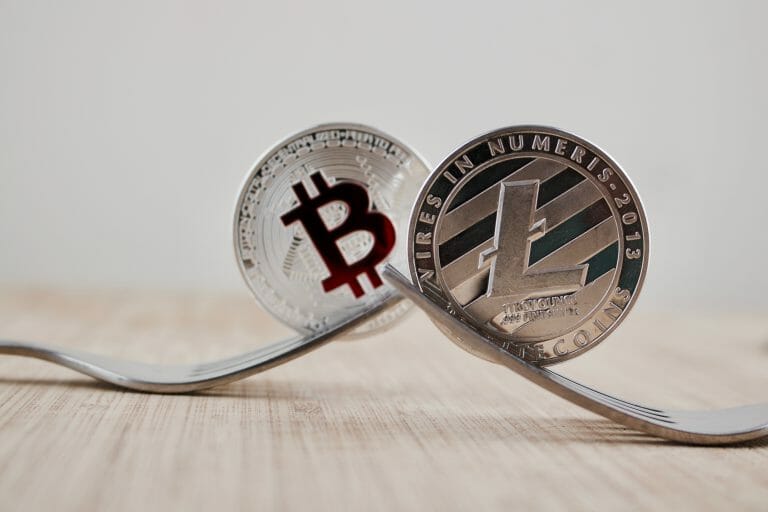
Bitcoin ($BTC) Prepares for Changes; Whale Enthusiasm for Litecoin ($LTC) and InQubeta ($QUBE)

InQubeta ($QUBE) and Litecoin ($LTC), have developed due to the intense whale participation in the trade.

The cryptocurrency market is no stranger to volatility, and Bitcoin ($BTC) is bracing for big price swings. Meanwhile, two big projects, InQubeta ($QUBE) and Litecoin ($LTC), are seeing huge interest.

InQubeta’s native coin, $QUBE, is currently in high demand. This situation is evident from the result of the ongoing pre-sale. The rapid transition of its price from the initial beta level to stage 4 of its pre-sale establishes it as a top DeFi project poised for high growth. This achievement has industry experts speculating that its value will increase even further when the product is officially launched.

Bitcoin ($BTC): Analyst Warns of Price Correction as Head and Shoulders Pattern Emerges.

Bitcoin, the leading cryptocurrency with the largest market capitalization, could see a price adjustment if a potential pattern is confirmed on its daily chart. Speed ​​and low cost in transactions are synonymous with $BTC. Ali, the cryptocurrency analyst, has spotted the formation of a possible head and shoulders pattern on the $BTC daily chart.

According to Ali, prices may decline until the daily candles close above $31,560. In case of correction, the $BTC price could drop to around $29,500 or even as low as $28,630. Many investors are now rushing to invest in other promising projects because of this event.

Litecoin ($LTC): Whales Make Noticeable Deposits, Influencing the Market

A substantial amount of Litecoin has recently been deposited on exchanges by major holders, often called “Litecoin whales.” Over the past few weeks, there have been a total of four notable transactions. The largest of them involved the transfer of 500,000 $LTC while the other three transactions were, interestingly, of the same size, moving 78,760 $LTC each.

These were carried out by large whales as they involved huge amounts of $LTC. These whales typically exert significant influence on the market as their wallets contain substantial amounts of cryptocurrency.

InQubeta ($QUBE): Revolutionizing the Crypto Space

InQubeta is a top DeFi project with a platform that allows users to invest in the future of artificial intelligence (AI) technology. The InQubeta platform is packed with various investment options including fractional investments, non-fungible token (NFT) staking, and a community-driven ecosystem.

InQubeta helps investment in AI startups by using fractional NFTs. This method differentiates $QUBE from similar development initiatives where opportunities are only for the rich. The $QUBE pre-sale consists of ten stages, and the value of the tokens increases in each of them. $QUBE is a deflationary token, making it a top ICO token because it can retain its value over time. The token has a 2% tax on all purchases and sales on the platform, which then goes to a burned wallet.

As Whales’ interest in InQubeta increases, this project has been in high demand. More than 414 million tokens have already been sold. Stage 4 of its pre-sale is valued at $0.0133 per $QUBE.

Like Bitcoin, given the market uncertainty, InQubeta and Litecoin are presented as options, attracting the whales’ interest. InQubeta allows members to stake their tokens and earn additional income. Its pre-sale comes with a discount on the DeFi coin Price. Before making any investment decisions, though, it is best to conduct research and compile as much data as possible.

By Audy Castaneda