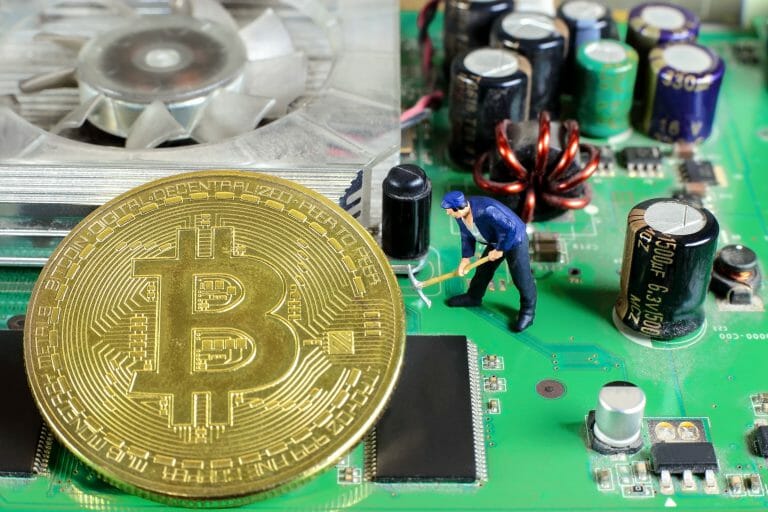
This Week’s Bitcoin Mining Highlights

A new week closes for the hectic world of cryptocurrencies with violent price movements from BTC downwards.

This coming week will be the last of the third halving era, which is particularly important. In a few days the expected halving will be carried out in the network of the largest virtual currency. This is a momentous event that marks the reorganization of the mining business for the next four years.

Experts Worry About Chinese Influence in US Digital Mining

Since 2021, Bitcoin mining activity has been formally banned in China. Since then, a large part of the companies that operated in that country moved to the United States. Now, within the North American country, concerns are increasing due to this fact. The permissibility of the US authorities with respect to these companies can be considered surprising.

In any case, government attempts to put pressure on the mining business are constant. However, national miners have considerable strength to prevent the industry from being strictly regulated.

Bitfarms Reaches Computing Power of 7 EH/s

One of the largest Bitcoin mining companies, Bitfarms, remains in the club of those most committed to improving its prospects. For the leadership of this group, the halving is presented as a great challenge, but at the same time as an opportunity. The pressure generated by this 50% cut in income forces firms to expand.

Consequently, for Bitfarms this became a real commitment. A few hours before the fourth halving takes place, the Argentine firm makes the connections of the new batches of equipment it receives. This week, the company announced the connection of some 5,000 new pieces of equipment in two mining centers in Canada.

With these new additions of mining machines, the firm’s hash power reaches 7 EH/s.

CleanSpark Will Increase Capacity with New ASIC Fleet

CleanSpark is another of the Bitcoin mining firms that continues working even a few hours before the halving. According to specialized media publications this week, the company has exercised a purchase option for 100,000 S21 Pro mining equipment from the Chinese manufacturer Bitmain.

With this, the company’s computing power would increase sharply this year 2024. This Friday, the firm confirmed that the new range of its hash power is 17 EH/s. Added to this is the fact that in January they announced the purchase of 60 thousand new equipment and had the option of 100 thousand additional machines.

The last batch is already a closed deal, according to the aforementioned media. Thus, the company would consolidate this year as one of the most important in this industry. Furthermore, it is emerging as one of the safe and profitable survivors of this fourth edition of the halving.

Core Scientific CEO Talks About Halving

Core Scientific seems ready to face the fourth halving. Its CEO, Adam Sullivan, expressed some of his views a few days after the cut. In a recent interview, Sullivan highlighted the challenges and opportunities that the halving represents.

He stressed that this new edition has particularities that make it very different from previous editions. Among them, he highlighted the important role that BTC spot ETFs represent in the stock market. Likewise, he spoke of a different geolocation of operations.

When the most recent halving occurred, mining was concentrated in China and now it is much more decentralized, he noted. This company went bankrupt in December 2022 in the worst part of the winter. However, with the improvement of the market it managed to pay off its debts and return.

By Audy Castaneda

“MiCA Will Change the Cryptocurrency Market as We Know It”: Gracy Chen

New rules to regulate the cryptocurrency industry will come into effect this year. MiCA will change the rules of work in the cryptocurrency market. Does regulation do more good than harm?

The new MiCA rules (a bill on regulation of the cryptoasset market) will come into force very soon, on December 30, 2024. Many experts believe that this law will have a profound impact on the entire industry and potentially become the standard for the global regulation of cryptocurrencies.

Some exchanges have already started preparing for the upcoming changes. In this sense, media outlet set out to find out how they are preparing for the adoption of MiCA on one of the main trading platforms: Bitget. For this, its CEO, Gracy Chen, was contacted.

Changes in the European Crypto Landscape According to Chen

The CEO of Bitget shared her predictions for the future of cryptocurrency trading and the adoption of innovations in the EU in the context of the adoption of the MiCA rules. She highlighted several main points:

Legitimation and stability. By introducing clear rules, the EU can provide a legal framework for cryptocurrency transactions, attracting more conservative institutions and retail investors who were previously put off by the lack of clear rules. The market may become more stable and less volatile.

Stimuli for innovation. Regulatory measures can provide the conditions for innovation to develop within a clearly defined legal framework. Companies can feel more confident investing resources in developing new technologies and services, potentially positioning Europe as a global hub for blockchain and cryptocurrency innovation.

Greater consumer protection. These regulations include measures to protect consumers from deception, fraud and market manipulation. This will increase confidence in the cryptocurrency market, encouraging more people to participate and invest.

Effects of MiCA on the Operation of Crypto Platforms

Speaking about how crypto service providers will have to “survive,” Gracy Chen noted that more trading platforms will have to comply with strict regulations and requirements. This medal has two sides:

“Firstly, it could raise barriers to entry and make things difficult for platforms that do not meet regulatory requirements or cannot cover compliance costs. Secondly, it could contribute to market consolidation, causing smaller or non-compliant platforms to exit the market, resulting in fewer markets and services available.”

At the same time, these requirements can attract more traditional financial institutions and investors to participate in the cryptocurrency market, the Bitget director noted.

“Because licensed platforms must meet strict standards, investors may be more willing to trade on these platforms as they will have confidence that these platforms can provide a safe, transparent and legal trading environment.”

Future of Stablecoins

Regarding the upcoming restrictions on these assets in the European Economic Area. Chen mentioned several possible scenarios:

Decrease in market liquidity. Liquidity in the cryptocurrency market may decrease, making it difficult for traders to buy and sell quickly, especially in less liquid markets.

Search for alternatives. Traders can turn to alternative assets for liquidity and coverage. These could be other unrestricted stablecoins, as well as cryptocurrencies that provide similar benefits.

Adjustment of market trading strategies. If traders can no longer use certain stablecoins as a hedge, they may have to adjust their trading strategies. This may include using different financial instruments or adopting different risk management approaches.

Chen noted that, in general, EU policy is favorable to cryptocurrency traders and platforms. She believes that the adoption of MiCA brings more new opportunities than potential challenges.

By Leonardo Perez

Coinbase Launches Interlocutory Appeal in SEC Case – Details

Coinbase is seeking an interlocutory appeal in its ongoing court case before the US Securities and Exchange Commission (SEC). This petition marks the latest development in a highly monitored lawsuit dating back to June 2023.

In a motion filed on April 12, the US exchange seeks constitutional clarification of a specific “controlling question of law” as it fights the Commission’s accusations of operating as an “unregistered stock exchange, broker and clearing agency.”

Overall, Coinbase appears to be implementing another strategy to undermine the SEC’s petition after the court denied the exchange’s motion to dismiss the charges in question.

Coinbase, which ranks as the largest crypto exchange in the United States with 73 million users, has expressed its opinion on the need for a clear crypto regulatory framework while harshly criticizing the SEC’s continued crackdown on the digital asset industry.

Coinbase Presents Arguments for Interlocutory Appeal

Typically, judicial appeals are heard after a trial or a final decision by a lower court, but in the case of interlocutory appeals, certain issues or rulings are appealed before the conclusion of the entire case. In SEC v. Coinbase, the defendants seek a review of the meaning of an investment contract in terms of crypto transactions.

Coinbase has stated that this petition verifies all legal requirements for an interlocutory appeal. First, the exchange claims that there is a “overriding question of law,” which establishes whether an investment contract can be formed on the basis of transactions without post-sale obligations.

Additionally, Coinbase highlights aspects of “substantial grounds for differences of opinion” regarding this issue, especially regarding the application of the Howey test to cryptocurrency transactions.

Finally, the American stock exchange claims that the review of this issue could potentially neutralize the main accusations of the SEC in the judicial process between both parties, hence the need for this appeal.

Thereafter, the court will review this interlocutory appeal petition and, once certified, present the control right issue to an appellate court for appropriate resolution or guidance.

Vital Appeal for US Crypto Industry – Coinbase CLO

Commenting on Coinbase’s latest petition, the exchange’s chief legal officer, Paul Grewal, stated that the interlocutory appeal motion is important for the crypto industry, especially amid the SEC’s “unfair” enforcement actions due to the lack of a legal regulatory framework. Grewal said the following:

“We request to address this appeal earlier than normal because it is critical to our industry. The SEC’s action against us and other digital asset companies goes far beyond the legal authority given by Congress and unfairly shadows innovation in US digital assets.”

Grewal explained in an April 12 post on X that the “controversial question” revolves around whether an investment contract requires “something contractual.”

“Whether an ‘investment contract’ can exist without any post-sale obligations is a pure and contentious question of law,” the exchange states in the court document.

Grewal highlighted the early filing of Coinbase’s appeal request, filed just 17 days after the dismissal request was denied. However, he justified the action due to its importance to the broader cryptocurrency industry, with the goal of resolving the dispute over cryptocurrency transactions as soon as possible.

The crypto lawyer also expressed his confidence in the sustainability and growth of digital assets while reiterating Coinbase’s commitment to clear operational rules and regulations for the US crypto industry.

By Audy Castaneda

Spot Bitcoin ETF: HashKey Prepares Infrastructure Ahead of Hong Kong Approval

Ahead of the expected approval, mainland China-based stock funds are exploring opportunities in the Bitcoin exchange-traded fund market through their subsidiaries in Hong Kong.

As Hong Kong gradually becomes a cryptocurrency hub and anticipation grows over the possible approval of spot Bitcoin exchange-traded funds (ETFs), a licensed cryptocurrency exchange in the region, HashKey says it has implemented the best infrastructure and product features to support these new asset classes.

Barring last-minute changes, the Hong Kong Securities and Futures Commission (SFC) will make the decision to greenlight Bitcoin ETFs in the region on Monday next week, with product listing expected to take other two weeks.

Can ETFs Trigger Bitcoin Bullish Rally After Halving?

The approval of the first spot Bitcoin ETFs in Hong Kong could catalyze Bitcoin’s post-halving rally, according to Herbert Sim, COO of cryptocurrency exchange Websea, who also noted that Hong Kong-based ETFs will only add to the institutional demand and flows created by large US ETF issuers like BlackRock, which he expects to continue.

Large investors, or so-called mega whales, who own at least 10,000 BTC are accumulating Bitcoin at the current price, in anticipation of next week’s approval, according to popular cryptocurrency commentator Bitcoin Munger in an April 12 post.

Development and Integration of HashKey infrastructure

In an interview with The Block, Livio Weng, CEO of HashKey Exchange, stated that HashKey has completed the development of operating models for spot Bitcoin ETFs in collaboration with fund issuers ahead of the approval date.

Figures show that HashKey’s own custody business has been in stable operation for more than a year with assets in custody exceeding HK$2.2 billion ($280.7 million). HashKey is positioned to provide essential infrastructure support, including trading, custody, and securities administration and settlement (SSA) services, for these ETFs.

Although the specific asset managers collaborating with HashKey were not revealed, reports suggest that at least four asset managers, both from mainland China and Hong Kong, have filed applications with the intention of launching Bitcoin spot ETFs. Sources familiar with the matter indicate that Hong Kong regulators are speeding up the approval process for these products and could potentially grant approval next week.

Unlike mainland China’s strict regulations on cryptocurrency trading and mining, Hong Kong has adopted a more welcoming stance towards cryptocurrency companies. In June 2023, the region initiated a licensing regime for crypto trading platforms, licensing two platforms, HashKey and OSL, to offer retail trading services.

The Hong Kong SFC has been very busy with approval applications lately. Last month, it licensed cryptocurrency exchange HKbitEX for regulated activities.

Bitcoin ETF Spot Market Expansion in Hong Kong

Speaking about the future of cryptocurrencies, Weng expressed optimism that if the challenges related to on-chain betting can be addressed, the launch of Ethereum spot ETFs has huge potential for the region. He believes that Ethereum ETFs, as yield-producing assets, can attract significant interest from large institutional investors, potentially surpassing the appeal of spot Bitcoin ETFs.

Meanwhile, ahead of the expected approval, mainland China-based stock funds are exploring opportunities in the Bitcoin exchange-traded fund market through their subsidiaries in Hong Kong. This is due to strict regulations on cryptocurrency trading and mining in mainland China.

Market watchers say that as Hong Kong positions itself as a hub for cryptocurrency innovation and investment, the potential approval of Bitcoin spot ETFs represents an important milestone, indicating growing institutional interest and regulatory acceptance of digital assets in the region.

By Leonardo Perez

SpotOnChain Reveals the Impact of the Halving on the Bitcoin Price

Bitcoin halving events cause significant price increases, and their effects usually manifest between 6 and 12 months after the halving. Institutional interest and coverage can influence market behavior and investor sentiment around halving events. Although Bitcoin’s halving may increase its long-term stability, changes and economic conditions in general will influence its volatility.

The Bitcoin halving is a critical event in the cryptocurrency market, in which the issuance rate of new BTC supply is halved. This reduction is expected to increase shortages and potentially drive up the price, especially if demand remains constant or increases.

The upcoming Bitcoin halving has sparked great interest and speculation, with many experts predicting a substantial price increase.

How the Next Halving Will Affect Bitcoin Prices

Historically, Bitcoin has experienced significant price increases following halving events, although not immediately. Hannah Phung, data analyst at SpotOnChain, told a media outlet that price increases tend to occur around 6 to 12 months after the halving.

Following the first halving in November 2012, the price rose from around $12 to over $1,000 by the end of 2013. Similarly, with the second halving in July 2016, the price of Bitcoin skyrocketed from around $650. to almost $20,000 in December 2017.

The third halving, in May 2020, saw the price rise from around $8,000 to an all-time high of $69,000 in November 2021. Phung emphasized the following:

“In theory, reducing supply increases scarcity and consequently drives up the price, especially if demand remains stable or increases. Furthermore, the reduction in supply also means that miners have less BTC to sell to cover their costs, decreasing selling pressure.”

The cryptocurrency market has evolved significantly since these previous halving events. With wider adoption and growing institutional interest. Indeed, demand for Bitcoin exchange-traded funds (ETFs) may introduce additional complexity to price dynamics, as well as potential easing of monetary policy.

For these reasons, some analysts predict that the price of Bitcoin could rise as high as $200,000 or $500,000. However, the exact timing and scale are still unclear. Phung added the following:

“While past trends offer some perspective, the cryptocurrency market is unpredictable. There is no guarantee that the next halving will follow the exact pattern of the previous ones. The Bitcoin market is much larger and more consolidated than in previous halvings. Still, I am very optimistic about a price increase after the halving, but the exact timing and magnitude remain uncertain.”

Institutional Impact of the Bitcoin Halving

Although a surge in buying due to fear of missing out could be short-lived, growing institutional participation suggests a focus on long-term holding that could lead to a more mature market with lasting impact. This narrative surrounding the halving may encourage institutions to view reduced supply as a positive factor for long-term price appreciation.

However, institutions are likely to approach investing in Bitcoin with sound risk management strategies. They can weigh the potential benefits against the inherent volatility of the asset:

“Although Bitcoin offers the potential for high returns, it also carries higher risk compared to most traditional assets. Therefore, investors should carefully evaluate these trends and correlations when integrating Bitcoin into their investment portfolios.”

As a long-term store of value, similar to gold, Bitcoin’s limited supply and decentralization appeal to investors seeking a hedge against inflation. Integration with traditional financial systems has further legitimized Bitcoin.

Given these market conditions, the upcoming Bitcoin halving could lead to greater price stability. That, in the long term due to the reduction in supply.

By Audy Castaneda

Bitcoin Halving: A Tale of Two Emotions: Will FOMO or FUD Rule the Market?

As the countdown to the much-anticipated 2024 bitcoin halving event nears its climax, the cryptocurrency world finds itself in the midst of a whirlwind of excitement and speculation.

Social media platforms have become a hotbed of discussions surrounding the imminent halving, according to data from Santiment.

Such increase in social media conversations indicates a potential for significant price movements in the volatile cryptocurrency market, causing both FOMO (Fear of Missing Out) and FUD (Fear, Uncertainty, Doubt) among investors.

FUD can manifest itself in a variety of ways, such as false news about government regulations, security issues on an exchange platform, or unfounded criticism about the technological viability of a particular cryptocurrency.

FOMO can lead investors to make impulsive decisions, such as purchasing the asset at an inflated price, hoping not to miss the opportunity to make profits.

Rise of Social Media Fuels Speculation About Bitcoin’s Fate

While some analysts believe the intense discussions could signal a potential price rally, others remain cautious, pointing to recent flat market conditions that may cushion the impact of the event.

On April 12, Santiment took on platform X to state the following:

“As Bitcoin has now drawn to its final week before the halving, social dominance toward the topic has peaked at its highest level of the year at 9pm UTC. The spikes in this topic should be received as high confidence price reversals for crypto markets. Markets have been mostly quite flat, which means this spike won’t be a major difference maker.

But if you see $BTC teasing all-time high levels in the next few days, you should interpret high mentions of the halving as a FOMO sign, and likely temporary top. Alternatively, if prices start dropping back toward $67K and you see a spike in halving discussion, this is a sign of FUD, giving you the opportunity to buy with confidence.”

Unique Dynamics Surrounding Bitcoin’s 2024 Halving

This upcoming halving event carries a unique set of circumstances that differentiate it from its predecessors. Bitcoin’s current trading position above its previous cycle high adds an element of unpredictability to the equation, making it difficult to forecast the duration and intensity of the impending bull run.

Experts weigh in on the confluence of reduced supply and rising demand for ETFs as potential catalysts taking Bitcoin into uncharted territory.

Antoni Trenchev, co-founder of Nexo, highlights the importance of understanding the demand dynamics in the market, particularly with respect to whale demand for BTC, which involves veteran Bitcoiners, newcomers, and ETF holders.

Analyst predicts ‘realistic’ five-fold rise to $3 Trenchev suggests this surge in demand could magnify the impact of the impending supply shock, paving the way for a shorter but more intense bull market.

Expert Perspectives: Optimism vs. Caution

While some experts remain cautiously optimistic about the potential outcomes of the halving event, others caution against overestimating its impact. Steven Lubka, head of private clients at Swan Bitcoin, emphasizes the importance of maintaining a level-headed approach amid the frenzy surrounding the halving. Lubka suggests that while the event may cause short-term price fluctuations, its long-term effects are likely to be more moderate.

As the countdown to the bitcoin halving event reaches its crescendo, the crypto community finds itself grappling with a mix of hope and caution. While some anticipate significant changes in the market landscape, others are preparing for a more moderate response.

By Leonardo Perez