LG CNS Launches Blockchain Platform – Monachain

     LG CNS, is a subsidiary of LG Corporation that supplies information technology services. Recently, LG CNS launched its own blockchain-powered platform “Monachain”, aimed at taking a stake in the lucrative, blockchain-logistics business sector related to finance, telecommunication and manufacturing.

As reported by the local Yonhap News Agency, on May 13 LG CNS’s blockchain platform, named after “La Gioconda” or “The Mona Lisa”, Leonardo Da Vinci’s famous oil painting, can be used for digital authentication, digital currency and digital supply chain management. It is also designed to enable blockchain-based finance, logistics, manufacturing and communication.

Monachain also allows users to create their own digital wallet and use various other financial services. According to the report, LG CNS is seeking an agreement with domestic banks in order to create a digital community currency business, and appeal to a wider audience.

According to a LG CNS representative:

“Even further, Monachain can help business owners boost productivity as the company provides a digital supply chain management system that enables suppliers to manage the entire production processing efficiently.”

Monachain provides a digital certification service that uses a decentralized identifier (DID), a new type of identifier intended to verify identity digitally. This will allow users to easily identify themselves, transfer money or pay online with their smart device, according to the company.

Blockchain applications for system integration suppliers has boomed in the recent years, with a series of partnerships formed among the world’s most recognizable leaders in this sector. LG CNS has partnered with R3, the world’s largest finance sector blockchain consortium in May 2017. The firm also earned a membership in the Open Blockchain Industry Association (OBCIA) last month, and will take part in “Hyperledger” in the first half of this year. Hyperledger is a project that aims to become a platform across the financial, banking, internet of things, supply chain, manufacturing and technology industries.


by Samuel Larreal
Huawei Launches Official Bitcoin Wallet

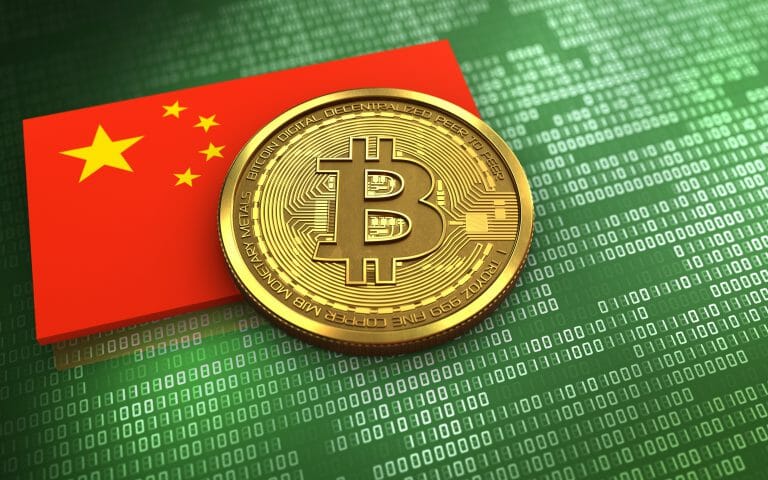
     Today, Huawei, the multinational networking, telecommunications equipment, and services company, made available for its costumers its official Bitcoin wallet. In collaboration with BTC.com, Huawei launched in its store the first mobile app focused on cryptocurrency.

This is a surprising move after China recently cracked down on speculative trading in the cryptocurrency market. Beijing banned initial coin offerings (ICOs) last year, and has closed down domestic Bitcoin exchanges. Even so, the Shenzhen-based Chinese smartphone maker seems to be pretty comfortable with the new addition to their app store.

“BTC’s Bitcoin wallet application was reviewed by AppGallery, and was approved for official release in multiple countries and regions, not including Mainland China,”

a Huawei spokesman said in a statement.

“From our leadership position in China, the tip of the spear of mobile payments, we expect to see massive growth in global cryptocurrency adoption habits in the near future… Cryptocurrencies have recently expanded the human understanding of digital economy at a large scale,”

said Jaime Gonzalo, Vice President of Huawei Mobile Services, in a statement Friday.

The AppGallery will be pre-installed on all new Huawei and Honor phones, and will be rolled out to older devices in the coming months.


by Samuel Larreal

Oracle to Launch a New Blockchain Platform

The blockchain industry is growing. Every day, more and more technology providers are joining the growing list of software and hardware businesses working with encryption technology services. Companies like Amazon Web Services, IBM, Microsoft or BlockApps, a Microsoft affiliate, and now, the most recent to integrate to the industry, Oracle, are changing the way fintech market works.

Yesterday Thomas Kurian, the President of Product Development at Oracle, announced Oracle’s new blockchain platform service that will be officially unveiled by the end of May.

Oracle, in coalition with Banco de Chile, will allow users to log inter-bank transactions on a hyperledger by using this platform. Oracle also plans to solicit pharmaceutical companies with a need for tracking and tracing batches of medicine, as a way to alleviate the burdens of products recalls. According to Kurian, this platform is currently in the processes of working with the Nigerian government in efforts to document customs and import duties on the blockchain.

This growing addition to mainstream companies in the blockchain industry, means a big victory for the blockchain community. The resources of these businesses can help the technology to make new boundaries and help its benefit the common user, and equally to the industry behemoths.


by Samuel Larreal

Dubai Blockchain Business Registry

     Dubai stands among the world’s largest hubs for cryptocurrecy trading, and is one of the biggest supporters of blockchain development. Due to the fast growth of the market in the city-state, the local government has laid the foundation for Dubai to be the world’s first blockchain technology based city by 2020.

One of the decisive measures taken for accomplishing this enormous task, happened this Tuesday when the city’s Department of Economic Development (DED) launched the Dubai Blockchain Business Registry, a project that aims to simplify registration process for blockchain-based businesses. This project, developed by the DED, in collaboration with Smart Dubai and IBM, is scheduled to launch its first pilot in the Dubai Silicon Oasis, a government-incentivized technology park. The pilot aims to enable the sharing of license information over the blockchain.

“The project will act as the core technology powering Dubai’s Unified Commercial Registry, to store and update company registration by the Department of Economic Development, as well as the free zone authorities in Dubai”

added the DED in its official announcement. This blockchain implementation project, along with “over 20 more use cases with several entities across the city”, according to Smart Dubai director-general Dr. Aisha Bin Blshr, is a sign of the efficient work of the city in order to embrace blockchain as a tool to optimize operations in the city.

“Having 100% of all applicable Dubai government transactions run on blockchain is the first pillar of the Dubai blockchain strategy, and ongoing collaboration with government and private sector entities is crucial to our success,”

exclaimed Dr. Aisha Bin Blshr.


by Samuel Larreal

Mining in Outer Space – Miner One CEO

     “We think mining will, of course, eventually reach outer space”, said Miner One’s CEO, after launching a mining rig into the stratosphere. Last Monday, Miner One, an emerging, cryptocurrency mining company, launched the Space Miner One into the stratosphere, where it mined and confirmed transactions for the first time at the record-braking height of 100,000 feet from the planet´s surface. Connected to internet via satellite phone and attached to a weather balloon the Space Miner One rig floated through the lower atmosphere, fitted with a Raspberry Pi 3, an ASIC mining chip, a non-lithium battery, a GoPro Hero 5 and a metal souvenir coin.

According to Pranas Slušnys Miner One CEO,

“The goal of Space Miner One is to symbolically express our belief that bitcoin and cryptocurrency in general is about the future and the revolutionary technology at its heart, so-called blockchain technology. And with this new technology, the sky’s the limit.”

The Mining One project, is currently raising capital in order to establish a mining facility in northern Sweden, where climate and energetic conditions are ideal to generate better guarantees to the investors, aided by new equipment and highly competent personal.

In an interview Slušnys assured that this symbolic launch represented a possible future, that he firmly believes in.

“We think mining and the technology it is based on will, of course, eventually reach outer space. In a sense, it already has to the extent that communications channels carrying information around the bitcoin network use satellites. We even hear word that NASA is researching the possibility of using blockchain technology for communication and navigation in space.”


by Samuel Larreal

Cryptocurrency a Safe Haven Asset – South Korean Wealth Management Platform

Jeong Ki-wook, founding member of TrustVerse, a major South Korean wealth management firm and former Cisco executive said in an interview with the tech-news outlet, ZDNet Korea, that he firmly believes that, with the right improvements, cryptocurrency assets, like Bitcoin and Ethereum, could become a safe haven assets in the not so distant future.

The executive also said that the current market is a volatile, and even sometimes hostile, place for some of the big investors and traders, but with the right usage of cutting-edge technology and innovative solutions, there is a significant possibility of minimizing the risk in investment in the crypto-environment.

Jeong assured that cryptocurrency has enormous potential as a safe haven asset, due to the increasing stability in the market, led by the growing adoption from merchants, highly-influential businesses, and individual users. Although cryptocurrency remains a high risk, high return asset class, the proper focus of technologies like AI are necessary to create systems like the one described by Mr. Jeong which allows investors to

“autonomously detect risk and alter the portfolio of cryptocurrencies and tokens based on the state of the market”.

Start-ups, and projects that use the advantages of AI for predicting the risk of the market and ensure investment have emerged over the years, like the Decentralized Autonomous Organization (DAO), one of the first ICOs on the Ethereum platform. Or the Ethereum-based Numerai, another not so well-known project using artificial intelligence, and data science to create a decentralized hedge fund. Sadly, the broad public has remained uninterested in this kind of systems.


by Samuel Larreal