
Huge Potential For Blockchain In The Markets – BBVA

     Executive Board Member and Head of Economics and Public Affairs at BBVA, Jose Manuel Gonzalez-Paramo, considers the potential of blockchain as an underlying technology, which will help improve the efficiency of capital markets.

During his speech at the annual meeting of the International Capital Markets
Association (ICMA) sponsored by BBVA, which took place in Madrid, the executive urged that capital markets, including the banking sector, to take advantage of the benefits that technologies like blockchain can bring.

“Innovation and digitalization offer an unprecedented opportunity for capital
markets to increase their efficiency, improve their security and offered greater
value to their customers,”

exclaimed Gonzalez-Paramo. He furthermore explained that blockchain technology can improve the efficiency of the procedures in the Stock Exchange, or in securities operations, where, commonly, a large number of applications and intermediaries intervene. It could also boost the speed of payments and increase the security of these transactions.

Gonzalez-Paramo referred to the benefits of automated advice, through “Robo-Advisors”, which could generate economies of scale and reduce costs in these types of services, as well as trading algorithms, another innovation that has helped to process information in high frequency negotiations.

The BBVA executive has shown optimism about sustainable financial progress in Europe.

“Public and private initiatives have accelerated awareness of the financial risks associated with climate and the need for sustainable financing,”

he said. Likewise, Gonzalez-Paramo has insisted that financing the transition to a sustainable and low-carbon economy, exploring new ‘green’ alternatives, as well as facing digital disruption, are the major challenges currently faced by capital markets.


by Samuel Paz

Audited Blockchain Checkpoint Patent – IBM

On May 31st, the technology behemoth, IBM, was awarded two patents for a system that verifies the integrity of a blockchain. IBM is calling this system audit-able “checkpoints.”

The main goal of these checkpoints is to allow businesses to satisfy regulations for data verification and retention when connecting to the network. IBM has heavily focused on blockchain products and services for enterprise-level businesses. The company is a noteworthy innovator in this field, especially in relation to scaling, auditing, and supply chain management.

The first of the two patents, explains how a “checkpoint” works and its anatomy. According to IBM ,the requirement is that all peers/nodes that perform validation achieve consensus about the validity of the blockchain at the time of the snapshot.

“Before a checkpoint is certified, it must be consistent, meaning that all validating peers must reach the same state (value) for the checkpoint. Preferably, the checkpoint is a compression of the current blockchain world state into a compact representation (e.g., a hash value) of the ledger that is consistent across the (validating) peers.”

The second patent, explains how the checkpoints can be audited.

“As the checkpoint has been certified, there is a new process that IBM has patented for then auditing that checkpoint. Businesses can then refer back to a certified checkpoint and reconcile data from the blockchain.” “To have a certifiably-auditable blockchain, an auditor should be able to rerun the transactions between checkpoints and then compare the value of the latter checkpoint with the value recorded in the ledger. The first step in this auditing process is to double check the hashes of all the blocks in the chain. To be thorough, the signatures on all transactions should be checked, although the hashes on all blocks ought to be sufficient.”


by Samuel Larreal

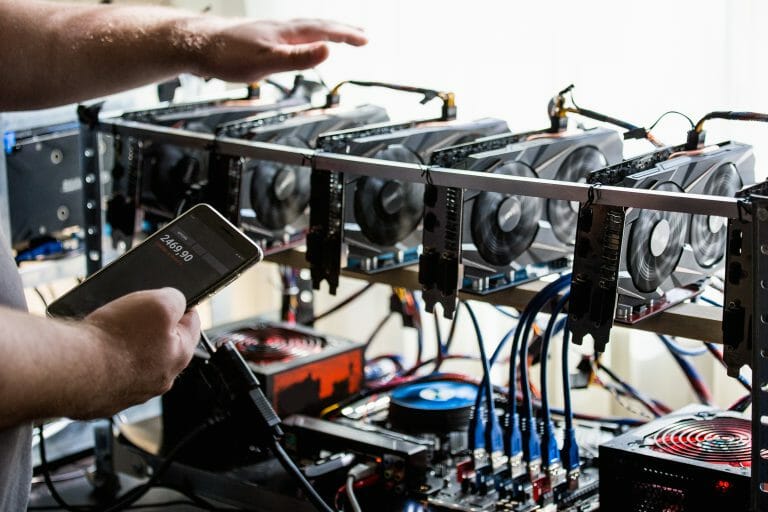
Venezuela Bans Import of Cryptocurrency Mining Equipment

The Venezuelan government recently banned the import of cryptocurrency mining equipment.

Venezuela has been highlighted by crypto-specialized media in recent months, kicked off by the announcement of the Petro, as a new national, petroleum based, “cryptocurrency” and the increasing adoption of Bitcoin as an answer to the economic collapse of the Bolivar.

Recently, the government decided to set a general blockage on the import of mining equipment. Venezuela has been qualified as one of the most cost effective countries to mine Bitcoin. Venezuelans have used cryptocurrency as an investment in order to easily exchange bolivar into other currencies without recurring to the black market, and the capital city, Caracas, has become a mining hub as the citizens struggle to survive.

As reported by local media, Venezuelan authorities have accordingly to a new policy announced this April, banned all mining equipment, such as different types of graphics cards and computers, as well as ASIC miners, in order to prevent locals from abandoning the state’s official currency entirely. Customs authorities have been seizing computer equipment by air and sea in the nationwide crackdown. According to Superintendent Carlos Vargas,

“We are in an evaluation process to select and authorize companies that are qualified to import and market digital mining equipment and be responsible for the respective guarantees in our country.”

Liberty Express and DHL have adapted to the new measures, either updating to inform users of the new restrictions or sending out notices to customer pages directly.

While the government has embraced cryptocurrency with the controversial launch of the Petro, the crypto asset tied to the value of oil, and started a new trend of nations adopting Cryptocurrencies in order to dodge economic regulations and sanctions; their stance on local miners is not as welcoming. Even boycotting complete mining operations in the region. The National Association of Cryptocurrencies will meet with the Superintendence of Cryptoactives and Related Venezuelan Activities to discuss the issue and perhaps outline a time limit to the ban.


by Samuel Larreal

India Will Not Use Petro For Oil From Venezuela

     In a recent statement, Indian Foreign Minister, Sushma Swaraj, stated that India
does not have any plans to use the cryptocurrency created by the Venezuelan government called, “El Petro” for the oil trade between the two countries.

In order to entice their business, the Venezuelan government has offered a discount of up to 30% on the purchases of oil to the Indian government with the condition that the transactions are carried out using the Venezuelan cryptocurrency. With the aspiration of giving credibility to this highly criticized cryptocurrency, Venezuela would have sent a team to India to negotiate with Coinsecure, a leading cryptocurrency exchange, with the goal of establishing a platform for buying and selling Petro in the Asian country. The Venezuelan cabinet didn’t get an immediate response from the Indian government, however, doubts have been cleared after the statements of the minister.

It is necessary to remember that the Petro, the cryptocurrency created by the
Venezuelan government at the beginning of this year, is promoted by the President
of the Latin American nation, and is said to be backed by oil reserves, which are under heavy US sanctions. The use of the Petro has been denied and rejected by the governments of the region, alleging instability and the lack of foundation in its operation.


by Emanuel Andrade

Blockchain Enhances Economic Growth – Xi Jingping

“blockchain is an enhancer for economic growth”,

says the President of the People’s Republic of China, Xi Jinping

Chinese President Xi Jinping, in a recent statement, acknowledged the role of
distributed accounting technology to boost China’s economic growth. The statement was issued on Monday during the annual conference on scientific developments, which emphasized the role of new technology to position the Chinese market internationally.

According to President Jinping,

“Since the beginning of the 21st century, a new generation of industrial revolution
has been substantially remodeling the global economic structure, with the
emergence of solutions and applications with artificial intelligence, internet of
things and Blockchain making constant progress in multiple sectors”

In this statement, the president indicated his future intentions to promote the
development of new applications and projects by enabling laboratories and research
centers. However, this news comes amid regulations on the commerce of cryptocurrencies and initial coin offerings (ICOs), and as of now the authorities have kept the ground clear for the deployment of the technology that supports digital currencies.

Different startups have sought to partner with government entities to promote innovation
and creation of projects based on blockchain. For example, Albert Xuan, co-founder of Liaoyuan, clarified that despite great interest,

“China still is at a very early stage in blockchain development. even so, everything is taking a good course.”

According to the stipulations of the media in the country, the province of Guangdong
has already implemented a total of 71 projects based on blockchain technology, which
contributes 16% increase within the industries.


by Samuel Paz

Blockchain Based Phone Security

In search of a telephone security system based on blockchain – India

Recently, the Indian Telecommunications Supervision and Control Agency announced
their intentions to launch an application backed with blockchain, to block and divert calls
and/or annoying messages. The Telecommunications Regulatory Authority (TRAI) proposed a new draft focused on optimizing processes with the reception of “unscrupulous elements” by commercial communications.

The project, titled

“Regulation of preference of customers over commercial communications, 2018”,

has an objective of the creation of a system that allows users to control messages and incoming calls, especially those related to commercial communications or unsolicited marketing, known as Spam.

The TRAI also communicated pride in the adoption of the new technology that will
grant the ability

“to continue with regulatory compliance, while promoting improvements
and innovations in the technological sector”.

Thus, “blockchain will guarantee confidentiality and will give access only to those who
are authorized. So they could access the details of the subscriber only when they
need to deliver the service.”

According to a spokesmen, “This will be the first time that distributed accounting technology is used to implement applications in the telecommunications sector.” TRAI, also proposed a “sandbox” as a test measure for new projects, before the implementation or the official launch. This “sandbox” will also promote more innovation with blockchain technology for entities to develop solutions and applications in order to optimize processes, globally.


by Samuel Paz