

Uzbekistan Promotes Opening of Tax-Free Cryptocurrency Exchanges

     Cryptocurrencies and blockchain technology, from regulations, to mass adoption to optimize services, has been a hot topic for governmental institutions all over the world. A recent statement issued by the President of Uzbekistan, Mr. Shavkat Mirziyoev, reveals his intentions to welcome decentralized exchanges to open local stores in the territory.

According to the presidential decree,

“The operations of legal entities and individuals related to the turnover [transactions] of crypto-assets, including those carried out by non-residents, are not taxable, and the revenues received from these transactions are not included in the base [foundation] for taxes and other mandatory payments.”

It should be noted that the document issued by the authorities establishes several points related on how trade and business with digital currencies will be managed. First, it is clear that the income or wages paid in cryptocurrencies will not be subject to taxes or taxes, as well as

“any licensed exchange that operates with digital currencies or foreign fiat currencies will not be subject to regulations”.

Although, for foreign exchanges that wish to obtain a license, they must comply with a series of regulations, which include:

  • Opening a branch in the region
  • Having a capital greater than or equal to $700,000 (30,000 times the minimum wage)
  • Store the information of users and transactions for a period of not less than five years and…
  • Comply with the anti-money laundering regulations

Universities Alarmed After Increase in Cryptocurrency Mining Operations in Dormitories

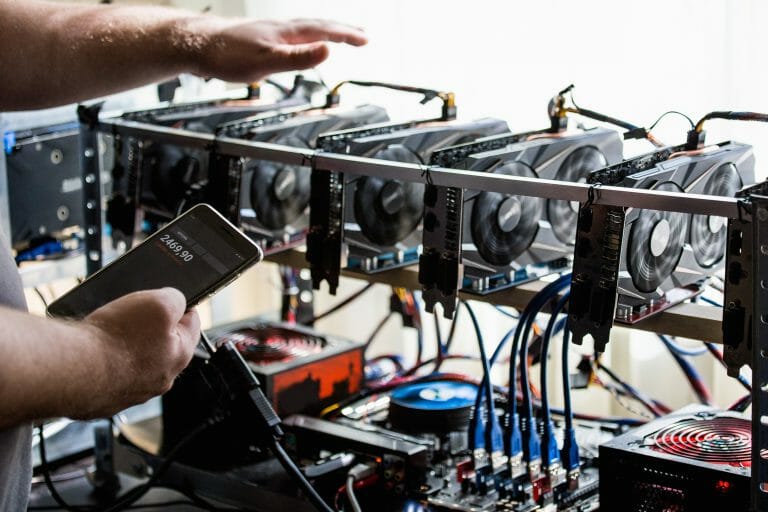
for their part, federal and local authorities will also promote mining activities and will even provide a capacity of more than 100 kWh of electricity per plot without the need for an auction, which is generally required to acquire land. This is not the first time that the authorities of Uzbekistan are evaluating the possibility of adopting cryptocurrencies. In fact, last February, the government announced its financing plans for an innovation center to explore the use of blockchain technology in the capital, Tashkent.

Stellar Project Lightyear Completes Acquisition of Chain – Interstellar is Born

0

     One of the most potentially impactful acquisitions in the blockchain and cryptocurrency market has materialized this week. The Chain platform, which is backed by investments made by prominent financial entities such as Visa and Nasdaq, has been bought by a Stellar startup. Chain is one of the field leaders when it comes to crypto entrepreneurship, and Lightyear supports global partner activities for the Stellar network, which is one of the biggest free and open-source financial protocol available to connect financial systems. The acquisition of Chain by the Stellar-powered Lightyear.io was announced on Monday. The platform is known for raising north of $40 million from Visa, Nasdaq, and other top financial companies.

The Interstellar Project Sees the Light

As a result of the merge, the Interstellar entity is officially born. Former RRE Ventures partner and Chain CEO Adam Ludwin, will be the leader of the new venture as a CEO. The well-known Jed McCaleb, father of the Ripple and Stellar protocols, will be the CTO. All the current Chain employees will be retained. Several investors joined forces to close the deal that has been rumored to be worth somewhere in the neighborhood of $200 million, which would make the acquisition one of the biggest of 2018.

Despite Chain’s focus on private blockchains, Ludwin has stated that Lightyear will stay its course. As Ludwin told CoinDesk, Lightyear needs a chain that everyone can access. He said that people at Chain viewed favorably Stellar’s ability to create platforms that could master the craft of asset issuance.

McCaleb, meanwhile, headlined a reciprocal situation: Stellar’s coders wanted to link with entities and institutions that served as an aid to commercialize their work. Therefore, a win-win situation panned out.

A Software Solution

Crypto investors, however, should note that interstellar does not intend to have any influence on the Stellar-powered token XLM. According to Ludwin, the new initiative exists to be used as a software solution.

The merging process was a long one. The preliminary conversations started back in early 2018, so we are talking about months of disagreements, talks, and back-and-forth discussions. However, the final result was satisfactory for everyone involved.

Interstellar provides a software solution that plans on serving as the setting of a symbiotic relationship, with Chain helping Lightyear improving its shortcomings and limitations and vice versa.

Ludwin also made clear that the Interstellar project was nothing like one of McCaleb’s “babies,” Ripple. The new venture’s primary goal is to work together with the Stellar Development Foundation to adapt the software to be used by for-profit startups and enterprises.

Ludwin said that while Ripple focuses its efforts to power international B2B (Business to Business) networks, Stellar can issue tokens of all kinds. However, and similar to Ripple, Interstellar will keep bringing open-source software to the companies already associated with Chain. The venture will maintain its use of the Sequence service.

A Little Bit More about Stellar

One of the fastest-growing networks of 2018, Stellar is a platform that connects banks, payments systems, and people in one efficient system. It fosters the perfect environment to move money quickly, reliably, and with little costs involved.

The platform assists low-cost payments between different currencies, with transactions on the decentralized Stellar network being solved in 2-5 seconds.

By Andrés Chavéz

Iran Recognizes Cryptocurrency Mining as an Industry

     The Iranian High Council of Cyberspace confirmed on Thursday the new status of cryptocurrency mining as a national industry. Regulators now recognize the crypto-industry as an intent to dodge the economic pressure caused, among other reasons, by United States sanctions. secretary Abolhassan Firouzabadi stressed that the authority will “declare the framework and final policies” for startups and companies in the cryptocurrency sector before the turn of this month.

According to Firouzabadi

“We [at the HCC] welcome Bitcoin, but we must have regulations for Bitcoin and any other digital currency…Our view regarding Bitcoin is positive, but it does not mean that we will not require regulations in this regard because following the rules is a must.”

The Iranian government’s recognition of cryptocurrency mining as a legitimate industry propelled Bitcoin price over $24,000 in some of the cryptocurrency exchanges in the troubled nation. One of these being the Exir platform, which set BTC token at 1,020,000,000 IRR. The value of Ethereum was  $9.

Iran’s Central Bank is preparing draft policies and regulations for the recently recognized mining industry. The pilot is expected to be ready in less than 3 weeks. Firouzabadi, suggested the idea of issuing a national cryptocurrency, according to the council it,

“can be used as a financial transaction instrument with Iran’s trade partners and friendly countries amid economic pressures through U.S. sanctions (…) launching the national cryptocurrency is promising and can be used as a financial transaction instrument with Iran’s trade partners and friend countries amid economic pressures through U.S. sanctions.”

The strong devaluation of the national currency against the dollar price, due to the withdrawal of several European markets from Iran to avoid conflict with the United States after Iranian President statements, has led numerous companies to cease operations in the country (presumably more than 100). Due to the political destabilization that the nation has been experiencing for several months, this situation has encouraged locals to approach the cryptocurrency industry as an alternative to safeguard their funds for the future.

Trading activity has been rampant in Iran during recent months with the head of Iranian Parliament’s Economic Commission claiming citizens had spent over $2.5 billion buying cryptocurrencies beyond the country’s borders in anticipation of the United States’ formal withdrawal from the Iranian nuclear deal.


By Samuel Larreal

Line’s Cryptocurrency Not Available for American & Japanese Markets

     According to official sources, Line users from Japan and the United States will not be able to use instant messages service’s own cryptocurrency due to licensing issues. Despite plans of the Line Corporation to issue its own cryptocurrency in international markets, this new circumstance will definitely slow the momentum of this cryptocurrency.

“Over the last seven years, LINE was able to grow into a global service because of our users, and now with LINK, we wanted to build a user-friendly reward system that gives back to our users,” said LINE CEO Takeshi Idezawa. “With LINK, we would like to continue developing as a user participation-based platform, one that rewards, and shares added value through the introduction of easy-to-use dApps for people’s daily lives.”

It is important to note that this currency-project called LINK, would not be issued through an ICO, but as a reward to its users after performing various actions in its messaging app, in addition to being available for trading in BitBox, an exchange also owned by the Line Corporation.

“In contrast to the other digital tokens and cryptocurrency projects, LINK will not perform an Initial Coin Offering (ICO), but a reward system that will grant LINK to users as compensation for using certain LINE ecosystem services. (…) This LINK can be used as a payment or reward within the dApp services that we will launch soon, and for other things such as content, trade, games and exchanges within the LINE ecosystem”

commented the company’s official spokesperson.

For the moment, BitBox is not licensed by the Japanese  the Financial Services Commission (FSA). Even though Line is a Japanese company with more than 75 million users in the country, the fact that its customers cannot use LINK could be a serious blow to the utility of this token. However, the company confirmed that Japanese residents will have another LINK alternative called Link Point, which can be exchanged for LINK tokens once BitBox obtains the necessary licenses. For Japanese residents, Link Point will be received as a reward for activities carried out in the dApps. Japanese users can use Link Point within the dApp or change.


By Samuel Larreal

Blockchain Jobs Growing in Asian Markets

0

     The current job market is increasingly turning from labor focused vacancies to mainly skill-based jobs due to the exponential rate of automation in many sectors, principally in developed countries like the US and China. Since the 2017 cryptocurrency price rise the cryptocurrency market, as well as blockchain technology development, has been drawing the attention of people in many areas. When prices began to rise exponentially in 2017, the demand for jobs in the industry increased in the same way.

“We hardly ever hire from inside of crypto because most people inside of crypto are very inexperienced. You have very, very few people who are experienced who get into the crypto industry,”

said Julian Hosp, co-founder of Singapore-based crypto wallet and card start-up, TenX.
Although since early 2018 the crypto market suffered significant losses, blockchain technology has continued its adoption trend by companies in numerous fields, large companies and even consortiums of several firms. Blockchain has been applied to take advantage of automation.

The Asian labor market has become one of the most active and striking for the diverse professionals interested in this technology. Not only is there a demand for jobs for the industry, but also recruiters keep on finding personnel for the constant projects that arise frequently.

“If crypto is doing well, if people are making money in crypto, we get huge inbound from people because they feel like, ‘I need to jump on this wave (…) And then when you see crypto going down — and we saw this at the very beginning [of this year] and we’re seeing this right now — then we see that immediately the demand of people, they’re like, ‘Oh no, this is a dying industry, I shouldn’t go in there.’ So, it’s completely emotional,”

Hosp told CNBC in an interview.

The most common skills sought by recruiters are those of knowledge in the Python programming language. However, not only programmers have a place in this new ecosystem of companies. Other professionals from different areas such as marketing, public relations and operations management, have also been interested in jobs in the sector.

Despite all of this, and although job search engines in Asia show a growth in requests for this type of employment, recruiters indicate that, in fact, few professionals are adequately prepared to provide their services in tasks related to technology.

“It’s maybe after February, we suddenly see a lot of influx of talent from traditional venture capital funds … and investment banks in China. It could be said the Asian or the Chinese talent are a little slower than their European or American counterparts to come into this field,”

said Wayne Zhu, a founding partner of NEO Global Capital, the venture capital fund arm of the NEO.

The very success that the cryptocurrency market has had, above all, at the highest point of its prices, has generated this interest in the industry. However, when it is affected, motivation also decreases.

The evolution of blockchain technology and even the cryptocurrency market, are just beginning their long road of development and stability, which implies a new field of available jobs for which demand will be constant, and permanent training of professionals in the skills required to improve the industry.

By Samuel Larreal

Bitcoin Consolidates its Market Dominance as Altcoins Continue to Collapse

     As a consolidation of last week’s events, this seven-day period started with Bitcoin’s market dominance increasing over other altcoins. Crypto markets, therefore, continue to show a downturn, with most of the top 20 digital tokens reporting losses in value.

The most prominent altcoins all lost between five and six percentage points of value today. Bitcoin fell as well, but at a minimal rate of 0.3% in the last 24 hours. The biggest cryptocurrency in our current market was trading at $6,238 at the time of this writing.

The crypto market, as a whole, continues to show signs of declining, with the total market capitalization dropping to $191 billion. The figure is the lowest point it has touched in the last ten months, and a far cry of what the market projected just seven days ago, which was $239 billion.

All facts and figures are courtesy of the specialized web CoinMarketCap. The $48 million difference in the market between September 4 and today marks a whopping 20% loss in total value.

ETH Loses Ground

One of the tokens that lost the most was Ethereum. Its price point collapsed below the $190 mark, precisely at $181, which is a 4% drop from 24 hours prior. ETH now faces a somewhat uncertain quest to climb back to the $200 range. Given that ETH is the most important altcoin, its daily decline means that the gap separating it from Bitcoin’s price is getting bigger and bigger with each passing day. The world will most likely see the day in which an altcoin matches Bitcoin’s value, but don’t hold your breath, as it may not happen soon.

Bitcoin is still gaining momentum when it comes to market share, and even though it showed a slight daily decline, the gap in comparison to Ethereum is bigger than ever. The 56.9 percent of Bitcoin presence in the crypto market is the highest since December 16, 2017, the day in which it shattered all predictions and reached the $20,000 mark.

The Biggest Losers

Ethereum lost quite a bit of value, but thankfully for its token holders, it wasn’t even close to the most affected cryptocurrencies. For example, take the case of VeChain (VET): it is now trading at $0.01, down 6.2% when compared to its value on Monday.

Bitcoin Cash (BCH) was also among the biggest losers of the day. The Bitcoin “baby brother” dropped 5.4% in value. It is now being traded at around $445. The market keeps “eating” altcoins at an alarming rate.

The third most prominent crypto, according to market cap, is Ripple. The XRP token also showed a decline, but it wasn’t as pronounced as Ethereum, VeChain, and Bitcoin Cash, at just 2.4%. It trades at $0.25 as of right now.

What About the Risers?

Fortunately, not everything is gray in the crypto market today. At least not to the Tezos (XTZ) people: their digital coin is trading at $1.34 as of right now, which marks a 12% increase in value over the last 24 hours. Tezos still has some catching up to do, as it is still down seven percentage points compared to last week.

By Andrés Chávez