Former Football Stars Paul Scholes and Andriy Shevchenko Support Crypto Project

We have seen cryptocurrencies and blockchain technology “invade” several sectors, industries, and scenarios looking to create solutions to everyday problems, or better ways to approach specific situations. That is why it should not come as a surprise that they are touching the ground on the world’s most popular sport: football.

The Soccer Legends Limited startup, a Hong Kong-based initiative, is looking to integrate the sport with blockchain technology. According to the team, the project aims to “bridge the gap between soccer superstars, youth talents and fans.” The “Soccer Legends,” a figure introduced by the team, will take young players under their wing and open up a world of possibilities to them by offering 433 token holders the chance of sponsoring the mentorship of these future stars, thanks to smart contracts.

The associated cryptocurrency will be 433 token, as a reference to a famous team line-up within the sport. The digital asset will be used to show support for a future star in the discipline, have an influence in relevant soccer-related decision making, and even get people in touch with famous players around the world. The token presale of the 433 assets was scheduled to start on November 16th, 2018, with each one having a price of $0.09. A total of 300 million 433 tokens will be available for purchase in the presale, roughly 30 percent of the total.

Investors are in Stellar Company

The Soccer Legends Limited project sure has some stars backing it up. The company itself announced that two of the most influential and successful players of their time will be part of the “lineup:” they are Andriy Shevchenko and Paul Scholes.

The former is Ukraine’s all-time scorer and current head coach. He was one of the deadliest goalscorers of his time, particularly shining with AC Milan from 1999 to 2006 and winning the FIFA Ballon D’Or in 2004. He is Ukraine’s top goalscorer in history with 48 goals and is now the head coach of the national team. Known as “Sheva” in the playing days, Shevchenko also won the 2003 Champions League with the Rossoneri.

On the other hand, Scholes was one of the most prominent midfielders in Manchester United’s golden team from the nineties and the 2000’s, along with Ryan Giggs, David Beckham, and others. He won the Premier League eleven times and was one of the most influential and durable players of his time, also representing the English national football team.

A Lineup of Eight Prominent Players

Both players will support the project and also “personally participate in the ecosystem as mentor and event hosts,” according to the team. Actually, the plan is to recruit at least eight more prominent players to complete ten after the fundraising phase is done. The Soccer Legends Limited also claims to have formed an official partnership with Global Legends Series (GLS), a league of retired soccer stars.

With soccer having such a big market and organized scheme, Soccer Legends Limited and the 433 token aim to use blockchain technology as an instrument for fans to become more involved with the clubs and players they follow. The initiative has its own ecosystem and the ERC-20 compliant 433 token.

By Andres Chavez

Experts Say Bitcoin May Take “Weeks, if not Months,” to Recover after Recent Collapse

How the mighty has fallen. When the New Year was starting, Bitcoin was hovering around $20,000, an all-time value that only lasted a few weeks. After January 7th, though, the situations started to change, and the fortune of investors quickly turned for the worse: a downward trend started and, until the last hours of Tuesday, BTC was trading at around $6,400.

Enter Wednesday, and a bloodbath took down Bitcoin and most of the top 20 altcoins with it, and the world’s premier digital asset saw its price fall below the $5,600 mark for the first time in almost a year.

As of the moment of writing this piece, Bitcoin had slightly recovered to be valued at $5,611, with no gain or loss in comparison with those rates of the last 24 hours. Now, there are concerns about how much time will it take BTC to recover, and with “recover,” everybody may have managed a different meaning.

“Technical Damage” Needs to Be Repaired

Rob Sluymer, who is currently an analyst of Fundstrat Global Advisors, explained to Bloomberg that it will take “weeks, if not months” to recover from the “technical damage” that Wednesday collapse brought with it.

Actually, Sluymer talked on Wednesday, a few hours after the crypto industry’s price fall, in a note to clients. He noted that the BTC price drop has pushed markets into a “deeply oversold” territory, and also observed that the technical indicators, those that as recently as last week pointed towards a value rise, are now “not so favorable.”

Wednesday “breakdown” produced significant technical damage “that will likely take weeks, if not months, to repair to create a durable enough price ‘structure’ to support a multi-month rally,” were his exact words. He implies that before thinking about a sustained, multi-week increase, first there needs to be some stability.

Consequences All Over the Place

Not only Bitcoin’s value was severely depreciated on Wednesday (again, it touched its lowest price since October 2017 after weeks of trading sideways,) but altcoins also suffered the consequences. Ethereum, which was trading at above $200, is now in the $180 range and was surpassed by Ripple (XRP) as the top altcoin in market cap.

The fact that Bitcoin price fell below the $6,000 threshold is, according to Soichiro Tsutsumi, a trader at eWarrant Japan Securities K.K. in Tokio, a dangerous development for people in the industry, especially those who own businesses that rely on a client pool.

Shares of companies connected to crypto assets have also been going down, naturally, after Wednesday market crash. Several firms endured losses of at least 2 percent, in some cases weekly or even monthly lows.

According to Sluymer, the market for the end of the year is “stressed, but not broken.” Fundstrat actually expects a growth in stocks for the YE lead by sectors hit the hardest after Wednesday bloodbath.

Fundstrat was, at least in the early part of the summer, forecasting a future spike in Bitcoin’s value, with its head of research Tom Lee stating back then that the world’s leading digital asset would be worth $22,000 – $25,000 by the end of 2018.

By Andres Chavez

Hackers Take over Google’s G Suite Account and Perform another Crypto Scam

Hackers have long operated with a focus on attacking crypto exchanges, wallets, and other related platforms, at least since the cryptocurrency boom began. They have shown the world that evil can sometimes win and that basic and advanced security measures should be taken to safeguard such valuable digital assets.

However, the latest victim of a hacking attack was none other than Google, arguably the world’s most influential and powerful enterprise. The Internet giant, more specifically one of its associated (and verified) accounts, tweeted a message prompting users to pay between 0.1 and 2 Bitcoin (BTC) to get between 1 and 20 BTC back.

A Giveaway Scam

Google’s GSuite account (@GSuite) was the victim of hackers trying to take advantage of vulnerability and the company’s name and perform a “giveaway” scam. The message stated that Google was “giving up” 10,000 BTC to the community and also said that cryptocurrency payments were now available in GSuite.

Thanks to the quickness of a Twitter user named @B_u_r_t_o_n, a screenshot of the message is now available for people to see. The tweet was actually promoted on the account of GSuite, which functions as Google’s productivity and collaboration tools arm. The tweet, of course, was quickly erased by Google.

In a year in which numerous hacking attacks have terrorized users and investors in nearly all platforms, seeing a Google product being the victim of a takeover, albeit a short-lived one, is scary. Both Twitter and Google have confirmed that there was indeed hacking activity involved, and they stated they are looking into the matter to try and find more details about the possible authors.

Under Investigation

A Google representative, according to the site Business Insider, explained that “This morning (Wednesday) an unauthorized promoted tweet was shared from the G Suite account. We removed the tweet and are investigating with Twitter now.”

Twitter also had a say regarding the events, with a spokesperson explaining that Google’s G Suite official account was unexpectedly and “inappropriately accessed and that they would continue to closely monitor the situation.”

A Terrifying Modus Operandi

Sadly, hackers are now targeting verified accounts to perform crypto related scams. They provide cybercriminals with the familiarity weapon: people see that the account is verified and that is enough for them to take the “offer” as a legitimate one, but that is not always the case, as we could learn today.

For instance, just days ago, hackers successfully targeted accounts belonging to an American lawmaker, a film business, and a book publisher to make it pass as Elon Musk.

Even Target, a world-famous department store from the United States of America, suffered the same fate this past Tuesday. According to a tweet from the enterprise itself, their “Twitter account was inappropriately accessed. The access lasted for approx. half an hour & one fake tweet was posted during that time about a bitcoin scam. We have regained control of the account, are in close contact with Twitter & are investigating now.”

By Andres Chavez

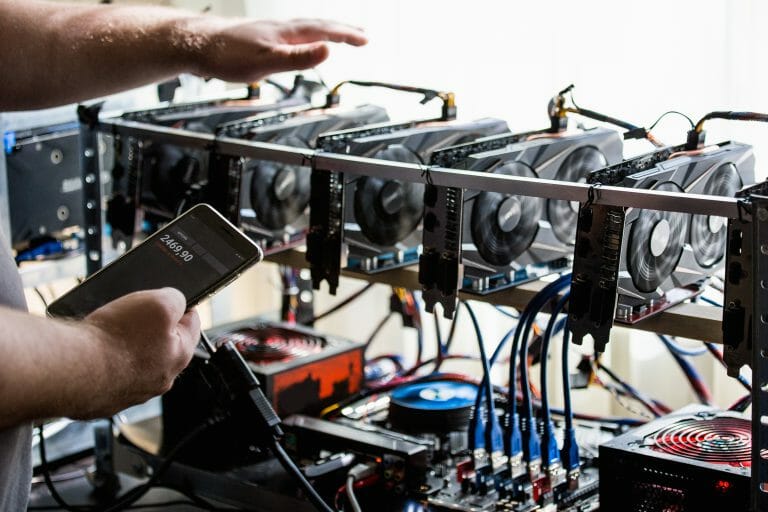
New Hardware to Mine Cryptocurrencies from Home Will Be Available In December

The device will allow mining Ether, Monero, ZCash and Ethereum Classic (ETC). It would generate a low electrical demand, without loud noises

The massification of cryptocurrency mining is one step closer. Farb Nivi, CEO and co-founder of the startup Coinmine, made the announcement on his Twitter account, last November 14th, about the launch of Coinmine One, a device that any person can use to mine cryptocurrencies from their homes or offices.

As indicated on Nivi’s Twitter account, the corporation has its own operating system. It will be possible to mine Ether (ETH), ZCash (ZEC), Monero (XMR) and Ethereum Classic (ETC) through the use of a mobile application, available on Android and iOS. It is expected that a node of Bitcoin Lightning, Dfinity or Filecoin can also run.

The device looks very similar to an Xbox. Its price will be approximately $ 799 and will be available for purchase from December, although the company did not want to offer a precise date or talk about a specific goal for their sales.

The company clarified the device is not designed or created to offer large profits but is aimed at technology enthusiasts, who wish to have the device in their homes to mine in a simple way, without a large power consumption or noise, as the characteristic buzz which traditional mining machines emit. “People who want to try the different protocols and interact with the communities of themselves”, reads in the official information released on Wednesday.

Chapter Ventures, Coinmine One’s investor, explicitly supported the project because it wants to know more ways in which “normal” people get involved in the support of cryptocurrency infrastructure. “Coinmine will democratize access to mining in an affordable and fun way that almost feels like playing a video game”, said Jeff Morris Jr, Founder of the startup.

This software refers to users to monitor their mining activity and social networks. In fact, one of its main features, so far, is having available only one token at the same time. The system will be updated automatically as changes are made to the protocol and when there is a greater number of available cryptocurrencies.

The device consumes 120 watts and generates only 40 decibels, which guarantees both low power consumption and low sound, compared to what happens with other mining devices, which are characterized by the buzzing and high electrical power requirement, according to Nive’s explanations.

Coinmine will receive a commission of 5% on cryptocurrencies extracted through their devices. This company recently received the support of investors such as Coinbase, Arrington Capital, Brian Norgard, Anthony Pompliano and Balaji Srinivasan. This initiative will allow more and more people to mine without needing to have a lot of technical knowledge.

Other projects have focused on bringing mining to the homes of people who wish to enter this new world of technology. The startup 21 Inc. announced its first product for mining at home in 2015, the 21 Bitcoin Computer, defined it as “the first computer with native hardware and software support for the Bitcoin protocol”. The Chinese manufacturer Bitmain also put on sale AntMiner, another hardware for mining from home.

These signs seem to show that, in the near future, the mining of cryptocurrencies would be an activity that will reach more people in more and more countries worldwide. The advances and the new proposals for the use of the blockchain technology, which are presented every month, are the “blocks” that are building that expectant path.

By María Victoria Rodríguez


Swiss Federal Railways Develop a Digital Identity Pilot on Ethereum

Employees who work on this type of tracks need to be certificated people. Blockchain technology is the tool to achieve this and avoid risks of accidents

 Complying with security protocols for maintaining the Swiss railways will be possible through the use of distributed accounting books, and blockchain technology, for the correct identification of workers in that sector. In this way, the Government will avoid bad practices and new accidents presented due to bad praxis.

Train accidents can be fatal and are often linked back to malpractice on tracks. Due to this, the Swiss government has enforced security regulations and record-keeping requirements of who has worked on the tracks and if they were certified to do so.

The Swiss Federal Railways Company (SBB) works in a pilot to make it real. It has been exploring how to implement its first blockchain use case. The project takes form in the Ethereum’s test network, Rinkeby, to apply blockchain technology in the management of the employees’ digital identity system. The corporation made the announcement on November 12th through a publication on Linum Labs’ corporate blog, which is a software study for blockchain’s architecture where SBB conducts the pilot test.

The main objective is to verify the employee’s identity and their credentials in order to manage the processes of their job automatically in the distributed accounting book, destined to save this type of personal and technical information.

Ethereum’s platform and Uport-Consensys, an identity company based on blockchain technology, were the key to develop the project. Swiss cryptocurle of Zug authorities started shaping the idea in July 2017.

About the initiative, Linum Labs informed: “With uPort it is sought that railway workers, certification authorities and supervisors can have their own unique digital identities, linked to uPort ID, which is then anchored to a blockchain identity. A hash of the worker’s check-in / check-out activities is published in the blockchain, so that the internal database can be audited”.

The reasons

Many companies are involved in this project because there are thousands of construction sites with more than 30,000 employees in Switzerland, which makes it difficult to maintain an organized and centralized control. Each of these sites has a multitude of workers from different construction companies and they all need to be medically fit and certified.

Inadequate work practices in the railways occur despite the efforts made by the government to comply with the safety protocols and maintenance requirements for the registration of activities, along with the certifications of the personnel working on tracks.

The Previous Process

A small group of people participated in a proof of concept (PoC) and worked for five weeks in the creation of the architecture of the application. To do this, they downloaded uPort on their mobile phones, available on Android and iOS, in order to register their uPort ID on Ethereum’s blockchain.

Once the person downloads the application, the ID is associated with the training certificates obtained by the personnel, which provides information on their training for the job. The person’s activities are registered on blockchain platform by using QR codes. Then, they can be reviewed by a supervisor.

Several companies have been experimenting with digital identity on blockchain, in order to overcome the limitations of centralized digital identity systems. Last April, IBM established a cooperation agreement with the Sovrin Foundation, a nonprofit institution dedicated to providing self-sufficient digital identity to operate a decentralized global network. Now, Swiss Federal Railways do the same and joins to others blockchain technology developments that take place in that European country.

By María Victoria Rodríguez

The Split is Official: The “Hash War” Resulted in two Different Blockchains

It is no secret that the Bitcoin Cash hard fork, scheduled to take place on Thursday, November 15th, brought division among the crypto community. Now, those concerns have been made official, and there are now two different cryptocurrencies deriving from Bitcoin Cash: Bitcoin ABC and Bitcoin SV.

The official split occurred at precisely 18:02 UTC. On the one hand, we have one iteration called Bitcoin “Satoshi Vision,” or SV, which was clear in its opposition of the software upgrades introduced on Thursday by the other side of the “cassette,” Bitcoin ABC.

Friction between Bitcoin ABC and Bitcoin SV

Now, a much anticipated “hash war” has been in place, and both blockchains are mining blocks on their networks. And while Bitcoin SV has threatened to sabotage ABC in the past few days, that has not come to fruition as of now.

“An SV miner can even legally kill off a chain. That is the miner’s right. This is what bitcoin is,” said Craig Wright, the Chief Scientist behind nChain (the company leading Bitcoin SV) in a recent tweet.

While Bitcoin SV had its first block mined at a later moment than ABC (precisely at 18:29 UTC,) Bitcoin ABC had already created two new blocks and performing transactions moments after the Thursday hard fork went live. As of the moment of this writing, Bitcoin ABC was ahead of Bitcoin SV by 10 blocks, according to the always reliable data provided by the Coin Dance site.

After Mempool successfully achieved the first mined block on the Bitcoin SV blockchain, SVPool and Coingeek quickly followed. On the other hand, the Bitcoin.com, BTC.com, and Antpool mining pools have been in the middle of the action on Bitcoin ABC.

Mining Behavior so far

The majority of the blocks mined on the Bitcoin ABC blockchain have featured more than a thousand total transactions, but at nearly 21:00 UTC, there was a notorious drop in transaction count and the size of the blocks, according to Blockchair.

Whereas Bitcoin SV was controlling most of the Bitcoin Cash network a couple of hours prior to the hard fork, now the scenario has been reversed, with Bitcoin ABC, always according information provided by Coin Dance, is now ahead of its “rival” regarding hash power support. In fact, there was an announcement from mining pool Bitcoin.com saying that mining support was being redirected to mine Bitcoin ABC’s blocks in the temporary fashion.

Questions remain surrounding the future of both blockchains. BlockDozer observes that a significant increase in activity took place just minutes after the hard fork. As for the causes, many people are speculating about a spam attack to overload the other side’s network.

 What the Future May Hold

Since Wednesday, and after the software upgrades, Bitcoin Cash prices have been swinging wildly. The future of the value of both blockchain propositions will largely depend on hash power support and how users react to each software upgrade. Projecting behavior this early seems difficult, though.

The Poloniex exchange provides an accurate representation of each side’s price. Right now, the site has Bitcoin SV at $94 and Bitcoin ABC at $285.

By Andres Chavez