John McAfee Announces the “Freedom Coin:” It Will Be Available in the Fall

The crypto space is a welcome place for innovation and new alternatives. Day in and day out; products, services, and projects are born with new offerings that captivate the attention of investors all around the world. And whilst regular cryptocurrencies and “stablecoins” dominate the scene, there is also place for other types of assets.

American entrepreneur, IT security expert, crypto enthusiast and presidential candidate John McAfee made the news this week because of his intentions to launch what he is calling the “Freedom Coin.” By design, the asset will have “zero cash-in value, yet is accepted universally.”

A unique Paradigm, Not Connected to other Assets’ Behavior

According to McAfee, the coin should be released later this year, most precisely, in the fall. The online security expert says that the Freedom Coin “is designed to confront the problem of exchange head on, using a unique paradigm” and a new structural concept. For that reason, the token is neither based on any commodity nor connected to the value or behavior of any other asset, as most cryptocurrencies are.

McAfee observes that “the value of the coin will always be zero in relation to any other currency yet its natural market value is free, completely, to grow.” It is definitely a fresh concept in an industry dominated by ever-changing tokens that see their price go up and down depending on several circumstances and developments.

Those conditions, circumstances, and developments may vary, and can greatly affect the fate of a specific token or project. The idea behind the Freedom Coin, as its name so accurately indicates, is to eliminate the “fear, greed, manipulation and the vagaries of external economic conditions.”

Waiting for the Whitepaper

As of today, the project still does not have a whitepaper, and the crypto industry is awaiting it to have more details, both technical and environmental, about the project and its concept. The document will be released at a later date that has not been specified.

The McAfee Freedom Coin is purportedly available to perform transactions directly between user wallets. However, it is not going to be present on crypto exchanges and similar platforms, in an attempt to detach it and its value from other assets.

McAfee published a message regarding the project: “No it is not mined. No, we are not doing an ICO. No, we are not looking for investors. No, we will not be listed on an exchange. No, we will give no more information before release of white paper. Yes, this is real… Also, there will be no airdrops”.

A Truly One-of-a-kind Project

He stated that whilst there are numerous original crypto projects circulating in the industry, the Freedom Coin is unique and has a one-of-a-kind modus operandi, eliminating the currency exchange market from its ecosystem and relying on private sales or peer-to-peer platforms.

According to a reply from McAfee in his official Twitter account, “private sales are unrestricted. It is organized exchanges that will not be able to play. A private sale does not make a market. Buy gold, diamonds, bonds, stocks – even dollars – we don’t care. But an exchange market for anything whatsoever cannot be done.”

McAfee recently announced his intentions of developing a privacy-focused “Visa/Mastercard Crypto Debit Card,” which is already undergoing tests.

By Andres Chavez

President of the Central Bank of Russia Says She doesn’t Want to Legalize Cryptocurrencies

Since some years ago, the Central Bank of Russia has taken a strong position to avoid unnecessary financial risks. It considers Bitcoin and other cryptocurrencies as a “high risk” asset

Although there are many companies and institutions that have decided to bet and invest in the world of cryptocurrencies, there is still a large number of people and institutions that see as negative that this technology is implemented in the financial system of different countries. Some of them consider that, by involving cryptocurrencies with the conventional trading system, the flow of these digital assets can be altered considerably and, in turn, the traditional system could be subjugated to dizzying drops together with the prices of these assets.

Among the people who consider this negative possibility is Elvira Nabiullina, who is the highest representative of the Central Bank of Russia. A few days ago, Nabiullina said she disagreed with the legalization of the use of Bitcoin (BTC), which is, in her opinion, an unreliable asset with a volatile rate that generates little confidence to implement it with free rein in the Russian financial market.

In addition, the president of the financial entity sentenced that she does not consider that any other cryptocurrency will be legalized, due to the multiple risks they represent. Nabiullina also considers that no institution it should take into account to make payments with cryptocurrencies. She ensures that it would be a mistake to apply this technology as a payment method. “We are against the legalization of cryptocurrencies, specifically as a means of payment”, she commented.

During the exposition of the Russian Highest Financial Institution’s point of view, the main representative again declared about the non-legalization of cryptocurrencies. Nabiullina pronounced her speech in the State Duma (the lower chamber of the Russian Federation), during a meeting. “We believe that there are great risks here for those who have a cryptocurrency… It is necessary to protect citizens from risky investments”.

In recent years, the Central Bank of Russia has taken protective measures and is evaluating what it considers as risky investments. It is for this reason that they have remained so hermetic to the possibility of legalizing cryptoactives, especially when they are considered too volatile assets for medium and long term use.

Despite these actions that seek to support the economic stability of Russia, the position against these assets is reinforced more and more. Representatives also commented: “Of course, we are against to enter cryptocurrency in our monetary system (…) For all purposes, we do not see the option of cryptocurrencies to fulfill the function of money substitutes, neither in this case”.

These statements are even adverse when, currently, the Russian official currency, the Ruble, has been in depreciation during some years and it is devalued up to 200%, compared to the price of the US dollar since 2014. This shows that, even avoiding “unnecessary risks”, the financial institution has not been able to evade other risks.

A few years ago, it was announced that the Central Bank of Russia was evaluating the possibility of creating its own cryptocurrency, a project that ended up being ruled out.According to Nabiullina, the idea was ended just when the “madness” of cryptocurrencies came to an end because the bear market was growing by then.

Interestingly, these statements are given just when the bear market has concluded in the cryptocurrency market and when there are many companies and institutions in the world that feel optimistic about the future of this technology, such as the exchange company Kraken, which paid 250 salaries using bitcoins. There are different opinions regarding to cryptocurrencies and these points of view could change at any time.

By María Rodríguez

Japan Approves Amendment to Strengthen its Law for the Use of Cryptocurrencies

The central intention is to take control over the cryptocurrency industry and avoid irregular events like cyberattacks

In recent publications issued by different Japanese media, at the end of May, it was informed that the Japanese Parliament approved an amendment which strengthens the laws that regulate the use and control of cryptocurrencies in that region.

The purpose of this change is to avoid, through the best means, using this technology for scams, theft and money laundering. Similarly, it seeks to create for the common user a suitable environment for both personal and commercial use.

The Financial Instruments and Exchange Act, and the Liquidation of Funds Law, are the names of the laws that received this legal modification, and are tools that were created in order to eradicate speculation with cryptoactives, reduce irregular trade with digital currencies and protect users from scams and hacker attacks. Most of the changes are in the area of ​​protection, since the rules regarding control issues and punishable acts were reinforced.

The amendment puts atight control on the use of these financial tools, this is in order to protect, in a categorical way, the entire Japanese financial system, which could be affected or influenced if this technology gains strength in trade. It is still unknown if this strengthening of the laws could negatively impact the crypto industry in the Asian country, but it is expected that the measure will only help users feel more secure when using cryptocurrencies.

It should be noted that the amendment obliges all financial systems in the country not to denominate cryptocurrencies with that name, but change the name and call them “cryptographic assets, with the unique purpose of avoiding all kinds of confusion with the rest of the official currencies that the Japanese financial system manages, such as the Yen, the US Dollar or the Euro. In this way, differences are specified, so these laws have a special treatment with these assets.

In addition, it would be established that exchange houses must have a cryptocurrency fund as a way of protection to ensure reimbursement for users if it is necessary, especially after cases of theft by hackers, or some other type of error in a system that could generate losses to the user. This happens as result of experience in cases such as Coincheck, the Japanese exchange house that suffered a cyberattack which caused losses of more than 530 million dollars in cryptoactive.

In this amendment to the Financial Instruments and Exchange Act, it is also highlighted that security tokens and Initial Coins offerings (ICOs) are now considered securities and will be regulated and denominated in that way.

The Financial Services Agency (FSA) of the country received the text for its establishment in all monitoring and control processes related to cryptoactive. This institution has been the main precursor for the strengthening of legal instruments in order to ensure control over cryptocurrencies until there are better monitoring mechanisms.

By María Rodríguez

A Competitor for Tether? Binance is about to Issue its Own Stablecoins within the Next Two Months

Stablecoins are rightfully earning a very good reputation, as they inspire more confidence and trust among users than assets such as Bitcoin and some of the top altcoins. That is why each day; more and more platforms are trying to develop their own stablecoin.

Such is the case of Binance, one of the most widely known cryptocurrency exchanges in the planet. According to reports, the platform will issue its own stablecoins sometime in the next two months. Bloomberg was the news site that broke the piece of news in the middle of the week.

Available for Several Currencies, Starting with the GBP

Wei Zhou, currently acting as Binance’s Chief Financial Officer, told the mentioned publication that the company will be issuing stablecoins “in a matter of weeks to a month or two.” The plan is to make them available for several currencies.

The first stablecoin will be pegged to the value of the British pound (GBP) and will be named “Binance GBP.” The business model, according to the executive, will be somewhat similar to that of Tether (USDT,) which involves making money off of interest on fiat deposits.

The Binance GBP, of course, will not be the only stablecoin that Binance will develop, as the platform intends to come up with other options backed by other national currencies like the yen and the euro. However, there is not any plan to issue a dollar-backed asset.

Why Not the USD?

On that end, Zhou explained that “from the users’ perspective, only certain portions of the world use the dollar. Other users use other currencies, and we feel it should be reflected in stablecoins as well.”

The array of stablecoins that Binance will issue will, allegedly, decrease Tether’s market share on the platform, which stands over 50% of stablecoin volume at the moment of writing this piece, per Zhou.

Twitter users first found out about Binance’s tests for a British pound stablecoin at the start of the week, noticing the listing “$BGBP” on the exchange. Changpeng Zhao, the platform’s CEO, replied to a user’s tweet, confirming that a stablecoin was indeed being tested, with £200 minted.

Chinese Exchanges and Stablecoins

More than $10 billion in USDT trading has taken place in Chinese exchanges in the first five months of 2019, while $450 million in USDT traded have come in the United States. Chinese crypto exchanges serve as the platform for more than half of all USDT trading in the planet.

As of now, Tether accounts for more than 98% of stablecoin trading volume, and whilst dozens of projects have tried to take away some of that market share, most have been unsuccessful. However, Binance project may represent the first serious threat to the USDT.

Kyle Samani, the Co-Founder of crypto hedge fund Multicoin Capital Management, expressed that “a stablecoin issued by Binance would certainly threaten Tether’s value proposition.”

Samani also stated that “Binance could also work with an auditor to offer strong assurances that the tokens are fully backed and easily redeemable. Considering the recent events with Tether (concerns about it being 100% backed by cash and securities,) those assurances would be a compelling reason to use Binance’s stablecoin.”

By Andres Chavez

Facebook Will Announce Crypto Project’s Details this Month

The whole cryptocurrency industry is waiting for the big news, which is basically the worst-kept secret ever: Facebook is about to launch a crypto project. However, the company has neither officially explained it nor the details about the coin. The moment is about to come, though.

Facebook, the largest and most influential social media network in the whole planet, will make the announcement of its crypto project this month, according to a report from news conglomerate CNBC, in recent hours. Employees of the site will, purportedly, earn a part of their wages in the coin.

CNBC cited a report made by The Information on the subject. The former said that Facebook will have third parties administrating the reigns of the cryptocurrency, in an attempt to make sure that the coin is not centralized.

Third Parties to Serve as Nodes

These third parties will allegedly pay up to $10 million for the chance to be a node in the system for Facebook’s token. They will serve as nodes in order to validate transactions made in the ecosystem.

Per the CNBC piece, “cryptocurrency nodes contain the computing power necessary to resolve complicated mathematical equations, which are used to validate transactions. They are typically decentralized and spread among thousands of parties, but Facebook is creating a foundation with named partners to help manage its currency.”

The rumors have Facebook’s token as a stablecoin, integrated as a payment method in the whole Facebook’s network, including proprietary products and services such as instant messaging and VoIP tools WhatsApp and Facebook Messenger, and pictures and videos app Instagram. The stablecoin, according to The Information, will be available through physical ATM-like devices and machines.

Whilst the crypto space has speculated about Facebook’s token and rumored details, the company has stayed silent about the matter. However, it was made public in recent days that the United States’ Commodity Futures Trading Commission (CFTC) is talking with the social media giant about its upcoming asset.

Facebook, for its part, has been doing its due diligence in the matter. Last month, it acquired the “Libra” trademark for the cryptocurrency: it was reported by sources familiar with the situation that Facebook was looking for financial firms to develop the token, and that the name of the project’s codename is, indeed, Libra. The rumours did not stop when, also in May, the Mark Zuckerberg-owned company registered a new financial tech business, named Libra Networks LLC, with the Geneva Commercial Register in Switzerland.

The Project that is on Everyone’s Lips

Facebook has been teasing its users about the idea of a cryptocurrency for quite some time now. According to CNBC’s report, “about a year ago, the company appointed former PayPal Executive David Marcus to begin exploring opportunities with blockchain, the technological underpinning for cryptocurrency. Since then, several outlets have reported that the company has been building its own digital currency.”

The digital currency, per the CNBC piece, will be available for users “to store, trade, and exchange for regular currency, in part through Facebook apps.”

By Andres Chavez

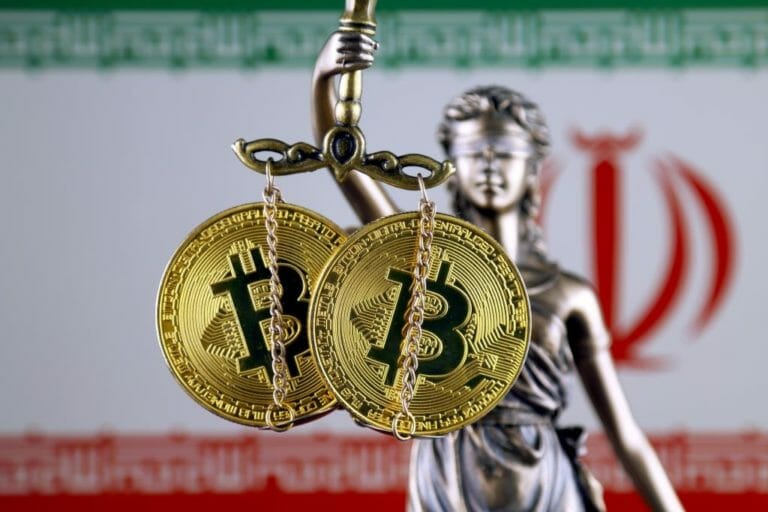
Localbitcoin and other Cryptoexchanges Disabled Users in Iran

The ban of this platform in Iran is an answer to the sanctions imposed by the United States more than a year ago

In a message published on the website of the cryptocurrency platform Localbitcoins.com, at the end of May, the blockade of all transactions that were made to users located in Iran was announced.

These users complained that the service did not allow them to execute any type of operation, purchase or sale with cryptocurrencies. Without knowing exactly what was happening with their funds, users reported to each other and issued complaints to the operator.

The news had not been confirmed by any of the official entities of Localbitcoins.com. After several users had broadcast the fact on local Telegram networks and other platforms, the cryptoexchange page system began issuing the message prohibiting operations in the country.

On the website of the exchange company for the Arab country, a sent message says: “Unfortunately, LocalBitcoins is currently not available in your selected region”. After this statement, local media reported the news and confirmed it to its users.

Currently, and according to local media, it is known that the ban is directly related to local laws in Finland, where the peer-to-peer (P2P) cryptocurrency transaction portal is based. Localbitcoins.com is always adjusted to the laws of its place of origin, with the aim to operate in the rest of the countries.

Not only Localbitcoins.com has confirmed the suspension of its operations in that Asian country. Other large portals of transactions with cryptocurrencies, such as Coinbase and Binance, have also made the blockade. Both portals are also recognized as large in commercial operations with cryptocurrencies and they would have large volumes of transactions in the Islamic territory.

The blockades of these portals of commercial transactions with cryptocurrencies obey to the strong commercial sanctions within the country, imposed from the United States, more than a year ago, by the current administration of President Donald Trump. This happens after the withdrawal of diplomatic agreements related to nuclear disarmament in the Asian nation.

For merchants and natural users, portals such as Localbitcoins worked as one of the best alternatives to overcome the blockade in the country and make international purchases, since to use these portals it is not necessary to have any type of credit cards or international bank accounts. They worked, in another aspect, as a way to save and mobilize funds between exchanges and shipments and remittance receipts.

Recently, Coindesk interviewed an Iranian merchant who was affected by the blockade of the exchange portal. “Since I negotiated in relatively high volumes, LocalBitcoins was my best option because I could find good deals with real people. In local exchanges, the rates are unfavorable in many cases, while the total volume of assets is low. For example, you can barely find two bitcoins for sale on any given day”, he commented.

Localbitcoins has not issued any opinion about the ban imposed on this location and has only limited to publish a tweet referring to this case: “Our services are not available in your region for customers based on risk”. Users still waiting and wishing the return of these operations in their country.

By María Rodríguez