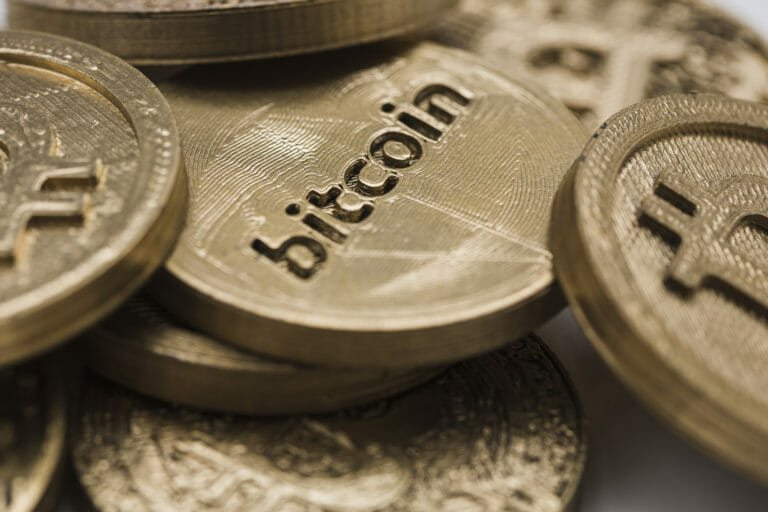
Bitcoin Losses $3,000 in Less than a Day at the Same Time Coinbase Goes Down

Bitcoin Losses $3,000 in Less than a Day at the Same Time Coinbase Goes Down

For several weeks now, Bitcoin had been gaining steam and its price has been increasing rapidly. Last year ended with a lot of uncertainty about the future of the world’s most prominent digital asset, as it began a slide in mid-November that took its value from the $6,000s to the low $3,000s in less than a few weeks.

However, the market showed a sustained recovery since the middle of March 2019, the moment in which it passed the $4,000 threshold for good. From that point on, its price began to increase until it passed $13,000 on Wednesday, June 26th.

A Severe Outage

But from Wednesday to Thursday, the digital asset endured another sizable drop, one that it had not suffered in months: from more than $13,000, it went to as low as $10,373.75 on June 27th, which equals to a drop of approximately $3,000. Perhaps not coincidentally, the fall began at the same time that Coinbase, one of the primary cryptocurrency exchanges in the planet, suffered an outage.

Analysts say that people were reminded of Bitcoin’s volatility factor by seeing Coinbase go down for a few hours, and that was one of the main driving factors for the brief price drop. Overall, the year is still successful for Bitcoin, as it is up more than 200% in 2019, but the events of Thursday were unexpected.

Before the price drop, the cryptocurrency was enjoying quite the honeymoon, with the value being at a 17-month high on Wednesday: $13,485.85. CNBC quoted a Coinbase spokesperson, who opted to remain anonymous, that said the platform was down “for a short period of time due to high volume.”

Leverage: One of the Causes

Michael Moro, who is the CEO of Genesis Global Trading, told CNBC that “even the most optimistic crypto bulls would tell you that a 50%+ move in a week is too much too fast,” identifying leverage as the “key driver” to the drop off.

“The presence of leverage exacerbates the moves in both directions and affects the speed dramatically,” Moro told CNBC. “Of course bitcoin has a history of doing this (both upward and downward), but it is hard to call the magnitude of the move healthy.”

Leverage was in the thoughts of known crypto personality Brian Kelly, the CEO and Founder of BKCM. He said that as the prices rose, so did borrowing costs; making it more expensive to bet on the cryptocurrency to keep growing in value.

At the moment of writing this piece, BTC was exchanging hands at $11,032.33.

Libra as a Catalyst for Bitcoin Success

It is no secret to anybody that the announcement of the Libra cryptocurrency, with Facebook behind it, has been greeted with lots of space over the Internet and media. BTC has rallied almost 30% since the world’s biggest social network revealed its new project, raising awareness about digital assets and more interest from institutional investors.

“The noise over Facebook’s coming plan to launch a digital cryptocurrency, discussed here last week, must have helped to revive interest in Bitcoin,” according to Jefferies, Analyst Christopher Wood.

Meanwhile, Michael Novogratz, CEO Galaxy Digital Holdings, also stated that Facebook was a catalyst for bitcoin surpassing the $10,000 threshold. “One of the largest companies in the world said we believe in cryptocurrencies. If you’re an institutional investor who’s getting close and still worried about investing, it makes you that much more confident.”

By Andres Chavez

Bitcoin’s Price Continues Rising Whilst the Dollar Faces Challenges

The dollar fell 1.57% against a group of six currencies last week. Nervous investors seek to acquire other currencies that serve as a refuge

Faced with the possibility that the Federal Reserve of the United States could lower interest rates this year, the dollar has fallen against other currencies. It is reported that, meanwhile, the tensions between Iran and the United States offer greater stability to the Japanese yen (JPY) and the price of Bitcoin has been increasing significantly since last weekend.

Bitcoin, the most widely known cryptocurrency worldwide exceeded US $11,000 for the first time since March 2018. In this way, Bitcoin has increased by almost 200% until now this year; driven by the plan proposed by Facebook for the launch of Libra, arousing the enthusiasm for the use of cryptocurrencies.

Meanwhile, investors are waiting for a possible truce declaration in the trade war between the Presidents of the United States and China, Donald Trump and Xi Jinping respectively. This situation is occurring in the framework of the summit of the Group of 20 (G20) to be held in Osaka, Japan in June 2019.

Brian Daingerfield, Head of forex strategy in Stamford, Connecticut, said that the interest is on the dovish turn taken by the Federal Reserve and what may happen in the G20. He added that, with this group, it is difficult to trust the direction of the market.

In this way, the markets believe that if Washington and Beijing do not control their heated rhetoric about trade, then the Federal Reserve will be forced to reduce interest rates. The objective of this measure is to avoid a broader economic slowdown as a result of higher tariffs on US imports.

In this regard, the Vice Minister of Commerce of China, Wang Shouwen, said that both China and the United States should engage in trade negotiations.

Similarly, according to the FedWatch tool of the CME Group, federal funds futures indicate that there is a high probability that the Federal Reserve will cut rates in late July. These expectations have weakened the dollar, which fell by 1.57% against a group of six currencies. That was its biggest weekly loss in four months. This decline occurred amid the rise in the price of Bitcoin.

Hedge funds have also become slightly bearish about the dollar and bets have increased on the weakness of other currencies, such as the Australian dollar, whose position within the global economy has deteriorated.

The Japanese yen, for its part, lost some strength against the dollar, after Trump suspended a US military attack on Iran. Although the tensions between the two nations remain high, on June 24th the President of the United States imposed new sanctions on Iran in an attempt to curb its nuclear program.

However, the yen remained stable at 107.31 per dollar, after having reached 107.04 units per dollar on June 21st. Meanwhile, nervous traders seek to acquire safe-haven currencies. Among cryptocurrencies, Bitcoin has increased by 4.23% during the last week, with a price of US $11,323.81, according to LiveCoinWatch.

By Willmen Blanco

Reserve Bank of Australia Asks for Caution with Libra

RBA’s governor says that there are many regulatory issues that need to be attended regarding cryptoactives

The Governor of the Reserve Bank of Australia (RBA), Philip Lowe, recently warned that Libra, the digital currency announced by Facebook, could not reach the widespread use expected in the near future. He ensures that users must observe it and take care.

“There is a lot of water under the bridge before the Facebook proposal becomes something that we use all the time. There are many regulatory issues that need to be addressed and they have to make sure that there is a solid business case, so we have to be careful before drawing conclusions”, he said.

In 2017, Lowe also criticized the largest cryptocurrency by stock market capitalization, Bitcoin (BTC). At that time, he assured that the success on the price of that cryptoactive was due to the speculative “mania”. He commented that probably criminals felt more attracted by Bitcoin than clients.

Now Libra is the asset questioned, but not only by Lowe, but also by representatives of the governments of Russia, France, Spain, the United Kingdom and even US lawmakers and a part of the crypto community.

The announcement that Facebook would launch its own cryptocurrency has also caused differences within the cryptographic ecosystem. Although most of the opinions and expectations about this asset are quite positive, some government representatives comment that, until now, they do not see much future in this new proposal.

The Reasons

Lowe believes that the role of cryptocurrencies, in terms of being a means of electronic payment, is already fulfilled with the traditional electronic payment system or with fiat currencies.

“For a long time, I thought that a kind of cryptocurrency would not be successful in Australia because we already have a very efficient electronic payment system that allows any of us to make bank payments to another person in five seconds, just knowing their mobile phone number”.

The RBA even published a document called “Cryptocurrency: Ten Years On”, where it argued that cryptocurrencies would not achieve widespread adoption in Australia. “Bitcoin is unlikely to become a ubiquitous payment method”, it said.

The summary of this report states that “this article examines why Bitcoin is unlikely to become a ubiquitous payment method in Australia, and summarizes how subsequent cryptocurrencies have tried to address some of Bitcoin’s shortcomings, such as its volatility and scalability problems”.

Australia’s distrusts cryptoactives, even more Libra, which has not yet begun to operate in a massive way, but which belong to a technological giant that owns a large amount of data from its users.

The opinion of the governor of the Central Bank of Australia regarding Libra is similar to that of the Chairman of the Financial Market Committee of the State Duma of Russia, Anatoly Aksakov, who also disagrees with the use of this cryptocurrency in that territory.

In some weeks, it will be known the new point of view of Australia regarding the cryptography and the blockchain technology in general.

By María Rodríguez

The BIS Concerned over Facebook’s Venture

Faced with the venture of Facebook and other large companies such as Google and Amazon into the financial space, the BIS is calling for equal conditions for banks

The Bank for International Settlements (BIS), often described as the bank for central banks, issued its 2019 Annual Report, expressing concern about the disruption expected when large technology companies such as Facebook enter the financial space.

The BIS’s report analyzes the risks and challenges posed by companies such as Alibaba, Amazon, Facebook, Google, and Tencent, rather than paying for the service to the potential benefits of this building of the financial revolution.

BIS says that these firms have developed huge customer bases and have the benefit of a data-network-activities loop that provides them the potential to become dominant.

Whilst the venture of these companies into payments, money management, insurance and loans has just begun, it allows the possibility of a major change in the financial industry.

Benefits

The BIS considers that big technicians’ low-cost structure business can be easily expanded to provide basic financial services, especially in places where a large part of the population does not have access to banking services.

It explains that by using big data and analyzing the network’s structure in the established platforms, big technicians can assess borrowers’ risk, thus reducing the need for guarantees to ensure reimbursement.

Accordingly, big technicians intend to improve the efficiency of financial services provision, promote financial inclusion and allow associated profits in economic activity.

Risks

However, it warns that such a change involves new risks. In addition to the old problems of financial stability and consumer protection, “major technologies have the potential to grow to a large extent as financial institutions of systemic importance.”

At this point, BIS specifically raises the recent reports on Facebook’s new Libra project, in which the social media giant is considering offering payment services to its customers worldwide.

Challenges

The BIS suggests that there are also important new and unknown challenges that go beyond the scope of current regulations. It reports that major technologies have the potential to become dominant through the advantages offered by the data-network-activities loop, which raises questions of competition and data privacy.

Therefore, policies will be needed for a comprehensive approach on financial regulation, competition policy and regulation of data privacy. “The objective should be to respond to the venture of big technicians into financial services to benefit from the profits as it limits the risks”.

According to the report, as big technicians’ operations extend along regulatory perimeters and geographic borders, coordination between national and international authorities is crucial.

Fears

In a somewhat revealing statement, BIS further reveals its fears that banks may lose ground to the new big technological disrupters. In this regard it says:

Regulators should ensure a level playing field between large companies and banks, considering big technicians’ broad customer base, access to information and wide-ranging business models.

Since large companies have the ability to work across borders, international coordination on rules and standards is needed to address the potential change in the “risk-benefit balance,” says the BIS.

The report suggests that Facebook’s project may have a hard time with regulators worldwide, since the firm seeks to launch financial services for its billions of users.

By Willmen Blanco

Ripple Decided to Purchase 50 Million Dollars in Stocks of MoneyGram

The purchase of Ripple in MoneyGram represents around 10% of the stocks

In a recent publication of Ripple Labs, a subsidiary of Ripple, it was announced that the company has decided to formalize an alliance with MoneyGram, which will add the official cryptocurrency of the startup (XRP) to its daily transactions platform, in order to offer more options to its users.

According to the official information, Ripple made a direct purchase of around 10% of the MoneyGram’s shares, with an approximate value of 4.10 USD per share. All of this represents a total investment of 50 million US dollars to make possible the project.

The alliance will benefit Ripple allowing users to have direct access to a tool called xRapid. This service facilitates and enables the option of making large foreign currencies exchanges in international markets. After the alliance, the exchange platform will use XRP as intermediary.

In this way, this alliance takes place one year after the direct competition of MoneyGram, Western Union, concluded a trial period with the xRapid tool; also ensuring that using XRP did not mean a significant cost reduction, which was planned during the test time.

The efforts of Ripple have been consistent and have also had other approaches in order to improve their operations. In the last three years, the company has made important agreements and has established several projects with banks, with the aim to grow together. However, they have not generated better conditions for XRP so far.

On the other hand, this recent purchase made by Ripple, oxygenates MoneyGram, which has already had great financial difficulties in recent months, since in the latest reports of the company there is evidence of large losses and the reduction of their finances, which led to a sudden fall in their shares in past months. A year ago, the government of the United States stopped the purchase of the company, drowning the company’s attempts to get out of financial difficulties.

It is known, through spokespersons of Ripple Labs, that the purchase of the shares will not represent taking decisions within the MoneyGram executive board. However, Ripple will have a permanent observer who will be on the executive boards of the company.

The Chief Financial Officer of MoneyGram, Larry Angelilli, said he feels comfortable with the incorporation of Ripple as a financial partner. He commented that it will bring benefits for both companies. “We are quite pleased with the terms of Ripple’s investment, which will support the company with permanent capital and additional liquidity”.

Angelilli also mentioned that this agreement will help MoneyGram maintain its operations. “This alliance also provides MoneyGram the opportunity to improve operational efficiency, increase profits and cash flow”.

It is important to note that although Ripple’s investment in MoneyGram is very high, it does not ensure the complete success of the XRP cryptocurrency in the international exchange market, but it represents another opportunity to improve its efficiency, presence in the markets and versatility.

By María Rodríguez

Bitcoin: a Competitive and Decentralized System

Craig Wright explained that the main digital currency was designed in such a way that it would encourage people to devote to mining, clarifying that this work is not for all those operating in the Bitcoin ecosystem

Craig Wright, the Australian programmer claiming to be Satoshi Nakamoto, participated at the Expo-Bitcoin International in Bogota. He provided some details regarding the design of the main digital currency, as well as his reasons for supporting Bitcoin SV’s design and adoption.

He explained that Bitcoin was conceived as a system with a competitive infrastructure, which is much more logical than what is implemented by networks like Ethereum and Monero.

Bitcoin and Proof-of-Work (PoW)

Wright noted that in 2006 he was considering several algorithms before opting for Proof-of-Work, but he chose the latter because in his view it would have been catastrophic if the nodes were similar and all had the same possibility.

Bitcoin mining was conceived competitively because the priority was to create an incentive system that would guarantee the operation by the end user. He explained that not all users needed to run a complete node and that mining was not designed for everyone, since the more transactions per block, the greater the reward. Therefore, more teams would support the network expecting to get that prize, but the process involved some important expenses.

The end user’s priority is that all transactions reach the network, so the more people interested in the rewards, the more guarantees of the network’s best work. In this way, it avoids “the tragedy of the common,” which refers to the failures associated with maintaining equal conditions for all members.

Rules and Decentralization

Wright also assured that the main objective dealt with decentralized and distributed operations that protected the network from private interests of developers and heads of projects.

He assured that if developers establish the rules, they eventually become the point of failure within the project, since people are naturally corruptible and may handle things according to their own interests. For example, he said that Facebook’s cryptocurrency, Libra, was nothing more than a centralized database in the hands of institutions with financial interests.

Wright said that Bitcoin has to do more with algorithms with signatures than with cryptography, which makes the system safe as it creates an incentive system for the network’s supporters, motivating them to invest, and avoids double spending when making transactions.

Additional Considerations

Wright said that Bitcoin was committed to decentralizing and guaranteeing the uniqueness of transactions, since centralized initiatives were eventually destroyed by governments or fell into terrorist hands. The cryptocurrency was designed for people excluded from traditional systems and it allows unlimited transfers from any place in the world.

He added that Bitcoin was intended to transfer money without intermediaries charging large commissions. The idea was that each operation cost a few cents on a dollar, so that that people would have more control over their money and much more economic freedom.

Finally, he clarified that anonymity only supports companies and governments, concealing cases of money laundering, crime and corruption, which is not Bitcoin’s original objective.

By Willmen Blanco