Spanish Startups Ask to Accelerate the Approval of “Sandbox” to Guide their Blockchain ​​Research

Spanish startups seek the approval of Sandbox activities to prevent their blockchain projects from being outside the legal framework.

In Spain, startup companies are executing strong measures of pressure and also are waiting for the approval of the so-called “sandbox”. This is a controlled space for the authorities to test blockchain technology and all the aspects related to this sector.

Once this space is approved, companies that seek to use blockchain technologies will be able to define their guidance in the development of innovative tools. This would help facilitate the financial processes these companies need to improve. Likewise, it will help determine the potential of blockchain technology and verify the best ways to strengthen it.

According to local media reports, companies that hurry the approval of a bill to ensure a line of action in their blockchain initiatives, have signed, together with associations, a petition manifest to the local government, in order to avoid bureaucratic methods.

Among those who signed the petition are the Spanish Association of Fintech and Insurtech (AEFI), the Spanish Blockchain Association (AECHAIN), the Observation of Business Ethics, the Foundation for Financial Innovation and the Digital Economy (FIFED), the Spanish Association of Startups, The Spanish Association of Business Finances (ASSET), the Association of Financial Users (ASUFIN), and the Cotec Foundation for Innovation.

These associations are looking for ways to advance in legal procedures so that the Sandbox is not delayed more. They want to test blockchain technology.

For this, they argued that if their approval continues to be delayed it could result in the loss of more than 5,000 jobs, in only two years. In addition, Rodrigo García de la Cruz, who is AEFI’s CEO, projected that this fact could affect the crypto-industry, and an approximate loss of about 1,000 million euros in investments to this technology.

For local businesses, the legislation may be incomplete. This is something that could lead to certain failures and could harm their blockchain projects. This is because companies are not clear about the legal limitations that would regulate this technology type of technology in Spain. They do not want to spend time developing a tool that in the near future could be cataloged as illegal.

In this way, for these startup companies, there is a Sandbox, a controlled environment to develop their projects with the governmental observation and the approval of the authorities that define the regulatory framework.

Although the approval of this testing environment is already defined so that startups can develop their projects with government supervision, it has not yet been formalized, since the installation of a new government is expected.

The initiative to regulate these technologies is important, as well as the government’s motivation to advance a legal framework. An example of this is the action of the congress of Spain, which in the middle of last year, raised the idea of ​​looking for examples to regulate cryptocurrencies and all the technologies necessary for their livelihood, like blockchain technology.

By María Rodríguez

According To G7 and BIS, Bitcoin Has Failed and Stablecoins Pose a Threat

The G7considers the focus of the Libra project to be placed on the lack of international coordination. The G7 believes that Bitcoin has failed to be an attractive payment method.

Bitcoin and other initial cryptocurrencies have failed to be an “attractive method of payment or value storage,” according to a new report by the G7 and the Bank for International Settlements (BIS).

However, in the October G7 report, it is argued that cryptocurrencies whose prices are pegged to other assets, or stablecoins, such as Libra, pose a growing threat to monetary policies, financial stability and competition.

The widely adopted stablecoins to which it has been referred as “global stablecoins” have the potential to reach an international audience and have “significant adverse effects” on the current economic system, according to what the G7 report argues.

Meanwhile, first-generation cryptocurrencies such as Bitcoin have suffered from high price volatility, limits on scalability, complicated user interfaces and issues concerning governance and regulation, among other challenges. Consequently, cryptocurrencies have functioned more as a highly speculative asset class for certain investors and for those linked to illicit activity, rather than as a means to make payments.

The G7 report adds that the taxonomy of stablecoins (defined as an equivalent of money, contractual property rights, or rights against the issuer of an asset) will continue to be a prominent legal issue for some time. The effects of stable currencies on established monetary systems, such as electronic bank transfers, have not yet been fully understood.

Stablecoins might offer faster, cheaper and more inclusive payments, but only on the condition that a significant amount of risk is assumed, as warned by the G7.

On a footnote, the G7 report states that the management of the Libra Association by the Swiss Financial Markets Supervisory Authority (FINMA), which falls under the range of regulatory action in Geneva, is in agreement with the recommendations on stablecoins made by the G7.

The FINMA recently said that Libra focuses on the need for international coordination and “appropriate prudential requirements” for all services offered over those of a payment system.

The report on stablecoins was prepared at a request of the G7 in July, shortly after the launch of Libra in June. Although it was obviously largely directed at the project, the report only mentions Libra in a footnote.

In response to the G7, the Libra Association sent a memo on Friday, October 11th, stating that the stablecoin “has no intention of changing the role and the influence of Central Banks.”

Then it added that wallets and other financial systems operating in the Libra network (including exchange houses and entry and exit ramps) will have to comply with regulations, as well as with local capital controls, which can be adjusted to prevent large amounts of local currency from passing to Libra in emerging markets.

Investors should learn about what happens in the world of cryptocurrencies in order to learn how to make the best decisions. One way to do so is through articles in which they can read what experts like those from the G7 explain about the evolution of the market of cryptocurrencies.

By Willmen Blanco

Bitcoin Trade Grows in China Thanks to Tether, Despite Strong Regulations

Tether has been used in 99% of the Bitcoin spot trades in China so far this year. Binance has just launched a P2P yuan exchange service between peers in China.

Investors in Bitcoin and other cryptocurrency prefer to keep an eye on China, even after regulators began taking strong measures against digital assets. In recent months, the OTC (over-the-counter) cryptocurrency market in China has exploded, just as Chinese traders began buying Bitcoin with the dollar-pegged stablecoin Tether (USDT).

A study conducted by Chainalysis Inc. showed that Tether has been used in 99% of the Bitcoin spot trades in China so far this year, almost completely displacing the yuan. Meanwhile, the Bitcoin trade in similar markets, such as the Japanese and Korean ones, is mainly conducted with fiat money, as revealed by the research.

According to data from Chainalysis, about 40% of the 50 main cryptocurrency exchanges, regarding Bitcoin blockchain activity, are distributed throughout the Asia-Pacific region. During the first half of 2019, 35% of all received Bitcoin was recorded in these financial institutions. The exchange houses in the region also dominated the options and futures trade, with a total of almost 90% of the USD 2.36 billion contracts negotiated worldwide.

Philip Gradwell, chief economist at Chainalysis, whose headquarters are located in New York, stated that people should pay more attention to the price formation in big Asian exchange houses. In addition, he noted that there will probably be large amounts of liquidity there that, for example, these OTC brokers will provide, as it can move very quickly.

Binance, the largest cryptocurrency exchange house in the world, has just launched a peer-to-peer (P2P) yuan exchange service in China.

Tether began to dominate cash trade in 2018, just after the Chinese government imposed a ban on its citizens exchanging yuan for cryptocurrencies. Since the ban introduced in 2017, many people have been conducting exchanges from yuan to Tether through P2P exchange services or the OTC market, which is considered legal in China. Then they would proceed to use their Tether to buy Bitcoin and other cryptocurrencies.

Thanks to this growing demand for Bitcoin, market capitalization has achieved a threefold increase as of the beginning of 2018, since the private company behind Tether, whose headquarters is located in Hong Kong, issued more coins, although it not clear what exact issuance mechanism was used. At the beginning of this year, Tether became the most widely used cryptocurrency in the world, even exceeding Bitcoin, whose market capitalization is almost 38 times higher, according to data from CoinMarketCap.com.

After the introduction of the ban in China, OTC cryptocurrency trade has increased by leaps and bounds. Only 10 of the Asian OTC brokers tracked by Chainalysis received USD 877 million bitcoins during the year ending September 30th, which is as much as 52% more than in the previous 12 months.

Kim Grauer, senior economist at Chainalysis, considers that the way Bitcoin trade has grown in China is amazing. Once again, it can be observed why the cryptocurrency par excellence has maintained its popularity among the citizens of that Asian country.

By Willmen Blanco

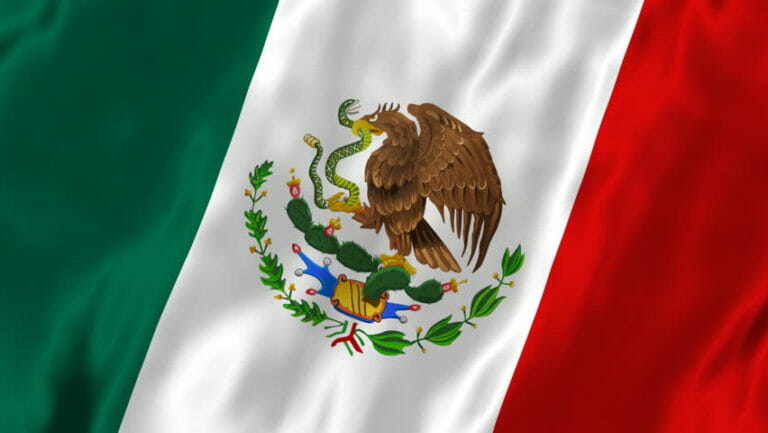
National Blockchain Raised by Mexico to Ensure Public Transparency

The Ministry of Finance proposed that a collaborative public platform be developed. The project was announced last Thursday, October 10th, but no release date was reported.

The federal government of Mexico again holds the magnifying glass on the benefits that the implementation of a national public blockchain would bring to the government’s administration. The Aztec Ministry of Finance showed special interest in distributed ledgers as a way to improve transparency and for society to benefit from accountability.

During the course on Fundamentals of Blockchain and Cryptocurrencies, which was held in Mexico City on Thursday, October 10th, Daniel Casados, a technology advisor to the Ministry of Finance, noted that although blockchains have become a massive subject due to cryptocurrencies, they have a lot of potential that has not yet been fully discovered.

During the event and at meetings with digital media, Casados said that the idea and great challenge raised was to develop a national blockchain, which is called the “transparency network.” He explained that the project will feature the participation of different actors from Mexico, among who will be the federal government (headed the Ministry of Finance), but it is believed that it will be expansive to the rest of the government, the industry (startup companies), and academia.

The advisor did not provide any details about the blockchain that is intended to be developed, but he said that although it is of a national nature, it is not owned by the government, since it will be public and highly collaborative. Casados has not yet responded to a request for comments on this project.

The authorities of the aforementioned Ministry see their project as a “triple helix” between the government, academia and companies, whose engine would be the society to which the benefits of transparency would be paid.

Data and National Economy

The academic meeting also served as a stage for Graciela Márquez Colin, Minister of Finance of Mexico, to explain the reasons why the authorities have approached the so-called distributed ledger technology (DLT).

The official said that many of their existing projects are in what has been called the data economy, and they have adopted it as a banner. She highlighted that it is an important moment to constitute a platform that is adaptable and an instrument to support all productive sectors.

With these arguments, the Mexican State will attempt to implement a “datification” of the national economy through the blockchain that is under development.

In order for public officials to understand how blockchains work, an alliance was established with the MX Internet Association, BlocksEDU (Canada), the Blockchain Institute of Technology, and High Tech Polymath for conducting this type of courses.

In the past, Mexico has also proposed the use of blockchains to fight against problems such as fuel theft. In the field of cryptocurrencies, the country maintains a regulation through the Law to Regulate Financial Technology Institutions (FTI), known as Fintech.

Distributed ledger technology allows, among other things, transfers between two or more people without the intervention of third parties. Its entry into the world of technology occurred through the creation of Bitcoin.

By Willmen Blanco

The Reasons Why MasterCard, eBay, Stripe, and Visa Decided to Leave their Association with Libra

Facebook’s new project, Libra, has lost 5 members since the announcement of its launch in June.

It is increasingly uphill for Facebook to conduct its crypto-project and develop its digital coin, Libra. Last October 11th, four large companies which supported Libra, decided to conclude their participation. Visa, Stripe, eBay and MasterCard announced their exit from the Libra initiative, which suffered severe setbacks.

 These companies commented that they will take care of their new business models, as well as innovative projects for their financial systems.

Although the companies announced their exit from the initiative of Facebook, they claim that the Libra project is a tool that has a lot of potential and can be a very powerful asset at some point.

Representatives of some companies talked about their reasons to leave the project. They argued that it is mainly due to the strong regulatory and investigative measures of the United States government, as well as other entities which disagree with the Libra project.

Among the impressions of the companies, Visa, for example, decided to leave the project due to the regulatory controls that the US government prepares for this cryptocurrency. This was declared by an executive of the payment company, through an interview with local media.

The Visa worker said that although they are outside the project, they would not hesitate to return to it when conditions are more favorable. This is especially due to the actions against the launch of Libra.

“Visa has decided not to join the Libra association at this time. We will continue to evaluate and our ultimate decision will be determined by a number of factors, including the Association’s ability to fully satisfy all requisite regulatory expectations”, he argued.

Finally, Visa emphasized how important the use of this technology can be, and noted that if this technology is suitable for an excellent legal framework, it could facilitate and improve digital payment platforms using a blockchain network that supports them.

In the same way, MasterCard said that they are designing and focusing their forces on projects to facilitate the financial life of people around the world. In addition, in a statement it said that Libra movements will be closely evaluated.

The other companies also issued their respective statements regarding their exit from the Libra project. Stripe preferred to say that joining was a boost. They prefer to stay out and evaluate the growth of the cryptocurrency. On the other hand, eBay said that at the moment they are preparing a new tool to manage their customers’ payments and improve their experience.

In recent weeks the Libra project has had significant falls since not only the withdrawal of these four companies has caused great damage. Previously, PayPal also announced its exit from Facebook’s project.

The association would have 23 members of the 28 that were announced when, last June, the development of the digital currency was announced.

The latest exodus leaves the Libra Association without any remaining major payments companies as members. This way, it can no longer count on a global player to help consumers to convert their currency into Libra to facilitate transactions.

By María Rodríguez

Honduras Coffee Sector Will Use Blockchain to Integrate its Supply Chain

It is estimated that by 2020 the tool will be available for about 20,000 small Honduran producers, who would benefit from loans.

Honduras is one of the 10 countries that more coffee produces globally. Now is the time to open the doors to new technologies. This, to positively transform a sector that has worked in a traditional way and, in some cases, with a lot of effort.

Through a new project, the production and motivation to participate in this sector could increase. Thanks to blockchain technology, Honduras has a system now to integrate the entire coffee industry actors.

This initiative seeks to achieve the traceability of coffee. In this way, the production process will be monitored from the crop until the product is for sale ready for consumption.

Recently, the GrainChain company signed a commercial agreement whose objective is to bring together the different actors of the coffee production chain in that Latin American country.

GrainChain is a platform which creates solutions for the agricultural sector based on blockchain technology. With this new project, it is expected that it can track 2% of the coffee that Honduras exports each year. This represents about seven million bags, according to the CEO of the startup, Luis Macías.

Other Advantages

The Texas-based American startupwill not only focus on monitoring the production and trade of Honduran coffee, but also it will be backed by smart contracts and it will store information about the movements in its blockchain.

Until now, the company has already achieved several agreements with different actors in the coffee supply chain in Honduras.

One of these companies that has joined GrainChain is a mutual fund management establishment. This Honduran company is responsible for facilitating coffee producers access to financing.

The name of that company is Confianza SA-FGR, which last October 6th said it would join the startup, signing an agreement that will allow 20,000 coffee growers to use the blockchain-based tool.

A Platform for Everyone

Francisco Fortín, representative of Confianza SA-FGR, commented that the objective of the project is to create a space for producers, exporters, banks and suppliers for coffee production.

In Honduras, small businesses produce 60% of the coffee in the country, with the support of some 89,000 coffee producers. In addition, coffee is the main export product of that country. It is for this reason that it will be favorable to strengthen the work system.

With smart contracts, GrainChain would help strengthen financing, raising trust between farmers and financial institutions and increasing transparency in the operation.

Until now, a pilot test with almost thousand coffee producers is pending. During that test developers can see how a mobile App would work with a wallet to handle the token of the project, called GrainPay. This token will make it easier for unbanked producers to access financing.

“If a producer wants to buy supplies and he does not have money, he can ask for a loan from a bank. The bank will transfer the money to the supplier and he will send the product to the farm”, Fortín explained.

On the other hand, the producer could monitor through his mobile phone all the stages of the production process, control the information, the inventory, and request financing.

Since the end of 2018, GrainPay functions as a stablecoin anchored to the value of a fiat currency. It is used within the platform for farmers. New technologies, thus, open non-tangible spaces that shorten distance barriers or even lack of budget.

By María Rodríguez