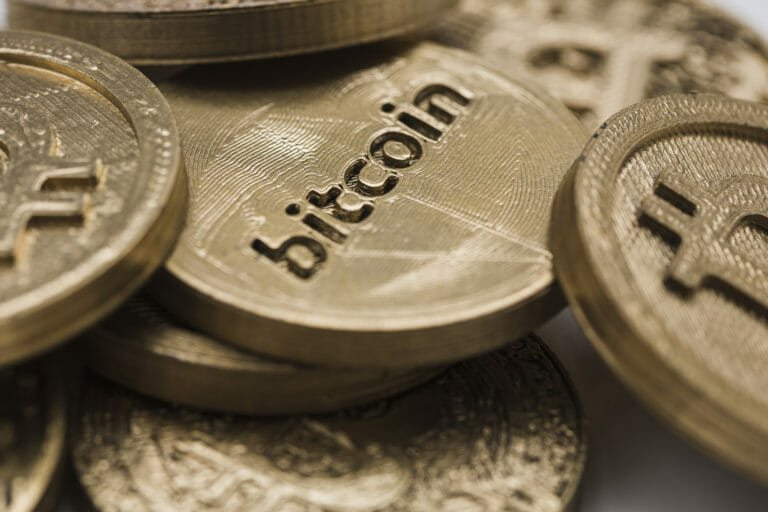
SEC is Fighting Against Unregistered Token Offerings

The SEC considers the sale of unregistered assets as something illegal or unethical so it sues ICOs that commit these actions.

The U.S. Securities and Exchange Commission (SEC) announced, last January, that two new Initial Coin Offerings (ICOs) completed in 2018 made fraudulent sales of unregistered digital asset securities. Although these ICOs are still waiting for final judgment, the SEC, in both cases, recommended all funds raised by the ICOs be paid back to investors.

The SEC is avoiding, in this way, that more unregistered Initial Coin Offerings sell assets that do not have permissions.

ICOs are a way to fund the early stages of a crypto venture by selling a certain number of tokens created by the startup in advance of product launch. But, sometimes, some of these assets do not have permissions or do not comply with the necessary characteristics so SEC proceeds to investigate these companies.

Since February 6th, almost 5,700 projects have collectively raised over $27 billion since the first ICO in July 2014. But now there is another form of ICOs called initial exchange offerings (IEOs), which capitalize on the sale of exchange tokens specifically. These IEOs have begun to emerge since last year.

The Rules

Token sales of any type that are sold to U.S. residents but are not registered with the SEC violate federal securities laws of that country. For this reason, the companies responsible for these actions are subject to fine.

Between 2016 and 2020, the SEC filed charges against 27 completed ICOs. This number does not include the number of ongoing investigations conducted by the regulator or the cases that have not publicly disclose settlement terms.

This situation has generated greater caution among cryptocurrency investors. According to ICOBench, the total monthly funds raised by ICOs declined from a high of $3.45 billion in 2018 to $18 million at the beginning of 2019.

To analyze companies that conduct unregistered securities offerings, the SEC operates in three steps: disgorgement, civil penalties, and prejudgment interest.

The SEC can also place injunctions and restrictions on an individual’s ability to work in the securities industry or serve as an officer or director of a public company. However, the SEC cannot put people in jail.

The amount of disgorgement, civil penalty, and prejudgment interest has not yet been settled for these two cases. It would be difficult to predict the final decision since each case is different and SEC does not pursue a unique model of suspicious companies.

Something true and very important is that as the number of SEC-penalized ICOs increases, the importance of regulatory compliance for investors strengthens. They want to avoid any inconvenience.

The resolution of the most known and pending cases since 2019, such as Telegram and Kik ICO, will serve investors, shortly, as important references to see the regulatory behavior of the USA.

In this way, the crypto community will learn a little more about the business and financing models of ICO allowed by the SEC, as well as the scope that this entity also gives to blockchain technology and crypto operations.

By María Rodríguez

Women Must Receive More Education about Cryptocurrencies

Gender stereotypes have conditioned the link between women and the cryptocurrency ecosystem. Boosting female adoption in the ecosystem is a matter of social programming.

Last December, the Center for the Governance of Change (CGC) of IE University published a study, entitled “Cryptocurrencies and the Future of Money”, focused on eight countries (Germany, Argentina, Brazil, Spain, France, Mexico, and the USA). It disclosed that the adoption by women in the field of cryptocurrencies is lower than that of men, especially in Latin America.

The research also revealed that the gap marked by the adoption of cryptocurrencies in Mexico, Argentina, and Brazil has been due to a lack of knowledge of how to acquire this technology rather than a lack of interest. Probably, it is not that women are not interested in cryptocurrencies, but that their approach to this world has been affected for other reasons.

History says that Valentina Tereshkova became the first woman to travel to space 57 years ago. She was 26 when he wore an astronaut suit to show the world women’s capacity to contribute to the development of society. However, more than half a century since that feat, it is surprising that terms such as astronauts, engineer, and developers are still associated with men.

The Consequences

According to the Office of the United Nations High Commissioner for Human Rights, a gender stereotype “is a generalized vision or a preconception about the attributes or characteristics that women and men possess or should possess or the roles that men and women play or should play.”

Therefore, gender stereotype is harmful when it limits people’s ability to develop their attributes or professional skills and to make decisions about their lives and plans. Analyzing the concept of gender stereotype and applying it to the field of cryptocurrencies, anyone could ask whether stereotypes are conditioning the adoption of cryptocurrencies among women or if they are little interested in crypto assets.

A survey conducted by Grayscale seems to have the key answer since it shows that 93% of the women that participated in the study indicated that they could be more open to this type of asset if they had more educational resources available. This would mean that greater education could lead to a greater female interest in Bitcoin and, therefore, in other cryptocurrencies and the rest of the ecosystem.

Gender Stereotypes

It is well known that the world is addressing the blockchain ecosystem as an opportunity to change the global financial structure and how society interacts with technology, which makes it crucial for women to participate. Possibly, that is the reason why some women are filling some of the highest positions in cryptography: Amber Baldet helped run the Blockchain Center of Excellence at JP Morgan for over two years; Elizabeth Rossiello founded a currency exchange and payment platform called BitPesa in Africa; Galia Benartzi co-founded Bancor, a liquidity protocol that facilitates the conversion of cryptocurrencies.

Several of these leaders have repeatedly expressed the vital importance of women driving female adoption in the world of cryptocurrencies. Baldet made it clear by saying that having someone at the design table representing the people that will use the technology can even be a matter of life or death.

She has discovered that women interact with technology and sees that it can be uncomfortable to share the GPS location or an e-mail receipt that can reveal a sensitive activity to an abusive partner. The same privacy features could make someone love an application as they can prevent ruining a surprise party. Diversity in development is not about a numbers game but about filling each other’s blind spots to build a safer and more useful product for everyone.

By Willmen Blanco

Installation of ATMs to Sell Bitcoin in Caracas Is Under Preparation

With the new ATM, users in Venezuela can exchange BTC, DASH, and BCH for US dollars in cash. The company Veinte Venezolana de Intercambio also plans to activate a new ATM.

After two ATMs for Bitcoin and Dash started operating in Caracas, Venezuela, the first equipment with the ability to sell cryptocurrencies for cash US dollars is now under preparation.

It should be noted that the device belongs to the Panda Group, a company dedicated to providing payment and exchange services with cryptocurrencies in both Venezuela and Colombia.

The CTO of Panda, Typson Sánchez, confirmed that the final details for the launch of the ATM are being refined. It is still necessary to determine the place where the device will be operating and the maximum withdrawal limits. Even though the minimum was established at USD 5, the maximum is still being evaluated.

Concerning the possible date for the activation of the ATM, Sánchez said that they estimate that it will occur on February 20th. However, this date is not definitive as it depends on whether the missing details are finalized.

Regarding the commissions on each operation, Sánchez reported that they are calculated at between 5% and 10%. The ATM will operate with US dollars, once the mechanism for receiving bills is adapted since it is configured by default to receive euros. The CTO said that they opted for the US dollar for liquidity matters in Venezuela, where this currency is moving on daily.

Another ATM on the Way

Panda’s ATM is not the only one with the ability to sell cryptocurrencies that is about to be activated in Caracas. Oscar Sánchez, sales manager of Veinte Venezolana de Intercambio and Cryptobuyer, explained that Veinte also has a two-way team in Caracas.

Veinte Venezolana de Intercambio is the company that installed the first cryptocurrency ATMs in the country. Both teams have the option to buy with Bitcoin dollars and DASH and are located in a Caracas branch of Traki, one of the largest retail stores in the country; and at luxurious Eurobuilding Hotel, which recently began accepting payments with cryptocurrencies.

In addition to Veinte ATMs, Panda had already installed mobile ATMs in cities in the interior of the South American country. According to data from Coin ATM Radar, there are a total of 6 cryptocurrency ATMs in Venezuela, which include automatic and mobile ones.

Venezuela on the cryptocurrency ATM map

Adding the two two-way (purchase and sale) ATMs that are about to be installed in Caracas, there would be 8 devices available to Venezuelan cryptocurrency users.

In this way, according to figures from Coin ATM Radar, Venezuela would be among the 35 countries with the most cryptocurrency ATMs. Among the countries on that list, which already exceeds 6,300 ATMs, the United States is the most prominent with more than 4,700 installed devices. Only three other countries have more than 100 operational cryptocurrency ATMs, namely Canada (756), United Kingdom (302) and Austria (172).

In the Latin American region, Venezuela remains in the sixth place, behind Mexico and Argentina (11), Dominican Republic (13), Panama (16), and Colombia, which leads the region’s ecosystem with 56 ATMs to date.

By Willmen Blanco

Internet Domains Will Be Registered with Newly Launched Blockchain Network

The activation of the transactions and functionalities of the blockchain will take place on February 17th. The platform allows mining the network’s native tokens, called handshake (HNS).

It was announced that Handshake, a DNS (domain name system) protocol based on the proof-of-work (PoW) system and led by Bitcoin Lightning Network co-creator Joseph Poon, launched its core network. This launch is aimed at decentralizing this type of service, as well as replacing organizations such as the Internet Corporation for Assigned Names and Numbers (ICANN) that govern top-level domains (TLDs) on the Internet, such as “.com” and “.Org”.

Handshake has kept a low profile since its debut in August 2018, when it was reported that the project had stealthily raised USD 10.2 million of large investment funds such as a16z Crypto, Draper Associates, Founders Fund and Sequoia Capital, inter alia. It should be noted that Handshake’s main net was officially launched at 1700 UTC on February 3rd.

Meanwhile, Name base, a domain registry also backed by a16z Crypto, launched its exchange and wallet services for Handshake’s native token HNS. Name base users will eventually be able to buy domains and receive bitcoins and other tokens, similarly to what is done on the Unstoppable Domains platform based on Ethereum, which recently added support for MyEtherWallet.

Handshake users can negotiate with Namebase to have unique top-level domains, such as “.guy”, using HNS tokens. Besides, they can earn more of these tokens when a subdomain is registered to that TLD.

Full Launch

Even though Handshake’s native tokens are mineable in the blockchain, transactions and full functionality will not be activated on the main net until February 17th. At the same time, the protocol will dispense USD 115 million valued in HNS, equivalent to 85% of the coin’s supply, which will be allocated to open source developers, in a decentralized airdrop.

Handshake’s main developer, Joseph Poon, outlines this strategy as a challenge to the initial coin offer (ICO) model. Consequently, the airdrop will distribute the tokens among users with accounts available on Github, Hackerbase, or PGP (pretty good privacy) keys, which ensure the protection of online communications in a web of trust.

In this way, Internet users can now configure their search engines to search for IP addresses in Handshake’s public blockchain, rather than in a traditional centralized infrastructure.  According to Alexa’s ranking, the main 100,000 websites have already been assigned to Handshake domain names.

Mining Handshake Tokens on Coinmine

It is worth mentioning that Handshake can also be mined on the Coinmine One platform. In this regard, Coinmine CEO Farbood Nivi stated that Coinmine’s mission is to allow people to be present at the beginning of new tokens such as Handshake, which aims to make the Internet freer and more directed by people.

The firm seeks to make it possible for those without technical knowledge to generate tokens with their equipment by clicking on the application. The executive adds that the goal is to help Handshake reach hundreds of people worldwide in the first few days. He concludes that these people will help educate others about this new protocol.

By Alexander Salazar

Over 500 Million Transactions Have Been Conducted since Bitcoin’s Launch

Currently, a total of about 300,000 transactions in Bitcoin are processed daily. In the last 2 years, around 200,000,000 transactions have been made.

Since the Bitcoin network was launched on January 3rd, 2009, it has managed to reach a new milestone. More than 500,000,000 transactions have already been conducted on the network, according to a follow-up chart on the satoshi.info website. These transactions may include uploading information to the blockchain, but not all of them refer to the sending of bitcoins between users.

At the time of writing this article, the follow-up chart mentioned above shows that there have been more than 500,052,000 transactions throughout the history of the Bitcoin blockchain. It can also be seen in the graph that the total figure has doubled in little more than 2 years.

At the start of the tracking on that website in early September 2017, there were barely more than 250,000,000 transactions. It was not until April last year that the figure of 400,000,000 was exceeded, as shown in the chart on satoshi.info.

During the last year, since February 2019, more than 120,000,000 transactions in Bitcoin have been made, according to data from the same source. When referring to the history of blockchain.com, it can be seen that reaching the first 100,000,000 transactions took almost 6 years. That number was surpassed in December 2015, as seen in the graph on blockchain.com.

According to data provided by BitInfoCharts in recent weeks, the average number of transactions per day is over 323,000. That figure would lead to a projection of about 118,000,000 transactions per year. In other words, the number of transactions on the Bitcoin network would reach 1 billion in a little more than 4 years.

Recent Milestones on the Bitcoin Network

Based on data from satoshi.info itself, Bitcoin mining has recently reached a new all-time high in processing power. The figures provided on this site show a peak of 144 exahashes per second (EH/s). In early January this year, the maximum recorded on the website was about 127 EH/s.

Alongside the increase in the processing rate, the difficulty of online mining has also reached all-time highs. It should be noted that the figure now exceeds 15.4 Teras, thus surpassing the recent milestone also reached at the beginning of January, when the difficulty stood at 13.7 Teras.

These milestones come a little more than 3 months before the third halving on the Bitcoin network. When that event occurs in block 630,000, the mining rewards will be reduced by half, going from 12.5 BTC to 6.25 BTC per block.

It is worth mentioning that the expectation of this event has not only impacted the mining of the Bitcoin network. There are also many theories about the behavior that the market of the main crypto asset will have, based on this reduction in the issuance of tokens.

After a little more than eleven years, Bitcoin demonstrates its ability to overcome all-time lows until reaching and even surpassing, all-time-highs. The growing numbers of people that have invested in this cryptocurrency are a sign that it has gained the general public’s confidence.

By Alexander Salazar

Bitcoin Will Become Profitable Again When It Reaches This Price

0

It is predicted that miners will still reap profits after Bitcoin’s halving in May 2020. The condition is that the main cryptocurrency reaches a very specific price range.

To start seeing profits, the market prices of Bitcoin (BTC) would have to be between USD 14,000 and USD 15,000. At present, miners make profits of between USD 3,500 and USD 7,000, depending on electricity costs. However, the Bitcoin network remains highly competitive, since it recently reached 125 quintillion hashes per second (H/s) as a record activity level.

It has been seen that at high mining levels, even with Bitcoin’s prices close to USD 10,000, the balance of mining is problematic. It should be mentioned that even the S17 team, one of the newest and most powerful, cannot reach those prices. It is interesting to know that miners continue with their activity every day although most of their platforms are not profitable.

There is a combination of low electricity costs and already built farms that may be driving the mining activity before the halving. On some occasions, the network has produced up to 1,950 BTC per day instead of the programmed 1,800 BTC. This suggests that the halving will arrive a few days earlier than expected, at the same time as it makes mining difficult.

Bitcoin Chinese Mining Pools Continue to Rule

Bitcoin Chinese mining pools and farms currently produce more than 50% of all blocks. Even though this participation has remained constant, there has been no collusion to attack or reorganize the network. However, after the halving, the important power of the SHA-256 hash will have to find its new sources of rewards to reach the breakeven point. The fees per transaction are not enough to boost the mining economy, as they represent approximately USD 200,000 per day in revenue.

Some possible scenarios include the expected development of BTC prices rising to over USD 14,000 for a new annual high. This would mean that block production would still be viable for most miners. However, the price of BTC may still be lower, which leads miners to try to mine other SHA-256 networks. At this point, Bitcoin Cash (BCH) and Bitcoin SV (BSV) may be susceptible, although most miners currently work below the breakeven point, altruistically supporting the networks.

The worst-case scenario would be a mining capitulation, which would especially affect smaller mining operations. The Litecoin (LTC) halving last summer was a glimpse of what had happened when block production was no longer highly profitable as the Litecoin network slowed significantly.

A Twitter user identified as @100trillionUSD posted that almost 50% is uncertain about a death spiral or miner capitulation after Bitcoin’s halving in May 2020. The tweeter stated that those are the people/risks standing between Bitcoin’s current USD 8,300 price and the USD 50-100k S2F model value after the halving.

In the case of Bitcoin, Chinese mining operations will possibly become even more influential, since they manage to reach the breakeven point and continue working while other miners die.

By Willmen Blanco