No Connection of Bitcoin’s with Terrorism Financing Is Found

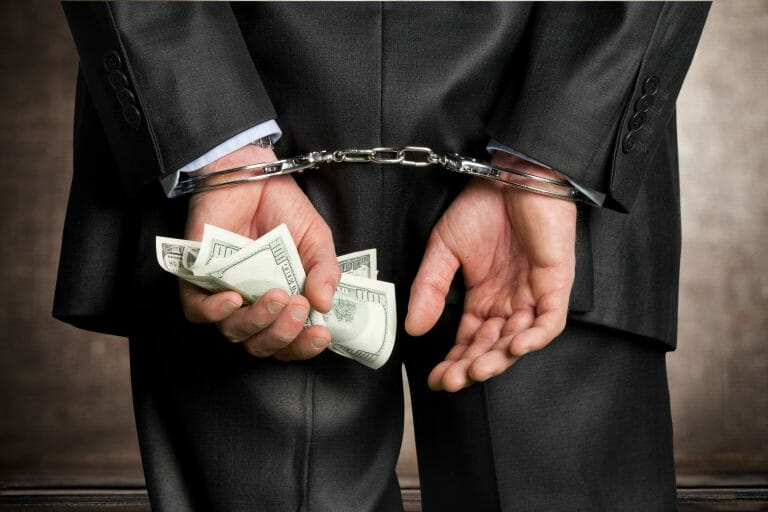
Chainalysis concludes that cryptocurrencies are not an ideal way of storing illicit funds. Sensationalism and misinformation have linked the use of crypto assets to terrorism.

Blockchain analysis firm Chainalysis released a report dismissing the narrative that has linked the use of cryptocurrencies like Bitcoin to terrorism for years.

In its “Fact-Finding” report, published last May 20th, the company states that there was sensationalism in the handling of the information that mentioned the possible use of Bitcoin and other cryptocurrencies to finance terrorism.

This includes the recently revealed possibility that ISIS has a “war chest” investment at USD 300 million worth of Bitcoin. Although this information was not supported with solid evidence, several major media turned the words of Hans-Jakob Schindler, Head of the Anti-Extremism Project expert group, into sensational headlines, according to the Chainalysis study.

The report added that most terrorist financing campaigns raise less than USD 10,000, which indicates that adoption is limited. Besides, if ISIS had converted its oil revenues into Bitcoin, the trading volume of regional stock exchanges and money services companies would reflect this flow of funds.

The firm also reflects on the responsibility of disclosing information on an issue as relevant as terrorist financing. They explain that fake news cannot only misinform people but also harm the reputation of cryptocurrency companies and the industry in general.

Chainalysis adds that media releases have been amplifying the findings linking cryptocurrencies to terrorism. He referred to the focus of the news about a cryptocurrency fundraising campaign, which the Popular Resistance Committees (PCR) led through the financial services platform Cash4PS. In this regard, the study revealed that, if the PRC was raising money, the amount did not exceed 24 million dollars.

When Disinformation Attacks

The firm also verified other crime news associated with the use of cryptocurrencies that were released this year. Said news highlighted payments with Bitcoin to facilitate the Easter Sunday bombing attacks in Sri Lanka which ISIS conducted. However, Chainalysis notes that the media releases were not in line with the actual findings.

The firm’s analysis suggests that those findings are probably wrong. It also indicates that the USD 10,000 transaction, and the subsequent balance increase of over USD 4 million, were only internal transactions that are standard practice for a payment processor.

The document rules out the possibility that cryptocurrencies are being used for storing illicit funds. It clarifies that, unlike cash and other traditional forms of asset transfer, cryptocurrencies reflect transparency. “Each transaction is recorded in a publicly visible ledger. With the right tools, users can prevent bad actors from abusing the system for financing terrorism and other crimes.”

The data provided by Chainalysis coincides with various studies conducted in different countries, which show that cryptocurrencies are not used for criminal activities as often as many think. Even so, many of the news reports that the media usually broadcast tend to highlight this idea.

In 2017, a prestigious think tank from the UK published an article about the apparent relationship between Bitcoin and the groups dedicated to terrorism that still exist today. In the text, it is revealed that such a connection is not as clear as people thought.

By Alexander Salazar

Increases and Falls in the Altcoins Market Can Be Detected Before They Occur

Abnormal increases in purchase orders can help to detect increase and fall schemes. The largest groups managed to generate volumes of USD 500,000 on average.

The groups of operators, who cause price increases and falls, cannot manipulate the value of Bitcoin (BTC) or that of other large cryptocurrencies. However, investors in small altcoins have a way to avoid such pitfalls, according to a new study.

A group of researchers from the Sapienza University of Rome wrote in May a document titled “Pump and Dumps in the Bitcoin Era: Real-Time Detection of Cryptocurrency Market Manipulations”. They say that it is essential to take advantage of the abnormal growth in purchase orders, which investors to buy extremely quickly, at any price.

The observation of these patterns, together with other information regarding volume and price, allows detecting when an increase and fall scheme in altcoins begins. According to the study, this algorithm does it a lot faster than any other solution currently available.

The report says that their real-time detector significantly surpasses the current state of the art, improving the expected detection speed in 30 or 25 seconds. It also highlights that exchanges can identify a pattern of increases and falls in altcoins better than any outside observer. Furthermore, the small forces of the law against increases and falls can dramatically reduce these market manipulations.

The researchers analyzed the period from July 2017 to January 2019. Of the eight groups of rises and falls that they identified, the largest were Big Pump Signal, Trading Crypto Guide, and Crypto Coin B, all of which focused on the great exchange Binance. The report indicates that these groups were all capable of generating an average volume of millions of US dollars. Big Pump Signals had the greatest impact with an average volume of over USD 7 million per operation.

Meanwhile, some small groups that operate Bittrex, Cryptopia, and YoBit generated average increment volumes ranging from a few hundred US dollars to nearly half a million USD dollars per increment.

Groups Operating Under Hierarchies

According to the study, a small group of leaders or “administrators” managed most of the groups that generate increases or decreases in altcoins. The said groups also had members organized in a hierarchy. Most times, the highest-ranking members were able to benefit from receiving notice of the next increase before the other members, possibly entering early while the price was still low.

According to the report, the advantage in terms of time of being at higher levels is usually 0.5 and 1 second concerning the next level, and the maximum advantage is in the interval between 3 and 8 seconds. It adds that the way to climb the hierarchy usually involves bringing new members into the groups.

However, it seems to be that these groups are now operating on a smaller scale. The aforementioned group, Big Pump Signals, now has fewer than 27,000 members. Its last publication, made on March 21st, stated that “the market was not ready for an increase.”

The current situation has changed this a lot since many people are watching the markets from home due to the COVID-19 pandemic. This means that boosting the market right now is good.

Therefore, small altcoin traders should be paying attention to “abnormal growth” in-market purchase orders. The researchers say that a much more careful investor would use limit purchase orders, to buy securities at no more than a specific price.

By Willmen Blanco

Despite Painting a Golden Cross, It Is Unclear Whether Bitcoin Can Reach USD 10,500

In recent days, there was a golden crossover between key moving averages. However, Bitcoin traders wonder if a strong bullish move to USD 10,500 is underway.

The price of Bitcoin (BTC) remains in a somewhat neutral zone, caught between two high-consequence paths. In recent weeks, the top-ranked digital asset on CoinMarketCap has struggled to exceed USD 9,900 to attack the USD 10,000 mark.

On the morning of May 19th, Bitcoin made another attempt to hit USD 10,000. At that time, the price quickly rose to USD 9,900 as some sort of setback in BitMEX’s trading engine caused the exchange to stop working for nearly an hour. The move did not last long and, for the rest of the day, the price stayed below USD 9,800.

That day, the mining difficulty rate fell by 6% since some miners closed their operations due to halving and Bitcoin’s current price.  They may also find it easier to mine Bitcoin after the difficulty adjustment.

Some traders believe that if the asset can go up to USD 10,200 and close above this level, the path ahead is bullish; especially if Bitcoin can hit USD 10,500. Others believe that a drop below the support zone from USD 8,900 to USD 8,550 means that prolonged side price action is expected for the rest of 2020.

The daily chart shows that Bitcoin continues to hit higher lows and stays above the multi-week rising trend line. Currently, the price continues to narrow into a pennant seen within 4 hours and 1 hour.

A sharp break in volume for this pennant should boost the price to USD 10,200, a point that is also aligned with the upper division of the Bollinger Band indicator.

Golden Cross and Coming Price Rises

Traders typically interpret the cross between moving averages as a bullish signal. Therefore, as the move nears its end, Bitcoin’s price could see a surge in buying pressure. This is a possible reason to expect the digital asset to exceed USD 10,000 and test the USD 10,200 level in the short term.

It is important to keep in mind that a sharp rise does not always follow a golden cross. For example, the golden cross of February 19th occurred less than a month before the catastrophic drop to USD 3,750 of March 13th.

In the short term, traders are looking forward to seeing if Bitcoin can break the pennant and exceed the resistance zone from USD 9,900 to USD 10,000. If the volume allows, a move above USD 10,071 will clear the way for the digital asset to climb to USD 10,200.

If 2020 high is exceeded at USD 10,500, the price would be above the long-term downtrend line since the all-time high of USD 19,800. Many traders consider this the confirmation of the start of a new bullish cycle.

From a bearish point of view, the repeated rejection of USD 9,900 and USD 10,000 increases the chance that the price will fall to significant support levels. A drop below USD 9,600 could cause the price to fall to the support level from USD 8,900 to USD 8,550, and below it, from USD 7,438 to USD 7,200.

By Alexander Salazar

Fourth Crypto Cycle in Bitcoin and Other Cryptocurrencies Is Approaching, According to Investors

Bitcoin is on its way to becoming the best-performing asset in 2020. Andreessen Horowitz believes that there will be a new surge in the cryptocurrency ecosystem.

Bitcoin will become one of the best-performing assets of the year. However, its price is still far from reaching an all-time high in USD 20,000 of late 2017.

Andreessen Horowitz, the Silicon Valley investment capital company, has foreseen the fourth cycle in cryptocurrencies, which could send the price of Bitcoin much higher.

Andreessen Horowitz partners, Chris Dixon and Eddy Lazzarin said that the 2017 cycle produced dozens of exciting projects in a wide range of areas, including payments, finance, gaming, infrastructure, and web applications.

Last April, Andreessen Horowits announced the addition of USD 515 million (in Bitcoin and other cryptocurrencies) to the fund of USD 300 million that it had launched in mid-2018.

The 2020 fundraiser, which smashed the original goal of USD 450 million, will be dedicated to blockchain and cryptocurrency projects. These include the areas of decentralized finance, next-generation payments, and decentralized Internet.

Although crypto cycles seem to be chaotic, they have been able to promote the growth of new ideas, codes, projects, and initiatives, which are the main drivers of software innovation, according to Dixon and Lazzarin.

They added that those who have been involved in cryptocurrencies for a long time see the ecosystem as though it were growing in cycles, alternating between periods of high activity and crypto winters.

The venture capital (VC) company identifies an underlying order in the first three cycles in cryptocurrencies in the years 2011, 2013, and 2017. First, the price of Bitcoin and other cryptocurrencies increased, leading to new interest and activity in the social networks.

New users are involved, contributing new ideas and codes, as well as creating projects and initiatives. These project launches inspire more people, finally culminating in the next cycle.

The Bitcoin and cryptocurrency price innovation cycle model is based on anecdotal information and evidence, according to Dixon and Lazzarin.

Dixon and Lazzarin say that they have had hundreds of conversations with cryptocurrency founders. They report that some investors first heard of cryptocurrencies when prices went up and everyone was talking about it.

The executives added that some of them thought that this was just about money. However, they note that they have started learning about the potential of this technology, and eventually fell in love with it.

The company has also analyzed 10 years of data, including comments on subreddits about cryptocurrencies on Reddit, Github’s allocations to repositories, and financing information from Pitckbook.

Meanwhile, the Bitcoin and cryptocurrency community is still readjusting after the halving. This event led to the reduction by half in the issuance of coins.

Regarding the amount of Bitcoin that those who maintain the network receive, there was a reduction from 12.5 BTC to 6.25 BTC earlier this month.

Many have warned that the price of Bitcoin could plummet as a result of the third halving. However, most analysts seem confident that the price of Bitcoin will eventually increase.

By Alexander Salazar

Delay of Rainy Season Leads to Disconnection of Bitcoin Miners in Sichuan

According to media, the rainy season could start in late May. Authorities will strengthen surveillance of energy use due to high demand.

Some Bitcoin mining farms in China’s Sichuan province have been disconnecting their mining equipment due to electricity shortages caused by the delay of the rainy season.

On May 18th, a local government announced that the electricity load in the region has increased by 22% since May 1st. However, the flow of water in local rivers has decreased by 20%, resulting in a deficit of hydroelectric supply.

Under such circumstances, some areas may experience power outages at times of high demand, and prolonged high temperatures will further exacerbate the voltage. The document says that, whilst managing to increase electricity supply, the authorities will strengthen surveillance and timely energy management in operations with high electricity costs.

There is no specific mention that operators are under close surveillance, but everyone knows that Bitcoin mining is an activity that relies on heavy use of electricity.

According to local mining farm operators, the rainy season, which usually begins in May, has delayed this year and prolonged high temperatures in Sichuan, leading to an increase in electricity demand. The result of this situation is that some parts of the allocated power supply for Bitcoin miners went for use by residents and local businesses.

Some miners have had power outages for more than three days, and some others can only mine during the night. Areas near the capital city of Sichuan Chengdu, such as Wenchuan, are suffering from severe power cuts. Some remote places such as Ya’an and Kangding, with little electricity demand and enough rainfall, have few electricity failures.

However, miners know the unstable factor of the rainy season well, so they understand that mining during this period is a risky business. The rainy season in 2019 was terrible for miners, since it started without rains during the first month and then storms damaged many devices.

More Government Involvement

Another factor in this year’s rainy season is the change in the attitude of local governments towards Bitcoin mining operations. With the introduction of hydroelectric power consumption zones, local governments in Sichuan have intensified their support for compliance with mining operations.

This seems to be good news for the mining industry, especially for those entering the scene. However, mining veterans worry about possible stronger energy measures towards existing miners with illegal building or tax problems.

In early May, a mining farm in Wenchuan ‒ Sichuan ‒ was reportedly closed because of taxes and by the environmental protection department. They got a fine of 10 million yuan (equivalent to USD 1.4 million) and had to disconnect all of their mining machines.

At the moment, inadequate access to electricity is the biggest impediment to Bitcoin mining. According to the local weather forecast, it looks as though the rains will not start until the end of May or the beginning of June this year.

Bitcoin’s mining difficulty, a metric that shows how difficult it is for Bitcoin miners to solve the blocks of the blockchain to receive a reward, decreased by 6% last May 20th, in response to the hash rate drop after the third halving. The downward adjustment indicates that more miners have stopped working in recent weeks.

If the rainy season in the world capital of Bitcoin mining still refuses to come, more miners may be forced to disconnect their machines. Therefore, it is hard to predict to what extent the Bitcoin network’s mining difficulty and the hash rate will be affected.

By Willmen Blanco

Brazilian Securities Commission joins Federal University to Study Blockchain ​​Technology

The study program is aimed at Ph.D. students of the Federal University of Paraná in Brazil.

The Brazilian Securities and Exchange Commission (CVM) reported, through a statement, that it joined the Federal University of Paraná (UFPR) to conduct in-depth research on blockchain technology. The alliance is aimed at encouraging academic research to the different capital markets and promoting their innovation.

The initiative hopes to impart topics ranging from blockchain technology and digital currencies to the study of investment robots and new ways and methods of using technology in finance.

According to data that the CVM provided, the academic program is aimed at postgraduate students or those who participate in doctoral studies. The Innovation and Competitiveness Research Group of the Department of General and Applied Administration (GPITEC) at UFPR will provide the studies in these areas.

Bruno Luna, Head of economic analysis and risk management advisory at the Securities and Exchange Commission (CVM), explained that this high-level academic program will be adjusted to the current laws of Brazil, as well as the legislation and supervision of other countries in the world. This program will help graduates to understand the different legal, normative, and regulatory parameters of technology applied to finance.

Luna comments that these studies can lead the specialist to have the necessary capacities to handle data related to these technologies as well as in any other related research work.

“Ponte de Inovação facilitated and streamlined the interaction between the two institutions. We observed that the two could win by joining efforts in actions of interest together. The realization of this agreement will be very beneficial for everyone and, even more, for the market”, Luna said.

The expert also added: “We will help to form the research of the doctoral student, who will conduct this work, in addition to providing the greatest support in the prospecting of quantitative data and in the field research that may be necessary”.

Some of the research points that the academic plan hopes to develop are Blockchain and Cryptoactive Technology, Fintechs, Regulatory Impact Analysis, Traditional Financial Products, Artificial Intelligence (AI), Data Science, and New Finance Techniques.

On the other hand, Marcelo Barbosa, President of CVM, stressed that these studies help improve the relationship between state entities with the higher education academy. Besides, this project allows us to generate advanced studies on technological topics that could be useful for the country’s institutions in the future.

Barbosa also assured that this type of study could promote important changes in the current regulatory apparatus in Brazil. “The agreement will also address innovation, another topic of great interest to us and that can lead to actions with a positive impact on the sector, as well as reflect on our regulatory performance and policymaking in general. It is stimulating to have more than one university willing to promote and spread this knowledge”.

Representatives of the UFRP Postgraduate Department also commented that the program represents an important advance for the advanced study sector in the country. This is also another opportunity to strengthen the adoption of blockchain technology.

By María Rodríguez