New Users Are Surprised With High Fees on Ethereum Network

Users must spend Ether to send DAI as it works on the Ethereum network. The current fees are close to the all-time high price of the year 2018.

The DAI stablecoin, which maintains parity with the US dollar, gained great popularity in Latin American countries such as Argentina.

Several savers turned to DAI as a store of value due to the devaluation of the national fiat currency, state restrictions to buy US dollars, and a strong campaign by exchanges and some YouTube influencers.

When they want to use the DAI that they have acquired, they learn that they need to have Ether (ETH); the cryptocurrency of the Ethereum network, to send it from their wallets to other addresses.

Fees for DAI Take New Users by Surprise

A user in the Facebook group Bitcoin Argentina said that he had bought DAI on an exchange and transferred the amount to a wallet. He explained that he had to pay a fee in ETH, which he did not have, to pass them to another exchange.

Another member of that group posted that he had downloaded the Exodus wallet and put some DAI there. To withdraw it, he had to pay a fee in ETH. Fortunately for this user, Exodus sent him the ETH to pay the fee and was thus able to solve his problem.

Cases like these frequently happen. This problem adds to the high fees that the Ethereum network currently has.

At the time of writing this article, the average fees on the Ethereum network are 0.00731 ETH (USD 3.20) but they reached 0.01436 (USD 6.29) on August 12th.

Romina Sejas is a member of the team of a cryptocurrency exchange and active DAI promoter. She finds the number of people trading cryptos without reading and understanding the entire process to be astonishing.

Sejas added that people entered to buy cryptos until at least 6 months ago. They now enter to rule or arbitrate without understanding basic issues such as Gas/fees. This leads to unexpected claims and problems for those who do not make a responsible income.

Why So Much ETH Is Needed to Send DAI

Ethereum is a network with its accounting on its blockchain. In that accounting, the native currency or unit of account is Ether. When users move money from one Ethereum address to another, what they transfer is Ether.

Ethereum allows “writing” on top of that currency and DAI is precisely a currency written on Ether. Therefore, moving DAI from one address to another means moving Ether.

The difference between DAI and Ether is that the latter is not a stable currency, but its value fluctuates in the market based on supply and demand.

On Ethereum, it is necessary to pay a mining fee to be able to include each transaction made in a block. The miner receives the fees that the transactions that are part of a block generated when adding them to the chain.

Fees have been increasing as the number of daily transactions approach levels not seen since the beginning of 2018. If proposals to lower fees, such as Escalator or EIP-1559, are not implemented, nothing seems to indicate that they will be reduced in a significant and lasting way.

By Willmen Blanco

The United States of America Uses Its Power to Know Everything about Bitcoin

From the Secret Service to the Army, everyone wants to know what is happening on the network. Companies from the ecosystem offer their surveillance services regardless of criticism.

Over the years, the increasing levels of adoption of Bitcoin (BTC) have generated a wave of regulatory measures in almost all countries. The United States of America is taking control of the first cryptocurrency to a space that involves the Department of Justice and the Internal Revenue Service (IRS), among other agencies.

The control of Bitcoin in the United States does not only correspond to financial or tax regulators. Different agencies that claim to have investigative powers are also involved, depending on the work that they perform.

The Securities and Exchange Commission (SEC) gets involved with Bitcoin as an asset, but the same is not the case with the National Security Agency (NSA). The former seeks to protect investors against potential fraud or scams, while the latter has the objective of ensuring the security of the country through the analysis of information.

It is no small thing that institutions attached to the Department of Defense, one of the secretariats with the largest budget in the world, take a closer look at Bitcoin. It is not only the NSA but also the Army as an armed organization and the Secret Service, which depends on the Department of Homeland Security.

Some of these entities are hiring companies from the ecosystem such as Chainalysis, Elliptic, CipherTrace, or Coinbase to conduct their inquiries. The fact that companies have offered their services to government agencies has caused a stir in various communities that continue to question these decisions.

President Donald Trump himself has asked the Treasury Department to “go after Bitcoin,” according to former White House national security adviser John Bolton. The head of state has made public his dislike of the cryptocurrency, saying that it is not money and that it facilitates drug trafficking and illegal activities.

Securities and Exchange Commission (SEC)

The SEC may be the government office with the most jurisdiction over digital assets. However, two announcements from the SEC in recent weeks further deepened its look at the cryptocurrency ecosystem.

On July 30th, the agency made public its plans to hire blockchain monitoring services to go over Ethereum smart contracts and decentralized finance (DeFi) applications. The SEC claimed that it wants to know what its logic and operation are like.

In 2017, the SEC had created a unit to fight cybercrime linked to ICOs and blockchain. The entity’s objective was to counteract possible threats that could affect investors and the financial industry in general.

Another commission close to the SEC is the US Commodity Futures Trading Commission (CFTC). In October 2017, it announced that it would consider cryptocurrencies like Bitcoin as commodities or assets.

Chainalysis-Government Relationship

The blockchain analytics company Chainalysis has had working relationships with the US government since 2015.

The company is the largest government contractor for blockchain analysis and cryptocurrency transaction tracking, with deals that would exceed USD 14 million. CipherTrace could have contracts for USD 6 million and Elliptic a contract for USD 2,450.

The platform serves to identify any cryptocurrency address and identify “the entity that controls the wallet and discover its related addresses.”

Daniel Cartolin, an analyst at the company, said that one of Chainalysis’ objectives was to address the priorities of government agencies.

By Alexander Salazar

Bitmain delays shipment of mining equipment for three months amid conflict between co-founders.

0

Chinese mining manufacturer Bitmain has delayed shipments of its Bitcoin Antminer mining machines for three months amid a conflict between co-founders, Jihan Wu, and Micree Zhan Ketuan, who are vying for control of the company.

As reported by various news outlets yesterday, Bitmain’s official Antminer mining brand posted a statement on its WeChat account informing customers of the delays. In the announcement, they said that “external interference on the management of the company” is the leading cause of the delay.

They also reported that customers whose equipment was in delivery in June and July would have to wait until September and October. This report means that Bitcoin mining equipment gets through pre-orders, which must be done two to three months in advance. The backorders were around March, which would mean a costly wait of six months or even longer for the miners.

Jihan Wu and Micree Zhan Ketuan, Bitmain Co-founders, are embroiled in a bitter fight for control of the company in a dispute that began late last year. Over time, it is evident that conflicts have started to impact the operations of the company negatively.

At the moment, to compensate customers for the delays, Bitmain is offering two alternatives. The first option involves cash coupons equal to the theoretical mining revenue between now and the actual delivery date. Those coupons could be a payment for future orders.

The second is that customers will be able to request a refund, provided they have not received their shipments 60 days after their written notification to Bitmain. Customers will not be able to choose both options simultaneously.

For several years, the two co-founders ran the company together; however, in October last year, Wu expelled Zhan, dismissing his position at the company in a statement. The event took place amid controversial circumstances, but from then on, Wu took control of Bitmain’s operations.

 There is a Fight for control

It did not take long for the conflict to go to court. In June this year, a court in China ruled in Zhan’s favor, allowing him to return to power. Zhan, who owns a 37% stake in the company, has now taken over control of Bitmain’s Shenzhen-based operations. However, according to Coindesk, the team for Jihan Wu’s portion of the company is who controls the WeChat account from which the delay communication was sent. According to this media, the situation threatens to become a paralysis of the company’s operations.

He suggests, Zhan’s side is likely to have no more comfortable time with shipments either, as Wu also controls the mining chip supply chain through Bitmain’s parent entity in Beijing. Previous reports had suggested that conflicts between the co-founders were delaying shipments.

By Jenson Nuñez

Russian Law Prohibits Cryptocurrency Payments

0

Russia will ban cryptocurrency payments starting next year, following a new law signed by President Vladimir Putin.

This decision is the result of the recent statement of the Russian regime, where they allege that the legalization of activities related to cryptocurrencies poses certain risks. However, as an alternative, the law supported transactions with so-called digital financial assets (DFA), which are token securities.

Putin signed the new bill on Friday, and it had been approved by the State Duma (Russian parliament) last week. The law takes effect in 2021 and would prohibit local cryptocurrency merchants, or users from buying goods, and services in the country using their tokens.

Furthermore, the bill proposes that individuals and government officials who got a restriction from creating or owning accounts abroad cannot hold digital currencies either. Among other concerns, the ban on cryptocurrency payments, as proposed in the bill, tends to ensure that the ruble, the money of the Russian central bank, is the only legal tender.

A more specific law regulating businesses related to cryptocurrencies is expected to be passed later in the remainder of the year, although no date has been disclosed.

Protecting the Ruble is the Goal.

The Russian government sees digital currencies not only as a means of payment but also as another means of saving and investing. This is a statement by the head of the State Duma Committee on the Financial Market, Anatoly Aksakov. The bill effectively aims to protect the only legal tender, the ruble.

While cryptocurrency payments become illegal in Russia by 2021, the bill allowed the issuance of digital financial assets (DFA); however, under the supervision of Russia’s central bank. With the approval of the central bank, other commercial banks and companies can operate with the financing agreements. Unlike cryptos that can serve as a payment method, DFAs cannot be used to pay for goods.

This statement means that companies can issue digital securities (tokens) on a blockchain if they are duly registered with the Bank of Russia as issuers and meet specific criteria.

The previous version of this bill, which had submitted to the State Duma, would make the issuance and trading of cryptocurrencies in Russia illegal.

Bank of Russia against cryptocurrency trading

Despite local lawmakers advancing regulatory frameworks applicable to cryptocurrency trading within the nation, the Bank of Russia still maintains a stance against these assets seeing business opportunities within the country.

The BoR contributed to the discussions for the creation of a bill launched during the third quarter of 2019, where it shared some provisions for companies, and token issuing entities, among which he highlighted that they must have a capital of at least some USD 660,000, and guarantee total access to the data of the Blockchain network in case it is required.

By Jenson Nuñez

China’s Official Cryptocurrency Continues its Development: It Will Be Deployed to Large Cities and Advanced Areas of the Country

0

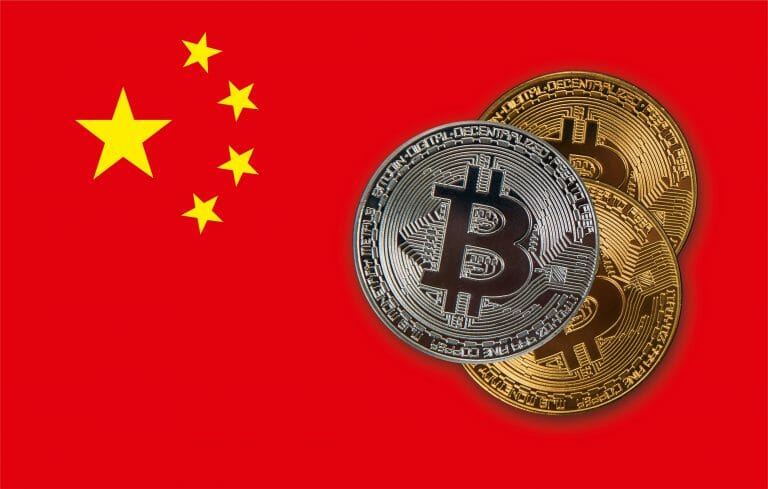
When it comes to Bitcoin, if there is a country that is betting on the blockchain to implement a cryptocurrency, it is, of course, China. The Asian giant began to roll out its official DCEP cryptocurrency in April this year with the help of four banks in the country. Now that the tests are progressing successfully, they are preparing to distribute it and make it operational in more cities in the country and developed areas.

Until now, the Chinese digital currency pilot program was minimally present and still without a clear timeline. Things are going to change soon. According to WSJ, the Chinese Ministry of Commerce has announced that it will expand the cryptocurrency trial to the country’s large cities.

They started with four cities (Shenzhen, Chengdu, Suzhou, Xiong’an) and the area related to the 2022 Winter Olympics. Then the program will expand to the northern part of the country covering Beijing, Tianjin, and Hebei province; also, the cities of the Yangtze River Delta and those of the Pearl River Delta. The latter includes Shenzhen, as mentioned earlier, Hong Kong, and Macao. They advise that cities in central and western China will also be able to participate in the testing program if they meet certain conditions.

With this announcement, China seeks expansion of its digital currency, essentially, to all areas with the most significant economic impact in the country. For this, it has the help of the four large banks in the country and also with large companies that are joining the initiative, including Didi Chuxing, the Uber-style transport company in China.

A long-term plan

In the statement of the Ministry of Commerce, they indicated that it aims to adapt “to the profound and complex changes in the national and international environment.” These are not randomly spoken words. The uprising tense atmosphere between China and the United States reflects a possible future in which sanctions by the United States will be more severe in China.

Of all these sanctions, one that can make full damage is that they are excluded from the international financial system, where the US dollar is the predominant exchange currency. If the digital currency DCEP is going to be China’s salvation in such a scenario, it will have to be seen, although they are preparing for it later.

China is one of the countries where mobile and digital payments predominate in general. Implementing a digital currency should not be complicated. On the other hand, they have been working on this system since 2014.

The digital currency pilot program will cover much of China’s most prosperous and wealthy regions; the Commerce Ministry said Friday: the capital Beijing and nearby Tianjin and Hebei province in the north; the Yangtze River Delta to the south; and, along China’s wealthy southern coast bill be highly benefited with this new approach to a more advanced economy.

By Jenson Nuñez

Users Will Have to Indicate How they Earn their Money to Trade Cryptocurrencies on BitMEX.

0

BitMEX, one of the leading derivatives exchange platforms in the bitcoin ecosystem, will require its users to go through a mandatory personal data delivery process to trade. Among these data, questions about the origin of their funds stand out.

Through a statement, the exchange site notified this Friday that its “user verification program” will take effect on August 28. From that point on, the platform will require its users with personal accounts to go through a four-step process “similar to identification checks at many other cryptocurrency exchanges.”

Among the identification requirements, BitMEX includes an identity document with a user’s photo, proof of residence, and a selfie. Users will also need to answer a series of questions about where their funds come from and trading experience.

From the date the identification program begins, current users of the platform will have six months to comply with the identification requirements. As of February 12, 2021, “it will be mandatory that all BitMEX users have completed the verification process to continue operating on our platform”, the text adds.

The statement specifies that this program does not involve its corporate clients. These must undergo the verification process in force since mid-June of this year.

BitMEX: “Identification is important to build trust.”

In an ecosystem where defending the privacy is a must by bitcoin users, BitMEX supports its ad by claiming that it seeks an environment of trust. “These new controls will create a more reliable and secure business environment for all users,” the statement read.

On the other hand, the text indicates that these new requirements will allow the BitMEX support team to “reliably verifies the real owner of an account in the event of a dispute, hacking or incapacitation.”

To promote compliance with identification requirements, BitMEX plans to launch a trading tournament. Only users who have gone through the data delivery process will be able to participate in that tournament, the details of which will see the light in the coming weeks, according to the publication.

The firm CipherTrace exposed in late 2019 that most cryptocurrency exchange sites use very little or simply do not use KYC (Know Your Customer). But many platforms have increased their information requirements.

Others have chosen, on the contrary, to eliminate the option. Hodl Hodl, for example, disabled the KYC option of its platform in March of this year.

Through social networks, users have expressed their discomfort with the decision to require identification in BitMEX. Some have even declared that they will withdraw the funds they have on the platform.

BitMEX is among the highest volume derivatives platforms in the ecosystem. According to data from CoinMarketCap, BitMEX is the second derivatives platform with the highest volume of exchange in 24 hours, behind Binance. In the last period, BitMEX has moved more than 2,146 million dollars.

By Jenson Nuñez