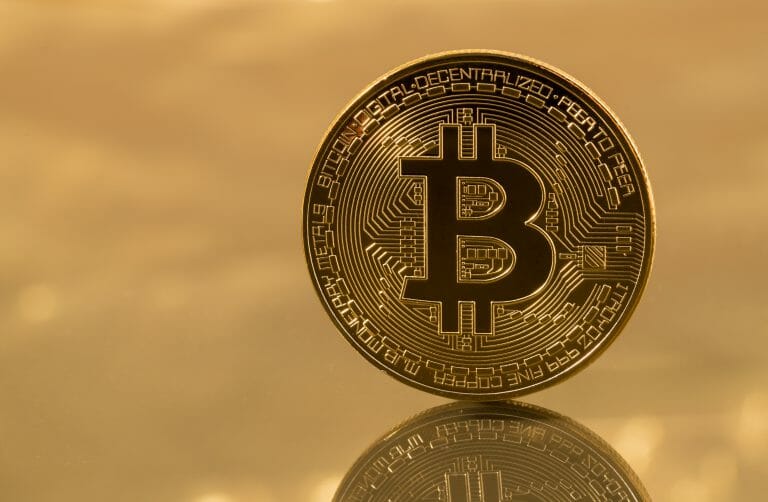
Digital Currency Group invests $ 100 million for bitcoin mining in the US.

0

Investment conglomerate Digital Currency Group (DCG) reported on Thursday about a new project, with which it intends to accelerate Bitcoin mining operations in the United States. To achieve its purposes, it has allocated an investment of 100 million dollars that will be managed by Foundry, the new subsidiary in which it has been working since last year.

According to the bitcoin mining map of the University of Cambridge, the United States records a monthly average of 5.29% of the hash power of the network that is produced in the world. However, at DCG they believe that the time has come for North America to regain a considerable part of the dominance established by China in the mining industry.

At the helm of the project will be Mike Colyer, as the CEO of Foundry, who points out that part of his task will be to bring more transparency and trust to the mining industry. He adds that the objective is not for the United States to have a dominant position, but for the network to spread throughout the world. That is why the motto of the company is “to promote a decentralized infrastructure”.

Staking refers to the process by which a user acquires and blocks a certain amount of tokens in a PoS network to validate transactions and receive rewards. With Foundry, DCG now operates four subsidiaries, including Genesis, CoinDesk, and Grayscale Investments. The latter has increased its possession of Bitcoin by 60,000 coins in the last 100 days, which is equivalent to about 33% of all coins mined in that period.

Digital Currency Group enters the Bitcoin mining battle

Access to cheap electricity will be decisive in Foundry’s plans, so its operations will begin in places with affordable and abundant energy, such as Georgia, Kentucky, North Carolina, and upstate New York. Its sites also include British Columbia and Quebec in Canada, two provinces with enormous hydroelectric capacity, as Fortune points out.

Although it seems counterintuitive, given that China may be a strategic competitor, Foundry is counting on Bitmain and other Chinese companies to supply mining equipment. Regarding this aspect, Barry Silbert, Founder, and CEO of DCG told the aforementioned media that he does not rule out that, in a short time, US companies will begin to manufacture mining equipment.

If anything, Bitmain Marketing Director Su Ke said he is satisfied with the partnership: “Through Foundry’s work and the financial support of our end customers, we have been able to ship a significant number of machines to the US. This year ”.

While it is true that with Foundry, DCG wants to enter a growing industry to make money, the competition in the world of bitcoin mining is fierce. In addition to China, countries like Kazakhstan are also focused on bitcoin mining. The country seems to have put its efforts into leading the industry.

In China, on the other hand, the main cryptocurrency mining areas would be demanding the cleaning of mining businesses. As CriptoNoticias reported last June in Yunnan, the dismantling of 57 “big data” projects was demanded. Meanwhile, last week in Inner Mongolia the government suspended subsidized electricity to 21 cryptocurrency mining farms.

By: Jenson Nuñez.

BitGo’s board states that its goal is to become an “independent, qualified and regulated” cryptocurrency custodian

0

If it achieves a softening, BitGo could start offering its cryptocurrency custody services in yet another region of the United States

The company applied to act as a trust with the New York State Department of Financial Services (NYDFS). The authority is in charge of regulating all products and services related to money that is conducted in the territory, even contemplating cryptocurrency businesses.

BitGo’s board states that its goal is to become an “independent, qualified and regulated” cryptocurrency custodian. In this way, they expect New York authorities to monitor the level of security and operational efficiency of their services. The platform will comply with KYC and AML standards, provide a hedge of $ 100 million in digital assets for its clients, and store all cryptocurrencies cold disconnected from the internet.

BitGO is betting on satisfying the growing demand for cryptocurrencies in the markets of institutional investors, who along with the years have found themselves more and more interested in digital assets. The company forecasts an increase in the purchase of bitcoin and other cryptocurrencies in the traditional market. A prediction that seems to be correct if we take into account that the MicroStrategy company recently bought more than 20,000 bitcoins to protect itself from future dollar inflation, caused by the coronavirus crisis.

The directors of this company assure that the New York authorities were interested in their proposal, which is why they expect a positive response to their request. Although New York is one of the states with the strictest regulations for the cryptocurrency market, recently the financial institutions of this jurisdiction have been talking about decreasing the bureaucratic obstacles imposed to allow the operation of cryptocurrency companies in the territory.

If it achieves a softening, BitGo could start offering its cryptocurrency custody services in yet another region of the United States. By 2018, the company became the first qualified custodian to store digital assets through South Dakota Banking. In this way, the company would be preparing for the cryptocurrency market to continue growing in the coming years.

BitGO bets on a bigger cryptocurrency market

In parallel to the New York plans, BitGo is also trying to fix the processing problems that the Ethereum blockchain currently has. Ethereum transaction fees have risen in recent months, the product of an explosion in popularity in DeFi applications, which is why BitGo is planning to build a sidechain.

The idea of ​​the company is to offer a service that allows transferring tokens at a lower cost and much faster. In this way, the firm will be able to continue working with its token anchored to Bitcoin, the WBTC, without major problems. The company currently owns some 46,000 bitcoins anchored to this ERC-20 contract, which allows them to mobilize and safeguard more than 500 million dollars.

Regarding the United States, this media reported yesterday that the Riot Blockchain Company recently announced the closing of an agreement for 18 million dollars with Bitmain. In this way, they guarantee to acquire 8,000 Antminer S19 miners that will be delivered from January 2021.

By Jenson Nuñez.

Bitcoin mining energy subsidies suspended in northern China

0

 There are suspicions that the reason would be related to the fact that mining companies have contributed little to the regional economy, says a report from the Weixin media.

The Department of Industry and Information Technology of Mongolia, north China, said in a statement that it suspended subsidized electricity to 21 cryptocurrency mining farms. Among those affected is AntPool, one of the world’s top five bitcoin mining pools, owned by the manufacturer Bitmain.

The Inner Mongolia government suddenly determined that it was necessary to cancel the preferential prices for electricity service for cryptocurrency mining. Although the real causes that prompted the measure are unknown, there are suspicions that the reason would be related to the fact that mining companies have contributed little to the regional economy, says a report from the Weixin media.

Another element that may be related to the move is the following of an assessment last year. The Inner Mongolia inspection team concluded that 6.732 million yuan ($ 960 million) could be recovered after removing certain entities from the grant.

The measure will reduce the profit of the farms involved, whose costs will increase by at least 33%. They will no longer have access to energy rates that ranges between 1 and 3 cents per kilowatt. The miners installed in other areas of the country like Xinjiang, fear that resolutions of this type will also affect them now, according to the same media outlet.

What happens in Mongolia

Inner Mongolia has been contributing about 10% of the hash power of the Bitcoin network that is produced in China. The country concentrates a monthly average of 65.08% of the world total, as can be seen in the bitcoin mining map of the University of Cambridge.

The northern part of China has been favorable for the settlement of mining farms that find in the region a cool climate, cheaper labor, and, so far, cheaper energy compared to other parts of the country. Due to the new electricity tariff, mining companies may consider setting up in other regions where their revenues will not be affected.

Electricity has been cheaper in Inner Mongolia since the Electric Power Distribution Center, the first provincial power market to formally function in China, was founded. This center offers lower prices for electricity service concerning the rates that exist in the rest of the country. Many in the region believe that access to cheaper electricity will allow the development of infrastructure that will boost the economy of Inner Mongolia.

 The dismantling of mini-projects

The local government of Dehong Dai and Jingpo Autonomous Prefecture in western Yunnan demanded the dismantling of 57 Bitcoin mining projects. These governments have considered cleaning up the mining businesses.

On the other hand, the study takes into account that the Chinese government has been increasing the pressure on mining and mining equipment manufacturing companies in the country. The regulation of electricity price and land use in China has caused a geographic diversification of the industry. Currently, Thailand, Canada, and the United States of America are offering miners competitive rates in terms of electricity costs.

By: Jenson Nuñez

The cost for the most electrically efficient mining card for Ethereum reaches $1,600

0

Beyond its cost, cryptocurrency mining enthusiasts are interested in the new products that are hitting the market. There is greater competition in the sector, together with companies specialized in alternative mining cryptocurrencies.

The American company Osprey Mining announced the launch of its new card to mine Ethereum and other alternative cryptocurrencies. The device has attracted the attention of the ecosystem for its electrical efficiency, as well as its high price, which is close to $ 1,600 per unit.

Unlike other graphics cards (GPUs) used to mine Ethereum – such as those from AMD and Nvidia – Osprey’s ECU50 is an FPGA device. This technology is reprogrammable and can be used to do specific tasks, such as mining the algorithm of a blockchain.

The ECU50 is compatible with Ethereum’s Ethash algorithm and achieves a hash rate of 41 MH / s with an electrical power of 75 watts. Also, the card has an 8GB RAM and a cooling system with two fans, as well as a copper structure.

As it is reprogrammable, it is compatible with various cryptocurrency algorithms. In the same way, it can be used as a video card in data centers or for video games. That is, it is very flexible in terms of its functions, and miners can adapt the card depending on whether mining is more profitable in one network or another.

High efficiency, but little profit for Ethereum mining

Although these features optimize cryptocurrency mining, miners on social networks have criticized the high price of the device. The ECU50 costs $ 1,599 per unit and has a 3-month warranty. As if that were not enough, Osprey Mining is a relatively new company, which began its operations in Silicon Valley in 2018.

Some professional cryptocurrency miners compared the profitability of this new card with the GPUs that work to mine Ethereum. They agreed that the device has excellent electrical efficiency, offering a power consumption of 75 watts when one of the most prominent GPUs on the market – the AMD Radeon 5700 – reaches just a minimum of 200 watts.

However, although the efficiency may be high, the miners indicated that the device is not more profitable than other graphics cards on the market. While ECU50 costs $ 1,599 is offering a hash rate of 41 MH / s, video cards like Radeon 5700 cost just over $ 400 and reach a hash rate of 55 MH / s.

If we consult what the profits of these two devices could be in a week of mining, it turns out that the ECU50 generates 1.51 dollars a week, while the Radeon 5700 generates up to 4 dollars a week. In other words, it is much easier to recoup the investment of the Radeon and start generating profits per year, than to recover the more than $ 1,000 invested in the ECU50.

Beyond its cost, cryptocurrency mining enthusiasts are interested in the new products that are hitting the market. Greater competition in the sector, together with companies specialized in alternative mining cryptocurrencies, could be a positive trend that generates better performance equipment for networks such as Ethereum, Litecoin, Dash, or Zcash.

The northern part of China has been favorable for the settlement of mining farms that find in the region a fresh climate, cheaper labor, and, so far, less expensive energy compared to other parts of the country. Due to the new electricity tariff, mining companies may consider setting up in other regions where their revenues will not be affected.

Electricity has been cheaper in Inner Mongolia since the Electric Power Distribution Center, the first provincial power market to formally function in China, was founded. This center offers lower prices for electricity service concerning the rates that exist in the rest of the country. Many in the region believe that access to cheaper electricity will allow the development of infrastructure that will boost the economy of Inner Mongolia.

By: Jenson Nuñez.

A renewable energy credit marketplace in SE Asia is led by Power Ledger

0

On August 25th, the Australian blockchain firm Power Ledger made a statement announcing the birth of a new marketplace, ideal for trading renewable energy certificates (RECs) across the Southeast Asian region, and part of Thailand.

The project is extremely linked to Power Ledger’s long terms collaboration with Thai RENEWABLE ENERGY firm BCPG. Their earliest joint project was set in 2018, a moment on which a conducted peer to peer renewable energy trial was led by both companies in one of Bangkok’s precincts.

Since then, Power Ledger has worked together with BCPG, and the Thai Digital Energy Development (TDED), and started the development of a blockchain platform intended to distribute and adopt green energy sources in the country.

Their primary plan is to use the blockchain platform to pioneer the rec marketplace that expands through the entire region. This is a very smart move considering the uprising interest in cryptocurrencies in the area.

BCPG plans to sell its RECs based on meter readings derived from the peer-to-peer platform in a REC marketplace that covers all Southeast Asia and an important part of Thailand. The whole operation, which includes: issuing, trading, and retiring the certificates will be recorded on the blockchain.

What is a REC?

A REC is a market-based instrument carefully designed to bring an economic incentive for electricity generation and consumption from green energy sources to organizations in a much easier way.

“Organizations want to make sure any REC purchased hasn’t already been used, as well as for settling that transaction quickly,” said Dr. Green. “Power Ledger’s blockchain-enabled technology provides a secure and accountable platform that can audit and streamline the buying and selling of renewable energy.”

The I-REC is building its reputation from the North American REC market, where Power Ledger recently partnered with the Midwest Renewable Energy Tracking System (M-RETS), and Clearway Energy Group to create a REC marketplace for North America.

“We’re looking forward to building on our work in the United States and replicating a similar effective model in the Asian market,” said Dr. Green. “Power Ledger has built a platform that can process high-volume REC transactions, ultimately helping companies meet their greenhouse gas emissions targets.”

The International REC Standard Brings a Global Standard for Energy Attribute Tracking

 These themes are being discussed by a high number of organizations expressing special interest and wanting to play a bigger role in the BCPG-Power Ledger project. “As a leading green energy producer in the Asia Pacific, we are excited to be the pioneer of REC trading in Thailand and the Asia Pacific, and create an expansion of our digital energy solutions using Power Ledger’s blockchain technology,” said BCPG President and CEO Mr. Bundit Sapianchai. “We believe that the REC marketplace will help promote the use of renewable energy and make the market more sustainable”.

The International REC Standard brings a global standard for energy attribute tracking: each REC charged gives proof that renewable energy is in the production process; exactly 1 megawatt of renewable energy is produced. This is an effective way to create safe improvements, and give enough sustainability to encourage governments, and other important companies to reduce emissions and help to care about nature.

By: Jenson Nuñez.

.

Snappa adopts bitcoin as a reserve to hedge against dollar devaluation

0

 Its announcement represents an important step in the future of bitcoin, as it demonstrates that the barriers to its mass adoption are constantly being broken down.

First, it was MicroStrategy, now the Canadian company Snappa announced on Monday its decision to adopt bitcoin as a reserve asset. The firm’s CEO, Christopher Gimmer, is convinced that the company is doing better since deciding to move a “significant amount” of its cash reserves to buy BTC.

In a blog post titled “Why We Save Bitcoin as a Reserve Asset,” Gimmer notes that Snappa began accumulating BTC in March of this year. He claims that global economic uncertainty, the devaluation of the dollar, and the digital scarcity of the cryptocurrency pioneer influenced his decision.

More companies understand the language of bitcoin

A couple of weeks ago, as reported by CryptoNews, MicroStrategy announced that it had made a total investment of $ 250 million in Bitcoin. With that, it made history as the first publicly-traded company to choose BTC as its cash reserve.

In a thread through his Twitter account, the restaurant owner explained how difficult it was to stay afloat after the COVID-19 shutdown, when the staff was unwilling to report to work due to benefits received from government assistance programs.

The Tahini’s founder added that once he adopted Bitcoin, he continuously learned about its technology. He claims that he realized that Bitcoin is “a true free savings technology that stores wealth across time and space.” It was then that he decided to change all his capital to BTC “as it offers a much better alternative to save.”

Like Snappa, Tahini also does not intend to halt its adoption process, stating that it will continue to acquire bitcoin for years to come and perhaps forever.

Although Snappa is not as big as MicroStrategy, its announcement represents an important step in the future of bitcoin, as it demonstrates that the barriers to its mass adoption are constantly being broken down. Snappa’s statement draws attention to the point that they continue to “accumulate [bitcoin] coins” continuously and have no intention of “selling them soon.”

Bitcoin is catching the attention of businesses due to its resistance to inflation. In that sense, Canadian restaurants Tahini’s also announced that they allocated all their cash reserves to Bitcoin.

Chris Gimmer, Co-Founder, Snappa, published the reason(s) behind the company’s new ideology on his website.”Would you rather save money in a currency whose supply is inflating each year? Or would you rather save in a currency whose terminal supply is programmatically fixed?” He questioned.

Gimmer made emphasis on possible uncertain conditions all over the world that could lead to a devaluation of traditional fiat. Moreover, He went on to express his disapproval of the Bank’s interest rate on the company’s account which is up to 0.45%. Holding cash in this way would drastically decrease the value of their holdings in few years coupled with the imminent inflation.

 The Difference Between Bitcoin and Gold.

In his published note, Gimmer also spotted the difference between Bitcoin and gold. According to him, at this point, Bitcoin is an excellent choice for Snappa than gold due to its functionality.

He insisted that Bitcoin has outperformed gold in the areas of fungibility, verifiability, and divisibility. Although, the tall history of gold proves that the yellow metal is an excellent store of value. Bitcoin, on the other hand, looks promising, and its bloom creates a lot of opportunity for growth.

“Bitcoin has only been around for 11 years and is still in the very early stages of becoming a trusted store of value. This, however, can be viewed as an opportunity since the future potential of Bitcoin is not yet priced in, “He stated. According to Gimmer, almost half of the company’s current cash reserves are now in Bitcoin, with plans to gather and invest more.

By: Jenson Nuñez