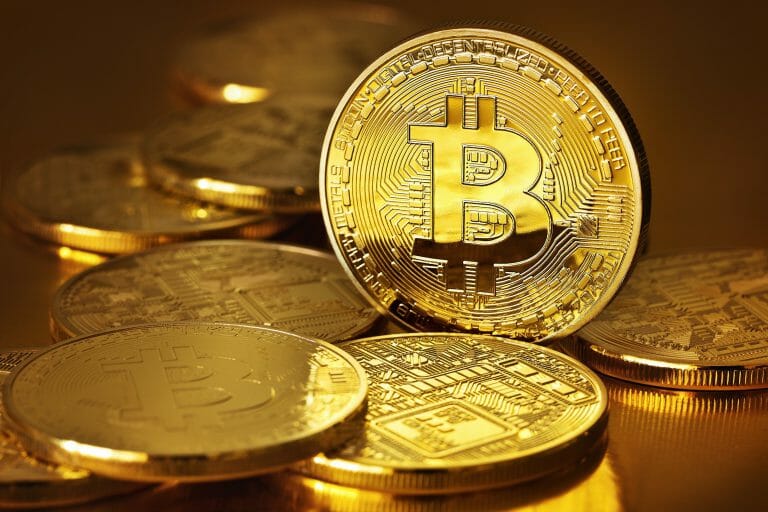
Bitcoiner Community Debates on How to Manage Their Coins

Control and verification are the basic aspects of every bitcoiner. Doubting and not investing beyond what is necessary is part of the “laws”.

On August 26th, members of the bitcoiner community opened a debate on eight “commandments” or rules that those who operate with and invest in Bitcoin (BTC) must comply with. The discussion already has 300 comments and covers aspects ranging from security and direct verification of transactions to the amount to invest.

User @Deathstaroperatorguy, who stated that “the main aspect of every bitcoiner is never to talk about the amount of BTC that he or she owns,” proposed the subject “The eight laws of Bitcoin.” As a second “commandment”, he quoted the popular saying “if they are not your keys, they are not your bitcoins.” Regarding this rule, he said that if the bitcoiner does not keep his or her Bitcoin safely in his or her wallet, it does not belong to him or her. Furthermore, he said that if he or she leaves Bitcoin on an exchange, he or she is not the owner.

From the third to the sixth “laws”, the participants in the debate emphasized that “bitcoiners must always thoroughly verify the transactions that they send or receive.” They also raised the fact of “constantly doubting about misleading offers and keeping keywords or seeds safe.”

The four “commandments” can be summarized as follows: ‘If it is too good to be true, it must not be true.’ The user invited “not to believe in false promises to duplicate bitcoins when sending BTC to another address and that free bitcoins do not exist” since they are a “scam”. He finished his proposal by saying that “it is essential to protect keywords, verify operations up to four times, and not fall into suspicious links.”

The seventh commandment is a reflection on the variety of opinions that exist in the Bitcoin ecosystem. The user said: ‘Everyone has an opinion on Bitcoin. Take it with a grain of salt. Never listen to a single individual and do your research.’

Concerning investing with Bitcoin, the eighth “rule” raises a well-known foundation in the world of finance: ‘never invest beyond what you are willing to lose.’

The forum members directed their opinions towards the ranking of the “commandments”. One of them identified as @DoubleEdgeEX, posted that “number 8 should be number 1, the basic knowledge of investors.” Others “violated” the first rule and began to say how many BTC they kept in their wallets.

Use of Bitcoin in the Community

To finish the decalogue of “laws”, some users agreed on what could be the ninth “commandment”: ‘make hold or maintain BTC positions in the long term’. The tenth rule would be “do not trade altcoins or shitcoins.”

What this group of bitcoiners proposes could be a kind of ABC that people conducting operations with Bitcoin should follow, regardless of their profile. In other words, keeping cryptocurrencies well protected should be a principle for both those who are new to the ecosystem and those who have inhabited it for years.

In times of the COVID-19 pandemic, these guidelines receive special attention as countless scammers seek to get hold of easy money through deception and scams. To be aware of this type of activity, users should learn about the most common scams with Bitcoin and cryptocurrencies in general.

It may seem repetitive, but the security and safeguarding of funds is a primary issue that bitcoiners must address as priority number 1 and not as an issue relegated to the background.

By Alexander Salazar

Blockchain Will Be Used for Governor Elections in Mexico

There will be elections in 15 municipalities in Mexico in 2021. Mexicans who have a Voting Credential will be able to register in the system.

Thanks to an electronic voting system that the National Electoral Institute (INE) of Mexico will enable, Mexicans residing abroad will be able to participate in the 2021 elections. According to the INE, this system will have a blockchain-based registration log and will guarantee that the vote of each person is secret using cryptographic encryption.

The INE explains in a video published on the electoralextranjero.mx portal the steps that voters must follow to be able to cast their vote within the system. The agency emphasizes that each voter must authenticate himself or herself in 2 steps, such as when accessing their e-mail.

The system will encrypt the vote cast and will send a QR code to the voter. In this way, the voter will be able to connect his or her identity with the vote, verifying that he or she has correctly registered it in the blockchain (or log) intended for this purpose. The INE has not yet specified which blockchain the system will use.

The National Autonomous University of Mexico (UNAM) and Deloitte have validated the designed system. The tests that these institutions conducted sought to verify whether the system guaranteed the principle of “one vote per voter”. This also aimed to verify the freedom and privacy of the vote, as well as the casting, transmission, reception, and counting of the vote.

Deloitte reported that 123 findings, which do not represent a critical risk, remained to be solved. However, the system is capable of withstanding attack, not allowing software installation, and only allowing one vote per citizen. The INE will have to overcome the problems found in early 2021 when it will conduct a new evaluation.

Elections That Will Occur in Mexico

The INE of Mexico expects voters to use the electronic voting system in 2021. In these elections, the inhabitants of Baja California Sur, Chihuahua, Mexico City, Colima, Guerrero, Jalisco, Michoacán, Nayarit, Querétaro, San Luis Potosí, and Zacatecas will elect the representatives for the governorship of their states, a migrant council, or a council of proportional representation.

Since September 1st, Mexicans will be able to register on the “List of Voters Resident Abroad” (LNERE). For this purpose, they must first process their Voting Credential at the consulate closest to their residence. Upon receiving their credential, they must confirm receipt and proceed with the steps designated in the aforementioned video.

Elections on Blockchain in Mexico and Other Countries

Another country that recently used blockchain in its elections for the constitutional amendment was Russia. The tests had problems since the platform allowed knowing the voter’s choice before counting the results and was the victim of hacking attempts.

One of the most sensitive aspects within this class of systems is precisely taking care of the privacy of voters while they are using a blockchain. In the case of Mexico, the INE has the cryptographic keys needed to determine the identity of voters, who can only trust that the institution will do what is necessary to keep them safe.

By Alexander Salazar

Despite Millions in Losses, Bitfarms Increases Investment in Bitcoin Mining

Bitfarms recorded a net loss of USD 3.7 million in the second quarter of the year. The company is installing more miners and expanding power generation.

In the second quarter of 2020 and the first half of the year, Canada-based Bitcoin mining company Bitfarms reported millions in losses. Its most recent financial report, which it released on August 28th, shows the negative numbers.

The balance reflects a net loss of USD 3.7 million in the second quarter of 2020 and a net decrease of USD 6.1 million in the first six months of the year. The first figure is almost triple that of the second quarter of last year when it stood at USD 1.3 million. In other words, the gap increased by 183% or USD 2.4 million in one year.

The semi-annual register also shows “red” numbers with an increase of 85% compared to the balance of the first semester of 2019, when the losses stood at USD 3.3 million. The company reported a decrease in general and administrative expenses that would be associated with the dismissal of personnel that occurred in April.

Despite the net losses, the company seems to be betting on Bitcoin for the long term, since it announced the purchase and installation of new miners and greater infrastructure for electricity generation. Besides, it revealed positive figures in terms of Bitcoin mining.

In the second quarter of the year, Bitfarms mined 815 BTC at an average price of USD 5,075 per unit. It also announced in July the acquisition and installation of 1,865 WhatsMiner M20S equipment with a capacity of 135 PH/s. It even made investments to increase the electricity generation capacity at its plant in Saint Hyacinthe, which would go from 10 megawatts (MW) to 15 megawatts.

Concerning direct Bitcoin mining operations, Bitfarms stated that gross mining profits amounted to USD 2.5 million. However, the figure is 51% lower than the one recorded in the second quarter of 2019, when they stood at USD 5.1 million. In other words, there is evidence of a drop of USD 2.6 million.

Even though the losses have increased compared to last year, Bitfarms said that it has identified the problems that led to the negative numbers, but that it is “satisfied with its business model.”

Four months ago, Bitfarms reduced its workforce due to the effects of COVID-19. Although the measure was temporary, nobody knows if they already reversed it or if they will do it in the coming months.

Other factors that may have contributed to the losses are the market volatility due to the pandemic and the Bitcoin halving that occurred in May, said John Rim, Bitfarms CFO, and COO.

The widespread quarantine and the COVID-19 pandemic have affected several companies in the Bitcoin ecosystem. In recent weeks, analysts reported that 2020 had become the most challenging year for mining.

The spread of the COVID-19 disease has also influenced the global manufacturing and distribution of ASIC miners, whose deliveries have experienced delays.

By Alexander Salazar

There Could Be Extension of Current Bitcoin Price Cycle Until 2022

In the first cycle, the price of the cryptocurrency peaked in less than a year. With increasingly long successive cycles, the current one could extend for 600 more days.

The price of Bitcoin began to record evolution in mid-2010. Since that year, this cryptocurrency has experienced successive bubbles, as well as abrupt drops. A recent study by Coin Metrics shows a comparative analysis of four Bitcoin price cycles.

These cycles begin at a local minimum until reaching a maximum point. The first cycle is approximately one year, from mid-2010 to mid-2011. A small group of enthusiasts starting in the trading culture knew about Bitcoin. At the same time, the price rose from a few US cents to about USD 20 in one year.

Then, Coin Metrics looks at the second cycle, ending in early 2014, when Bitcoin reaches the USD 1,000 barrier for the first time. Bitcoin exchange Mt. Gox fueled that bubble and then closed following the theft of 850,000 BTC in February 2014, affecting around 24,000 users.

The last full cycle extends from the beginning of 2015, with Bitcoin barely exceeding USD 200, until December 2017, when it reached an all-time high of almost USD 20,000. According to data from CoinMarketCap, the yield increased by 8,900% in this Bitcoin price cycle.

The current cycle begins with December 2018 low and is in full swing.

It is possible to see that the period that elapses for the first three cycles increases, with a duration of about 1, 2, and 3 years. On the other hand, the current cycle, for which the maximum does not seem to have occurred yet, has had a duration of more than a year and a half, about 600 days.

To be able to compare the four cycles, Coin Metrics represents them together on the same time scale, starting from a common origin. In this way, it is easier to see that the first cycle lasts less than half the second cycle and that the third cycle is longer than the previous one since it extends beyond 1,000 days.

Based on the analysis, historical data do not guarantee that probable patterns will repeat themselves in the future. However, it is possible to observe that each price cycle is longer than the previous one. Besides, the speed of price growth for the first three cycles is lower in each successive cycle.

The current cycle started with a greater push than the previous one, but it is possible to appreciate the effect of the drop that occurred in March. Even so, there was a price recovery fairly close to the curve of the last cycle.

If the current cycle has the same duration as the previous one, it would still take 600 days to reach a maximum. This hypothesis would imply that the current Bitcoin price cycle would end in 2022.

It would be necessary to wait at least a year and a half until the next bubble occurs, which would have a lesser impact on the price.

By Alexander Salazar

Ransomware Attack Attempt Involving Bitcoin Payment Is Foiled by Tesla and FBI

0

The cybercriminals offered USD 1 million worth of Bitcoin to install malware on Tesla’s network. After an undercover operation, the FBI managed to capture one of the alleged attackers.

Tesla CEO Elon Musk wrote on Twitter that “this was a serious attack,” referring to a ransomware or data hijacking attempt involving Bitcoin payment. This event could have seriously affected the electric car manufacturer. The company and the FBI took swift action that managed to foil plans to put one of the company’s assembly facilities at risk.

In recent days, the US Department of Justice reported that the FBI captured 27-year-old Russian citizen Egor Igorevich Kriuchkov for having acted in a conspiracy. The agency does not specify who the incident was against, but Musk’s tweet confirmed that the reported Nevada Company was Tesla.

According to the report, Kriuchkov offered to pay USD 1 million worth of Bitcoin to an electrical engineer at Tesla’s Gigafactory (lithium-ion battery factory) to introduce malicious software onto the computer network. The goal was to steal the company’s patents, and intellectual property, and then request several million US dollars of ransom for not leaking those data.

Kriuchkov and the employee, who remains anonymous in the report, had allegedly met in 2016but contacted each other again via WhatsApp last July. Kriuchkov then traveled on a tourist visa to Nevada, where the two men spoke face-to-face several times between August 1st and 20th, according to the official report.

After some meetings, Kriuchkov formally proposed the employee to introduce malware into Gigafactory’s internal computer system. To do this, the cybercriminal offered to use a malicious accessory to corrupt the system.

Attack on Tesla as Desperate Plan to Get Bitcoin

Fortunately for Tesla, the employee did not lend himself to the attack but decided to alert the executives of the company, who in turn informed the authorities. Although the criminal offered to give him USD 1 to damage the servers of the battery factory, the employee preferred to warn his employer. He even served as a double agent on behalf of the FBI for several days.

According to the report, the FBI recorded a meeting between the attacker and the employee at a Reno gas station in Nevada. This was a part of its undercover operation. At that time, the cybercriminal explained the details of the blackmail plan. Soon after, Kriuchov was arrested in Los Angeles.

The FBI said that Kriuchov was working with a group that planned similar attacks on companies. They lure employees by offering to pay them huge amounts of US dollars or euros in Bitcoin, in exchange for installing malware. The agency added that one of these targets was the logistics company CWT Group, which reportedly paid USD 4.5 million for a similar ransomware attack last July.

The situation around Tesla makes it clear that hackers are increasingly confident or desperate, daring to travel and show their faces. At other times, attackers take advantage of vulnerabilities in online systems without resorting to physical presence to infect their victims.

By Willmen Blanco

Digital Euro Tests Will Begin in Spanish Banks

Some of the banks that would test the system include Santander, BBVA, CaixaBank, Bankia, and Banco Sabadell. This is the step that follows the testing of smart contracts for interbank payments.

There are signs within the banks of Spain that the Iberian country seeks to put them at the forefront in financial innovation in Europe. This is the beginning of tests with the Digital Euro, the potential digital currency of the European Central Bank, in September of this year.

The institution that would be in charge of running this project would be the Spanish payment services company Iberpay. Its main mission is to manage the interbank payments infrastructure, specialized in the exchange, clearing, and settlement of transactions between financial institutions.

In addition to Iberpay, the five main Spanish banks Santander, BBVA, CaixaBank, Bankia, and Sabadell would start to test a token equivalent to the Digital Euro. The announcement has been subject to delay due to COVID-19, but Digital Euro tests should occur between next September and October.

A 2019 report by Iberpay deals with a tokenized digital money model that Iberpay would issue. Although it does not directly mention the Digital Euro, it could be a token with similar characteristics.

According to the report, “the ECB would be in charge of the issuance of this foreseeable digital euro,” as is logically expected. They explain graphically that “for each digital euro issued, a physical euro would disappear.” The document adds that it would be like the chips in a casino, which only have value within that gaming establishment, but that they will exchange the chips for money at the end of the night.

Digital Euro as Challenge for Spanish Payment System

Internal sources note that “the proposed model has undergone a comprehensive evaluation from a legal point of view, as well as an analysis of the legal aspects to consider in the case of proposing a productive scenario, which includes possible changes in the corporate purpose of Iberpay”. Also, there is “the eventual need for ad hoc regulation, and new legal and contractual obligations,” as the document states.

In other words, no regulation governs the operation of this class of financial instruments. Therefore, it is possible to presume that this is one of the reasons why the company has not shared too much information about it.

Sources from the Bank of Spain assure that the institution “is aware of the tests and maintains frequent communication with Iberpay.” They also note that they do not participate in the tests, but it seems important that the sector is familiarizing itself with these new technologies for their possible future development.

Spain Wants to Get Ahead of Other Countries with Digital Euro

Although Spanish banks seem to want to get ahead of the rest of Europe, the truth is that they have competition. For instance, the Central Bank of France performed experiments with its version of the Digital Euro, whose tests were successful and allowed to liquidate at least EUR 40 million.

For its part, Italy gave the go-ahead to the Digital Euro in late June. However, there is no information about the results, so it is possible to conclude that it is still a proof of concept (PoC).

If Spain completes Digital Euro tests, it would have a significant advantage over other banks in the Eurozone. It could even influence the regulation that should be imposed throughout the region.

In 2019, the European Central Bank announced that it was studying the possibility of implementing a Digital Euro. The idea of the currency is to serve as an alternative to Bitcoin and other cryptocurrencies.

By Alexander Salazar