DeFi Fever Leads to Rising in Stablecoins and Tether Becomes King of This Market

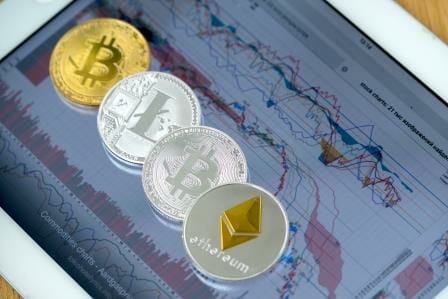
The capitalization of stablecoins exceeded USD 16 billion; Tether accounts for 85% of this market with a supply of more than USD 14,000 million.

There has been unprecedented growth within the cryptocurrency market thanks to the boom that stablecoins have been experiencing in recent months. The total capitalization of these US-dollar-pegged currencies between July 20th and August 31st went from about USD 12 billion to more than USD 16.5 billion, which might be a consequence of decentralized finance (DeFi) activity.

Tether (USDT) has had the biggest expansion, with special emphasis on its versions on Ethereum and Tron, according to data from CoinMetrics. Concerning USDT-ETH, its capitalization went from about USD 6 billion (in mid-July) to USD 8,740 million (in late August), that is, almost 50% more.

Regarding USDT-TRX, it jumped from USD 2,885 million to more than USD 4,000 million growth on those dates. The capitalization of the first version of Tether, on Omni, remained stable around USD 1,335 million during the period analyzed.

The momentum of stablecoins is striking as it is the first time that it has reached such high capitalization. A growth of 33% summarizes the rise when comparing the market figures in the last 40 days. It is possible to obtain a daily average of about USD 100 million that have entered this market by dividing the increase of USD 4,000 million in that period.

For the analysis, Coin Metrics also considered the stablecoin USDC, which grew from USD 1.11 billion to USD 1.522 billion, that is, by 40%. The remainder stablecoins analyzed were DAI (USD 277 million), PAX (USD 268 million), BUSD (USD 185 million), HUSD (USD 133 million), and USDK (USD 22 million).

According to the figures, Tether has 85% of the total stablecoin market, with a capitalization of USD 14,000 million between its three versions.

DeFi After Steady Stablecoin Growth

Despite its risks, DeFi has generated quick interest and loans, which has gained its popularity. Services like Compound, Synthetix, Curve, REN, Balancer, and Aave offer these applications. They operate on the Ethereum blockchain, where both profits and losses can occur.

To illustrate this, stablecoins and DeFi are a kind of “marriage” in which the latter works. In other words, the user uses stablecoins to inject capital into a platform and generate collateralization with another token.

Operators enter funds that become locked or at stake, which generates an increase in capitalization on the platform that the user uses and in stablecoins in general. By maintaining his or her positions, the user can receive returns or request loans. An example is that of Compound, which uses DAI, USDC, or Tether for these operations.

There are different opinions regarding how many millions of US dollars are locked in DeFi. Some versions claim that there are more than USD 6,000 billion, while more conservative ones place the figure at about USD 3,500 million.

In the case of stablecoins in general, coins of this type were leading the cryptocurrency market last July, according to eToro. Furthermore, the Financial Action Task Force (FATF) has already predicted that stablecoins will have massive adoption in the next few years.

By Willmen Blanco

Parts of Nuclear Reactors to Be Registered on RSK by Argentine Platform

0

A platform allows tracing the components of a nuclear reactor. They hope that in the years to come it will become a required standard in the nuclear power industry.

A platform that an Argentine company developed allows tracing all the elements that constitute a nuclear reactor by uploading information on a blockchain.

The platform, whose name is NuclearisTrack, was developed by Nuclearis. This firm, which started in a garage in 2008, specializes in manufacturing components and finding engineering solutions for the nuclear power industry.

They mainly manufacture sealing rings, which serve as containment barriers for the primary circuit in the cooling channels in reactor cores. They manufacture the sealing rings that the Argentine nuclear power plants Atucha I and II use. In their expansion plan, they have opened commercial offices in the United States and China.

NuclearisTrack is built on the RSK network, which enables creating smart contracts and dApps secured with the computing power of Bitcoin.

“We have nothing to do with cryptocurrencies, but we saw the possibility of using blockchain for the nuclear power sector,” said Santiago Badran, CEO of the company.

Traceability Is Essential for Nuclear Power Industry

The immutability of the data registered with NuclearisTrack is critical to the nuclear power industry. “Imagine uploading information that no one will ever be able to hack or modify to the blockchain,” said Badran to explain the basis of the development that they achieved.

Sebastián Martínez, CTO of Nuclearis, gave more details about the importance of traceability. He said that “the component of a nuclear reactor that we cannot support with documentation has no value.” “The documentation guarantees the quality of each document that we use, thus guaranteeing the reliability of the entire nuclear power plant,” he added.

Telling a joke typical of that industry, he mentioned that when a new component arrives at a nuclear power plant, it does so in a pickup truck, followed by a larger truck carrying the documentation for the component.

“All the documentation that supports the quality of the component is as important as the component itself,” he concluded. NuclearisTrack allows verifying that the documents have not undergone any changes, and it discards the possibility of making forgeries.

Free and Open Source Platform

The idea of Nuclearis is, as happened with the ISO 9001 standards, to reach the point where nuclear power plants require registering data on a blockchain. If this happened, they would exclude from the market those who do not comply with this procedure for lack of interest in working with them.

Martínez considers that someday when nuclear power plants make public tenders, they will ask their suppliers to comply with ISO 9001 standards and have the ability to upload their documents to a blockchain.

Future plans with NuclearisTrack include transforming the platform into an intuitive interface that does not require a programmer to adapt it to the needs of each user.

They will also seek ways to be able to upload the complete documents to the blockchain. At the moment, they can only upload “a fingerprint” that allows confirming that the paper-based document is genuine and has not undergone changes.

By Willmen Blanco

New Members Are Added by Bitcoin Sidechain While Its Decentralization Grows

Eight companies have joined the Liquid Federation in the last month. The total supply in circulation on the Liquid network is 2,593 L-BTC, equivalent to more than USD 31 million.

In a matter of a few months, the amount currently in circulation on the Liquid network, a Bitcoin sidechain, has increased by 63.29%. This relates to the new additions that the Liquid Federation had made, since the decentralization of the network increases as it adds projects.

The Liquid network reached more than 2,593 L-BTC, which is approximately the amount of money currently in circulation in that market. In recent months, its growth has been remarkable, considering that its total supply in circulation in March alone was 952 L-BTC, a little more than all the money in circulation on the Lightning network. It is important to remember that one L-BTC has a 1:1 value with BTC, hence about 31 million L-BTC are recorded on this Bitcoin sidechain.

The arrival of new projects, which are mostly exchanges or investment funds, could explain this growth. They intend to use the Liquid network to take advantage of its speed to verify transactions.

The addition of 8 new projects in late July and another 10 in March now total of 52 members in the Liquid Federation. According to the governance model of the sidechain that Blockstream developed, the addition of more members could help decentralize the network and increase its security. One month ago, they stated that “decision-making on the development of the network is becoming more distributed.”

It does not matter whether the security of one of the keys is at risk in the federated model since the history of the transactions is secured in the rest of the nodes. In other words, if the number of participants grows, the sidechain will become more secure. This is because there is a distribution of responsibilities to manage the validation of transactions.

In the same way, the Liquid Federation’s roadmap includes an upcoming update called Dynamic Federations (DynaFed). It will allow “any of the members to add new officials to operate and secure the sidechain.”

New Members of Liquid Come from Different Sectors

The most prominent new members are companies such as cryptocurrency exchange INX, which recently announced a public sale of tokens with which they plan to raise USD 129.5 million.

In recent months, Satoshi’s Games has sought to integrate the Lightning network into its gaming network. It is also using Liquid to tokenize skins and weapons in its Lightnite game. This allows its players to withdraw them and trade them with other players and verify their scarcity.

Other additions that the Liquid Federation has made include CoinShares, Condensat, JST Capital, Paymium, PetruchevCapital, and Seven Labs. They will run projects on a network designed to provide faster transactions and smart contracts.

In 2020, the Liquid Federation has added companies of the stature of hardware wallet manufacturer Ledger, crypto trading firm MerklePro, blockchain tool developer Wyre, or exchanges Hodl Hodl and STOKR. These join other members of the federation like Bitso, BitMex, and OpenNode.

By Alexander Salazar

US Court Confirms that Snowden Is Right by Describing Surveillance by NSA as Illegal

Collecting data from millions of phone calls could violate the Fourth Amendment. Snowden and organizations related to his thinking celebrated the legal ruling.

A US Federal Court ruling against the National Security Agency (NSA) for violation of privacy was a reason for political activist Edward Snowden to celebrate. The court determined that the surveillance program that collected metadata from millions of Americans’ phone calls was illegal and possibly unconstitutional.

Snowden, who currently lives in Russia, said that the news reported seven years ago that he was “accused of being a criminal for telling the truth.” He said that he did not imagine that he would ever see US courts “condemn the activities of the NSA as illegal” and give him “credit for reporting them.”

The court made reference to the possible violation of the Fourth Amendment to the US Constitution. This article guarantees the right of the inhabitants “that their persons, addresses, papers and effects are safe from arbitrary searches and arrests.”

The rights that this amendment indicates are valid unless an oath or protest confirms “a plausible reason” that describes the place that will be searched and the people or things that will be detained or seized.

A legal appeal that four Somali immigrants filed led to the current court ruling. These individuals received a conviction in 2013 for the crime of raising funds to finance terrorism. The investigators reached these conclusions after gathering evidence from the NSA’s surveillance program.

In relation to this particular case, the Court itself clarified that, even though the four convicted Somalis obtained the data unconstitutionally, they are still valid as evidence. For this reason, their legal situation remains unchanged.

Victory for Right to Privacy

Snowden, along with other individuals and organizations committed to the defense of personal privacy, celebrated the recent legal ruling. Among them, the American Civil Liberties Union (ACLU) stated that the sentence “is a victory for our right to privacy.”

During the presidency of Donald Trump, this organization has initiated more than 400 cases against the US Government. They maintain that “the aggression against civil liberties and civil rights is greater under this government than in any other in history.”

In mid-August, the US president said that he would consider the possibility of giving Snowden the pardon. The reason for that was that many people thought that the activist was not receiving  a fair treatment. Trump may have changed his perspective on the situation of the former spy.

Snowden Defends Bitcoin

Snowden has lived in Russia under political asylum since 2013. He obtains financial resources through his conferences, for which he charges over USD 10,000. He has even participated in debates about Bitcoin, in which he has praised the freedom and privacy that this cryptocurrency can provide.

He has said that people live in a world where privacy is for professionals, experts and the rich, that is, for the elite. It is necessary to live in a world where privacy is accessible to everyone, not as a privilege, but as a right, according to Snowden.

By Alexander Salazar

In Face of Upcoming Hard Fork, Name of Bitcoin Cash Is in Dispute

Currently, 55% of the nodes are not compatible with the implementation by the ABC group. The rule that discounts 8% from the miners’ reward is the point of disagreement.

It seems final that a hard fork will occur in the Bitcoin Cash environment. There is still division between the ABC and BCH Node development groups over the implementation of the “coinbase rule”. It is a type of tax that imposes a contribution of 8% on the rewards per new block created. This would become the reason why the chain could undergo a division during the next network update scheduled for November 15th.

In mid-August, the Bitcoin ABC team announced the freezing of functions and the release of version 0.22.0, containing the new features to implement (coinbase rule and improvement of Mining Difficulty Adjustment Algorithm). Since then, both ABC and BCH Node have intensified the battle. Now they are seeking the support of the majority, since the rights to the Bitcoin Cash brand are in dispute.

The BCH Node rejects the coinbase rule activated by the ABC group, which wins more opponents every day. According to data from coin.dance, there are currently 1,257 public nodes on the Bitcoin Cash network. Bitcoin Unlimited and BCH Node represent the majority, that is, 55.05% of the nodes that are not compatible with the implementation by ABC, the team that developer Amaury Sechet leads.

According to Bitcoin Cash promoter Roger Ver, the hard fork is final. He has previously stated that he is against the implementation of the coinbase rule. “Diverting some of the reward from Bitcoin Cash blocks to pay a single development team is a Soviet-style central planner’s dream come true,” he commented in recent days.

Other members of the community consider that the ABC group has already marked its distance from the legitimate code, while the rest are determined to continue with the original plan. Some community members also believe that the real problem with Bitcoin Cash is developers that have power. With this, they suggest that the frequent disputes in the cryptocurrency ecosystem relate to private interests rather than to differences that may be natural between groups.

Less than a month ago, Sechet announced that the next network update would include the coinbase rule, which surprised the community. There was an immediate reaction from the community, not only because most viewed it as detrimental to the Bitcoin Cash ecosystem, but also because ABC applied the rule arbitrarily. Many believe that it will allow the diversion of funds from miners to some developers.

For the moment, the coinbase rule is irreversible as the software that will put it into operation is written to go live in November. A similar plan to fund the protocol had previously failed, which also threatened to fork the network.

Bitcoin Cash would be undergoing its third division if a new hard fork occurs. In 2018, Bitcoin SV (short for Satoshi Vision) was born after a fork. Before that, in 2017, BCH was born from the coordinated division of the Bitcoin (BTC) network.

By Alexander Salazar

How to Trade without Becoming a Victim of Scams, According to Eduardo Gavotti

The economist says that it will not be a good idea to jump in and start trading without any previous knowledge. He recommends avoiding websites that promise high returns to avoid becoming a victim of scams.

It is crucial for success to work ethically, especially when it comes to the stock or crypto market. It is essential to detect scams to avoid becoming a victim of those who seek to live on other people’s money. Besides, investors should never trust but always verify, according to economist and financial advisor Eduardo Gavotti.

Concerning experience working with financial services, the professional economist and trader revealed data that can help people start trading without falling into scams. He gives some recommendations to approach trading, without losing money.

Study, Analyze, and Determine an Approach to Start Trading

Gavotti considers that it will not be a good idea to jump in and start trading without any kind of knowledge or preparation. He says that anyone doing this will probably lose money. He adds that it will make more sense to do some research before starting to trade.

The economist recommends that investors have the analysis of the assets that interest them. They should determine the best time in the market to enter and take advantage of a wave of growth.

There Are No False Promises in Serious Trading

Gavotti also recommends not paying attention to anyone who approaches, ensuring that the trading can generate a 400% profit. He believes that whoever makes a promise like that is surely lying. He adds that anyone who promises big returns is claiming to already know the movement of the market, which “is impossible unless that person can predict the future.”

The financial advisor explains that traders or brokers do not bring good intentions if they do not specify whether the trading has a reverse side. To start trading assets, a person needs to understand that it is possible to make a profit, but that there are also risks of losing money.

Regarding Investing, Ethics Must Be the Greatest Benefit

The economist clarifies that there are two types of financial advisors. On the one hand, some make recommendations based on risk appetite and customer profile. “This type of advisor will give you a portfolio with a list of suitable recommendations for you to achieve your goal in a given time,” he said.

However, there is also another type of advisor, which Gavotti calls “pseudo advisers” as they have agreements with brokers (trading platforms). In other words, they are intermediaries, but they do not reveal this information to their customers. These people approach customers, request their money to manage their account, say that they will invest it, and ask to share the profits.

Gavotti said that ethical advisers manage their customers’ capital, receive returns in a certain period, and benefit from a previously agreed profit margin. On the contrary, pseudo-advisers promise a percentage of profit that they generally do not cover, and they push buttons very quickly, while the broker pays them for attracting customers and allocates commissions for volume traded.

Do Research to Detect Scams

Among his recommendations, Gavotti says that it is necessary to learn everything before selecting a cryptocurrency trading platform to operate. Investors must never trust and always verify, as he emphasizes.

Then he explains that it is like selecting a doctor since their reputation is as relevant as their diploma. Fortunately, people now have access to information on the Internet that can help understand who is reputable and who is not.

To avoid becoming a victim of scams, Gavotti advises rejecting websites that offer free things. In this regard, he said that it is necessary to doubt as they may be casting a hook to catch the unwary.

By Alexander Salazar