The Central Bank of the Bahamas to Gradually Launch Its CBDC

The launch of the Sand Dollar will be gradual and will divide into two stages, the first of which will be aimed at the private sector. The second phase of national participation will focus on government and public services.

The Bahamas is a tourist destination par excellence with spectacular landscapes, whose beaches receive millions of visitors every year. However, the country has a serious crypto project with which it will finally confirm that digital assets will dominate the world in the coming decades.

The Central Bank of the Bahamas will launch its digital version of the Bahamian dollar nationwide through authorized financial institutions. Previously, they announced that this is no longer a test since the CBDC project Sand Dollar will deepen in 2021.

Gradual Launch

The Central Bank of the Bahamas announced that its launch will be gradual and that the first part will focus on immediate readiness within the private sector. The digital currency will cover the three levels of authorized accounts subject to the proper “KYC” regulations.

Beyond the launch, the strong bet is in the next twelve months. In that time, “engagement and outreach with key private interested parties will intensify, extending until the first quarter of 2021.”

For its part, the second phase of national participation will focus on government and public services. Besides, it will become more intensive in the course of the first and second quarters of 2021, according to the Central Bank’s authorities.

Financial Inclusion

The governors are clear that the possibilities of access to financial development on the islands “are high by international standards.” However, the number of archipelagos makes it difficult for certain citizens to access banking services. That does not affect those living in the capital, Nassau, or in the main tourist sites, but it does affect a small portion of its nearly 400,000 inhabitants.

“The Central Bank is participating in the development of a broader national financial inclusion strategy that would address these problems. Despite this, better access to payment services would provide the conduit to more easily reach other financial services,” they acknowledged.

Strong financial training will accompany the technology strategy to “increase product awareness.” In doing so, “they seek to encourage more positive behavior around personal finances.”

Security Testing

The population was enthusiastic about the CBDC when it was just an idea in the political leadership, but it raised doubts about its security. Given that cryptocurrencies experience hacks and thefts daily; this was an issue to address. The Bahamas believes that it has an initiative that is resistant to any type of attack, based on the tests that it applied to its cybersecurity.

The most prominent features of cryptocurrencies include the fact that transactions are anonymous and difficult to track. For example, Monero manages privacy so well that it is cybercriminal’s digital asset of choice. This feature will not be available in the Sand Dollar.

While the use of paper money is the most anonymous form of payment in the world, this digital cash will pay “strict attention to confidentiality and data protection,” according to the report. It will be easier to track those transactions that could have some kinds of links to money laundering or terrorist financing.

This project would be an example for many other countries that plan to use it but have not developed the platform to do it out. Even though it is far from elite economies, the Bahamas showed its commitment to cryptocurrencies.

By Alexander Salazar
There Is a Collapse of the Correlation between Bitcoin and Gold

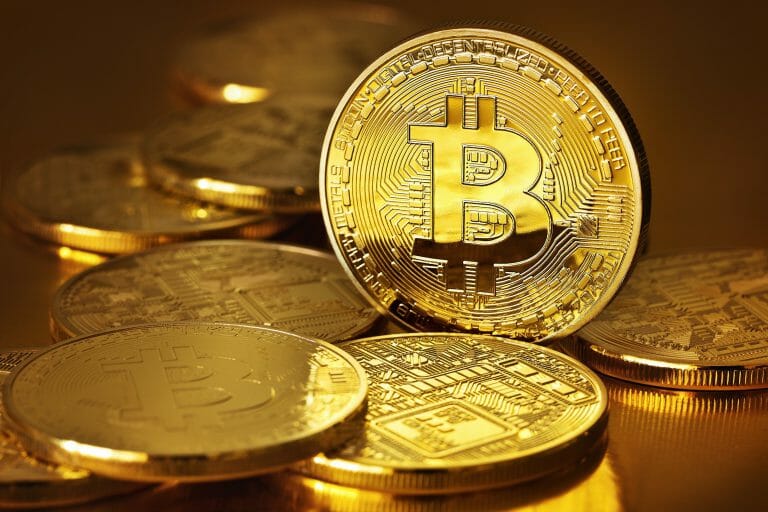
Gold is one of the assets that the falls in the markets have affected, leading it to decrease by 47%, the worst drop since mid-March. Following this fall, the correlation between gold and Bitcoin dropped by 24%, since the digital asset remained stable.

Although gold and Bitcoin have been related due to their importance and impact on the economic sector, they move in different scenarios (virtual and physical). Today, both assets do not seem to be so connected, since the coronavirus crisis has marked differences between them.

In 2019, gold and Bitcoin showed similar movements that led them to correlate at 0.827 for much of the year. However, this correlation that they were beginning to have is fading.

Market Falls

During the last week of September, the correlation between the digital currency and the precious metal closed in the red.

Analysts consider that financial markets, like the area of digital assets, have recently shown a series of variations in their prices. Various tensions and fears, due to the uncertainty about the next presidential elections in the United States, have caused this negative closing.

Various investment assets such as gold and cryptocurrencies reflected these tensions. While gold fell by more than 2%, cryptocurrencies such as Ethereum experienced double-digit declines, with losses exceeding 10%.

However, the recovery after the drop in value on September 23rd has generated some good signs. This movement showed a consistent rebound, which will continue until the last quarter of the year. Over the past two years, this rebound has distinguished itself by having a joyous start along with a second-half in which profit-taking predominates.

Gold-Bitcoin Correlation Collapses

The recent tensions harmed all financial markets, from stocks to commodities. Besides, the precious metal closed the quarter with a decline in value of about 47%. In other words, it fell by almost half, which is why analysts consider it the worst drop since last March.

Similarly, the declines since early August, when gold rose in value above USD 2,700 per ounce for the first time in history, have led to the current decline in prices. This drop of more than 10%, reaching USD 1,854 per ounce, favors the collapse of the daily correlation between Bitcoin and gold, placing it below 24%.

This figure makes it possible to highlight the good performance of the so-called “digital gold”, despite the particularly challenging context that September provided.

Crypto Market in Positive

In recent days, despite the above, the crypto market has shown positive signs, since it has had more than 75% above parity.

Out of a total of 15 main crypto assets, there are only two signs in red: Binance Coin (BNB) and Polkadot (DOT), which have lows of just over -0.2%. For their part, Bitcoin SV (BSV) and Cardano (ADA) are among the best placed, having more than 8%.

In the same way, when making an extension of the analysis that takes into account the top 100, only the cryptocurrencies Arweave (AR) and Swipe (SXP) perform better.

Concerning the digital asset Cardano, the market appreciated the return to trading on the Bittrex exchange, especially after the 30-day blocking. This return was because the maintenance interventions took place after the Shelley protocol upgrade in early July.

By Alexander Salazar

The launch of Ethereum 2.0 Phase 0: beacon chain is imminent

0

The Ethereum Foundation recently published a kanban board that lets you know how much time is left for the launch of Phase 0 of Ethereum 2.0 or “Serenity”. According to its proponents, this update will introduce the use of Proof of Stake (PoS) as a consensus mechanism.

The board, published on Github, shows a set of activities that must be completed to achieve the launch of Phase 0. This phase aims to implement the Beacon Chain, the network in charge of storing and managing the registry of validator nodes, the first nodes to implement Proof of Stake to record their transactions.

As explained in the Ethereum 2.0 “Roadmap”, the Beacon Chain will run in parallel with the current Ethereum blockchain to ensure there is no disruption to the data. To achieve this, several macro-objectives are established on the board some of which are marked as “required”. For example, one of the required targets is Medal; the test network that is currently being evaluated and that to be approved must run well for 10 weeks.

Misc-testing, Infra, Security, Specs are other sections that mark with the word “required” and within them, different tests and audits that are under observation.

However, the table has not been updated for 15 days, and nothing ensures that more required activities adhere to the board. If more tasks sum up, the wait for the long-awaited update will be lengthened.

From your Ethereum 2.0 client

Prysmatic Labs is one of the companies currently developing an Ethereum 2.0 client called Prysm. Recently, they announced that they contributed to some of the sections that appear on the kanban board and they say that their client could be ready by November of this year.

For example, they announced the performance of a security audit, the implementation of an API, and the programming of the voluntary exit of the validator nodes. All the code they have provided has been audited by Trial of Bits and Quantstamp, two computer security companies, to ensure their immunity from denial of service attacks and others.

Ethereum 2.0: what the community was waiting for

The Ethereum 2.0 implementation is one of the most anticipated events by the Ethereum community since it would come to attend to the saturation of the network. Currently, the Ethereum blockchain uses Proof of Work as a consensus mechanism and supports 14 transactions per second. However, the growth of DeFi has caused the percentage of network utilization to reach up to 97%. This significantly increases the price that users must pay in transaction fees.

This is why Vitalik Buterin and other developers are betting on the change to Proof of Stake. According to Buterin, this new blockchain would allow increasing the number of transactions processed to 100,000 per second. Besides, it would considerably reduce the electricity consumption associated with the mining process.

Ethereum 2.0 is an update that received an announcement for several years, but it seems that the final stage is finally underway. Recently, Justin Drake, Ethereum researcher, and Vitalik Buterin, founder of the project, could not agree on the launch date. However, it seems that 2021 will be the deadline in which we will finally see, at least, the first part of this update.

By: Jenson Nuñez.

How does the Bitcoin satellite node installed in Venezuela work?

0

Bitcoin Satellite Node Kit

The manager of AnibalCripto commented that the node works by receiving data from Blockstream’s EUTELSAT13 satellite –the company’s satellite planned for Latin America– and these are received by a satellite dish or satellite dish to later be decoded and presented to the user in real-time.

To access the satellite node, users must buy the kit on the Blockstream page with which they will connect to the node and receive the satellite signal. At this point, Garrido clarified that the user who does it must have some knowledge about computing, computing, and/or API to be able to successfully perform the installation and consequently run the node.

Knowledge in these areas is necessary because to make the installation successful, users must access an API interface via Ubuntu, which communicates with the node. All the API information is inside the Blockstream page, and with this, you can proceed to the installation. However, for this, Garrido indicates, it is necessary to know the subject since it involves relevant technical aspects.

The kit has a value of $399.99 for the basic version and $899.99 for the pro version. It is important to highlight that for the average income of a Venezuelan these amounts are quite difficult to pay.

No internet needed

Having access to this tool implies that users do not need an ISP (Internet Service Provider) to enter the Bitcoin Blockchain. Everything works through the satellite network, which receives and relays the data as a signal. The initiative allows transactions that take to confirm the same amount of time that it would take with an internet connection.

“The only way for a transaction to be late is for something to happen directly with the network or the mempool. But the satellite node could not incur any delay,” he said.

One of the main objectives of this initiative is to generate connectivity. Garrido indicated that they seek to be on the air even in the event of a blackout that leaves them without electricity.

It is an alternative for Venezuelans to have permanent access to the Bitcoin network. It is worth noting that this country has one of the worst Internet connections in the world, which greatly affects crypto users. Constant power outages and failures in the few Internet providers make connectivity in Venezuela inconvenient for everyone.

In addition to instability, Venezuelans must also struggle with the slowness of the connection. While the average speed in the region is 5mbps, which of Venezuela is just 1.7 Mbps. The Ookla Company ranks the Caribbean country as the slowest connection, and another study by the Economic Commission for Latin America and the Caribbean (Cepal) describes it as the worst connection in Latin America.

The arrival of this satellite node does not end here. This first node was installed in the city of Valencia by Aníbal Garrido and the programmer Álvaro Pérez. However, CryptoBuyer indicated that two more would be installed in the city of Caracas and in the state of Bolívar to guarantee coverage throughout the country.

By: Jenson Nuñez.

IOHK establishes an alliance with the UN and opens a call for the development of Blockchain solutions with Cardano technology

0

IOHK, the company that supports the evolution and growth of the Cardano ecosystem, announced a strategic alliance with the United Nations (UN), with which it supports the open call for the development of Blockchain solutions in terms of sustainability.

According to information published by various news portals, the idea is that those interested in participating in this call make use of Cardano’s technology and decentralized network to operate their solutions, for which there will be a reward of USD 10,000 for projects they are winners.

All proposals that wish to participate in this campaign must contemplate addressing the Sustainable Development Goals (SDG), a program implemented by the UN five years ago in which it cites 17 target areas to help with the use of these technologies, among which poverty, inequality, and environmental degradation stand out.

Regarding the Catalyst fund, IOHK indicated that this first financing for USD 250,000 in ADA funds is part of a pilot test, with which they will test the effectiveness of this program, contemplating that it will handle around USD 70 million in cryptocurrency annually to promote the project development.

Among the initiatives contemplated to receive investment through this program, maybe the ones proposed in the area of ​​marketing, infrastructure development, business planning, active media creation, development of solutions and use cases, as well as a wide variety of projects provided that can help promote the adoption and development of Cardano for the future.

Regarding the choice of beneficiaries, IOHK indicated that the people who manage ADA funds will be able to express their opinions and vote for the proposals they consider most important for the future of the ecosystem. In this regard, the directors of the company said that this idea, in terms of decentralization, is aligned with the objectives for the project.  This is because

Some projects presented in the past

Regarding the initiatives presented, the following stand out:

Design and construction of self-sustainable houses supported by the Cardano Blockchain, which could address the problem of housing and democratize property ownership, while supporting the homeless.

Remittance service to support the sending of money to relatives and acquaintances in different countries, which would be based on the Cardano Blockchain, subsequently guaranteeing a low cost in the payment of commissions.

Portable medical records system, which serves as support when identifying treatments and/or courses of action. At all times, this would guarantee the anonymity of the owners and would be very useful for conducting investigations. Blockchain-based ticket office system precisely to eliminate intermediaries, and in consequence, avoid reselling due to high costs.

By: Jenson Nuñez.

OpenBazaar 2.3 has a wallet with multiple cryptocurrencies and new support for Litecoin

0

The retail platform for the trade of articles that operates with cryptocurrencies, OpenBazaar, reported that it is currently facing financing problems that threaten its commercial operations and requests support from members of its community.

According to information published in a statement issued by the team, OpenBazaar indicated that it has assumed the operating costs of the support services it currently uses to date, among which are the seed nodes and APIs for the use of wallets, and exchanges of cryptocurrencies, which will stop working due to the economic problems that the company is currently facing.

In addition to the above services, the OpenBazaar team reported that the situation also makes it unfeasible to keep its mobile device application, Haven, in the iOS and Android application stores, so they will no longer be available from On October 1 of this year, and those who keep them downloaded may not be able to use all their operating properties.

Therefore, OpenBazaar members are asking Haven users to withdraw funds from the app’s wallet as soon as possible, as funds may be blocked after October 1. In turn, OpenBazaar indicates to users that it will soon be publishing information in which they will offer more details about the measures to be taken, and where it will put detailed instructions so that people make the due closure of their accounts by withdrawing the capital stored in their wallets.

Financing problems

Regarding financing problems, the team indicated that since 2014 OpenBazaar has been trying to materialize its vision for the creation of a fully decentralized P2P trading platform for articles, for which they carried out different calls and campaigns in which they managed to raise money from reputed investors.

However, the company was unable to reach the level of growth they need to guarantee the sustainability of its operations, as it was unable to reach the number of users necessary for this type of business to gain much popularity. This makes it difficult for the team to finance the operational costs of running the platform today.

Requesting community support

In light of the abovementioned problems, OpenBazaar sustained its operations with the help of donations made by community members. However, they indicate that they are already reaching their limits and that they have not had much success finding other mechanisms to finance operations.

In the coming days, they will publish explainers on how to release funds from nodes. They will also be open-sourcing our search engine and Blackbook indexer code for those that may want to run the infrastructure privately.

When they launched OpenBazaar back in 2014, they wanted to bring the full power of decentralized marketplaces to a global audience and were lucky enough to raise money from world-class investors to found OB1, and throughout the time they worked tirelessly on the vision of free trade.

Unfortunately, they have not achieved the level of user growth and adoption required to build a sustainable business off serving OpenBazaar/Haven users. As a result, OB1 cannot sustain funding the ongoing infrastructure costs.

Over the past several months, they also relied on OpenBazaar’s donation funds to support these infrastructure costs, but those funds will be deleted shortly. At OB1, They have desperately tried to secure more funding to not only maintain OpenBazaar’s support costs but execute the next phase of the protocol that OpenBaazar believes can unlock explosive user adoption. Sadly, everything went unsuccessful, leaving no choice but to discontinue these supporting services.

 They stated: “We would like to apologize for the short notice, which is the result of last-minute funding plans falling-through. We will do everything in our power to try and extend the window so that users can safely withdraw their funds from their OpenBazaar and Haven wallets”.

By: Jenson Nuñez.