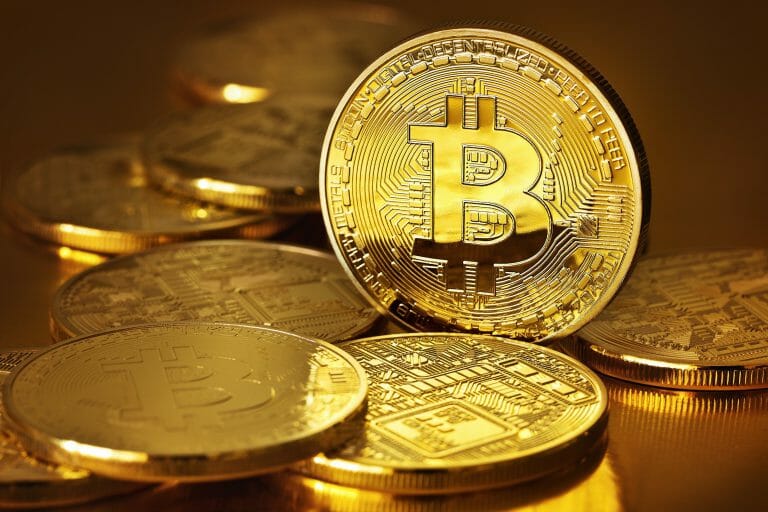
For the Second Time in 2020, Bitcoin Exceeds USD 12,200

This Year, institutional investment has driven the price of Bitcoin. The main cryptocurrency has been the highest-performing macro asset in 2020.

for the first time since August, Bitcoin’s price overcame the psychological USD 12,000 barrier. Many would have expected a profit-taking correction from traders. However, Bitcoin has continued to climb to a high of USD 12,280.74, being the second time in 2020 that it has reached this level.

Data from CoinMarketCap indicate that the parent cryptocurrency is experiencing a slight reversal, trading at USD 12,175 per unit, at the time of writing this article. It has maintained a trading volume of USD 36,720,325,040 (equivalent to 3,015,961 BTC) in 24 hours. The highest trading volume (5.55%) has occurred against USDT on Estonian-based exchange EtherFlyer, preceding Australian-licensed exchange IDCM by 4.56%.

Bitcoin Has Been the Highest-Performing Asset in 2020

The year 2020 has been turbulent and uncertain, but Bitcoin has managed to do well. This year could go enter history books as the moment in which institutions started turning to Bitcoin as a refuge. Apart from MicroStrategy, who invested more than 38,000 BTC, other publicly traded companies including Square and Stone Ridge have seen the main cryptocurrency as a safeguard for their wealth.

London Stock Exchange listing company, Mode Global Holdings, announced that it will convert 10% of its treasury cash reserves into Bitcoin, which coincided with its price increase. For that reason, they stated that they will make “a significant purchase”. They said that they will do it as part of their “long-term strategy to protect their investors from the depreciation of their currency”.

“Amid the challenges of COVID-19 and the UK interest rate at its lowest in the Bank of England’s 326-year history (0.1%), our confidence in the long-term value of Bitcoin has only increased,” according to Jonathan Rowland, CEO of Mode. He also stated that they are seeking to maximize the value of their returns after their recent Initial Public Offering (IPO).

It is possible to see in Skew’s annual returns statistics that Bitcoin has been the highest-performing macro asset in 2020, with a 69.39% annual return. Gold, a traditional refuge of value, follows the first cryptocurrency with 25.69%. Concerning the US dollar, it shows negative figures when observing its average in the last month and quarter, despite presenting a 1.24% annual return.

The community is very optimistic about these figures, which seems to be driving the interest of investors. In agreement with that, Bitcoiner and analyst from cryptocurrency exchange Kraken, Pierre Rochard, stated that Square’s purchase of USD 50 million worth of Bitcoin will fall short. For that reason, they will eventually make greater panic purchases when they see the advance of inflation. They added that even AAPL “will also make panic purchases.”

Despite all this, there could be great uncertainty for all the markets as a result of the next elections in the United States. The outcome of the electoral event could shake prices in the short term, especially if the candidates use new issuance of economic stimulus as a campaign strategy.

For these, and other reasons, Bitcoin has proven to be the best option for those who want to venture into the cryptocurrency world.

By Willmen Blanco

There Has Been a 500% Increase in the Average Value of Each Bitcoin (BTC) Transaction

The average value per transaction of Bitcoin (BTC) has managed to increase by 500% since July. A significant increase in institutional investments by firms such as MicroStrategy and Square and the support from PayPal seems to have contributed to this.

Bitcoin has experienced a 500% increase in average value per transaction since July. This has occurred amid a major bullish momentum for the main cryptocurrency.

The reversal of the stock market has been the determining factor in this new upward episode. The panic that seized the markets, following the statements of the International Monetary Fund (IMF), is another cause of the strengthening of the value of this cryptocurrency.

Bitcoin Experiences a 500% Increase, But Not in Price

The average value per transaction was about USD 25,000 last June, according to data from BitInfoCharts. The average currently stands at USD 151,000 per transfer.

In other words, the Bitcoin average value per transfer has increased by 500% in just about four months.

That is not the only thing that has surprised the Bitcoin community. There was a peak, which began on September 18th and lasted 48 hours, where the average value per transaction went from USD 105,062 to USD 151,779.

Compared to Ethereum, the current average value per transaction of Bitcoin is 190 times that of Ethereum.

Why This Increase in Average Value per Transaction Happens

One explanation for this is that Bitcoin is currently experiencing a significant increase in the institutional presence. This situation is capable of moving said amounts of money through the leading cryptocurrency.

This conclusion coincides with the announcement of the increase in investments in Bitcoin by firms such as MicroStrategy and Square.

However, data from BitInfoCharts regarding the number of new active addresses did not indicate a significant increase. In other words, the increase in operations is not due to significant growth in the number of new investors.

Bitcoin Also Gets a Push from PayPal

The leading cryptocurrency seems to have finally managed to overcome the USD 12,000 barrier once and for all. The new that PayPal would back Bitcoin has been the catalyst for this to occur.

Data from CoinTelegraph, Markets, Coin360, and TradingView confirmed the best day of Bitcoin in more than a year since its gains exceeded 7% in just 24 hours.

At the time of writing this article, Bitcoin is currently trading at USD 12,820, according to the CryptoTrend tool, Crypto Online.

The push from PayPal comes after it had announced its plans to support BTC and three additional altcoins: Ethereum, Litecoin, and Bitcoin Cash since next year.

There have been both positive and negative reactions to the news, but it certainly pushed the price of Bitcoin to a new level. It only remains to see if it will manage to resist.

Since its creation, the main cryptocurrency in the market has proven to be able to overcome its worst all-time lows. Besides, the increase in the number of institutional investments and the incorporation into international payment services like PayPal are signs of its growing acceptance.

By Willmen Blanco

Adoption of Bitcoin Soars in Turkey

Amid a strong economic crisis, the adoption of Bitcoin explodes in Turkey, as an alternative to the Turkish lira.

The economic situation in Turkey is certainly not the best. For several years, the economy of the Asian country has faced great difficulties. The construction sector that kept it growing until now overheated. This situation has led to a drop in GDP, increased unemployment, and the weakening of its national fiat currency, the Turkish lira. For these reasons, it is no wonder that the adoption of Bitcoin is soaring in Turkey.

Importance of Bitcoin in Crisis-Ridden Economies

Everyone knows the important role that Bitcoin has played in crisis-ridden economies. The fact is that cryptocurrencies have begun to have a better acceptance in recent years in developing countries. They have increased their adoption of virtual currencies, integrating them into their business models.

This is happening because, unlike developed countries, they do not have strong economies and fiat currencies. Venezuela, Argentina, or Nigeria, among other developing countries, do not have the same level of stability in their societies. Their population seeks ways to take refuge both from the weakness of their national fiat currencies and from the government controls that the State may exercise over their money.

In recent years, it has been precisely in these countries where the use of cryptocurrencies such as Bitcoin has grown significantly. Not only have transactions with the crypto asset increased but also its use by businesses and mining activities. In the last few years, it has been possible to observe the latter phenomenon in Turkey.

Turkey and Cryptocurrencies

The Turkish government has allegedly followed an aggressive foreign policy, aiming to revive the Ottoman Empire. The truth is that the economy of Turkey is collapsing, of which its citizens are aware. This situation has led them to look for alternatives that protect them from the weakness of the Turkish lira. Of course, these alternatives include the main cryptocurrency in the market.

As a consequence, in the last twelve months, peer-to-peer cryptocurrency exchange platform Paxful has experienced an increase of 274% in the number of user registrations in Turkey. According to its CEO Ray Youssef, “the rising inflation of the Turkish lira has been a great financial burden for Turkish citizens. They can use Bitcoin to preserve wealth against the instability surrounding the Turkish lira.”

The Chainalysis Geography of Cryptocurrency report confirmed Youssef’s view. According to this document, Turkey would be the Middle Eastern country with the highest rate of adoption of Bitcoin. It also has the largest number of users operating on the BTC Blockchain. This trend will continue in the future, as long as the economy of the country continues to suffer.

Once again, it is possible to see that countries with crisis-ridden economies resort to decentralized cryptocurrencies like Bitcoin. Since its creation, this crypto asset, in particular, has proven to be able to overcome its worst all-time lows. Therefore, it stills the best option for those who want to venture into the world of cryptocurrencies.

By Alexander Salazar

Following Hard Fork of Its Network, Monero Corrects Stuck Nodes

Monero activated The Oxygen Orion code with the hard fork occurring last October 17th. The price of XMR, the network’s cryptocurrency, has increased by 35% in the last four weeks.

Last October 17th, the non-contentious hark fork of the Monero blockchain occurred. Due to an error in the new software version v0.17.0.0, some nodes got stuck in block 2210720.

According to a post on Monero’s Reddit official account, the software error causes the sticking of both the nodes synchronized from scratch and the existing nodes not synchronized beyond the 2210720 block. Also, those that are offline waiting to synchronize get stuck. Regardless of this error, the network has continued to operate properly, they state in the message.

They made a minor update to the software version to correct the problem. They have been working on it since October 18th, according to the Monero blog. For that reason, the developers invite users to update to the new software version v0.17.1.1, which contains a patch to correct the error. They make it clear that the error has not affected those who have managed to synchronize the node beyond block 2210720.

The nodes that have gotten stuck on Monero include the localmonero.co block explorer and some third-party services such as bitinfocharts. One of the forum participants on Reddit noted that these browsers have been showing a much lower transaction count than what is occurring.

The Monero developers say that, in addition to solving all these stuck nodes, they are making other minor corrections with the patch. Among them, they mention an “improvement to the start/stop screen and a correction to wallet stalling on closing.”

Price of XMR Rises After Hard Fork Is Activated

Users could download the software version v0.17.0.0, called Oxygen Orion, since the end of September. The client arrived before the hard fork activated on Saturday 17th.

With the new code, they incorporated the support for a new type of ring signatures known as CLSAG (Concise Linkable Spontaneous Anonymous Group). This replaces the implementation of MLSAG (Multilayered Linkable Spontaneous Anonymous Group).

As a result of this new mechanism, the size of Monero transactions decreases by about 25%, while verification speed improves by 10%.

Even since before the hard fork, the price of the network’s cryptocurrency, XMR, has been experiencing significant growth.

Data from Live Coin Watch data indicate that, despite a drop in its price on the date of the hard fork, the advance of XMR in the last month has been around 35%. Since October 18th, the value of the cryptocurrency has increased again, rising by 4% in 24 hours.

In recent days, some news reports stated that Monero will add atomic swaps with Bitcoin to its blockchain. They will be able to do so thanks to donations that will finance the project. Previously, in January, the developers had announced that they were working on a new mechanism to increase privacy.

By Alexander Salazar

IMF Reports on Potential of CBDCs

The IMF has recently published a report discussing the potential of central bank digital currencies (CBDCs).

There are differences in the way central banks relate to cryptocurrencies, depending on the country. Many have considered the idea of developing their digital currencies, known as “central bank digital currencies” (CBDCs). However, the International Monetary Fund (IMF) recently explained in a report that CBDCs cannot solve all problems despite their potential.

Undoubtedly, central bank digital currencies (CBDCs) can benefit countries seeking to exert greater control over their monetary policy. The IMF explains the real situation of these assets in its recently published report.

What the IMF Report Says about CBDCs

The report mostly assessed the different pros and cons of CBDCs. However, it seems that its main conclusion is that users should see a CBDC as another monetary policy tool, not as the solution for all world economies.

In general, the document indicates that CBDCs do not change the economic forces that drive the international use of currencies. They are just digital forms of existing fiat currencies. However, the authors recognize that CBDCs could strengthen the incentives behind the substitution and internationalization of currencies.

The IMF report also concluded that a CBDC is not a unique solution for all mediocre economies. Besides, it will not save countries with high inflation or similar domestic problems.

Something interesting is that the report created some hypothetical scenarios for the issuance of a CBDC. Some of those scenarios view it as a niche tool only for cross-border payments, while others see it as a tool for currency substitution.

The report even considered a scenario in which people widely adopt a set of CBDCs and use them for both international and domestic transactions.

Benefits that IMF Finds in CBDCs

Of course, one of the main benefits of CBDCs is that they form a digital payment system. However, before countries can issue or adopt them, they should look at the international treaties governing monetary agreements.

In a world where people massively adopt CBDCs, issuing central banks must decide whether it is in their national interests to serve as the lenders of last resort for those countries that use their CBDC extensively.

This could be inconvenient since high external demand could require central banks to expand their monetary policy toolkit. However, the IMF report suggested that it would be possible to reduce this concern by setting certain limits.

Extra Comments

There are also private efforts to launch a stablecoin for international use, but the IMF warns that a truly global stablecoin poses its risks to monetary policy.

This kind of unsupported global stablecoin (GSC) would become a stateless currency. It would be possible to preserve its value through the commitment of big technologies to follow “a credible set of rules and principles”.

A global stablecoin could fulfill the role of a fiat currency in countries with unstable exchange rates or high inflation, the report warned. However, the adoption of a GSC could lead to a world where private companies direct the monetary policy of an asset to which countries would be subject.

For the moment, the IMF report focuses on the development and possibilities of CBDCs, since this debate is just beginning. There will be many alternatives and possibilities for people in the future, but it will be necessary to accept the consequences.

By Alexander Salazar

Criminals that Laundered Money for Mexican Cartels and Paid Bribes with USDT Go to Prison

They are facing charges of money laundering, cocaine distribution, identity fraud, and bribery. The cooperation of international agencies allowed conducting the investigation.

After four years of investigation, the US Department of Justice reported that alleged money smugglers linked to Mexican drug cartels “used the stablecoin Tether (USDT) for their operations.”

Assistant Attorney General Brian Rabbitt explained that this alleged criminal organization “laundered drug proceeds for the Mexican cartels.” Rabbit also said that the drug traffickers and money launderers “will go to court wherever they are.”

At least six Chinese people participated in a conspiracy to launder around USD 30 million in drug proceeds, the Department of Justice reported. They are now facing charges that include a conspiracy to launder money, distribute cocaine, and attempt identity fraud and bribery.

Xinizhi Li, Jiayu Chen, Eric Yong Woo, Jingyuan Li, and Tao Liu are already in prison. The sixth member of the criminal band is Jianxing Chen, who is at large and with an international arrest warrant.

Besides cryptocurrencies, they also reportedly used casinos, front companies, bank accounts, and cash to commit their crimes.

Bribing the Wrong Person

Tao Liu allegedly bribed a State Department official with bank transfers and cryptocurrencies. He expected to obtain US passports for himself and his associates.

This official was an undercover police officer, of which Liu and the rest of the defendants were unaware. There were records of the bribes, which he incorporated as further evidence in the investigation and subsequent complaint.

The Drug Enforcement Administration kept the USDT address to which Liu sent the cryptocurrencies under control.

International Cooperation Was Key to Investigation

If the US Department of Justice finds the defendants guilty, they could face penalties depending on each one’s participation in the criminal band. None of them would spend less than 10 years in prison and some could even reach life imprisonment.

US Attorney for the Eastern District of Virginia, Zachary Terwilliger, explained that the result was possible thanks to the collaboration of the “agencies around the world.”

USDT Centralization Is Disadvantageous for Crime

Those who want to evade government controls have long used the Tether token, which has parity with the US dollar. For example, Russian and Chinese traders widely use this currency to make cross-border payments.

Its massive use gives USDT liquidity, which facilitates transactions. The disadvantage is that, unlike Bitcoin, USDT is a centralized token. For this reason, the issuing entity can restrict its use.

There are a hundred “frozen” Tether addresses at the time of writing this article. The company responsible for this token activates the use ban whenever a court order requires it.

USD Coin (USDC), Gemini Dollar (USDG), and PAX, from Paxos Standard, among other centralized stablecoins, are susceptible to unilateral freezing. In the latter case, the contract even enables the Paxos Company to “erase” the balance of an address so that the authorities can confiscate the assets that back it.

National governments are aware that stablecoins exist and that some people use them for illegal purposes. For that reason, they become increasingly strict in the controls and regulations on those financial instruments.

By Willmen Blanco