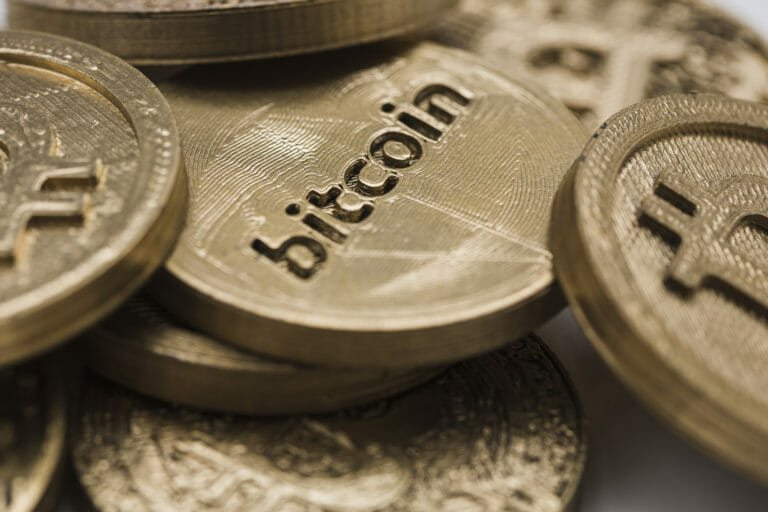
Customers of Venezuelan Supermarket Chain Excelsior Gama Can Pay with Bitcoin

Regarding online purchases with home delivery, it is possible to pay for them with cryptocurrencies. This Venezuelan supermarket chain uses CryptoBuyer points of sale.

On October 23rd, the Venezuelan supermarket chain Excelsior Gama enabled payments with cryptocurrencies in its establishments in Caracas. Users have expressed their satisfaction at being able to make payments with Bitcoin and other cryptocurrencies.

The company confirmed the information through its account on the social network Instagram. There they state that they enabled payments with Bitcoin (BTC), Ether (ETH), Tether (USDT), Dash (DASH), and Litecoin (LTC). Additionally, they accept DAI, Binance Coin (BNB), and XPT, an ERC-20 token of CryptoBuyer.

A partnership with the Panama-based startup and exchange, CryptoBuyer, makes it possible to use these cryptocurrencies as a form of payment. With this, the customers of the supermarket chain will be able to use a payment system with points of sale (POS).

The CEO of that company, Jorge Farías, confirmed on his Twitter account that the 24 branches of Excelsior Gama, located in the capital of the country, now accept payments with cryptocurrencies. He adds that it is possible to use the website of the supermarket chain to shop online and take advantage of the home delivery system.

According to Farías, the use and adoption of cryptocurrencies as a form of payment “is an increasingly evident reality in Venezuela.” In that way, he referred to other businesses that also accept cryptocurrencies through points of sale. Such are the cases of Burger King Venezuela, the Traki chain of stores, and the Samsung Experience stores.

The executive explained that it is also possible to use CryptoBuyer points of sale at the Tamanaco Intercontinental and Eurobuilding hotels in Caracas.

Last May, more than 20,000 businesses in Venezuela that use the Merchant Server platform of the payment processor Mega Soft began to accept Bitcoin and other cryptocurrencies. This all happened after they established a partnership with CryptoBuyer.

“The market, entrepreneurs and the general public are beginning to understand that payment with cryptocurrencies is a real alternative to traditional means of payments,” said Farías about the advancement of adoption in Venezuela.

Users Start to Pay with Cryptocurrencies

Most followers of Excelsior Gama and CryptoBuyer on the social networks were in favor of the news since they can now make payments with Bitcoin.

To prove that they had made their payments with the cryptocurrency, some users showed videos and images. However, others expressed concern about the amount that they have to pay for fees.

The users also asked about the date when they will enable payments at Excelsior Gama establishments in other Venezuelan cities. They recalled the current difficulties in making electronic payments with foreign currencies in the South American country.

All this occurs during a multi-year hyperinflation process, which has generated a sharp devaluation of the local fiat currency: the bolivar (VES).

Many people in Venezuela see the implementation of payment on cryptocurrencies as a way to face the crisis that is a result of the hyperinflation. Once again, Bitcoin has shown that it is capable of helping users from countries with depressed economies.

By Alexander Salazar

Audit firm says: Ethereum 2.0 is almost ready for launch.

0

Other projects audited by this company are YFI and SushiSwap.

Vitalik Buterin, the creator of Ethereum, said that he expected the launch during 2020.

According to Quantstamp, a company dedicated to the audit of smart contracts, Ethereum 2.0 is almost ready for launch, although they did not give more details. The company reported this after completing an audit of Teku, the client for this new version of Ethereum by ConsenSys.

“Ethereum 2.0 is on track to enter phase 0 very soon,” were the words of Quantstamp CEO Richard Ma. He added that the Teku audit took “countless hours,” in which work teams coordinated, tested, and worked with audit firms to “ensure that the Ethereum 2.0 foundation is ready for delivery.”

On Teku, Richard Ma called its code “of the highest quality.” He added that the issues Quantstamp is able to spot were quickly resolved by the Teku development team.

These issues include a bug that could cause client synchronization failures. Also, an unlimited incoming message queue opened the possibility for DDoS attacks on individual nodes.

What does Quantstamp “almost ready” mean?

Teku will not be the only client that Ethereum 2.0 has. Among others, Nimbus, Lodestar, Lighthouse, and Prysm are also in development. Prysmatic Labs, the developer company of the last of the mentioned clients, assured that they are working to solve some details and launch it in November 2020.

But Prysm also received an audit by Quantstamp in July this year. Back then, Richard Ma said, as he did now with Ethereum 2.0, that the client was ready to go.

YFI and SushiSwap: Dubious Protocols Got Quantstamp Approval

Quantstamp defines its mission as “protecting the decentralized Internet.” On their website, they claim to have security experts who perform rigorous auditing processes in “blockchain implementations to prepare them for the launch and future iterations.”

Among the projects that Quantstamp audited was SushiSwap. The audit took place days before this decentralized finance protocol (Defi) left UniSwap and momentarily took away much of its liquidity; its anonymous founder sold all of its Sushi tokens causing, a decline in its price.

Sushi’s audit received limitations due to technical issues, and unlike Teku, the Quantstamp team made no further comment on the project or related issues.

Quantstamp also, in July this year, intended to do an informal audit of Yearn Finance, another Defi protocol. It became famous when its YFI token, of which 30,000 are issued units and which, according to its creator Andre Cronje, “has no value”, rose to USD 41,000.

Cronje is currently under legal action. The reason is the promotion of an experimental project within its platform without clarifying that it was incomplete. The equivalent of USD 15 million got locked in a smart contract due to an alleged hack.

Ethereum 2.0: A reality in 2020?

Several years passed since the announcement of the soon release of Ethereum 2.0, but until now an exact date or official estimate is still a mystery. Justin Drake, a researcher at the Ethereum Foundation, who claimed that the new blockchain would be available in early 2021, more recently admitted that he does not know when it will be ready.

Now the signs are more evident, and from various sources, such as the auditing companies mentioned here, the countdown to the launch of Ethereum 2.0 is coming to an end.

The launch of the initial phase of Ethereum 2.0 is one of the most anticipated events by the community that was built around this network. One of the main differences from the current version is the change in the consensus algorithm.

While Ethereum 1.0 uses proof of work (PoW), version 2.0 will employ proof of stake (PoS). Among other advantages, this new blockchain would allow increasing the number of transactions processed to 100 per second. Ethereum currently supports 14 transactions per second.

By: Jenson Nuñez

DeFi Season Could be over as Bitcoin and Ether Pack Bags for the Moon

0

Bitcoin and Ether see a strong bullish sentiment, but confidence in DeFi starts to shake.

With Bitcoin price successfully punching through the $ 12,000 barrier right after PayPal announced the possibility of joining into digital assets, October seems to deliver on the excitement that the previous month did not achieve to provide. Some experts believe that a considerable rise is on its way.

Ether (ETH) price registered a pick-up, this, considering the confidence this decentralized finance keeps gathering since its release. Defi was the one with the major kick-starter for cryptocurrency popularity in 2020, but now, other digital assets seem to be ready to start thriving and could reach noticeable heights by the end of the year.

What happens with bitcoin? Will it reach the $ 14,283?

According to a recent report by Finder – an online comparison resource featuring 30 experts from the industry, Bitcoin’s price is about to reach $ 14,283 by the end of the year. And according to Finder’s cryptocurrency editor, Andrew Munro, Bitcoin’s reputation as a reliable store of value is the main reason behind the bullish outlook. He said:

“Many panelists noted that BTC is increasingly finding a place in traditional portfolios and is being bought by both institutional and retail investors as a hedge against inflation. Given the unprecedented quantitative easing efforts by central banks around the world some panelists speculated that BTC would become a widely adopted ‘store of value’ asset. ”

Other experts talk about various reasons for a rally in the price of Bitcoin. There is a clear regulatory framework in the digital asset market and the many setbacks associated with fiat currencies, such as inflation and negative rates.

The panel average predicted a $ 14,283 Bitcoin price by the end of the year, other predictions are pointing to a far much higher price tag, especially taking into consideration the famous stock-to-flow model that anonymous analysts PlanB created.

Is there hope for Ethereum to keep up?

Bitcoin showing its real strength over other cryptocurrencies, with increasing trade and market capitalization dominance, industry participants also hold a positive outlook on Ether, with a panelist average of $ 513, a 40% increase by the end of the year. On the other hand, experts are not so sure about Ether’s sustainability. Munro said:

“The most commonly cited factor behind bullish near-term Ethereum predictions was the expected launch of Ethereum 2.0 before the end of the year, and the impact of staking on circulating supply.”

Ethereum’s volatile popularity throughout 2020 is due to the rise of DeFi, but some skepticism about the long-term prospect and sustainability of DeFi is in the air. While others hold high hopes for the launch of Ethereum 2.0, which may take years to finalize. According to Jonathan Hobbs:

“Defi plays got overly speculative earlier this year, as they often do in this industry. We can see some of those flows now moving back towards bitcoin, with bitcoin dominance trending upwards post the DeFi sell-off. ”

By: Jenson Nuñez.

Mercado Libre Founder Tells PayPal CEO that Bitcoin Is a Substitute for Gold

0

The CEO of Mercado Libre believes that Bitcoin will not become legal tender. The Argentine businessman predicts a strengthening of payment systems with fiat currencies.

In recent days, the co-founder and CEO of Mercado Libre and Mercado Pago, Marcos Galperin, commented on Bitcoin and other cryptocurrencies. He believes that the function of these assets is to operate similarly to gold and serve as a store of value.

Many people in Latin America use the e-commerce platform that Galperin runs. He recently talked online with PayPal president Dan Schulman about digitizing payment systems.

Schulman asked the Argentine businessman about his opinion on digital currencies. Without mentioning Bitcoin, the CEO of PayPal recalled the current interest from many central banks in issuing this type of currency. Marcos Galperin’s reply focused on comparing cryptocurrencies to gold.

“Cryptocurrencies are a great substitute for gold,” said Galperin. He highlighted that the difficulties of cryptocurrencies to scale create obstacles in transactions. For that reason, he does not think that they are viable as a payment method. Besides, he considers that the process of scaling would entail a very high energy cost, which he does not find convenient in the current ecological environment.

Marcos Galperin also raised the issue of the decentralization of cryptocurrencies, citing it as a prominent feature. However, he said that this causes governments to lose power, so “cryptocurrencies are not very likely to become legal tender.” On the contrary, he predicted that fiat currencies will strengthen digital payment systems.

Coronavirus Expansion and Electronic Commerce Boom

The beginnings of electronic commerce at the end of the 20th century and its current growth from the expansion of the coronavirus were other topics that the leaders of PayPal and Mercado Libre discussed. In this regard, Schulman asked Galperin about his experience on the Mercado Libre platform amid lockdown due to the pandemic.

During a drop in the use of cash for fear of contracting coronavirus, Galperin confirms the rise of electronic payments. He noted that the trade of products on Mercado Libre, in Latin America, has been between USD 15,000 million and USD 20,000 million so far in 2020.

According to the Argentine businessman, the payment system has grown about three times, processing payments between USD 45,000 million and USD 60,000 million, with around 100 million people making online purchases in Latin America. In this way, the platform’s buyers have valued digital purchases more in this time, paying loans on time through the Mercado Pago system.

The mission of this e-commerce platform is to help eliminate cash handling in Latin America. This “has accelerated with the pandemic and will increase in the coming years,” according to Galperin. For him, this fact is very useful in the countries of the region since there are many unbanked people, and many economies suffer the onslaught of inflation.

This conversation took place after PayPal’s recent announcement to allow the sale of Bitcoin and other cryptocurrencies, initially in the United States. At the beginning of next year, the customers of this digital payment platform may be able to make payments in cryptocurrencies in around 26 million businesses around the world.

By Willmen Blanco

October Legal Review

1

This October brought us some impressive law enforcement news that shook the blockchain world. The most notable were the cases brought by the Securities and Exchange Commission (SEC) and the Internal Revenue Services (IRS) against John McAfee. Also, this month, the SEC has ended the case of Kik Interactive, Inc. by obtaining a final judgment against the company.

John McAfee

A legendary computer programmer, who got involved in the blockchain industry during an ICO wave, John McAfee was charged by the SEC for nondisclosure of payments he received for promoting a number of tokens.

As many blockchain market participants know, John McAfee was very vocal about investing in tokens, supporting, endorsing, and marketing several ICOs in his Twitter account and at various conferences. He appeared to be impartial and independent. According to the SEC findings, Mr. McAfee was paid over $23 million in digital assets for such promotions, which he denied. Under the U.S. law, the investors are entitled to know whether the promoters are being compensated by the issuers of securities. Also, the SEC alleged that John McAfee made other false statements misleading the public about his investments into certain tokens and his advisory role in some ICOs.

Besides, the SEC claims that John McAfee was also involved in another scheme of touting certain tokens he had accumulated on Twitter and then selling those tokens as prices rose. This was essentially a “pump-and-dump” practice, which is illegal under the U.S. securities law.

As a result, the SEC charged John McAfee and his bodyguard Jimmy Watson Jr., who assisted him in these cases with violating antifraud provisions of the federal securities laws, Mr. McAfee with violating the anti-touting provisions, and Mr. Watson with aiding and abetting John McAfee’s violations. The SEC sought permanent injunctive relief, conduct-based injunctions, the return of allegedly ill-gotten gains, and civil penalties in addition to bar John McAfee from serving as a public company officer and director. The complaint against John McAfee and Jimmy Watson, Jr. was filed in the U.S. District Court for Southern District of New York.

Simultaneously, the IRS unsealed their charges for tax evasion and willful failure to file tax returns following the arrest of John McAfee in Spain. The charges relate to the same unlawful activities alleged by the SEC as well as to Mr. McAfee’s consulting work, speaking engagements, and selling rights to his life story for a documentary, for which he allegedly received income but failed to report it and pay income taxes.

The U.S. tax law requires U.S. taxpayers to file an annual income tax return regardless of their country of residence. Willful failure to file a tax return is considered a misdemeanor and can lead to a fine of not more than $25,000 or imprisonment of not more than one year, or both, for each count of violations.  The IRS alleged that John McAfee did not file his income tax return from 2014 to 2018.

Moreover, the IRS alleged that Mr. McAfee deliberately directed his income to be deposited into bank accounts and cryptocurrency exchange accounts of other people. According to the IRS, Mr. McAfee also concealed his assets, including real property, a vehicle, and a yacht, in the names of others as an attempt to evade his tax liability. Tax evasion is a much more serious crime and is considered a felony. If convicted, Mr. McAfee can face up to a $100,000 fine or imprisonment for not more than five years, or both, for each count.

John McAfee appears to be fighting all charges brought against him by the U.S. authorities.

Kik Interactive, Inc.

The case against Kik Interactive, Inc. initiated more than a year ago by the SEC has finally come to an end. On October 21st, the SEC secured a final judgment on consent against the company for the unregistered offering of digital tokens “Kin” in 2017.

The allegations brought by the SEC against Kik Interactive, Inc., were based on the activities of the company before and during the ICO. The SEC alleged that by 2017 the business of the company was failing, and Kik Interactive, Inc., intended to finance its new operations by selling one trillion digital tokens. As a result of public and private sales, the company was able to raise about $100 million from investors worldwide.

Although the tokens were released upon the completion of the sale, no product could be used with the Kins. Instead, as the SEC’s alleged, the Kin tokens were marketed as an investment opportunity promising an increasing value of tokens due to the rising market demand driven by the efforts of the company. Kik Interactive intended to keep three million Kin tokens for the company to profit from the trade of tokens on a secondary market along with the investors.

Under the Howey Test used by the U.S. Courts to define securities, any instrument designed for the person to invests his/her money into a common enterprise and expect profit solely from the effort of the promoter could be considered an investment contract, which is one form of the securities. The claims made by Kik Interactive in connection with the sale of its tokens led the SEC to believe that Kik’s ICO was the unregistered securities offering.

Kik Interactive, Inc. attempted to fight the charges at first but then lost a summary judgment in September of this year and agreed to settle with the SEC. As a result, the Kin tokens were found to be securities by the Court, and the company was ordered to pay a hefty fine of five million dollars and to comply with the other non-monetary requirements set by the final judgment.   

This summary is provided by international attorney Katrina Arden. Attorney Katrina Arden spoke at the leading tech conferences, authored legal articles and participated in discussions with multiple countries’ regulators on the development and implementation of the blockchain and cryptocurrency law.

By Katrina Arden

North America Concentrates 45% of Bitcoin’s Lightning Network Nodes

South America only has 0.8% of Lightning Network nodes. There is a pattern that interconnects nodes between countries with a similar culture.

Researchers from Austrian and Swiss universities conducted a study that indicates the location of most nodes of Bitcoin’s Lightning Network (LN) micropayment network. They say that they are in seven countries: the United States, Germany, Canada, the Netherlands, the United Kingdom, France, and Switzerland.

The results of the study entitled Node classification and geographic analysis of the Lightning cryptocurrency network reveal that 44.8% of Lightning Network nodes are in North America, while 43.1% are in Europe. The other nodes are in Asia (6.2%) and Oceania (2.2%). South America and Africa have lower participation, with 0.8% and 0.6%, respectively.

The researchers monitored the network’s data in 81 countries, clarifying that they could not determine the location of 2.3% of the remaining nodes due to a lack of IP addresses. In almost all cases, they found that the United States precedes Germany as the leading country to which most nodes connect.

Professors Philipp Zabka, Klaus-T. Foerster, Stefan Schmid, and Christian Decker conducted the research. They gathered data from the network between March 2018 and January 2020. They say that they recorded more than 7.8 million messages from the websites showing the states of the public nodes.

The study aimed to obtain data on the geographical distribution of Lightning Network nodes. The authors established that the network has a prominent presence in metropolitan areas, while payment channels show a moderate geographical bias.

Cultural Patterns between Lightning Network Nodes

Concerning connection preferences, most Lightning Network nodes tend to create channels with the largest hubs. This occurs, even if there is a great geographical distance between them. However, the researchers identified some patterns related to cultural identity.

They observed a tendency to share nodes and establish channels with countries that share the same language or a similar ethnic group. However, the authors stress the need for further analysis to assess this behavior.

This distribution relates to the results of another recent study. The authors found high levels of concentration among Lightning Network nodes due to the constant creation of multiple centers (with many hubs).

The Most Widely Used Lightning Implementation

The academics recall in their report that the Lightning Network currently uses three implementations: LND, C-Lightning, and Eclair. They explain that “each written in a programming language, with slightly different values in its parameters.”

To know which of these implementations is the most used in most countries, the researchers classified and sorted 99.9% of the nodes.

They started to analyze the beginning of the growth of the Lightning Network in 2018. At that time, the LND and C-Lightning clients released their first major update, the professors recall.

They determined that about 87% of the nodes on the Lightning Network are LND. Meanwhile, 11% of the nodes are deployed with C-Lightning, and about 2% use Eclair.

The results of the study also show that deployments within a country have a similar distribution. There is a predominance of the LND client in 78 of the 81 countries.

The academics focused on the countries of North America, Europe, and Asia, where 94% of the total population of LN nodes are. They did this to determine if the geographical distribution of the three implementations was similar in all countries.

By Willmen Blanco