A PayPal User Trades Bitcoin and the Company Suspends His Account

0

The platform reported the user’s trading operations as irregular. Although PayPal launched its new cryptocurrency service, there are employees of the company who seem to know nothing about it.

Trading Bitcoin with PayPal’s new cryptocurrency service could result in the permanent suspension of a user’s account and the blocking of all his funds for six months.

An American PayPal user, identified as TheCoolDoc, said that he recently used the platform to conduct some trading operations. He did this taking advantage of the fact that the company decided not to charge fees for transfers with Bitcoin until 2021 and due to the current volatility of the cryptocurrency market.

He commented that he conducted a group of cryptocurrency buying and selling operations that exceeded USD 10,000 in one week. However, instead of the platform reporting them as cryptocurrency transactions, they categorized it as “item sales.”

The system reported the movements as something unusual, which did not surprise the user since he had not conducted so many operations since he created the account. PayPal decided to limit TheCoolDoc’s operations, as well as send a message requesting explanations for 10 operations that the customer had conducted in recent days.

According to the user, the developers of “PayPal Crypto” did not think about the detail of reporting cryptocurrency transactions as such. For that reason, he sent all the necessary information for them to review his transactions, in addition to his identification data and a personal photo. Besides, he noted that all the operations that he had conducted were connected to Paypal Crypto.

However, he received a message from PayPal saying that they had permanently suspended his account and that they would withhold his money for 180 days. The message stated that the affected user “will not be able to do more business with Paypal.” TheCoolDoc added that a total of USD 462 will remain in his account possibly for six months.

The PayPal Support employees were open to helping him, but they did not know anything about PayPal’s new cryptocurrency service. The customer says that he had to explain the details about this new feature to the operator even though the company had already launched it in recent weeks.

PayPal Is Not an Exchange to Trade Bitcoin

User Bittabet argued that “PayPal is not a cryptocurrency exchange. He says that its service aims to allow people to hold Bitcoin and then spend it on other businesses. In other words, the platform is a kind of crypto-asset wallet or bank account, rather than a product for trading.

The same user explained that PayPal may never have taken into account the volatility of Bitcoin and the speculation of these markets. For that reason, they adopted the asset as one more currency for their traders, but people like TheCoolDoc may have other plans.

Another user, identified as ModernRefrigerator, commented that the company has a centralized design, which lends itself to censorship and the withholding of funds. He believes that it is necessary to support the development of more decentralized exchanges that allow users to do what they want with their money. “When an exchange like PayPal or Coinbase exercises that kind of control, it goes against the original vision of Bitcoin.”

On November 13th, PayPal announced the start of its cryptocurrency operations in the United States. This sparked excitement in the cryptocurrency market while also helping the price of Bitcoin to start its bullish run.

However, these new events do not make it clear whether PayPal is prepared for cryptocurrency users or whether it has a regulation capable of adapting to this market. Only time will have the last word on it, while “TheCoolDoc” awaits his money back.

By Willmen Blanco
Gnosis creates its own DAO

0

GnosisDAO receives the support of 150,000 ETH and Eight million gnosis (GNO).

Gnosis, an Ethereum-based predictive marketplace platform, announced GnosisDAO, its own Decentralized Autonomous Organization (DAO). It is a type of digital organization that works based on a system of rules encoded through smart contracts.

According to information published on the company’s blog on November 23, the plan with the new DAO is to allow Gnosis users to vote on the governance and development system of the platform.

Early proposals for the launch of the DAO include the distribution of a one-time reward in GNO for the first active participants, the introduction of a SAFE token for governance, and the development of the Protocol for Gnosis Improvement Proposals (GIP).

In this way, predictive markets will be created using the Gnosis Safe Multisig platform, funded at the beginning with 1,000 ethers (ETH) and 20,000 gnosis (GNO) from the Gnosis treasury. In the end, GnosisDAO will have effective control over 150,000 ETH and 8 million GNO, the company clarifies.

The note also states that the idea is to decentralize the project in a more progressive way, not only through community participation but also with the use of already created products. The process will begin with the technical and governance layers for the project’s products in a web 3.0 ecosystem.

Governance based on predictive markets

Among the notable novelties of the plan is the fact that the company will base its DAO on the concept of futarchy (futarchy or governance by predictive markets). It is a model formulated in 2000 by the American economist Robin Hanson, from George Mason University, in the USA.

According to Hanson’s manifesto, in the futarky people vote for values, but they bet on beliefs. “Elected representatives would formally define and manage a measure of national welfare a posteriori, while market speculators would say which policies they hope will increase national welfare,” explains the academic.

Thus, the futarky proposes that the effectiveness of democratically elected officials or the policies to be implemented should be tested in prediction markets. These markets are seen as generating a barometer of policy success or failure that voters can refer to increase their decision making.

The Gnosis team is aware that the mechanics and rule-setting for decentralized futarchy will take time, so the initiative will begin in the form of a minimal viable futarchy network. Since voters can go against the direction of the markets, GnosisDAO will launch on a gentler incline that may tighten as the DAO grows.

“GnosisDAO will use prediction market technology to transparently guide development, support, and governance decisions,” they say.

They also state that each proposal must go through three essential phases. The process will begin with a post on the Gnosis Forum. The final phase will use the Gnosis Impact application and an instant GnosisDAO survey. At this stage, the prediction markets will show the impact of the projected price in GNO.

Gnosis has so far been characterized by the constant development of predictive markets. Last April the startup launched a predictive platform dedicated to events related to the coronavirus pandemic, where users bet on information related to the virus.

By: Jenson Nuñez.

Maradona Receives His First Post Mortem Tribute on the Ethereum blockchain

0

The token was under development on the Rarible platform and merged up for sale on OpenSea. Its author expects to receive offers, so it does not have a fixed price.

A non-fungible token (NFT) created with the mission to pays tribute to former Argentine soccer player Diego Maradona, is currently for sale on the OpenSea digital goods market. This happened minutes after the news of his death appeared on different media sites, Maradona was 60 years old and died after suffering a cardiorespiratory arrest.

Ten thousand units of the token were launched, initially selling for 0.1 ethers (ETH) each ($ 59.21). Later, its author, identified as C7215B, removed the fixed price for his work. Now, those who wish to purchase it must propose an offer.

The asset represents the possession of an image of Maradona that appears to be drawn by hand. Includes the text in Spanish, English, and Italian Caption! Thanks for the magic.

Maradona, who along with the Brazilian Pelé received the FIFA award for the best player of the 20th century, had undergone emergency surgery two weeks ago due to a subdural hematoma. After being released from hospitalization, he remained at his home in the city of Tigre, Argentina, where he died.

There are other tokens with Maradona’s image

An NFT is a special type of token that represents something quite special and unique. Therefore, unlike cryptocurrencies, they are not interchangeable with each other. For the development of such a token, the Rarible platform happened to be useful, which allows anyone to create and sell collectibles on Ethereum.

The former footballer had already reached this blockchain, months ago thanks to Sorare. It is a fantasy football game that has Maradona as one of its digital collectibles.

Also, the Panini Company has a tokenized version of the soccer star. Unlike the new homage or Sorare token, it was developed on Panini’s permissioned blockchain. It is an autographed design in which Maradona is seen wearing the uniform of the Italian club Napoli.

By: Jenson Nuñez.

The Key to Satoshi Nakamoto’s Identity Could Be in London

Based on schedules and other evidence, London could be Satoshi’s operation center. An analysis dismisses that Craig S. Wright is the creator of Bitcoin.

After 12 years, the identity of the creator of Bitcoin remains a mystery. Although there are many theories, they produce more questions than answers. The most recent one places Satoshi Nakamoto in London during his time developing this technology.

Of a total of 5 possible locations of Satoshi at that time, it was easy to dismiss two of them just by observing activity patterns based on schedules. Those discards included Japan and Australia, particularly the latter since the schedules seem to indicate that the oceanic country is not an option.

This excludes Australian businessman Craig S. Wright, who has run his campaign to proclaim himself as the creator of Bitcoin.

London, East, and West of the United States Are the Most Likely Options

After discarding the other countries, there are only three options: the United Kingdom and two time zones (East and West) of the United States. Each schedule would represent different activity patterns of Bitcoin’s creator, but all would seem like reasonable options.

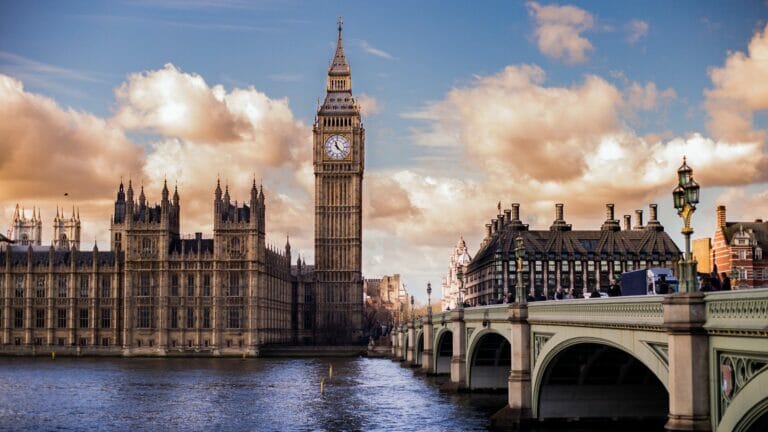
Another variable tip the scales in favor of the capital of England. The text that Satoshi entered in the Bitcoin Genesis block was: “The Times 03 / Jan / 2009 Chancellor on the verge of a second bank bailout.”

That is one of the messages most in favor of London as Satoshi’s location at that time. This headline appeared in the London edition of the newspaper on that date.

The Times also began to circulate in the United States a couple of years before that publication. However, the person or group of people behind Satoshi Nakamoto’s pseudonym is unlikely to have read that headline on US soil.

The versions of the medium in both countries were very different. Therefore, it is unlikely that the same headline made the cover of the US version, which happened in the web edition. The headline appeared that day, with a slight variation: it included the name of the British Chancellor, or Chancellor of the Exchequer (Finance Minister) at the time, Alistair Darling.

The creator of the pioneering cryptocurrency may have read the headline that appeared in the Bitcoin block in a section with captions from the front pages on The Times website. He could also have done it through another website where said front page appeared.

Other Clues about Satoshi

There is a penchant for the London option as the most likely, but it is impossible to say with certainty where Satoshi lived when he was working on Bitcoin.

There are two PDF versions of the Bitcoin white paper, which contains the foundational technical aspects of this technology. One version dates from 2008, while the second, currently available on the bitcoin.org website, is from the following year.

The document creation times, in both cases, refer to the United States. However, this proof is out of the question as Satoshi may have tampered with the timestamps when saving the files. Satoshi may even have not created the documents but just generated marks to mislead.

These latter data have little influence in determining Satoshi’s identity. Therefore, the position of London as Satoshi Nakamoto’s operation center in the early days of Bitcoin makes more sense.

By Willmen Blanco

IMF: Central Banks efDy Monetary Law with the Issuance of Digital Currencies

0

Current legal frameworks are inadequate for issuing CBDC to the public. The international body believes in the relevance of the reform of monetary legislation.

The legal department of the International Monetary Fund (IMF) published a document in which it makes a thorough review of the existing financial legal provisions. In that sense, it concludes that a reform of the laws will make The Central Bank Digital Currencies (CBDC) can acquire status as legal tender.

In the report, IMF advisers point out that the issuance of CBDCs is and must be on a stable legal basis that is consistent with central bank law; although, in many cases, this law only authorizes the issuance of coins in the form of paper or plastic.

However, the document proposes a way: “in any case, this lack of legal basis can soften by amendments to the central bank law.” However, it clarifies that even if the CBDC issue has a stable legal basis under central bank law, its status under monetary law will continue to “raise many complex issues.”

Above all, because digital currencies do not represent a new monetary unit and can only be considered as a form of payment expressed in currencies, according to the report.

To identify and address the other complexities, the authors of the document advise government authorities to proceed with caution in case they decide to introduce CBDCs as payment methods in their countries.

They believe that a comprehensive review of the monetary law, the central bank law, and other legal provisions are necessary so that their developments are adjusted to the legal aspects.

What does the IMF say about the attributes of CBDCs?

IMF legal advisers note in their report that the legal treatment of CBDCs is in line with the characteristics of their design. In this sense, they say that digital currencies based on tokens can be considered as a new form of digital money, while those based on accounts are not, but rather represent the digital form of countable money, which are the balances registered in the accounts from creditors.

 An example that would illustrate this difference would be a digital currency based on a token such as bitcoin that does not require the identification of who processes the payment, while those based on bank accounts are linked directly to the identity of the user.

The document refers to CBDCs that use a blockchain-based token to represent the digital form of a nation’s fiat currency. The distinction that the authors make is that an account-based system requires verifying the identity of the payer, while a token-based system requires verifying the validity of the asset used to pay.

In any case, under current law, token-based CBDCs do not qualify as currencies in most countries since, until now, this legal category is reserved for fiat money, which adds difficulties for countries that raise the issuance of digital currencies backed by blockchains.

In any case, analysts hope that countries and their central banks will be able to resolve many of these difficulties, which are related to the fact that token-based CBDCs can be available to different layers of the population. They should be able to acquire the same private law privileges as legal tender and to provide criminal protection against electronic.

By. Jenson Nuñez.

Gazprombank Inaugurates its Transactions with Bitcoins in Switzerland

0

The bank and its Swiss partners will offer traditional cryptocurrency services. You will join the OpenVASP association to enforce a KYC policy.

The third-largest bank in the Russian Federation, Gazprombank, a subsidiary of the oil company Gazprom, consolidated its first transaction in bitcoins at its subsidiary in Switzerland. The operations will meet all the demands of the Swiss financial system.

Gazprombank launches its first banking services for corporate clients in cryptocurrencies after obtaining a license from the Swiss Financial Market Supervisory Authority (FINMA). The bank’s offering will include accounts, investment management, and custody of cryptocurrency assets.

After long investment plans in the Swiss environment, Gazprom makes an alliance with Avaloq, a Swiss leader in fintech, and with the security company METACO to operate within the open environment for cryptocurrencies in Switzerland.

“Digital assets will become increasingly important to our clients in the global economy. We are happy to work with leaders of Swiss entities in the future development of a Swiss and global blockchain ecosystem. ”

This offer from the bank’s Swiss subsidiary is intended to integrate KYC processes to meet the requirements of the Swiss Financial Market Supervisory Authority, FINMA. That is why Gazprombank has decided to join the OpenVASP Association, an open-source protocol initiative for service and asset providers to maintain a free transmission of their customers’ data between them.

This should create a more secure environment similar to the traditional data transmission that banks usually share and keep with each other. The “travel rule” will exist to stimulate the collection and share of information the suppliers get from their customer’s data. Personal data, if the transaction exceeds 1000 USD, which seeks to maintain an environment more prone to invest in the Swiss ecosystem.

By: Jenson Nuñez.