After the Crisis of the Lira in 2020, Turkey Will Test Its Digital Currency

0

The central bank’s governor noted that Turkey completed the conceptual phase of the project. The Turkish lira has depreciated by more than 20% against the US dollar this year.

Turkey recently joined the central bank digital currency (CBDC) race in the year of the biggest crisis for its national fiat currency, the Turkish lira. The governor of the central financial institution, Naci Ağbal, reported these developments to the local parliament.

In recent days, Ağbal stated that the country’s digital currency project is already well advanced. He also said that they will start a pilot test in the second half of 2021.

“We have currently completed the conceptual phase of this project. Our goal is to start the pilot tests in the second half of 2021,” said the central bank’s representative.

The announcement, and particularly the level of progress on this project that the authority acknowledges, took everyone by surprise. Not even the Bank for International Settlements (BIS) knew that Turkey was planning to create its digital currency, according to its updated database.

This occurs just at the close of a year with a sustained crisis for the local fiat currency, the Turkish lira. A graph shows that the currency has depreciated by about 20% against the US dollar this year.

After starting the year with a ratio of USD 0.16 per Turkish lira, each lira now represents only 0.13 USD. At one point in early November, the ratio reached USD 0.11 per Turkish lira.

Turkey thus joins a long list of countries that are exploring the implementation of their digital currencies, which China leads among the nations with large economies. The Asian country has already conducted several tests with the use of its digital yuan for its citizens’ retail purchases and is in a much more advanced stage than the rest.

The Asian giant is the most advanced among the most powerful nations, but it will not be the first to launch its CBDC. The Bahamas is the only country that has already launched its digital currency, the Sand Dollar, which they integrated into the country’s payment network in October.

Turkey’s Silent Progress towards Its Digital Currency

Turkey had already evaluated the possibility of creating its digital currency in mid-2019, but there were no major advances after those statements. At least, that did not happen publicly, since now it is possible to see that they did continue to develop a project that would come to light before anyone thought.

The Eurasian country is no stranger to the world of cryptocurrencies. A source from the Central Bank of Venezuela revealed that the South American country has been making Bitcoin payments to Turkey.

A mid-2019 survey ranked Turkey as the country with the highest level of adoption worldwide.  Besides, they had already created a national research center that focused on exploring the use of blockchain technology the previous year.

No one expected the Turks to be so far advanced and to be ahead of the United States and the European Union itself. The latter are still discussing the possible implications of their digital currencies and do not have a clear schedule for moving forward.

The number of central banks that welcome the possible implementation of digital currencies is growing. Although they are in different stages of discussion, conceptualization, or development, large economies are already working towards the total digitization of their economies.

By Alexander Salazar
Amid Its Cryptocurrency Adoption, PayPal Decided Not to Purchase BitGo

0

Various anonymous sources exclude the possibility of PayPal’s negotiations to buy the Bitcoin custodian. The payment company could be exploring other acquisition possibilities in the industry.

PayPal may have abandoned one of the plans that it had already announced, amid its process of adopting Bitcoin and other cryptocurrencies. Recent, reports indicate that the payment company would no longer be negotiating the acquisition of BitGo, one of the custodians that has the largest amount of funds in Bitcoin under its protection.

Last October, plans to buy the Bitcoin custodian became known to Bloomberg. PayPal seems to have canceled the negotiations but no one knows the reasons why those talks collapsed, according to Fortune.

Mike Belshe, CEO of BitGo, did not want to confirm the rumors about the alleged acquisition by PayPal, according to that source. On the contrary, Belshe stated that his company has been “in talks with everyone” in recent years. He said that BitGo would not accept a “small exit”, but it is not yet clear whether that was the reason why its negotiations with PayPal stopped.

Since its founding in 2013, BitGo has offered the service of safeguarding funds in Bitcoin and other cryptocurrencies to more than 300 companies. Among them, the Bitstamp exchange and Japanese bank SBI Holdings are the most prominent. Belshe himself has stated that the company currently has more than USD 16 billion worth of cryptocurrencies in its custody.

The number of institutional investors who have entered Bitcoin trading has steadily increased. This has led the companies that offer custody service for funds to receive more weight, according to Belshe.

Despite PayPal’s refusal to comment on the unsuccessful negotiations, an anonymous source close to the payment company could have confirmed that information. Also, that person added that PayPal could be looking for other options in the cryptocurrency environment.

PayPal Wins with Bitcoin and Bets Increasingly Strongly

After having announced its adoption of Bitcoin and other cryptocurrencies, in addition to the rumor about its possible acquisition of BitGo, the digital payment company has had greater revitalization in recent months.

PayPal shares have appreciated by about 20% since the news became public knowledge. Following its entry into service for customers in the United States in November, the momentum has been growing.

Even though the alleged negotiations with BitGo have fallen and they are looking for other alternatives, PayPal has strengthened its partnership with Paxos. The latter has been working with them for months to enable them to integrate buying, selling, and paying with Bitcoin and other cryptocurrencies.

In mid-December, the company participated in a financing round in which Paxos managed to raise a total of USD 142 million. In this way, PayPal shows that it is increasingly betting on its adoption of Bitcoin, a possibility that it had denied for years.

By Alexander Salazar

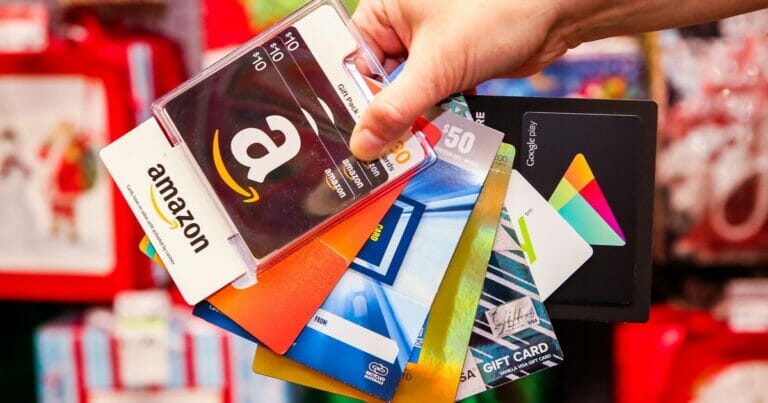
eBay and Amazon reject private browsing when buying Gift Cards with Bitcoin

0

Users of Bitrefill, a digital gift card store, report blockages by Amazon and eBay. Bitrefill reports that users from Venezuela and Africa are among the most affected by this rejection.

Bitrefill users reported the inability to buy eBay and Amazon gift cards with bitcoin and other cryptocurrencies while using VPN and other private browsing methods on the Internet.

According to an open discussion by users, which took place yesterday on Twitter, eBay and Amazon prohibit virtual geographic relocation to their buyers, regardless of whether a portal such as Bitrefill is used to make the purchase.

Bitrefill talked about this measure, saying it is undesirable for users. However, it is a policy whose implementation goes beyond their hands and is the responsibility of the companies in question.

Through Twitter, Bitrefill offered an explanation to some concerned users about the actual situation: “Some companies that offer gift cards restrict the locations where their products can be sold. For us, it is best not to sell these products, “they say.

However, the user who initially reported this limitation, explained that he could not make the purchase even when located within the same country in which he was, so it is clear that in no way can you buy Amazon gift cards or eBay on Bitrefill while using a VPN or Tor browser.

Bitrefill ensures that in these cases there is nothing to do, but indicates that in addition to Amazon, other 3,000 available products can be purchased with private browsing and with personalized geolocation.

Bitrefill argues that in principle users were allowed to buy through its platform using VPN or Tor, but stores that did not allow this policy began to block users, who complained to Bitrefill about this situation.

As indicated, users in Venezuela and Africa are the most affected by these blocks.

Does Bitrefill share my IP address and other data?

Bitrefill does not share its users’ IP addresses with third parties, the company stated on Twitter, sticking to its privacy policies. In its regulations, Bitrefill points out that it does not provide its users’ data to third parties, except in some unavoidable exceptions, such as when a phone number must be shared with the operator to recharge the phone service.  

Also, they would share the necessary data in circumstances where a judicial authority requests it appropriately. Bitrefill does not sell the data to third parties as a form of business. We understand our clients’ struggle to keep their lives private and can expect a strong commitment from us to make this possible”, reads its policy.

They still must comply with the policies of each company they work with regarding the use of VPN and other private browsing services, which, in other words, are increasingly used.

There is another comment in which someone pointed out that Nike left the Bitrefill catalog catalog. The assured that the sports brand does not want to have any relationship with cryptocurrency companies. “They have simply asked that we remove it from the site because they do not want to be associated with cryptocurrencies”

By Jenson Nuñez

“Bitcoin Is the Best Investment,” According to Ricardo Salinas Pliego

Mexican billionaire Ricardo Salinas Pliego recently stated that Bitcoin is his best investment. Given the loss of value of paper money, he advises that investors diversify their investment wallets by assigning them to Bitcoin.

Ricardo Salinas Pliego is the president of Grupo Salinas and the second richest man in Mexico, according to Forbes. The billionaire executive recently stated that Bitcoin is his best investment. He mentioned that he bought his first bitcoin in 2013 when the cryptocurrency was worth around USD 200.

However, he said that he sold all of his positions for USD 17,000 and then bought them back at a cheaper price.

Salinas currently has about 10% of his wallet in Bitcoin and has no plans to sell anything in the short term. In this regard, he said that he wants to do holding: “I want to sit for another five or ten years.”

Ricardo Salinas Pliego’s Career

Ricardo Salinas’ fortune amounts to more than USD 11.8 billion, according to Forbes. The 65-year-old billionaire businessman was born on October 19th, 1955 in Monterrey, Mexico.

His company, Grupo Salinas, has businesses in industries such as media, telecommunications, finance, and retail.

The executive is also the president of TV Azteca, the second-largest producer of Spanish-language programming in the world and the second-largest media company in Mexico.

Curiously, Salinas gave away one million Mexican pesos (MXN), through 100 prizes of MXN 10,000 each, on Twitter. He transferred that money to the winners through the Banco Azteca App.

Bitcoin’s Potential

Ricardo Salinas is currently convinced that Bitcoin’s potential lies in its characteristics as a store of value.

He considers the properties of Bitcoin to be particularly attractive in Latin American economies. There are countries in the region whose fiat currencies are devaluing and inflation is rampant.

“What is happening in Venezuela and Argentina, where fiat money is collapsing, has turned into a scandal. That opens your eyes to the problem with fiat money,” said Salinas.

Reasons Why Ricardo Salinas Invests in Bitcoin

On his Twitter account, Ricardo Salinas warned investors that they should “protect [their] assets from inflation right now.” The reason for this is that “Bitcoin is the best candidate as a store of value.”

Salinas added that many people ask him whether he invests in Bitcoin. He replies that he does, “assigning 10% of [his] his wallet to this cryptocurrency.”

He said that he invests “in Bitcoin simply because [he wants] to protect [his] property.”

The Second Richest Man in Mexico Talks about Bitcoin on Twitter

Businessman Ricardo Salinas is using his Twitter account to encourage people to research the cryptocurrency.

The entrepreneur makes it evident in three tweets in which he mentioned that “paper money is worth nothing.” He added that “for that reason, it is always good to diversify our investment wallets.”

In the first tweet, he shared a video about some bags of cash that a banking institution was reportedly discarding.

“Watch the video and you will see why I invested in Bitcoin. In some countries, inflation is on the rise. Banks throw away their paper money as it has no value. For that reason, I think that you should diversify your wallet and assign it to Bitcoin. That’s a good strategy,” Salinas recommended.

In a second tweet, Salinas promotes the purchase of the book “The Bitcoin Standard: The Decentralized Alternative to Central Banking” by Dr. Saifedean Ammous.

In his third tweet, based on the cryptocurrency, he also recommended following a specific account in case of being interested in Bitcoin.

Finally, Ricardo Salinas Pliego said that Bitcoin is the natural result of the evolution of money, that is, from physical to digital form.

By Alexander Salazar

A New SEC Rule to Regulate the Custody of Tokenized Shares

The US Securities and Exchange Commission seek to ensure transparency and trust among investors. Brokers will be exempt from receiving regulatory sanctions for 5 years.

In recent days, the US Securities and Exchange Commission (SEC) requested comments to outline new rules for the custody of tokenized shares. The objective of the regulatory agency is to set work parameters for brokers or stockbrokers.

According to a report, the SEC seeks to foster innovation around the application of rule 15c3-3 of the Securities and Exchange Law. In other words, the entity wants to establish a new regulation and protect investors who want to have exposure to digital asset securities.

“The SEC requests comments to provide the Commission and its staff with an opportunity to better understand the evolution of regulations and best practices concerning the custody of digital asset securities. This knowledge will serve as the basis for any possible future action in this area by the Commission,” said the agency.

In addition to requesting comments, the SEC also stated about brokers and the custody of digital asset securities. The provision indicates that brokers will be exempt from receiving regulatory sanctions for a period of up to five years if they meet some requirements.

Among the obligations of stockbrokers are to have control of digital asset securities, limit their operations only to this type of assets, establish procedures to mitigate the associated risks, and inform their customers about the commercial risks of investing in these types of assets.

The provision seeks to encourage the reception of comments and set parameters for brokers to conduct the corresponding operations. As a result of the above, there is the emergence of the SEC’s recognition of a market in transformation and constant evolution that Bitcoin leads.

The release of the statement occurred a few hours after the SEC itself had sued Ripple and its founders over multi-million dollar sales of XRP. The Commission considers that the cryptocurrency is an unregistered security, while the company argues that it is a virtual currency.

Ripple may have raised more than USD 1.3 billion from XRP sales since 2013, said the SEC. That news caused the price of the crypto asset to collapse, with a decline that exceeded 30% in a few hours.

In October, outgoing SEC chairperson Jay Clayton stated that the commission was willing to promote those tokenized shares on the blockchain, as long as they were registered with the organization. The executive praised Bitcoin’s technology and the potential that it has for creating new trades on stock exchanges.

The difference between trading traditional securities and digital asset securities is what led to the emergence of the SEC’s ruling. Even though both worlds operate digitally, they have different technical requirements for transactions and custody.

By Alexander Salazar

Ford Used a Blockchain to Improve Air Quality with its Hybrid Cars

0

Ford tested fleets of vehicles in Spain, the UK, and Germany. Hybrid cars reduce polluting emissions automatically.

Some research conducted from manufacturer Ford shows that new technologies such as blockchain and geofencing (services based on geolocation) can mix-up with plug-in hybrid electric vehicles (PHEVs) to improve air quality in cities.

Ford presented the results of the investigation by a post on its website. There, they note that the findings follow an extensive three-year study of the potential for commercial PHEVs to help cities solve air quality challenges.

The research is carrying out through a program through which they collected more than 400,000 kilometers of data. They used Ford Transit and Tourneo PHEV cars, which were deployed in municipal and commercial fleets in London, UK; Cologne, Germany; and Valencia, Spain.

In those three cities, blockchain was used to monitor the times that a vehicle entered or left a geofenced area, checking that the two technologies operated together correctly.

When Ford’s connected PHEVs entered these constantly fluctuating zones, they automatically switched to low emission mode based on local air quality, taking this decision away from drivers. Air quality for citizens automatically improved, making it easier for vehicles to comply with local restrictions.

The note especially highlights the final results with the municipal fleet of Colonia, where there was more evident and better complementation between blockchain and geofencing.

The time a test car entered or exited a geofenced area, it gets a record on a blockchain, storing the “green miles”. This recorded data could then be shared between relevant parties, such as city authorities and fleet owners.

Ford’s publication also highlights the pilot tests that took place in Valencia. He adds that, in this city, as well as in Cologne, the research program, which began in London in 2018 concluded this year. In all the cities, Ford received financial support from the local authorities.

Among them, they mentioned the Generalitat Valenciana; and the Center for Advanced Propulsion and Transport for London, funded by the UK government.

“With our latest studies in Cologne and Valencia, we have demonstrated the additional sustainability and compliance benefits that connected technologies like geofencing and blockchain can bring to cities, citizens, and operators.” Mark Harvey, Director of Business Connectivity, Ford of Europe.

Ford Vehicles and other Experiences with Blockchain

The results mentioned above are useful for some cities in Europe, where low emission zones have been established in which highly polluting vehicles have restricted access.

In these cases, hybrid vehicles have an advantage because emissions can vary when switching between electric and combustion engines.

It is worth noting that this pilot program is not Ford’s first experience with so-called blockchain technology. Since 2018, Ford Company along with other large car manufacturers, such as General Motors and BMW, have been testing blockchains.

That year the three companies joined auto parts manufacturers and insurance companies to create a consortium that studies the application of blockchain in the automotive sector.

By: Jenson Nuñez.