
A 250-Year-Old Auction House Offers a Tokenized Collage on the Ethereum Blockchain

Famous auction house Christie’s will accept Ether as a form of payment. Some months ago, the British auction house sold a physical painting that recreates Bitcoin’s founding code.

Famous 250-year-old auction house Christie’s will auction its first tokenized digital artwork on the Ethereum blockchain. Between February 25th and March 11th, they will offer a non-expendable token (NFT) with a 5,000-piece collage that artist Mike Winkelmann.

The artist, also known as Beeple, created it exclusively for Christie’s, who classifies it as “a unique digital artwork”. The token brings together all the images that he created every day from 2007 to 2021. It is now a unique piece that he called “Every Day: The First 5,000 Days”.

On Christie’s website, they detail that they recently coined the NFT on the Ethereum blockchain. They also state that that it is a work of 21,069 x 21,069 pixels (equivalent to 319,168,313 bytes). In the physical world, this would represent a huge 100-square-meter mural about the size of 2 Olympic swimming pools.

According to the auction house, the initial bid is USD 100, and they will accept Ether as a form of payment.

Before Christie’s became interested in auctioning Beeple’s work, they already considered him “one of the world’s leading digital artists.” He exhibited his works on platforms like Nifty Gateway, a blockchain-based market that exhibits the most wanted digital arts and collectibles. There, he sold 21 of his original works in December last year, generating USD 3.5 million worth of cryptocurrencies.

The artist’s success just two months after he met cryptocurrencies did not go unnoticed by the auction house. This is especially true after a year in which galleries and museums closed their doors due to the COVID-19 pandemic.

Tokens, Bitcoin and Blockchain in the Evolution of Art

Even though Beeple’s work is the first NFT-based work that Christie’s will auction, it is not their first blockchain-related auction. Last October, Christie’s sold a work called “Block 21”, which combined a physical painting with an NFT, for USD 131,250. They obtained more than 10 times the estimated value for its sale.

That work is part of Robert Alice’s “Portraits of a Mind”. It is a global art project that recreates in 40 fragments what Bitcoin’s founding code would be like in the physical world. This is the largest artwork in the history of blockchain technology, with 40 frames over 50 meters long. He painted each of the 12.3 million digits of Satoshi Nakamoto’s original code by hand, with each painting containing 322,048 digits.

The specialists at NFT Async Labs developed the NFT, who describe it as a work with a “space-time” connection. This means that the digital component of the artwork is only visible during the day within the time zone where it is located.

Galleries and other spaces that traditionally dedicate to exhibiting physical works of art have closed, but the metaverse creates new places for them. One of these scenarios is in Decentraland, where renowned cartoonist Argentine José Delbo has exhibited his works.

By Alexander Salazar

A Company that the Dubai Government Owns Is the First to Accept Payments with Bitcoin in the United Arab Emirates

Those companies interested in making payments with cryptocurrencies will be able to do so remotely. Local authorities will also allow making payments with Ether and Tether payments.

KIKLABB, a firm that the government of the United Arab Emirates (UAE) owns, recently talked about Bitcoin (BTC) and other cryptocurrencies. In Port Rashid, in Dubai, they said that companies will be able to use them to pay for business licenses and visa fees.

The state-owned company specifically belongs to the Ports, Customs, and Free Zone Corporation. The former provides advice to companies seeking to establish themselves in the Dubai Free Zone. They will not only accept payments with Bitcoin but also with Ether (ETH) and Tether (USDT).

Local media reported that a technological structure will allow KIKLABB to manage payments through an “end-to-end and virtual business configuration.” They added that “customers will be able to register and pay for Dubai business licenses remotely with Bitcoin, only through their smartphone.”

Tasawar Ulhaq, the CEO of KIKLABB, said that they are working jointly with international partners. Their objective is that payments and transactions in digital assets comply with the regulations in force in the UAE.

He also noted that they are the first governmental entity that grants licenses through payments with cryptocurrencies. He considers that they will not be the last company to do so.

“Technology is rapidly gaining ground in the Middle East. I am eager to see how it will change the way we do business in the near future,” said Ulhaq.

Blockchain Development in the United Arab Emirates

Given the big interest from UAE government in blockchains, they decided to create the Emirates Blockchain Strategy 2021 project. The plan aims to capitalize on blockchain technology to transform 50% of government transactions into a blockchain platform this year.

They have another project that seeks to manage the life cycles of cars in the United Arab Emirates through the use of a blockchain. “The project is aimed at car manufacturers, dealers, regulators, insurance companies, buyers, sellers, and garages. It will provide them a transparent record of the history of the car, from the manufacturer to the junkyard,” they explain.

The Dubai Financial Services Authority (DFSA) recently released the 2021-2022 business plan. They highlighted their intention to promote a public consultation to provide a regulatory environment for Bitcoin and other crypto-assets.

Peter Smith is the managing director and head of strategy, policy, and risk at the DFSA. He explained that they will seek to regulate “a wide range of digital assets including security tokens and utility tokens.” Likewise, they aim to control exchanges and payments with cryptocurrencies, as well as companies that provide relevant services in these markets.”

The DFSA is just an example of the many companies in the world that are including digital assets into their payment methods. They understand that the use of blockchain technology will allow them to their car industry more efficiently.

By Alexander Salazar

Smart Contracts that Humans Can Read Are the Key to Security on Ethereum

Ethereum wallets can include messages with data that users can verify. EIP 3224 presents itself as a model that seeks to reinforce user security.

There is an adage in the cryptocurrency ecosystem that tells users not to trust but verify the messages in their wallets. However, many of them sign them to process their transactions even if they do not understand them. They find this practice confusing and insecure, which has led developers to simplify the syntax of the programming language. This improves the usability and experience of those who interact with decentralized apps (dApps).

Developer Richard Moore has incorporated a new programming standard into the Ethereum Enhancement Proposals (EIP) repository, called EIP 3224. He introduced this method so that app developers allow wallets to generate human-readable descriptions of what smart contracts claim will happen.

The new proposal has been under development and discussion since its introduction last January before its incorporation into the protocol. Moore uses it to optimize other similar proposals seeking to display data in a structured and readable format in user signature requests.

Increased Security for Ethereum Users

The method is a model that strengthens the security of users, who can verify data through accurate information before approving transactions. Its implementation would allow users to wait until the dApps show the binary data strings to sign them before processing transactions.

If a user enters a decentralized exchange to conduct a transaction today, he must sign an order associated with his wallet address. However, those without technical knowledge will view this order as nothing more than an incomprehensible hexadecimal string. Therefore, most of them choose to blindly trust the data that the platform on which they operate provides. Of course, they will not have any possibility of verifying what they are signing.

Users are not able to verify that the data of their operation corresponds to their request, so they run security risks. For that reason, they could become victims of malicious actors and would transfer all their Ether to the latter’s accounts. To avoid this, Moore proposes that users know exactly what they are signing.

Through the proposal, users receive a detailed and readable message of what the smart contract of the dApps will process. This will allow them to verify the correspondence between some aspects and the order that they have requested. They will check the address receiving the funds, the address from which they operate, the amount to transfer, and the fee rate. If these correspond with the order, they will proceed to sign to process the operation. Otherwise, they will have to abort the signing protocol.

This proposal is an example of how the ecosystem has evolved to reach more people. This new method that Moore introduced represents a great step for the security and usability of dApps. In the past, there was a similar step when the hexadecimal addresses in the Bitcoin blockchain became human-readable addresses. In this way, a service on the Ethereum network allows assigning domain names to wallet addresses.

By Alexander Salazar

Excellent Marketing Makes Bitcoin Grow as a form of Savings, According to Founder of Ualá

The Argentine businessman believes that Bitcoin is growing to become “a type of digital gold.” Barbieri assured that he has no savings in Bitcoin and rejects the idea of considering it a currency.

Pierpaolo Barbieri is the founder and CEO of Ualá, a payment service provider based in Argentina. He recently said that proponents of Bitcoin and other crypto-assets have been doing an excellent job of marketing. He considers that this has made many people in the world want to save a part of their savings that way.

The 33-year-old businessman, who has a degree in history and another in economics, spoke with Argentine digital newspaper Infobae. He gave his opinion on the economy of his country, the financial system in general, and his work in the company that he runs.

Regarding the use of Bitcoin (BTC) as a store of value, Barbieri noted that the marketing around it is excellent. However, he did not mention the characteristics that could make this cryptocurrency useful for this function. He did not even refer to its predefined issuance, its monetary policy that tends to be deflationary, or its immutable base code.

“When a person has a reserve of value, the rest of the people are the ones who define why it has that characteristic,” said Barbieri. The executive did not dismiss that the pioneering cryptocurrency has the potential for this function.

Barbieri also said that he believes that “Bitcoin is growing to become a type of digital gold.” He reported that he recently listened to Stanley Druckenmiller, who has been one of the best investors of the last 100 years. “He said that today Bitcoin is for millennials and centennials what gold was for many generations,” reported the CEO of Ualá.

“No One Will Make a Transaction in Bitcoin to Pay for a Coffee”

Barbieri stated that he has no savings in Bitcoin and explained that he does not see the possibility of Bitcoin becoming a currency. He argued that “no one will make a transaction in Bitcoin to pay for a coffee.” In previous weeks, the Argentine businessman similarly stated that “Bitcoin is not a currency and it never will be.”

The convenience of Bitcoin as a means of payment for small transactions has certainly decreased in recent years due to high fees. However, second-tier solutions like the Lightning network allow micropayments with negligible fees. That could help the crypto asset regain strength for the payment of goods and services.

The founder of Ualá said that “all financial assets run bubble risk” and Bitcoin does not escape this. He explained that there have been “zero global rates and huge financial asset price inflation in recent months.” However, he believes that “Bitcoin will possibly become a store of value, like a type of digital gold.”

Even though Barbieri is not in favor of Bitcoin and other cryptocurrencies, he does not fail to recognize their potential as a store of value. He believes that the success of the first cryptocurrency is due to the excellent marketing that its advocates have been doing.

By Alexander Salazar

Mexicans Now Need to Pay More than MXN 1,000,000 to Buy 1 BTC

Mexicans Now Need to Pay More than MXN 1,000,000 to Buy 1 BTC

In recent days, the price of Bitcoin (BTC) in the markets of Mexico reached a new milestone. The main cryptocurrency exceeded 1 million Mexican pesos (MXN) per unit for the first time, according to data from CoinMarketCap.

According to the price tracking website, 1 BTC is equivalent to MXN 1,036,863, doubling the price of the cryptocurrency from late December.  At that time, the pioneering cryptocurrency was trading at about MXN 500,000.

Mexican exchange Bitso showed some metrics indicating how the price has evolved in the last year. The Bitcoin bullish run started in the middle of last year and the price has continued to rise since then.

In just 24 hours, Bitso reached a trading volume that exceeded 237 BTC, with a maximum of MXN 1,048,823 and a minimum of MXN 1,004,001. In that period of time, Bitcoin gained 2%, that is, about MXN 18,124.

People can buy 1 BTC for a minimum of MXN 1,091,000 in the P2P market of LocalBitcoins. The minimum selling price on this platform is MXN 1,061,000. On average, their users trade between 20 and 50 BTC every week.

Reasons for the Rise in Bitcoin’s Price and Users’ Reactions on Twitter

What has happened in Mexico and the rest of the world in recent months helps determine the reasons driving Bitcoin’s price higher. In September 2020, the price of the cryptocurrency that Satoshi Nakamoto created was equivalent to about MXN 230,000.

However, many factors contributed to the unexpected increase in the price of the main cryptocurrency against Mexico’s national fiat currency. High demand led to reducing the issuance of Bitcoin and central banks started to print money amid the COVID-19 pandemic. In addition to that, there has been a wave of institutional investments in the pioneering cryptocurrency on the global scale.

Twitter user @javiermtzmorodo wrote about the milestone that Bitcoin reached in Mexico. He said that “today the price of Bitcoin exceeds MXN 1,000,000 for the first time in its history”.

Similarly, user @jaguimx shared an image in which the conversion of 1 BTC to Mexican pesos reached seven digits. This person humorously posted: “Meanwhile in Mexico, this is what 1 BTC looks like”.

Bitcoin recently reached a new all-time high in US dollars and it is now trading at around USD 51,000, according to CoinGecko. One day before, its price exceeded the barrier of USD 50,000 for the first time.

Another prominent factor is that Bitcoin already ranks 14th among the most valuable cryptocurrencies worldwide. According to data from fiatmarketcap.com, the value of Bitcoin surpassed that of the circulating pesos in Mexico. That is another milestone for the cryptocurrency compared to Mexico’s national fiat currency.

Other Latin American fiat currencies that have lost value against Bitcoin include the Paraguayan guarani (PYG), the Venezuelan bolivar (VES) and the Argentine peso (ARS). People need to pay PYG 3 to buy 1 satoshi, the smallest unit of Bitcoin. Venezuelans and Argentineans have to pay more than VES 89 billion and ARS 4,6 million respectively to buy 1 Bitcoin.

By Alexander Salazar

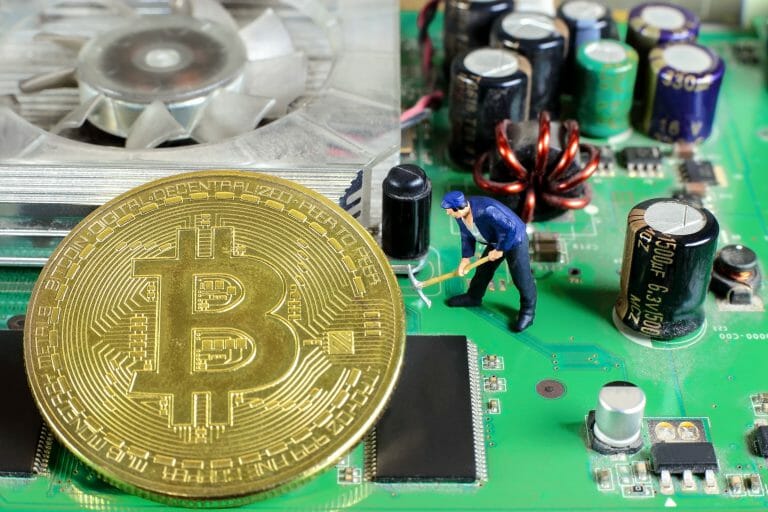
Analyst Considers that Bitcoin Mining is Positive for the Environment

Yassine Elmandjra did not accept criticism pointing to Bitcoin mining as a waste. This activity contributes to reducing the methane that derives from the greenhouse effect, the analyst said.

Yassine Elmandjra is one of the analysts at ARK Investment Management LLC (ARK), an investor that manages innovative and disruptive assets. He recently posted in a Twitter thread different reasons why mining Bitcoin does not harm the environment but rather favors it.

Those messages came in response to those who still consider Bitcoin mining to involve an excessive waste of energy and harm the environment. “On the contrary, we believe that the impact of Bitcoin mining is positive for the environment,” Elmandjra wrote.

The analyst spoke of the benefits to the environment of issuing Bitcoin, alluding to the use of stranded energy for mining. He mentioned factors that relate to energy recycling, which characterizes Bitcoin mining.

He noted that most miners use surplus renewable energy, such as excess hydropower. In that way, they obtain cryptocurrencies while making mining greener than the consumption in other industries.

Furthermore, Elmandjra highlighted Bitcoin’s higher efficiency in terms of energy consumption, in contrast to gold and the traditional banking system. The analyst had already said that “Bitcoin is much more efficient than traditional banking and gold mining on a global scale.”

“Traditional banking and gold mining consume 2.34 billion gigajoules (GJ) and 500 million GJ per year, respectively,” said Elmandjra. However, he explained that “Bitcoin consumes 184 million GJ, 10% less than traditional banking and 40% less than gold mining.”

As if these benefits were not enough, Bitcoin mining also contributes to reducing greenhouse gas emissions. This activity takes advantage of the methane in the atmosphere as a source of energy. Canadian oil companies have been using it for mining since 2019.

Elmandjra closed his Twitter thread citing Parker Lewis; the Head of Business Development at financial services firm Unchained Capital. The latter summarizes the reasons why Bitcoin is not harmful but favorable for the environment.

Lewis says that “a significant part of the energy that Bitcoin mining consumes comes from renewable resources.” The executive explains that “Bitcoin consumes energy that would become waste or burn in the atmosphere.” Besides, he highlights that “Bitcoin consumes energy resources whose development would not be economical.”

Among other aspects, Lewis believes that “Bitcoin will stimulate innovation in the development of renewable energy technology and resources.” He notes that “Bitcoin only consumes the energy that the free market will support at a free-market rate.” Finally, he predicts that “the nature of Bitcoin’s energy demand will improve the efficiency of power grids.”

To conclude, Elmandjra responds to critics of Bitcoin mining that “Bitcoin does not waste energy.” He agrees with Lewis that this activity favors the environment by efficiently taking advantage of renewable energy sources. For example, in China, cryptocurrency miners in Inner Mongolia and other regions use energy that they obtain from coal.

By Alexander Salazar