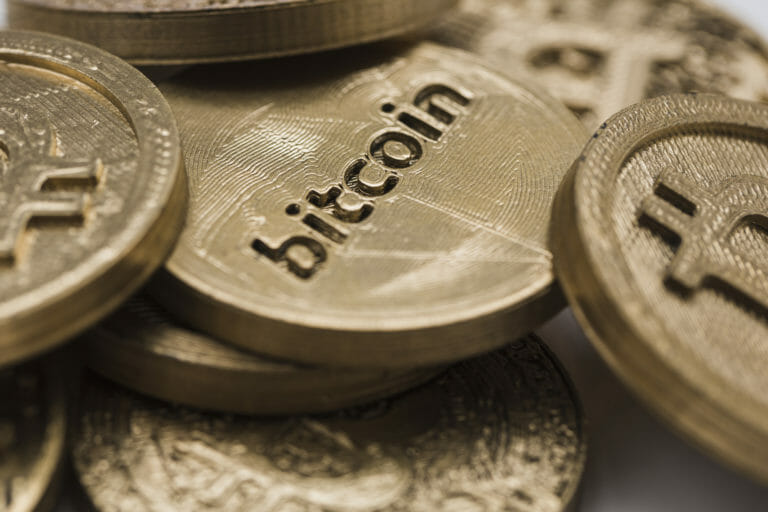

SEC Accepts VanEck’s Application for Launching a Bitcoin ETF

The SEC has until May 1st to accept, modify or reject VanEck’s request. VanEck’s Bitcoin ETF could still be the first to go public in the United States.

The US Securities and Exchange Commission (SEC) recently acknowledged investment manager VanEck’s request. The latter hope to be able to issue their first Bitcoin ETF (exchange-traded fund) in the United States. If the SEC approves this request, the VanEck ETF would be the first to go public on the country’s stock exchange.

VanEck applied jointly with stock market operator CBOE BZK earlier this year. However, they had not posted it on their website until just a few days ago.

The official entity has until May 1st to approve, modify or reject what VanEck states in the document. If the SEC’s regulators cannot reach an agreement, they could extend the response date by an additional 240 days.

Bitcoin ETFs are stock exchange-traded funds that track the value of the pioneering cryptocurrency. People trade them on traditional markets rather than on cryptocurrency exchanges. These investment alternatives allow the price of a share of the exchange-traded fund to fluctuate with the price of Bitcoin.

Support for Bitcoin among SEC Officials

The outlook of the approval of this ETF is highly favorable. For months now, the number of SEC officials who have shown their support for Bitcoin has grown. Among them is Gary Gensler, who is the current chairman of the SEC. Also, he has been a finance professor, a cryptocurrency initiative advisor, and a researcher on the impact of Bitcoin on finance.

According to a tweet from Documenting Bitcoin, VanEck is not the only company awaiting a response from the SEC for the approval of its ETF. Other companies in the same situation include Valkirye Digital Asset, a group managing investments in Bitcoin; NYDIG Asset Manager, a leading Bitcoin financial services and technology company; and WisdomTree Commodity Services, a sponsor and asset manager.

This is not the first time that VanEck has applied for its Bitcoin ETF to go public. They had already done it, in January and September 2019, along with blockchain-focused innovative software development and financial services company SolidX.

The SEC rejected both applications as it had done with many others from different companies interested in listing an ETF. The official agency expressed its concern about price manipulation and insufficient liquidity of the companies.

Examples of ETFs that Are Listed on Stock Exchanges

The United States is still waiting for the first Bitcoin ETF on its stock exchange. However, in the North American region, Canada already has three Bitcoin ETFs that are listed on the Toronto Stock Exchange. At the moment, this country is preparing the launch of its fourth ETF, this time based on the cryptocurrency of Ethereum Ether (ETH).

Regarding South America, Brazilian crypto asset manager Hashdex recently announced the launch of its first ETF. It is the first investment fund of this type to be born in the region. It is listed on the both Sao Paolo Stock Exchange (BOVESPA) and the Bermuda Stock Exchange (BSX).

By Alexander Salazar

An Analyst Believes that the Price of Ether Will Exceed that of Bitcoin When the Transition to Ethereum 2.0 Is Complete

Ryan Watkins is confident that the burning of fees will turn Ether into a deflationary asset. There is little certainty about when the Ethereum 2.0 implementation will be complete.

In recent days, Messari analyst Ryan Watkins spoke about Ethereum’s transition to version 2.0. He said that, when the process is complete, the price of Ether (ETH) could exceed that of Bitcoin (BTC), thus becoming the highest value crypto asset.

Watkins explained that Ethereum would move from the proof-of-work (PoW) model to the proof-of-stake (PoS) model, thus accelerating its transformation. He believes that, from that moment, the network would be more secure, its economy would gain momentum, and it would attract more users.

Regarding the possibility that Ether could become more valuable than Bitcoin, Watkins said that it could indeed happen. He predicts that the first step will be the update in July when the burning of fees will take place. He believes that this will contribute to making Ether more deflationary than Bitcoin.

Out of a total of 21 million BTC that there will be, around 18,658,168 units are currently in circulation. As for Ether, data from CoinMarketCap indicates that there are 115,113,616 units, although there is no preset total supply.

According to Watkins, Bitcoin is the cryptocurrency that started the revolution of decentralization of finance. However, he sees strengths in Ethereum that will help attract human and financial capital to build a stronger economy. In this regard, he mentioned the added value of the smart contract network that allows the development of multiple investment options.

The analyst highlighted the growth of the ecosystem of decentralized finance (DeFi), the impact of stablecoins, and the tokenization of art with non-fungible tokens (NFT), among others. He believes that these smart contracts have so much stored value that Ethereum is already the winning blockchain.

Ethereum’s Long Road to Version 2.0

Ever since the Ethereum blockchain emerged, it has used the same PoW mechanism as Bitcoin. However, the developers have spent years planning the migration to the PoS consensus, which may take several more years to complete.

The network will have to go through several phases and face multiple challenges, one of which involves fragmentation as part of the process. Even so, it will need to remain compatible with its smart contracts while it goes fully operational.

When the transition process to Ethereum 2.0 is complete, it will be possible to know the impact on the price of Ether. However, what is clear is the demonstration that miners plan to hold on April 1st. They will transfer all their hashing power to the Ethermine pool, one of the most important on Ethereum, opposing the burning of fees. By doing this, they will go against the protocol that Watkins regards as responsible for Ether being a deflationary asset.

In addition to the above, it is still necessary to observe to what extent Bitcoin will advance in its evolution. To do this, they will take into account that discreet log contracts (DLC) allow creating DeFi applications on the Bitcoin and the Lightning networks.

By Alexander Salazar

BTC and LINK seems to Be Leaking out from Exchanges

There is a continuous decline in the supply of BTC and the growth of users of the Bitcoin network. A financial calculation explains the reasons for the increase in the price of the leading cryptocurrency.

Bitcoin (BTC) completed its second major correction in this bull market last week. The price received a supportive wave and reached a $ 43,000 radius and increased by 44% over the next 13 days. BTC peaked at the new ATH (all-time high)at $ 61,844.

Without seizure, a new all-time major set an establishment over the weekend, with a worrying decreasing size. The week’s compromise brought a fall of 13% and the push of support in the radius of 53,300 dollars.

The daily obstruction was not below the relevant support radius at $ 55,000, the 0.382 Fibonacci retracements of the initial steep move. This situation shows that the uptrend faced an opportunity to keep going its way to a new ATH.

Users can have a vision that something is going to happen in March and early April. The expected increase in size does not indicate the direction of the following price battle.

Fixed Bitcoin Supply Keeps Descending

Research in captivity shows that the supply of fixed Bitcoin continues to decline. This research reflects in the “Liquid Supply Change” indicator, which in recent days generated the second most egregious daily display of BTC’s solvency reduction in more than three years.

These days had brought tremendous changes in universal wealth in the wake of the COVID-19 crisis that began in March 2020. It is evident that more and more retail and institutional investors seek a proper outlet to cash and are giving Bitcoin the hedge’s role.

It seems that such a process is only skyrocketing as more and more long-term hodlers lack profit. This situation appears after the long-term investor’s net position change indicator.

Network Users Are Climbing High Massively

The high number of Bitcoin users is Interesting due to the recent rise in new financial entities, which is almost at the same level as at the peak of the 2017 cycle when Bitcoin reached $ 20,000.

The daily increases in users slightly exceeded the 5,000 level at that time. Then four years later, it already reached a figure of nearly 35,000. This situation shows that the number of new users might surpass 100,000 or even catch a far higher number at the current cycle height.

Willy Woo made a post on Twitter about the increase in users. It states that if the captive data shows 35,000 new participants, users’ daily admission to exchanges, whose activity does not directly affect the blockchain, could already reach around 100,000 daily.

By: Jenson Nuñez

BitMex Adopted SegWit Years after its Activation in Bitcoin

The firm announced that it would soon issue Bech32 addresses for its new users. The firm also reported that it would migrate current users to the new addresses in various phases.

After five years of existence in the Bitcoin network of segregated witnesses (Segregated Witness or SegWit, for its acronym in English), the cryptocurrency exchange BitMex added support to BTC withdrawals using this format. This support will allow users to pay lower fees and save the deal 65% on block weight.

According to a statement on March 18, 2021, BitMex announced that it would allow its users to withdraw bitcoin with Bech32 addresses, which are the ones that natively support the segregated token.

The Company Explains its Vision in this Tweet:

We will soon issue Bech32 addresses to all new BitMex users and migrate current users to new addresses in the subsequent phases. We are excited about this because it will increase efficiency and lower withdrawal fees (on the Bitcoin network).

It is worth remembering that the exchange had already posted on its blog, on December 12, 2019, a press release announcing the enabling of support for shipments in Bech32 format. At that moment, BitMex mentioned that the Bitcoin network supports three address formats.

The first, the original address format, is the one that involves paying for the public key hash (P2PKH), whose addresses begin with the number 1.

The second format is the payment script (P2SH), allowing users to send bitcoin to a secured address through a script without knowing many details. This address is the type of address where BitMex users deposit their funds.

The third is the Bech32 format, also called the native SegWit format, which starts with a bc1 and permits users to take full advantage and benefit from segregated token scalability, higher efficiency, and lower fees.

Binance Also Supports SegWit Deposits for Bitcoin

In addition to BitMex, other exchanges, such as OKEx and Gemini, incorporated SegWit in 2019. The most recent case is that of Binance. Through a statement published on its official site on December 25, 2020, the company reported incorporating the protocol for BTC deposits (withdrawals were already under admission before). “By selecting the BTC (SegWit) network, users will be able to transfer funds to the SegWit (bech32) address,” the note says.

Binance said: “Please note that SegWit should help reduce fees. However, if you mistakenly send incompatible assets to this address, your funds will not be recoverable, and the result will be a permanent loss.”

What is SegWit, and how is its Adoption Process?

The protocol started its functions in the Bitcoin network in 2016. By 2021, almost five years have passed since this event. In this time, the protocol has gone a long way towards full acceptance, despite the advantages it offers.

According to analyst Willy Woo’s metrics, it has a 48% adoption rate. Although this option is functional since 2016, it is also essential to consider that it did not receive the approval of at least 95% of the network’s miners.

By: Jenson Nuñez

NFT OpenSea Platform Reached USD 23 Million in a Funding Round

For the firm, this was their first round of Series A fundraising. The investment will support the company on its expansion and its development team.

NFT’s OpenSea platform earned $ 23 million in revenue in its first Series A fundraising round. The investment will help the startup expand the development team faster and provide more extensive solutions to users.

On March 18, 2021, the information appeared through a note from David Finzer, co-founder and CEO of OpenSea, on his blog. The CEO argues that the company required this financing because it has many plans to offer the best experience to non-fungible tokens (NFT) fans.

According to the statement, the round was at venture capital firm Andressen Horowitz’s hands. Andressen Horowitz has vast experience in the cryptocurrency ecosystem. They also support Dallas Mavericks owner Mark Cuban, the investor Naval Ravikant and the firm Metapurse.

The platform Highlights Some Important Points in the Following Statement:

“In the last six months, the volume of transactions in the NFT OpenSea market has grown more than 100 times. We are lucky to work on many projects and creators from gaming companies, digital artists, musicians, and professional athletes. The world is adapting to the power of this technology, and it is happening suddenly.”

OpenSea plans to create a market for each NFT project. NFTs are an attractive item for many users due to their use and increased prices. OpenSea is one of those platforms that focuses its efforts on the NFT market.

According to the statement, OpenSea, founded in 2017, “seeks to provide a trusted platform for billions of people who may be interested in NFTs.” Among his plans is the creation of a proper market for each NFT project. They indicated that “every musician, creator, artist, influencer and startup can link to this market and sell their NFTs.”

Devin Finzer Expressed That he is Very Optimistic about NFTs and the Future of the Company. He Said on the Blog:

At OpenSea, we are growing and shaping this economy by building the world’s best, largest, and the most trusted market for this new digital asset type. In the following years, billions of people will know about a digital property, and we have built OpenSea as a trusted entry point into this world.

Non-fungible tokens are digital assets or tokenized versions of the natural world that can’t be interchangeable. They can work as proof of authenticity and ownership within the digital world.

The NFT fever still has a long way to go. New projects will emerge to create this type of collectibles or exclusive piece every day. The TV series’s co-host, Shark Tank, spoke about his perspective on non-fungible tokens and cryptocurrencies in a post through the basketball team’s website on February 11 of this year.

On that occasion, the billionaire established similarity between cryptocurrencies and the cards or collectible cards of sports teams.

According to the investor, the American tradition of collecting stamps of their favorite teams and athletes is now adapting to the new reality of cryptocurrencies and digital assets, particularly Non-Fungible Tokens (NFT) collectible tokens in blockchains.

By: Jenson Nuñez

The Oldest Bank in the United States Is Investing in a Cryptocurrency Custody Startup

BNY Mellon already holds more than USD 41 billion worth of assets in custody and plans to provide cryptocurrency services. Israel-based firm Fireblocks offers custody of cryptocurrencies to around 230 customers, including BNY Mellon and five other banks.

Currently, the Bank of New York Mellon (BNY Mellon), the oldest in the United States, is investing in Fireblocks. The technology of this Israeli firm will allow it to provide cryptocurrency custodial services on behalf of institutional investors.

According to the Wall Street Journal (WSJ), Fireblocks completed a financing round of USD 133 million in which BNY Mellon participated. Hedge fund firm Coatue Management and venture capital firms SVB Capital, Ribbit Capital, and Stripes joined the bank.

The Bank Offers Custody of Bitcoin and Other Cryptocurrencies

On February 11th, BNY Mellon revealed its Bitcoin custody plans. The entity already holds more than USD 41 billion worth of securities in custody. At that time, they had already been discussing with their customers about this service focused on Bitcoin and other cryptocurrencies.

BNY Mellon Chief Executive Officer of Asset Services and Head of Digital Unit Roman Regelman expressed his opinion on this matter. The executive says that developing products to link digital and traditional assets is critical to the future of custody.

In a statement, Fireblocks said that it began offering custodial services to cryptocurrency exchanges and institutions three years ago. They maintain that they have formed an institutional transfer and storage network in which they safeguard more than USD 400,000 million worth of cryptocurrencies.

Other Multinational Banks Invest in Custodial Services

The institution says that it has around 230 customers, including exchanges, liquidity providers, banks, and hedge funds, among others. Fireblocks co-founder and CEO Michael Shaulov said that they are working with five other multinational banks, apart from BNY Mellon. However, they declined to identify those financial institutions, according to the WSJ.

Shaulov said that he had worked with an Israeli military intelligence agency similar to the US National Security Agency (NSA). The other two co-founders also held similar positions in intelligence.

The CEO of Fireblocks explained that his experiences in the intelligence unit were highly relevant to his career in cybersecurity. In that sense, he commented that it is necessary to understand how attackers function or operate in their most advanced capacity. He believes that this gives an advantage in understanding how to build defense systems.

The proposed custody solutions are just one reason for BNY Mellon’s interest in Bitcoin. The financial institution said that it will also trade on Nasdaq alongside Simplify US Equity PLUS Bitcoin. The latter has requested approval from the SEC to invest in Bitcoin, indirectly, through the Grayscale Bitcoin Trust (GBTC) fund. In this case, BNY Mellon would act as the administrator, agent, and accountant of this Bitcoin investment initiative.

The relevance of cryptocurrencies, especially Bitcoin, has grown to such an extent that even banks have included them in their services. These financial institutions are becoming increasingly aware of the strength that these digital assets are gaining in the market.

By Alexander Salazar