
According to US Federal Reserve Chairman, Bitcoin Is a Substitute for Gold Rather than the US Dollar

The United States would develop a digital dollar but is in no hurry to enter the race. The executive distances himself from the term cryptocurrencies and prefers to call them crypto assets.

US Federal Reserve (Fed) Chairman Jerome Powell recently stated that Bitcoin (BTC) is essentially a substitute for gold rather than the US dollar. He said that stablecoins have an “improvement” as national fiat currencies like the US dollar back them, theoretically giving them “credibility.”

The executive questioned cryptocurrencies again, stating that they are very volatile, that nothing backs them, and that they incentivize energy consumption. He said that his administration prefers to call them “crypto- assets” rather than cryptocurrencies.

“Crypto assets are very volatile. See Bitcoin[, for example]. Therefore, they are not really useful as a store of value. They are rather an asset for speculation,” Powell commented. The official spoke of a day when Bitcoin was still trading around USD 57,000 per unit. However, its price has skyrocketed over the past seven months.

Powell complimented stablecoins, but he addressed a clear and strong message to the organizations issuing and supporting them. The head of the US central bank said that they could play a role in economies with adequate regulations. However, he asserted that “the role will not be that of forming the basis of a new global monetary system.”

The Fed Chairman said that private companies behind cryptocurrency projects with a global reach will deserve and receive the highest level of regulation. In other words, projects like Tether (USDT), USDC, and BUSD, among others, could receive more scrutiny in the future.

Working on the Digital Dollar, but Not in a Hurry

Jerome Powell emphasized that the United States is not in the race to develop a digital dollar but has been conducting evaluations. Given that the US dollar is the world’s main reserve currency; they have decided to do so. However, he said that the country has no reason to rush in this regard.

The official noted that the proposal of a fully digitized dollar is a project that the Fed would not lead alone. He explained that Congress would have to pass new enabling legislation and the White House would have to give its approval.

Powell also distanced the United States from the trend of testing its digital currencies, which many countries have already done. China is the most prominent case, but other countries such as Ukraine and the Bahamas have projects of this type in progress.

His position on the creation of a digital dollar greatly contrasts with what he said in February. During a hearing in the banking committee of the US Senate, he stated that such digitization should be a “high priority” project.

Last year, Powell said that his country had better develop a good project, rather than the first. The reason for that is that it would not be possible to dismantle a national service of this kind.

By Alexander Salazar
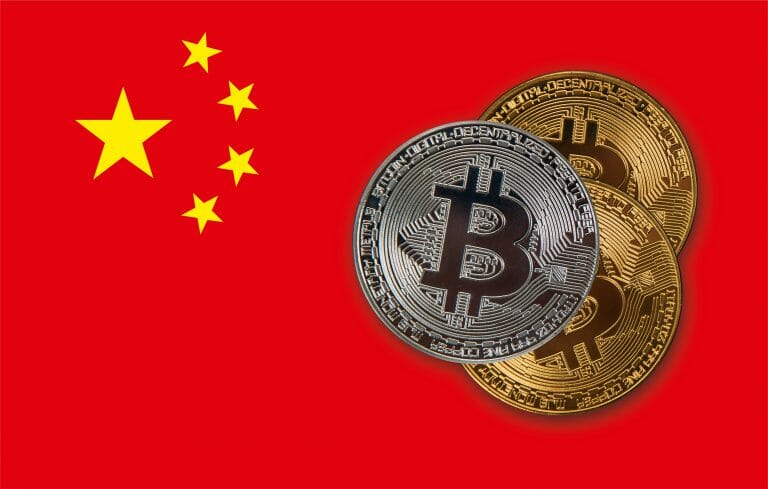
The Director of the Central Bank of China said: Privacy Cannot Happen When it Comes to the Digital Yuan

The digital yuan needs more private data from users who carry out more significant transactions. This method consolidates this bank as the most intimate among the payment platforms currently available.

As an intention to commit with international regulations against money laundering and terrorist financing, the central bank of digital currencies cannot be completely anonymous. Mu Changchun, which leads the Digital Currency Research Institute of the People’s Bank of China, highlighted this decision when discussing privacy and the digital yuan.

During his active stance in the China Development Forum this month, the official said that the digital yuan works with a design of “controllable anonymity.”

With this controllable anonymity, the director meant that the CBDC does not focus on citizens’ privacy, considering that the country runs the risk of paying a high price to the detriment of the fight against crime, according to digital media.

Changchun also assured that China’s CBDC offers the highest protection of user privacy among currently available payment platforms.

China and the Structure of its Payment Systems

The director makes this comparison because of the structure of China’s payment systems, WeChat and Alipay, connect to traditional bank accounts that need user data to work. Simultaneously, the digital yuan closely relates to the banking platform, allowing small anonymity chunks, as the director commented.

The executive added that the digital yuan wallet has two levels of “know your customer” requirements, known by its acronym KYC.

When carrying out significant transactions, users need to enter their private data to follow up on possible suspicious operations. “If you want to make large payments, the portfolio needs updates to increase the payment limit, as the intensity of KYC increases,” The director said.

The Digital Yuan Cannot Protect the Right to Privacy

Concerns around private data tied to the digital yuan platform are not new to China. Citizens have been expressing their concerns in each pilot test that the government has launched.

These concerns have also appeared as a highlight in a report recently published by The Wall Street Journal. The director points out that China’s central bank will have the power to track the digital yuan nationally among citizens who use it and foreign companies operating in the country.

As China moves forward by testing the digital yuan in various cities, including Shanghai, Shenzhen, and Suzhou, fears also grow that the new payment system will become a new state control system.

The central bank reported that, as the country becomes a cashless society, it hopes that digital will be the new norm for transactions, which would open new alternatives to gain control over supplies.

By: Jenson Nuñez

Microsoft Survey Suggests that Xbox Could be Considering The Acceptance of Bitcoin Payments

Microsoft asked Xbox users if they’d want to have the payment with Bitcoin as an optional feature, but some are skeptical regarding this possibility.

The increasing price of Bitcoin is the focus of attention of some companies. Such companies are beginning to consider the incorporation of cryptocurrency into their payment methods. The most recent appears to be Xbox, the video game brand created by Microsoft.

Microsoft’s hand survey suggests that the tech giant is considering adding Bitcoin payment support within its Xbox game console store. According to a post on Reddit, Microsoft led a study of its Xbox customers, asking them about their payment methods preferences.

The survey asked users about the methods they currently use to purchase Xbox products and items

 The user u / Avid_Hiker98 shared a screenshot with the alleged company query on the r / XboxSeriesX subreddit. As seen in the image, the survey asked users about the methods they currently use to pay for Xbox products.

These are some questions that appear in the survey: “Which of these other payment methods would you like to use on Xbox?”. This survey seems to be listing Bitcoin as one of the possible payment mechanisms. The same image appeared on other Reddit groups, Twitter, and other social media platforms.

According to data extracted from Reddit users, the survey was available to those participating in the Xbox Insider program to test beta operating system updates.

Microsoft and its Bitcoin Acceptance

Although Microsoft has not released further information about it, it would not be the first time that the technology company added support for payments with cryptocurrencies. The company got involved with Bitcoin long before other companies took a look at the digital currency.

In 2014, the technology giant had announced the integration of Bitcoin as one of its payment methods to buy content such as Windows applications, including games, through Xbox Live. At that time, the integration had been partial and available only to users in the United States.

The company had specified that Bitcoin could only work “to add money to your Microsoft account, and then buy digital goods from certain online stores.” At the time, the initiative suggested an open stance by the company towards digital currencies and raised expectations for broader adoption in the future.

Microsoft removed this feature back in 2018, according to a Reddit user. However, a report by CoinInsider suggests that Microsoft kept, for the past year, accepting Bitcoin payments from its online Microsoft Store.

While the Xbox online store does not yet support cryptocurrency-based payments, some users questioned the use of Bitcoin for this purpose. A user dropped this question: “Why would someone pay in BTC when it seems like keeping it long-term makes the most sense?”

Others focused on discussing the same doubt, pointing to some of the reflections that other industry analysts have pointed to around Bitcoin. As the narrative that Bitcoin is a store of value, equal to or better than gold, contradictions suggest that this asset is gaining popularity as a payment method.

By: Jenson Nuñez

Colombian Radamel Falcao Now Joins Fantasy Football with the NFTs of the Galatasaray Club

Galatasaray is the second Turkish club to enter Sorare’s platform. Sorare has more than 120 football clubs that already have their NFTs in Ethereum.

A new club of the most prestigious in football enters Sorare’s fantasy platform. Galatasaray made its fabulous entrance and joined the team with the most championships in Turkish football history, which brings players like the Colombian Radamel Falcao, the Uruguayan goalkeeper, Fernando Muslera, or the Dutch winger Ryan Babel to the world of non-fungible tokens (NFT).

Through a video on its Twitter account, Sorare received Galatasaray with joy. The Turk joins a team of more than 120 clubs that already have their own NFTs in the fantasy football system that runs on the Ethereum blockchain.

Galatasaray becomes the second team in the Turkish league to appear on the soccer collectibles platform after Fenerbahçe. As Sorare’s post points out, Galatasaray player cards are now available on their market for users.

In Sorare, users can collect digital cards from soccer players that currently play in the list of available clubs. With these cards, you can participate in different types of fantasy competitions, with scores that might vary depending on the players’ actual performance that the users possess in their respective matches of the week.

Besides, the platform has an exchange market where a diverse set of collectibles can go on sale. Depending on the rarity of the menu, the prices may be higher or lower.

A record sale of a unique card by Portuguese striker Cristiano Ronaldo happened recently. One user paid about $ 300,000 for the collectible on the network.

When a user signs up for Sorare for the first time, they receive a free card pack to start experiencing the game system. Then, by participating in competitions, and depending on your score, you can receive new collectibles as a reward.

Sorare is Raising high in the NFTs Universe

The arrival of Galatasaray only adds to the group of renowned clubs in the world of football that enters Sorare and the world of NFTs on the Ethereum blockchain, an industry in full swing.

Before the Turks, you could already find players from other clubs like Real Madrid, Juventus, Bayern Munich, Liverpool, or River Plate, and leagues such as Major League Soccer in North America.

In just over a year, this platform has paved its way into this universe. This platform has reached places beyond sport and other entertainment branches’ promotions. It also attracts sports figures as advisors and even investors. Currently, the platform has Gerard Piqué as a supporter. He joined as a strategic advisor and has even invested a considerable amount of money in the project.

The company recently received an injection of USD 50 million through various investors, including footballers and former players such as Antoine Griezmann, Oliver Bierhoff, and Rio Ferdinand.

Meanwhile, Sorare ranks among the top NFT platforms on Ethereum, with a trading volume exceeding $ 5 million in a week, according to NonFungible data.

By: Jenson Nuñez

Network Effect on Bitcoin Might Prevent Other Cryptocurrencies from Exceeding it

The usability of Bitcoin brings advantages to the network effect in this technology. The network effect gets stronger in Bitcoin than in other cryptocurrencies, according to a test.

The essay on the network effect on Bitcoin, written by financial consultancy Lyn Alden, gets rid of clues about how this computing and cryptocurrency protocol behaves, by design, to last over time and increase its benefits and capabilities.

Alden talks in her post about the network effect, and throughout the writing, she also relates it to Bitcoin:

“The network effect is the attribute of a company or other system in which, as more people use the network, it will become exponentially more valuable for each user. It is one of the strongest economic points that a system can have against its competitors”.

Investopedia Defines the Network Effect to Further Support us in Understanding this Concept

“The network effect is a case where the increase in users or participants improves the value of a good or service. The Internet is an example of the network effect. Initially, there were few users as it was of no value to anyone outside the military environment or the scientific research sector.”

As Alden argues, Bitcoin would feed and grow more significant thanks to unlimited connectivity between network participants, as well as its security and robustness, above other factors. Bitcoin would grow in the same way that technologies such as the telephone, the Internet, and social networks did back then.

The network effect bases its functionality precisely on how users’ connectivity grows in a network, technology, service, or product. The services also increase in quantity, but naturally, the increase in the user base depends on how well the application of such technology meets its users’ specific needs.

According to the author’s arguments, Bitcoin has already achieved more excellent usability by constituting itself as a more complex structure than it seems, creating many connectivity levels in a network with enough interactive layers.

Second layer solutions such as Lightning are an accessible sample of this layered growth in the technological sector. Simultaneously, the growing adoption of both small users and large institutions is an example of the network effect in the economic sector.

Lyn Alden Highlights that the Price of Bitcoin Could Go High or Fall in the Concise term

Alden also compares Bitcoin and other cryptocurrencies such as ripple (XRP), ether (ETH, Ethereum), stablecoins, Bitcoin forks such as Bitcoin Cash (BCH), and Bitcoin SV (Satoshi’s Vision) with other competitors in terms of being a reserve of value as Litecoin (LTC).

The network effect serves Alden to compare Bitcoin with other potent cryptocurrencies like Ethereum. Bitcoin’s powers in terms of the scope of its technology and the size of its economy make it the market leader.

Lyn Alden highlights that the price of Bitcoin could go high or fall in the concise term. But what happens to the price or some economic values ​​such as the volume and value of transactions or the market capitalization will not disrupt, in any case, Bitcoin’s road to evolver as the most robust technologic and economical solution.

By: Jenson Nuñez

Exchange OKEx Leaves Korea Escaping the Regulation of the Trading of Cryptocurrencies

The users of OKEx will have to withdraw their savings from the platform to avoid losses. There are no official versions, but the closure could be due to the new laws in the Asian country.

The OKEx exchange recently announced that they will stop operating in South Korea as of April 7th, 2021. The firm asked its users in the country to withdraw their savings from the platform before that date.

OKEx has not yet provided official explanations about the causes that lead it to make this decision. However, they said that the new regulations in the country, apart from business difficulties, were among the triggers. The official rules will prohibit exchanges from sharing order books, specifically since March 25th.

Another law that the authorities announced in November 2020 will prohibit privacy-based transactions with cryptocurrencies. For that reason, it would not be possible to trade Monero (XMR), Dash (DASH), and Zcash (ZEC) since March 2021.

Customers Will Have to Withdraw Their Balances

In the framework of a fight against money laundering, the South Korean Government has approved a new law. This rule obliges digital service providers to disclose information about their customers that conduct transactions exceeding USD 1,000. This could also affect the number of cryptocurrency transactions that users make in that Asian country.

In recent days, OKEx explained that they will not be responsible for the losses of users who do not withdraw their balances before April 7th. The exchange scheduled the end of the service for 6 p.m. (South Korean time) on that same date.

Binance’s Background in South Korea

In recent years, Korea has not been a particularly fertile ground for crypto assets. The Binance exchange also decided to leave the country in December 2020, just 8 months after it launched its platform there.

The low volume of transactions on Binance KRW (BKRW) and the low liquidity for users allegedly led to that situation. The closing of trading services on the platform took place on January 8th, 2021.

The Importance of OKEx in the Field of Crypto Assets

The OKEx exchange ranks 13 among the 15 most used exchanges in the world, according to data from CoinMarketCap. The platform currently offers various services related to Bitcoin and other cryptocurrencies. Therefore, its exit from the Korean market is a considerable setback for the advancement of crypto assets in that Asian country.

One of the main strengths of the exchange is that it offers the possibility of operating in more than 100 countries. Similarly, the low cost in fees of the platform is another prominent feature. For example, in Latin America, OKEx fees reach 0.08% and go down as users conduct transactions.

Korea is not the only country whose government has been against the transaction of Bitcoin and other decentralized cryptocurrencies. The authorities of China and the United States, for example, have expressed their skepticism about these kinds of assets. These countries are working on the development of their central bank digital currencies (CBDC).

By Alexander Salazar