The Authorities of a Chinese Province Call on Its Inhabitants to Report Those Who Perform Illegal Bitcoin Mining

The economic planning agency has made available telephone numbers and e-mail addresses to receive complaints about possible illegal mining sites. The local government says that the work is based on “public supervision” to find the mining equipment.

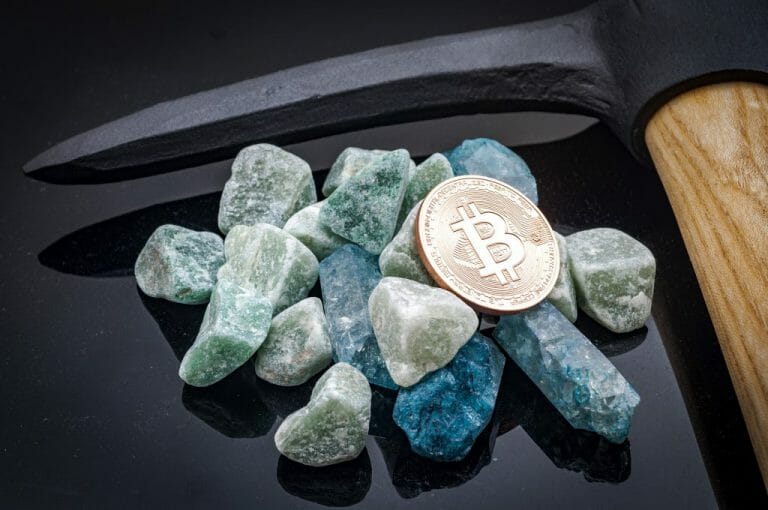
The authorities of the Chinese region of Inner Mongolia called on its inhabitants to denounce the illegal mining of Bitcoin and other cryptocurrencies. They want to reduce the consumption of energy by 3% this year, so they need to locate those who operate cryptocurrency mining equipment.

Neighbors can report possible illegal mining sites to the telephone numbers and e-mail addresses that the economic planning agency has made available. In recent days, local media reported that the work is based on “public supervision”, that is, social control to minimize the activity.

The agency said that it seeks to detect four potential targets: mining companies, miners who hide as companies pretending to be data centers, premise owners who keep mining equipment activated, and those who use electricity supply fraudulently.

China is interested in neutralizing the polluting emissions of Bitcoin miners, so the decision of the local authorities is very pertinent. “The goal is to maximize the role of public supervision,” according to a notice recently released in the region.

The residents received the notification two days after China banned the country’s institutions and means of payments from operating with cryptocurrencies. The government argues that this type of asset is speculative due to its anonymity, which would threaten “people’s property and the economic order.”

Bitcoin Mining Primarily Uses Renewable Energy Sources

According to a newly formed body of opinion, the Bitcoin network consumes large amounts of energy. However, scientific studies indicate that miners primarily use renewable energy sources. Almost 80% of the equipment uses hydroelectric energy instead of other methods such as coal combustion.

In February 2021, ARK Investment Management LLC (ARK) analyst Yassine Elmandjra issued statements on Bitcoin mining. She explained that the “impact of this activity is clearly positive for the environment”, in contrast to what most people think.

China currently accounts for most of the pioneering cryptocurrency’s processing power with 65% of the total hash rate. The Asian country has held a negative position on Bitcoin and other cryptocurrencies and has vetoed them as a means of payment. However, it has allowed the development of the cryptocurrency mining industry, which it now aims to restrict.

Elon Musk’s Alleged Reasons for Criticizing Bitcoin

In recent weeks, the CEO of Tesla, Elon Musk, negatively criticized Bitcoin, claiming that its mining harms the environment. The community expressed its anger over the effects of his comments on the cryptocurrency market. They even recommended that he do more research on the power sources that most Bitcoin miners use.

The Bitcoin Treasuries list currently includes MicroStrategy, Tesla, and Grayscale Bitcoin Trust as the main institutional investors betting on Bitcoin. Ironically, the electric car company owns a total of 43,200 BTC, equivalent to about USD 1,600 thousand, especially after Musk’s comments.

By Alexander Salazar

According to Willy Woo, On-Chain Data Confirms that the Bullish Market Remains Intact

Interest in Bitcoin has not decreased but rather continues to grow despite the market crash. Whales thank Elon Musk as his comments allow them to accumulate more Bitcoin.

Bitcoin (BTC) experienced a week of intense decline, which took it to a low of USD 30,200, but now shows a slight recovery. Although its value remains 41% below its all-time high, analysts see optimistic elements in the on-chain data. Renowned expert Willy Woo believes that the bullish market is still intact.

Woo said that the increasing number of entities on the network is a relevant indicator of where Bitcoin’s price is heading. He perceives this metric as a sign that the value of the cryptocurrency will recover given that more people are actively buying.

The analyst noted in a Glassnode chart that the number of users grows regardless of whether Bitcoin’s price goes up or down. The data provider uses a Bitcoin entity net growth indicator. Several attributes allow it to determine whether a single address is linked to an entity or whether multiple addresses are related to a single entity.

“The number of Bitcoin users has doubled approximately every year since its inception twelve years ago. Therefore, the 2021 peak may end at much higher levels than the 2017 peak. Taking this trend into account, we are just warming up,” according to Willy Woo.

Nobody Knows Where the Panic that Spread on the Bitcoin Network Is Going

More entities have bought more Bitcoin but the recent market crash has also caused thousands of addresses to be left empty. Analyst Lex Moskovski pays special attention to a group of addresses that had bought Bitcoin for the first time. They dumped their funds immediately after its price began to decline.

These “weak hands,” along with news that China launched tighter controls on Bitcoin, contributed to the price of the pioneering cryptocurrency collapsing. However, long-time holders continued to accumulate Bitcoin in the same address, regardless of the amount that they own.

According to analyst Dilution-proof, when panic seized weak hands, older “strong hands” acquired the funds that these “young” addresses dumped. The former refuse to “exchange their digital gold for cash or another asset (such as gold or real estate),” he added.

Whales Thank Elon Musk for His Negative Comments on Bitcoin

“Many Bitcoin whales have been born during the crash. Entities with a lot of money seem to have bought during this event,” Dilution-proof noted in a tweet with the hashtag “#Thank you Elon”.

The analyst shared a chart indicating that whales with 10,000 BTC on their balance sheet bought during the crash. Bitcoin evangelist Anthony Pompliano also provided data to support this analysis. He said that whales bought 122,588 BTC, equivalent to around USD 3.7 billion when the price dropped to USD 30,000.

The addresses with the most Bitcoin recently received another 39.6 BTC, equivalent to USD 347,000, according to Dilution-proof. However, it will still be necessary to determine whether the decline in hash rate will affect Bitcoin’s price, which has dropped by around 20%.

By Alexander Salazar

The Cryptocurrency Market Has Collapsed and Analysts Do Not Know Where Bitcoin Will Go

The recent market crash demonstrates the unpredictability and volatility of cryptocurrencies like Bitcoin and Ether. Market sentiment has taken a lot of damage, so investors could avoid the cryptocurrency market for some time.

The cryptocurrency market has lost more than USD 1 trillion in the last seven days. At the time of writing this article, the market is recovering to almost USD 2 trillion.

However, a very severe sell-off shakes the market and leads to speculation about whether the drop was enough to stop the bullish market. Some consider that this is just a necessary cleansing or correction. Furthermore, they predict that Bitcoin will be worth hundreds of thousands of US dollars per unit this year.

China Could Have Contributed to the Massive Market Crash

Cryptocurrencies like Bitcoin, Ether and Litecoin, among others, are highly speculative assets. Their supporters love anonymity and, most of all, like to speculate on future price action. They wonder whether their price will continue to fall or rise to the high predictions of analysts.

It is only a matter of time before having an answer to those questions, but it is not clear yet. The recent events in the cryptocurrency market demonstrate the unpredictability and volatility that characterize Bitcoin and Ether.

Those who have entered this market have gotten used to easy profits and a seemingly endless bullish trend. That situation contributed to an environment leading the whales to cause massive shaking. Meanwhile, speculators believe that China has coordinated an effort to harm Bitcoin.

An anonymous user said that Bitcoin would crash to USD 30,000 and even indicated where to set limit orders. The cryptocurrency reached that goal and rallied to more than USD 40,000. However, some people predict that it will reach USD 25,000, so there could be more drops.

A Technical Analysis Indicates that a Correction Should Have Occurred Earlier

Since the price of Bitcoin rose from USD 4,000 to more than USD 64,000 in just one year, there needed to be a correction. Normally, no asset moves up in a straight line but Bitcoin and Ethereum came close to doing so.

The bullish trend had turned parabolic but the parabola broke, leading to a major collapse. The focus is now on whether the bullish market has ended and a bearish market will start, or if it was just a shake-up before new highs.

Market sentiment has taken the most damage, so the trend is now in the hands of whales and institutions. Given that retail trade was affected, investors could avoid the cryptocurrency market for some time. Bitcoin and other altcoins could become more attractive at lower prices, thus stoking the bullish trend.

According to data from CoinGecko, the price of Bitcoin is almost 50% below the all-time high of USD 64,000. However, analysts believe that the bullish cycle has not ended despite the current collapse that the market is suffering. Renowned expert Willy Woo warned that Bitcoin’s recovery will not be quick and could happen within several months.

By Alexander Salazar

Bitcoin Mining Power is Losing Momentum amid New Advance from China

The Bitcoin hash rate fell from 180 EH / s to 145 EH / s in a matter of one week. With 5 days remaining for the next difficulty setting, there could be congestion in the network.

Since May 13 to the date, the Bitcoin hash rate fell from more than 180 EH / s to 145 EH / s, according to the 7-day average calculated by blockchain.com. The computational measurement in Bitcoin works by approximations, so the numbers might vary by source.

However, these numbers mark coincidences in the fall of the last days, with insignificant variations. BitInfoCharts, shows a peak of over a week ago around 171 EH / s. And although it reflected a level below 120 EH / s last Saturday, May 22, for today it shows an accumulated power of more than 150EH / s.

The loss of processing power can be happening because of several causes. But the main factor seems to be China, which makes sense considering that a vast amount of Bitcoin mining pools comes from there.

A very powerful rainy season in the Asian country could be the main cause of the fall of part of the accumulated processing power, as Alejandro de la Torre, an executive of one of the main Bitcoin mining groups, had commented a few days ago.

Also recently, China strengthened its position against Bitcoin with a new set of bans and prohibitions on the use of cryptocurrencies for institutions and means of payment. Then Reuters outlined the Chinese government’s intention to crack down on those who mine Bitcoin on its territory with “strong measures.”

The persecution of miners in the Asian country started with measures such as the one taken by the Inner Mongolia region a few days ago. The local authorities launched a campaign asking their citizens to report those who take part in digital mining.

Local media also reported the suspension of all services associated with Bitcoin mining by the Huobi exchange, in response to the measures announced by the Chinese government.

Network Congestion is a Possibility

The Bitcoin hash rate collapse comes right after an adjustment that took the difficulty to the all-time highs. However, the situation has not generated a big deal about congestion or another vital increase in commissions for transactions on the network.

Currently, there are about 25,000 transactions waiting for confirmation in the Bitcoin mempool with less than 100 satoshis per byte of commission to enter the next mined block.

Normally, the movement of transactions declines at the weekends, bringing more decongestion to the network. According to data from Mempool.space, a 16% drop in the difficulty of mining is coming, because of the loss of power accumulated by the miners. If this adjustment finally comes to happen, it would become the most pronounced downturn of the year, exceeding the 13% recorded at the beginning of May.

By: Jenson Nuñez

Argentina’s Central Bank Warns Again About Bitcoin

The BCRA and the CNV highlight that bitcoin is not legal tender in Argentina. Bitcoin’s return on investment in 7 years exceeded that of state-regulated assets.

The Central Bank of Argentina (BCRA) issued yesterday, May 20, a joint statement with the National Securities Commission (CNV) in which it warns “about the risks and implications” of bitcoin (BTC) and crypto-assets, in general.

The signatory entities of the text add that these financial instruments in Argentina are not legal tender. Also, these financial instruments may appear highly volatile, vulnerable to cyberattacks, and they lack the legal backing of other assets. The risk of fraud is high and exposes their users to commit money laundering. Due to the cross-border nature of the transactions, these could remain outside the jurisdiction of local courts.

The text shows similarities to the first press release that the BCRA published on the matter, in 2014. There were several arguments to that of the current statement, such as the volatility of bitcoin, the “lack of support,” the possibility of using it to launder money, and that it is not legal tender in Argentina.

In the text published yesterday, these warnings about risks are given even though, according to financial institutions, crypto-assets currently do not possess significant levels of acceptance and use in Argentina.

South America is Still on Diapers When it Comes to Cryptocurrencies

The growing visibility that cryptocurrencies have in that South American nation still has a long way to go, this way includes publicity of exchanges on public roads, hundreds of offers on P2P exchanges, and massive virtual communities such as the Facebook group “Bitcoin Argentina”. with more than 70 thousand members.

Even so, despite the alleged low use of bitcoin in Argentina by the BCRA and the CNV, these organizations consider that users must always adopt a precautionary attitude.

It is also important to clarify that the statement does not send attacks against investing in cryptocurrencies but rather focuses its arguments on the importance of knowing the risks related to such a practice.

The document reads: “It is important that those who decide to operate with crypto assets or invest in products related to them have access to sufficient information to understand and assess the risks associated with them.”

Bitcoin and the Assets Regulated by the BCRA and the CNV in the Next years

In the period between the two reports, the Argentine peso lost 90% of its value against the US dollar. The national currency (according to the market price or «blue dollar») went from being worth USD 0.12 in June 2014 to USD 0.01.

The volatility of the Merval was so massive that it included declines of more than 50% in a few days. Even so, the BCRA and the CNV bring detailed analysis on the volatility of crypto assets that, according to the text, can show significant fluctuations in short periods and lead to considerable financial losses for their holders.

By: Jenson Nuñez

Dubai Free Zone will Allow the Use of Bitcoin to International Tourists

Dubai Free Zone and the Securities and Commodities Authority came to good terms and signed the agreement. The alliance allows cryptocurrency exchanges to acquire a license in the Free Zone.

The Deputy Director of the Dubai Airport Free Zone (DAFZA), Amna Lootah, recently signed an agreement with Maryam Al Suwaidi, Acting Director-General of the Securities and Commodities Authority (SCA) to bring a supportive stance to the regulation, offering, listing, and trading of bitcoin and cryptocurrencies to tourists in that area.

The information came to light on May 19 by the digital newspaper Khaleej Times. The media outlet explained that this agreement allows cryptocurrency exchanges to obtain a license within the Dubai Airport Free Zone.

Also, through this partnership, DAFZA will provide a flexible regulatory framework and legislative environment that intends to set an improved experience for foreign investors in the cryptocurrency ecosystem.

The Agreement Allows the Authorities to Monitor Entities in the Free Zone

On the other hand, the SCA will be in charge of supervising the offer, issuance, and listing of cryptocurrencies, as well as regulating financial activities related to the granting of licenses within the jurisdiction of DAFZA.

The agreement also establishes that the authorities will monitor the entities that operate the Dubai Free Zone and that have obtained authorization to work with cryptocurrencies within the framework of this agreement.

Another beneficial feature is the help it would bring to the cryptocurrency sector and its growth. It would also increase the use of applications that work with blockchains in Dubai and the United Arab Emirates (UAE).

The United Arab Emirates and the Emirate of Dubai have also confirmed their commitment to blockchain technology through a set of strategic plans and initiatives that will bring relevance to this sector.

Cryptocurrency Demand Accelerates in the UAE

According to the Khaleej Times newspaper, the demand for cryptocurrencies is accelerating in the UAE and other countries on the continent, as global trading volumes for crypto-assets continue to increase too.

In the same way, the digital media reflects that the free zone has more than 25 years of great trust in the international business community, which seeks to establish its commercial activities in the sector.

 Bitcoin’s Current Status

During the morning of May 19, BTC fell to an unexpected level, although it bounced back to around $ 36,000. According to data from TradingView, it can be seen that at its lowest point so far this day, bitcoin fell to $ 30,066.

The last time that the price of BTC decreased that way was on January 28, according to the same source. Since then, bitcoin had doubled in price, setting a new all-time high above $ 64,000 in mid-April.

BTC opened the trading day on May 19 at $ 42,900. As a result, it lost nearly $ 13,000 during the crash. The cryptocurrency reached a trade set of $ 6,000. In a matter of a week, the cryptocurrency has depreciated about 40%. The crash came after Tesla billionaire founder Elon Musk unleashed a campaign against Bitcoin’s alleged environmental impact through its mining and excessive use of energy.

By: Jenson Nuñez