Cardano and Polkadot Are Part of Ethereum Co-Founder Anthony Di Iorio’s Portfolio

Di Iorio told Anthony Pompliano that Polkadot and Cardano have potential and stated that he believes in the best projects. Despite the hype about DeFi, he noted that he keeps his investments simple and invests in larger projects.

Canadian businessman Anthony Di Iorio is a co-founder of the Ethereum smart contract platform, alongside Charles Hoskinson, Gavin Woods, and Vitalik Buterin. In recent days, he said that he believes in the potential of the Cardano (ADA) and Polkadot (DOT) crypto assets.

Di Iorio is the CEO and founder of Canadian blockchain startup Decentral and cryptocurrency wallet Jaxx. He told cryptocurrency advocate Anthony Pompliano that he has a diversified investment portfolio with projects like Cardano and Polkadot.

Di Iorio Talks to Pompliano About his Cryptocurrency Portfolio

The executive revealed that his current portfolio includes cryptocurrencies like Bitcoin, Ether, Cardano, and Polkadot. He said that he believes in the potential of Polkadot and Cardano as they are among the best projects. Besides, he admitted that he likes Cosmos and other smaller projects.

He stated that, while working with Hoskinson, Woods, and Buterin, he knew that their goals would help drive these projects.

“I was a huge fan of Charles, who took different approaches to doing things. I admired him for the academic aspects of what he did or advanced. I was also a huge fan of Gavin Wood,” said Di Iorio.

“I met these guys during my days at Ethereum, noticing their drive, their competitiveness, and their intelligence. I saw those projects over the last few years and knew that they would go as far as they have,” added the Ethereum co-founder.

Current Price Performance of Cardano (ADA) and Polkadot (DOT)

Following a week of turmoil, the cryptocurrency market has held on, trying to balance losses and preparing for its recovery. Bitcoin is currently trading at around USD 37,000 and has generated huge profits. Meanwhile, the other cryptocurrencies have only made small gains.

The last few months have been exciting for Cardano as its network has made great strides. Additionally, its price has risen significantly, recording a growth of +6.0% in the last 24 hours. The cryptocurrency is trading at around USD 1.57 per unit, according to data from CoinGecko.

For its part, Polkadot (DOT) has grown by +5.7% in the last 24 hours, and its price is around USD 22.29.

Di Iorio Says that he Is Not Missing out on DeFi

There has been a lot of hype about DeFi but Di Iorio noted that he keeps his investments simple and invests in larger projects.

“Most of my things are in the top few things, that is Ether, Bitcoin, Cardano, and Polkadot. I also like Cosmos some other crypto assets, but I am not missing out on DeFi. I do not think there is enough time or energy. Running a lot of those things and keeping track of everything is a full-time job. For that reason, I have simplified my life quite a bit in recent years,” said the Ethereum co-founder.

By Alexander Salazar

Salvadoran Banks Will Stick with the US Dollar Although They Welcome the Bitcoin Law

Financial institutions will continue to process credits and deposits in the US fiat currency. According to analysts, people will continue to pay for imports and exports in US dollars.

In recent days, the Salvadoran Banking Association, Abansa, announced that it will continue to use the US dollar rather than Bitcoin for accounting purposes. The country’s financial institutions will use the US fiat currency as a reference for deposits and credits among their users.

This union, composed of 11 banks, considers that the authorities must work in coordination to apply the new law properly. Abansa is worried that promoters of Bitcoin as legal tender must respond to concerns about the measure.

“Abansa urges the authorities to work in coordination to apply the law properly. Since it is an innovative topic, the State must create financial education programs on the use of this type of instrument,” the organization highlighted.

Abansa Seeks to Contribute to the Development of the Bitcoin Law

Regarding the adoption of Bitcoin as an alternative to the US dollar in El Salvador, the association said that it does not reject the measure. On the contrary, the group seeks to contribute to the development of regulations and “operating models” that support the objectives of the law.

Bankers are aware of the progress of the regulations and expect to learn the technical considerations about Bitcoin. Besides, they told the National Assembly that it is necessary to adequately manage the risks associated with these projects that involve innovation.

El Salvador’s President Nayib Bukele announced a measure to allay fears about Bitcoin’s volatility. He reported that the Development Bank would ensure the free convertibility of the cryptocurrency in the country. The State would always assume the risk as it would do so through a trust fund of USD 150 million.

The Use of the Dollar Will Continue Alongside Bitcoin in El Salvador

The use of Bitcoin as legal tender in El Salvador would have a local reach, according to economist and analyst Carlos Acevedo. The former president of the Central Reserve Bank (BCR) of the Central American country believes that payments for imports and exports will continue to be in US dollars.

“People will pay for exports and imports with US dollars. Suppliers will also require payments in the US fiat currency. The only exception would be when a company selling its products to El Salvador accepts payments in Bitcoin. However, Bitcoin is not the means of payment for international trade,” Acevedo told local newspaper El Salvador.

What the former president of the BCR referred to and what Abansa thinks about it is in line with Miguel Kattán’s recent statements. The Secretary of Commerce and Investment explained that El Salvador will not substitute the dollar for Bitcoin but will use it as a payment alternative.

Although El Salvador would use Bitcoin as legal tender in a localized way, it is open to accepting it as an alternative means of payment. Many importers and exporters hope that Bitcoin can become a payment method for their negotiations. That reaffirms once again the relevance of the pioneering cryptocurrency in the global economy.

By Alexander Salazar

A Proposal to Create a Public Cryptocurrency Emerges from the Party of Spanish President Pedro Sánchez

The Bank of Spain would issue a public digital currency pegged to the value of the euro. They say that such a crypto asset could provide “financial stability” and facilitate financial inclusion.

The Spanish Socialist Workers Party (PSOE), through current president Pedro Sánchez, proposes that the Bank of Spain create a public cryptocurrency. In recent days, they presented the proposal to the Congress of Deputies for approval.

With this non-law proposal, the PSOE promotes the evaluation of the feasibility of a central bank digital currency (CBDC). That cryptocurrency pegged to the price of the euro would be the first of its kind in Europe.

The Bahamas Islands already have the sand dollar, available since 2020, and China also has a prominent CBDC project. Even the European Central Bank’s project seeks to implement the digital euro as the single currency in the Eurozone. According to international studies, the Bahamas’ cryptocurrency is the most advanced in the world, especially since it is available to the public.

One of the reasons for such a request is the “financial stability” that this CBDC could provide, “according to the authors of the project. Furthermore, this would lead to “the recovery of the character of money as a public good under democratic control.”

There are other fundamentals, such as the offer of a public alternative to “the rise of new digital forms of payment.” The project states that many of these payment methods escape banking regulation. Therefore, this would facilitate the financial inclusion of certain social sectors that do not have this service. Furthermore, this would represent a solution to “the decline in the use of cash.”

Spanish Legislators Fear the Anonymity of Private Cryptocurrencies

According to Spanish legislators, this public cryptocurrency differs from private ones like Bitcoin (BTC). They especially highlight the “high price volatility” of the latter and “their significant environmental impact.”

The proponents follow a discursive line that assumes that cryptocurrency mining harms the environment. However, some research on this sector states that mining promotes the use of renewable energy.

They add the “problem” of “the possibility of anonymity that these cryptocurrencies offer since they facilitate illicit activities and tax evasion.” In this regard, CBDCs foresee anonymity that decreases as the amounts of transactions increase. It is important to remember that “Bitcoin is not anonymous but pseudonymous.”

The Bank of Spain Studies the Creation of Its CBDC

Setting aside the parliament’s initiative, the Central Bank had already announced its interest in official digital currencies in May. The most important financial institution in Spain published an analysis on the benefits of this type of currency. Among them, it included its efficiency, transparency, and greater traceability of transactions.

Other Spanish state agencies have shown their interest in adopting blockchain technology to streamline their tasks. For example, the Ministry of Economy is working on a new method for processing stock transactions through blockchain technology. That would reduce the amount of time required to do the transactions and the fees to the intermediaries in that activity.

By Alexander Salazar

Federal Reserve ‘Inadvertently’ Supports MicroStrategy Regarding Bitcoin Investment

The Fed has a stake in an exchange-traded fund that owns company bonds.

MicroStrategy deposited bonds for 500 million dollars to invest in bitcoin.

The US Federal Reserve, the Fed, would have an indirect supportive stance in the seven-year bonds managed by MicroStrategy and the proceeds of which will help the company set future investments in bitcoin (BTC). The central bank would be the fourth-largest owner of an exchange-traded fund or ETF that holds 1% of its portfolio in such bonds.

At the end of March last year, and as an emergency measure following the COVID-19 pandemic, the bank introduced capital into the SPDR Bloomberg Barclays High Yield Bond. The measure was part of a strategy to reactivate markets in the face of the emergency crisis and the freezing of credit markets, according to a report made by Bloomberg.

Now, this fund, identified with the JNK ticker, is one of the owners of the debt securities that MicroStrategy got to manage last Tuesday to purchase bitcoin. In simpler words, the Fed, if it kept holding the ETF, would have helped indirectly with the investments that the business intelligence company has been applying with the main cryptocurrency since last year.

Athanasios Psarofagis, ETF analyst for Bloomberg Intelligence said on the matter: “It’s a pretty small amount, but to be honest, I’m surprised to see this happening there so soon. Fixed income portfolio managers have a bit of discretion over which bonds they can hold in their portfolio, so they might be adding a minimal portion before possible index inclusion.”

Federal Reserve and Bitcoin’s differences

The fact is catching unexpected attention since the Federal Reserve has been one of the most skeptical entities regarding the main cryptocurrency. In June of last year, a group of economists from the bank assured that BTC was not a new form of money, but that it was any other fiat money.

Fed Chairman Jerome Powell explained in a statement during March this year that bitcoin was not a candidate to replace the dollar as a store of value currency. For the executive, bitcoin has the potential to become a substitute for gold, but not for the US currency.

According to the report, the Fed would also have a stake in the iShares Broad USD High Yield Corporate Bond, another ETF that owns debt securities handled by MicroStrategy. This policy about printing more money to inject into the markets is one of the main reasons that would be making ups and downs in cryptocurrencies’ prices, a fact recognized by Powell himself.

MicroStrategy is one of the biggest companies that has set large investments in bitcoin. The company has used its resources and debt issues to purchase more BTC, something that is attracting more and more media attention worldwide. According to the records of Bitcoin Treasuries, the organization keeps in its treasury more than 92,000 bitcoins.

By: Jenson Nuñez

FBI Infiltrated 300 Criminal Networks Selling Falsely Anonymous Phones

The FBI did not break the encryption to acquire the master keys. The case puts on the table how important it is to have free and open software.

The FBI infiltrated through more than 11,800 encrypted phones among 300 alleged criminal organizations in a massive operation of more than two years against criminal activities in which cases of high-level public corruption were also found in many countries around the world.

The FBI operation, called Trojan Shield, was revealed on June 7, 2021, but began in 2018. It consisted of distributing the Anom device, a mobile device that encrypts communications and supposedly offers private digital interactions, among different criminal groups. But the truth is that the FBI had access to all the conversations made over the phones.

The document highlights that to make an organic distribution; Anom Enterprise used ‘criminal influencers’, recognized and influential criminal figures to set a promotion campaign of its adoption.

What the users of these phones ignored was that the American and Australian agents possessed a master key. Thus, they decrypted more than 20 million messages sent from these devices. With this evidence, they gained complete access to information about fugitives from the law of Turkey, Australia, Colombia, Sweden, the Netherlands, Finland, Spain, the United States of America, and Thailand.

The Contribution of an Anom Developer

The whole plan came to good fruition thanks to the collaboration of the Anom developer himself. San Diego FBI agents negotiated the conviction of the person named in the document as a confidential human source (CHS), who had distributed other encrypted devices such as Sky Global and Phantom Secure to various criminals before.

The source brought the US agency its encrypted device as an Anom source. At their discretion, the FBI and AFP agencies merged a master key into the telephone system to decrypt each message sent.

The CHS faced several charges, and his role in this operation could lead to his conviction. He is also known by drug traffickers and other criminals, his active role in the initial distribution of the devices was key to achieve the goals of the operation.

This event gave the device enough legitimacy, even more so after other private messaging services like Phantom were shut down in the past. After this situation, the adoption of Anom happened organically.

The FBI stated that one of the main goals of the operation was to weaken confidence in the private communications industry, while the FBI is willing to set up its infiltration.

This kind of infiltration can only happen when the code behind the devices is closed source and can show some back doors. In free and open-source devices, the chances to get the system manipulated are few. This happens because there wouldn’t be developers who review the code to notice the manipulation.

Recently, a rumor about the FBI having “hacked bitcoin” spread like a plague. The rumor stated that this “hack”’s intention was to recover stolen funds through ransomware, which is false. This possibility gained strength because federal agents reported having the private keys through a third party, but did not specify how.

By: Jenson Nuñez

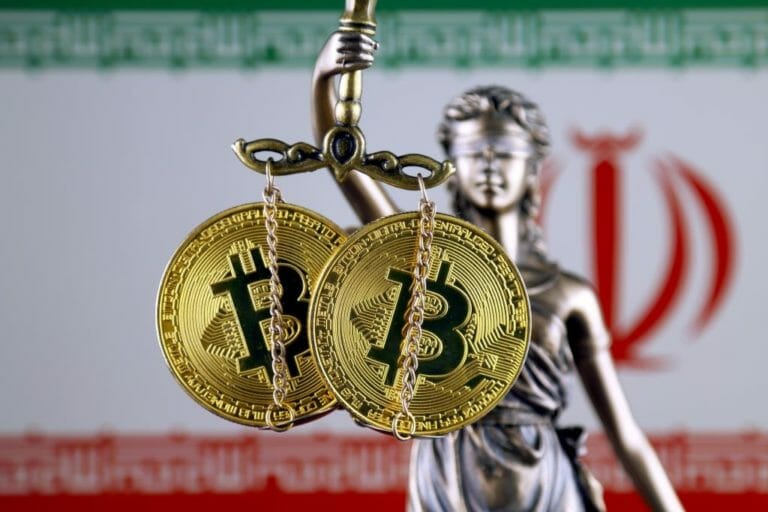
According to the President of Iran, It Is Necessary to Regulate Bitcoin Mining and Trading

Hassan Rouhani said that Iranians should be aware of the risks that cryptocurrency exchanges pose. The head of state called on regulators and the media to educate people about cryptocurrencies.

In recent days, the president of Iran, Hassan Rouhani, called on his cabinet to implement measures to regulate cryptocurrencies. The head of state argued that it is necessary to control Bitcoin (BTC) and the trading of cryptocurrencies. He said that that it would help preserve and protect his country’s interests from the expansion of digital assets.

Rouhani recently held a meeting with the cabinet’s economic coordination board. He used that occasion to say that it is time for his government to pay attention to legal and technical requirements. He said that they seek to set guidelines on Bitcoin and other cryptocurrencies.

The Iranian president explained that it was necessary “to think of a solution as soon as possible and introduce the necessary laws. In this way, we would be legalizing the activity of cryptocurrencies and protecting the capital of the people in this field.” At the same time, he stressed that Iranians must be aware of the risks of trading cryptocurrencies like Bitcoin.

No one yet knows exactly what kinds of guidelines Iran could implement on Bitcoin and the trading of crypto assets. It may be restrictions on foreign exchanges or audits to banks that allow these types of transactions. Likewise, they could have the intention of implementing limits on the trading volumes of cryptocurrencies.

Rouhani Requires Education about Bitcoin and Other Cryptocurrencies

Regardless of what the government of Iran understands about the trading of Bitcoin, Rouhani knows that the activity requires increased attention. For that reason, the president also called on local regulatory agencies and the media to help. He wants them to explain to people what cryptocurrencies are and what their “requirements” are.

“The agencies responsible in the field of capital markets should cooperate with the media and cyberspace. They should help inform, educate and raise awareness about this phenomenon, its instructions, and its laws,” added Rouhani.

When the president held the meeting with his delegates, he spoke about the mining of Bitcoin and other currencies in Iran. He said that he had suspended this activity until the end of the summer, that is, until next September. He explained that the country was experiencing many power outages, which is partly due to the process of mining cryptocurrencies.

It is not the first time that the Iranian government has shown that it is not totally against cryptocurrencies. However, they said that they want to establish strict control over everything related to these types of assets. For example, they consider Bitcoin would serve as a bridge to evade US sanctions. They note that the latter situation puts the West Asian country in financial isolation.

The President of Iran knows the relevant role that Bitcoin plays in today’s world economy. For that reason, he wants to control the use of the pioneering cryptocurrency within the territory of the country. Therefore, it is only a matter of time until people see what he will do regarding cryptocurrency mining and trading.

By Alexander Salazar