UNICEF invests 44 ethers for more Argentines to access cryptocurrencies

The funds will be delivered to the firm Xcapit. The company will grant a section for raising money in crypto for charity.

The United Nations Children’s Fund, better known as Unicef   for its acronym in English, announced the financing of a startup in Argentina with up to USD 100,000, which will be delivered in ether (ETH). The goal is to promote financial education in areas of the population that do not have access to these services at all.

The company benefiting from this UNICEF initiative, coordinated through the Investment Fund and CryptoFund of the organization, is Xcapit, based in Córdoba. Also, the project encompasses five other relevant firms from Mexico, India, Nepal, Kenya, and Rwanda. This seed capital investment will serve to promote and inform about the many investment methods based on new technologies in a country like  Argentina.

Xcapit is a platform that links to a Binance account to create investments through an artificial intelligence (AI) procedure. There are different investment plans and models that each user can choose according to their possibilities.

The company started in 2018 and, according to the article posted by Unicef   Innovation Fund, it will receive 43.78 ether (ETH) for the development of its services for the 1.7 billion people who can’t get proper access to these facilities in Latin America.

On the website of the venture, there are references about  its contribution to the UN, and the following message appears there: “We are building a blockchain platform powered by AI, which encourages a culture of savings and investment among young citizens.” One of the ideas of this project is that Xcapit has an area dedicated to raising funds in crypto to allocate to community aid in Argentina.

UNICEF and its Use of Cryptocurrencies

The Unicef   Crypto Fund (whose official name is UNICEF Cryptocurrency Fund) was launched in 2019 and, as the organization itself promotes, it represents the first initiative of its nature in the United Nations. It is part of the Unicef   Innovation Fund, which has already brought support to 110 startups from 57 countries with a total of more than USD 10 million.

In a dialogue with the Clarín newspaper, Cecilia Chapiro, investment advisor at the Crypto fund, explained that “few people relate UNICEF with blockchain, with technology, with digital currencies. But precisely in my area, we intend to explore how these emerging technologies can bring a positive impact on the world.”

Chapiro also added that all the companies in which this area of   Unicef   is interested “have a technological base, especially in virtual reality, data science, internet, drones, and even blockchain.”

These financings have also happened in previous years, and several Latin American companies have received contributions. Such is the case of OS City, a Mexican startup that plays a major role in advising governments to offer services to their citizens based on blockchain technology. Likewise, Cireha, from Argentina, and Afinidata, from Guatemala, have been other supported projects in the Latin American region during 2020.

By: Jenson Nuñez

Cuba Suspended All Bank Deposits with Dollars in Cash

The guideline will come to effect on June 21, according to Banco Central de Cuba. The decision seems to be temporary, but it will affect natural and legal persons.

The Central Bank of Cuba (BCC) announced that all deposits with dollars in cash in the banking network will face a temporary suspension. The measure will take effect on Monday, June 21, and will affect natural persons, national or foreign, and also legal entities.

The financial institution argued that the suspension has to do with the economic blockade The United States of America has been imposing on the island. The authorities highlighted that these “limitations” affect the banking system since they cannot freely dispose of funds marked in dollars.

The central bank highlighted on the matter that, given the obstacles imposed by the economic blockade of the United States of America so that the national banking system can deposit the cash in dollars abroad, which is collected in the country, the plan has been released to temporarily stop the acceptance of banknotes.

The authorities also explained that the existing accounts in dollars and the funds in them will not receive any harm from the measure. These accounts will not be blocked, and it will grant the possibility of making transfers without mishap. The measure only relates to deposits with US bills and coins.

Regarding transactions in other currencies such as the euro, the bank clarified that they will keep being executed without any extra limitation. Regarding the time that this measure would last, the institution stressed that it will solely depend on the eradication of the restrictions that prevent the normal operations of the export procedures of the dollar.

The president of Cuba himself, Miguel Díaz-Canel, talked about the suspension of deposits, saying that it is a brutal and unprecedented financial persecution of the blockade. The president assured that the biggest problems facing the island, in economic matters, have to do with the decision of the United States of America to restrict the trade that any country intends to do with the Caribbean nation.

Bitcoin is a Target for the Cuban government

In April of this year, the Communist Party of Cuba (PCC) reported that it would add bitcoin (BTC) as part of the country’s new economic guidelines. Mercedes López Acea, a member of the party’s political bureau, stated that they would closely follow the operation of cryptocurrencies to adapt them to the conditions of the local economy.

This measure by the Cuban central bank, related to operations in dollars, could increase the possibility of the potential adoption of bitcoin in the country. However, some of the obstacles that the nation has for the massification of BTC would be the availability of a telecommunications infrastructure and better access to the Internet.

By: Jenson Nuñez

No One Knows Exactly Where Ethereum Classic’s Price Could Go

An active development community is making improvements to increase the security of the ETC network given the high risk of attacks. This cryptocurrency has suffered losses but its great bullish power suggests that it will resume the previous trend.

For the past few weeks, Ethereum Classic (ETC) has been declining steadily, in line with general market sentiment. However, the future of the price of this Ethereum (ETH) fork continues to look promising.

This cryptocurrency emerged as a solution to a difficult situation that the Ethereum community was going through. In 2016, there was a theft of several million ETH that The DAO project was guarding.

The stolen coins remained on the Ethereum Classic network while the Ethereum mainnet returned the ethers to their owners.

Despite their differences, both networks seek to become a large decentralized blockchain, capable of executing smart contracts without third-party interference.

The Current Situation of Ethereum Classic

ETC has steadily gained traction in the ecosystem, maintaining the foundations of its parent cryptocurrency. However, an active development community is making changes and improvements to face its direct competition.

A proposal to change the algorithm seeks to increase the security of the network, given the high risk of 51% attacks. The proposal, called ECIP 1049, recommends switching to SHA 3 (Secure Hash Algorithm 3) to reduce the possibility of attacks against the network.

The development team’s leader Alex Tsankov stated that the SHA 3 code is ready and is working on the testnet. Right now, it is in the stage of receiving community consensus.

The Hash Rate Indicates the Good Health of the ETC Network

One of the best ways to assess the health of a proof-of-work (PoW) validated network is its hash rate. The Ethereum Classic network recently had a strong rebound in its hash rate, which has doubled since April.

Although ETC has been growing steadily, it is still a long way from reaching its parent cryptocurrency. The Ethereum network has more than 745,000 active addresses while the Ethereum Classic network has just 35,000.

However, the project is making steady progress promising to drive the numbers higher. That would go hand in hand with the general bullish cycle of the market and new improvement proposals.

Ethereum Classic Price Technical Analysis

Ethreum Classic’s daily chart indicates a clear correction after a big bullish momentum.

Despite the losses that this cryptocurrency has suffered, the fall does not seem too worrying yet. The strong bullish power of ETC in recent months suggests that the bulls could surprise by resuming the previous trend.

It is a matter of time, as there may be sales up to USD 40.00, in case of losing the USD 51.57 support. That would delay the rise or would increase the risk of a deeper correction.

Ethereum Classic Price Forecast

Ethereum Classic’s weekly chart allows identifying a clear medium-term bullish trend that is still in force. That could continue to drive the price higher in the future.

In order not to risk the bullish trend, buyers should defend the USD 51.55 support. If they lose it, the ground would be clear to USD 37.

There is still a dominant bullish strength, which could surprise soon. Most likely, the trend will resume, looking for new all-time highs. According to the Fibonacci tool, the target is USD 280.

By Alexander Salazar

Elon Musk Should Invest in Cardano Rather than in Bitcoin, According to Charles Hoskinson

Hoskinson acknowledged that Bitcoin could use solar and wind power but advises Tesla to focus on a greener cryptocurrency. He said that he would like to work with Dogecoin after giving Elon Musk advice to improve the cryptocurrency.

In recent days, IOHK CEO and Cardano (ADA) founder Charles Hoskinson spoke about Tesla’s CEO Elon Musk. He highlighted the main reasons why the billionaire businessman should invest in Cardano rather than in Bitcoin. Furthermore, he predicted that the cryptocurrency meme Dogecoin (DOGE) could disappear.

He argued that he places Cardano above Bitcoin for its sustainability and carbon neutrality. He believes that it is an option for those “who are concerned about alternative energy, sustainability, carbon reduction, and carbon neutrality. It cannot be in a system where there is no built-in mechanism to restrict energy consumption.”

However, Hoskinson acknowledged that Bitcoin could use energy that would otherwise go to waste. He added that the proliferation of Bitcoin will increase the use of solar and wind energy. However, he said that Tesla should focus on a greener cryptocurrency.

Hoskinson Says that “Bitcoin Has Programming Limitations”

The Cardano founder highlighted that Bitcoin has “programming limitations” that prevent it from doing “interesting, unique and attractive things.” He explained that Bitcoin will not be suitable to have an Internet of Things (IoT) layer if Tesla wants its vehicles to communicate with each other.

According to Hoskinson, it is necessary to have “a fundamentally different infrastructure to create such a token and regulate such a system. It is necessary to have DEX and stablecoins, and all kinds of mechanics for something like this to be possible. If they can solve this, it will be really beneficial for Tesla.”

He said that the pioneering cryptocurrency “has extremely low programmability as it is not aware of any other system. There is no native way to issue an asset and it cannot do anything interesting or unique.” Regarding the relevance of Bitcoin, he said that it is only about all the money that traders have invested.

DOGE Needs a Full Review to Stay

Hoskinson reiterated that the code for the cryptocurrency meme Dogecoin needs a complete review to remain relevant in the long term. Since DOGE is a third-generation cryptocurrency, he believes that it needs a review like other assets such as Solana.

Hoskinson’s sentiments are in line with the advice that he gave Musk in May to improve Dogecoin. The Ethereum co-founder stated that DOGE needs a system similar to that of Bitcoin.

At the time, Musk asked the cryptocurrency community for ideas on how to improve Dogecoin. The Tesla founder also said that he was working with the developers of the cryptocurrency meme to improve the network.

After the price of the cryptocurrency rose, the community began to show concern about its sustainability. The reason for this was that DOGE lacks a real-world use case. According to Hoskinson, Dogecoin’s lack of usefulness stands out as a significant difference between it and Bitcoin.

Dogecoin May Disappear, According to Hoskinson

As Dogecoin’s wealth is concentrated in few wallets, Hoskinson predicted that it will disappear if this group decides to sell. However, he believes that the impact will be significant for most of the retail investors of the asset.

Furthermore, Hoskinson expressed his wish to work with Dogecoin along with the Cardano team in the future. That way, the mathematician and former Ethereum CEO would have the opportunity to put into practice the advice that he gave to Elon Musk.

By Alexander Salazar

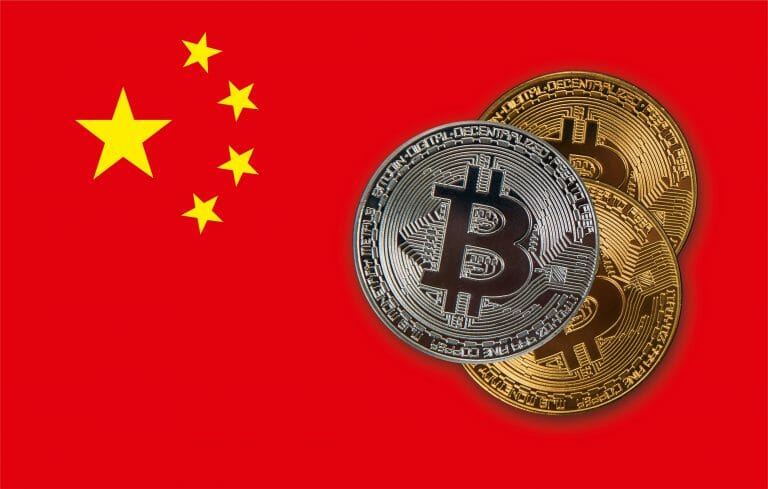
Bitcoin Mining in One of the Highest Hash Rate Provinces in China Could Be Subject to Restrictions

The province of Yunnan went from 10.23% to 5.4% of global hash rate dominance. The loss of dominance of Bitcoin mining in China contributes to the decentralization of the cryptocurrency.

The authorities of the Chinese province of Yunnan recently released a document proposing to investigate the illegal use of electricity. They propose including citizens, companies, and institutions involved with unauthorized Bitcoin mining.

The document is titled “Notice from the Yunnan Province Energy Administration on Strengthening Energy Management of Bitcoin Mining Companies.” It proposes actions such as cutting off the electricity supply to those who mine illegally before July.

The Yunnan authorities have not published the document officially but have only issued it internally. Some Bitcoin mining machines have stopped and more may follow, according to the officials.

The penalty could lead to the closure of the establishment, hoping that those responsible will “rectify” such activities considered illegal.

Provinces Must Reduce Permits for Cryptocurrencies

In May, China’s Finance Committee addressed measures on Bitcoin mining and trading. The first province to start taking action according to this plan was Inner Mongolia.

Xinjiang, Qinghai, and Yunnan also joined massive cryptocurrency mining bans. These provinces have announced that the measures could shut down any company that violates the new laws before July.

These actions are part of the objectives that the State Council set for the Chinese provinces. In that way, they take measures on Bitcoin and other mining and commercial activities, according to the Qinghai Department of Industry and Technology.

The Finance Committee seeks to investigate, sanction, and suspend the supply of energy to illicit cryptocurrency mining activities. The intention is to prevent mining establishments from making illegitimate profits without permission.

Regions like Inner Mongolia have started to investigate and “fix” projects that could use these types of virtual assets. Since another document suggested investigating cloud mining, they extended the warning to Internet-related technological companies.

Bitcoin Mining in Yunnan Uses Green Energy

Inner Mongolia has many fossil resources while Yunnan is the second largest hydroelectric producing province. Although the latter uses “cleaner” energy than other regions, central China’s policy blocked cryptocurrency mining there.

Zhang Nangeng, CEO of Canaan, a company that manufactures ASIC Bitcoin miners, has criticized such measures. He believes that China should not restrict mining that uses renewable energy such as hydroelectricity.

However, this would not be a global action against all Bitcoin mining in the region, but against “unauthorized” individuals or companies. However, some mining companies would be forced to migrate out of Yunnan and China.

Lower Hash Rate Dominance Helps Decentralize Bitcoin

The loss of global dominance of China’s hash rate will help decentralize Bitcoin mining. Some sources state that this restrictive policy on cryptocurrencies and mining has contributed to this in recent months.

According to the University of Cambridge, from 2019 to April 2020 China mined more than half of the global supply. From February to April 2020, the Asian country went from 72.03% to 65.08% in average monthly hash rate.

The province of Xinjiang has had 30% of hash rate in China during this period. Yunnan went from 10.23% in September 2019 to 5.4% of the global hash rate dominance in April 2020.

China’s hash rate dominance has fallen by as much as 55% so far this year. That situation started after the bans that have caused the mass departure of Chinese mining farms for other countries.

By Alexander Salazar

How Are Laser Eyes Related to the Pioneering Cryptocurrency?

No one should underestimate the power of memes as they have a great effect on the reputation of crypto assets. Proponents of Bitcoin will continue to use laser eyes until the price of the cryptocurrency reaches USD 100,000.

The number of images of people with laser eyes on social media has increased so far this year. Characters directly related to Bitcoin, famous people, businesspeople, politicians and athletes, among others, have published their photos with laser eyes on Twitter.

Those images came along with the hashtag #LaserRayUntil100k, which means focusing on the price of Bitcoin until it reaches USD 100,000. Many know that laser eyes are related to Bitcoin, but few know their origin.

Bitcoin Is the Money of the Internet

Everyone must understand that this is the age of the Internet and that Bitcoin is the “money of the Internet”. Satoshi Nakamoto created the crypto asset to function on the global network that links information to computers.

The Internet allows a fad to spread at the speed of light, and a meme can either increase or destroy a global reputation. A meme is funny, so people share it with others right away thanks to social media.

A Group Defends Bitcoin From the Memes That Attack It

A meme is cultural information that individuals can pass on to each other. With the help of the Internet, users add a light and comical tone to them, that is, they express them as a kind of joke. The largest network makes a meme so far-reaching and no one should underestimate it.

Twitter user Chairforce created the idea of laser eyes to show sympathy with the digital asset. He describes himself as the founder of #LaserRayUntil100k but GregZaj, chief marketing officer for the Strike app, posted the hashtag first.

Chairforce is a member of the self-appointed Bitcoin meme army, created to protect Bitcoin from meme attacks, given their powerful scope.

However, a simple meme has achieved great impact and has united bitcoiners. As Guillermo Torrealba, CEO of the Buda.com exchange, mentions, it is easier to identify with the movement and also express sympathy.

Characters with Laser Eyes Support Bitcoin

There is an ever-growing list of characters with laser eyes, which includes people who are involved or not with cryptocurrencies. Entrepreneur Michael Saylor, CEO of MicroStrategy, changed his Twitter profile photo to one with laser eyes. He commented that “laser eyes proclaim a technology to guarantee the human rights of life, freedom, and property. Laser eyes signal intent to make Bitcoin an instrument of economic empowerment.”

Famous businessmen like Elon Musk, sportsmen like Tom Brady, and politicians like United States Congressman Warren Davidson add to the list. There are also Latin American legislators like the Mexican senator Eduardo Murat Hinojosa and deputies like the Brazilian Fabio Osterman and the Argentine Francisco Sánchez.

After announcing the adoption of Bitcoin as legal tender in El Salvador, President Nayib Bukele also has laser eyes.

Memes influence the opinion and mood of millions of people and become NFTs that can be worth several million US dollars. For example, a person bought the NTF of the dog meme that inspired Dogecoin (DOGE) for more than USD 4 million.

By Alexander Salazar