The Number of Bitcoin Miners Leaving China Grows in the Face of Repression in the Country

Large miners of the industry are going to Kazakhstan as that country has cheap electricity. El Salvador has volcanic, hydroelectric, solar, and wind energy, which would allow miners to avoid using fossil fuels.

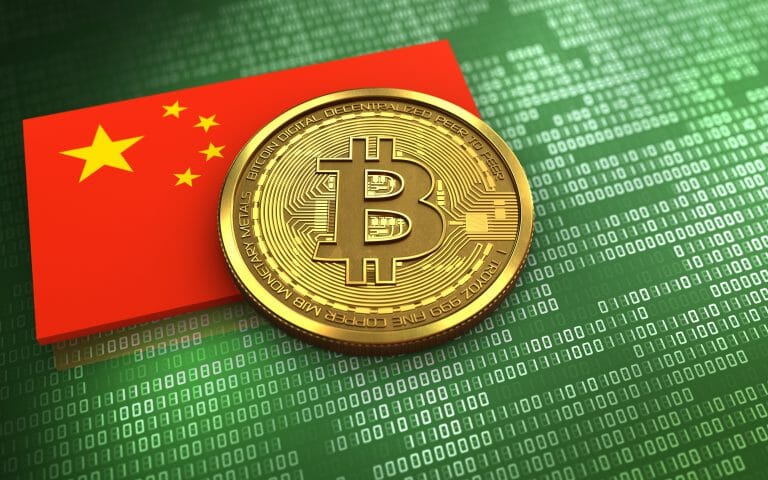
The growing repression against the industry has prompted Chinese Bitcoin (BTC) miners to relocate their operations to other countries. For example, the manufacturer of ASIC equipment Canaan decided to mine the cryptocurrency in Kazakhstan.

They said that Kazakhstan has abundant energy sources and is the ninth-largest producer of coal in the world. The country is also a large producer of other fossil fuels such as natural gas.

For miners forced to emigrate, Kazakhstan is an attractive destination since it produces more than twice its energy demand. That situation allows it to offer cheap electricity to Bitcoin mining farms looking for a place to settle.

Chinese mining companies are currently looking for new alternatives, seeing diversification as a “logical step” in their development. They not only manufacture equipment but are also looking to produce the necessary computing power to mine Bitcoin. Bans on mining in various provinces of China have caused a hash rate reduction of up to 50% in the last month.

Some of the mining companies in Canton, in the northeast of Hong Kong, are moving their equipment to Maryland, the United States.

El Salvador and Argentina Could Attract Bitcoin Miners

In recent years, the Bitcoin hash rate had increased significantly, mainly in China. That country has produced much of the computing power behind Bitcoin, but it looks as though that will change.

Due to its proximity to China, Kazakhstan emerges as a possible candidate for miners looking for new spaces to settle. The United States and Canada are other options where there are already large Bitcoin mining farms.

However, El Salvador and Argentina are also Latin American countries with potential for Bitcoin mining. For example, the Canadian company Bitfarms has been planning to build a gigantic Bitcoin mining center in Argentina.

Likewise, El Salvador has a plan to offer Bitcoin mining facilities with very cheap energy. According to Salvadoran President Nayib Bukele, this energy is 100% clean and renewable and takes advantage of volcanic activity.

In addition to volcanic energy, El Salvador has other sources that can contribute to encouraging Bitcoin mining. The country is building a large hydroelectric plant with a generation capacity of 67 megawatts (MW).

That nation is also building the largest wind farm in Central America, which has 10 of its 15 wind turbines. These are the highest in the region (120 meters high), which allows them to inject electrical energy into the national grid.

In December, the AES El Salvador company opened a solar power plant that generates 5.2 MWp of sustainable energy. That same company also developed another project generating 100 MW of renewable energy through 10 solar plants. Due to its diversity of energy sources, El Salvador is becoming a country with great potential for Bitcoin mining.

By Alexander Salazar
The Legislative Assembly of El Salvador Does Not Support the Petition to Repeal the Bitcoin Law

Deputy Portillo Cuadra believes that the Bitcoin Law would make the price of electricity more expensive. Parliamentarian Johnny Wright asked to change the Labor Code for the payment of wages in US dollars.

The deputies representing the Republican Nationalist Alliance (Arena) party recently requested the Legislative Assembly of El Salvador to repeal the Bitcoin Law. However, this request to remove the legal tender status of the cryptocurrency does not have majority support.

According to the Salvadoran newspaper El Mundo, other deputies did not support the proposal that they made.

Deputy of the Arena party René Portillo Cuadra argued that the Bitcoin Law would make electricity more expensive. He said that this law is causing financial organizations to be unable to make loans to El Salvador.

Deputies Numan Salgado and Romeo Auerbach represent the Great Alliance for National Unity (Gana), a party allied with the ruling party. When they heard about Portillo Cuadra’s position on the regulations, they stated that their party does not support the repeal of the Bitcoin Law.

Salgado added that Arena and the Farabundo Martí National Liberation Front (FMLN) want to change or repeal that law. He suggests that they are seeking to cause uncertainty and fear among Salvadoran citizens.

“Arena and the FMLN reject the implementation of the Bitcoin Law, aiming to cause fear in the population. Besides, they want to create mistrust and make the implementation of this digital currency unsuccessful. We believe that they are defending the formal financial sector as they would lose the commissions for all their monetary transactions,” said Salgado.

Other Deputies Defend the Bitcoin Law

Reinaldo Carballo, deputy of the Christian Democratic Party (PDC), defended the Bitcoin Law, whose regulations they will introduce in 90 days. Carballo said that these rules would only affect the financial sector of El Salvador when it comes into effect.

“Bitcoin will be a virtual currency that we will use in transactions and earn those commissions that they charge us from the United States. For that reason, I do not support the Arena initiative,” Carballo said.

The Bitcoin Law Arouses Controversies among Parliamentarians

Marleni Funes, a deputy of the FMLN, was willing to study the proposal to repeal the Bitcoin Law. Despite this, she considers that the initiatives of the opposition deputies against this regulation will not succeed.

According to Funes, neither the reform nor the repeal will pass in this Legislative Assembly. She also questions this Constitutional Chamber, where the population must organize and show its position on this law.

Before supporting the repeal of the Bitcoin Law, the parliamentarian reiterated that she must know the Arena proposal deeply.

Deputy Johnny Wright Sol of the Arena party suggested reforming the Labor Code. According to this regulation, they will receive the salary in the legal tender. From September 7th, the US dollar and Bitcoin will coexist in El Salvador.

For this reason, Wright Sol asks to reform the Labor Code to establish the payment of wages in US dollars. However, the Supreme Court of Justice of El Salvador will judge whether the Bitcoin Law is against the Constitution.

In his capacity as a Salvadoran citizen, lawyer Óscar Artero claimed the above-mentioned legal initiative as unconstitutional. On June 8th, the law received approval before the Constitutional Chamber of the highest Salvadoran judicial authority.

By Alexander Salazar

The President of the Inter-American Development Bank considers that Bitcoin is not a solution for El Salvador

Claver-Carone believes that adopting Bitcoin as legal tender will not help boost the Salvadoran economy. The IDB president said that it is necessary to study the Bitcoin Law in depth before implementing it.

In recent days, the president of the Inter-American Development Bank (IDB) Mauricio Claver-Carone spoke about the adoption of Bitcoin (BTC) in El Salvador. He believes that its use as legal tender will not help boost the economy due to the volatility in its price.

According to the Salvadoran newspaper El Mundo, Claver-Carone joins the negative remarks concerning the Bitcoin Law. Multilateral organizations such as the World Bank and the International Monetary Fund are also against it.

The executive said that the Salvadoran government seeks to facilitate transactions and commerce transparently and securely, but Bitcoin is not the solution.

After that statement, Claver-Carone softened his position, saying that the Executive of El Salvador has good intentions. The IDB president stressed the need to study this law deeply and highlighted the advantages of blockchain technology.

Concerning the use of Bitcoin in the Central American country, the highest representative of the international financial organization considers that Bitcoin is a speculative resource. For El Salvador, whose comparative advantage is the stability that dollarization provides, it is complicated and would add unnecessary volatility to that system.

Using Bitcoin for Sending and Receiving Remittances

The Legislative Assembly of El Salvador expeditiously approved the Bitcoin Law on June 8th. For its approval, 62 of the 84 deputies voted in favor of the regulation.

The document says that natural or legal, public or private, persons can use Bitcoin in any transaction that they need to conduct. Not only individuals and companies will be entitled to use Bitcoin as legal tender, but also the organs of public administration. This law also establishes that every economic agent must accept Bitcoin as a form of payment when acquires a good or service from them.

President Nayib Bukele seeks to use Bitcoin to send and receive remittances at a lower cost per transaction.

Between May 2020 and May 2021, the amount of money that came from remittances with Bitcoin quadrupled. The amount went from around USD 424,000 last year to more than USD 1.7 million this year.

International Organizations Call for Caution on El Salvador’s Bitcoinization

The IDB and the World Bank call for caution on the bitcoinization of the Salvadoran economy while the IMF expressed its concerns. The World Bank did not agree to give El Salvador technical assistance regarding its adoption of Bitcoin as legal tender. The international agency considers that it cannot support the implementation of the cryptocurrency in the economy of the Central American country. They argue that the use of the crypto asset is harmful to the environment and lacks transparency.

Meanwhile, International Monetary Fund (IMF) spokesman Gerry Rice also gave his opinion on this issue. He said that the adoption of Bitcoin as legal tender involves a series of macroeconomic, financial and legal problems.

By Alexander Salazar

The Current Market for Bitcoin and Altcoins Looks Much Like that of 2017, According to Coin Metrics

In both cycles, Bitcoin’s dominance fell within a month of its respective peaks. Dogecoin’s pattern in this cycle was similar to that of Ripple’s XRP in 2018.

The dominance of Bitcoin (BTC) in the cryptocurrency market fell to January 2018 levels. The boom in market capitalization of many altcoins led to this drop in the percentage of Bitcoin’s total market capitalization.

Something similar happened during the bullish run in late 2017 and early 2018. In that period, BTC reached USD 20,000 per unit for the first time, according to data from a report from the firm Coin Metrics.

The report deals with the free-floating supply (or liquidity) of a cryptocurrency rather than the total supply of issued coins. The figure comes from calculating the number of currencies that move in the market.

The recent study draws a parallel between the two moments of the cryptocurrency market. Then, there was a significant flow of capital from Bitcoin to altcoins during the height of the price boom.

In both runs, Bitcoin’s free-floating supply-based dominance fell to the level of 40% or less, about a month after peaking, the analysts note.

In both cases, new altcoins emerged, diverting some of Bitcoin’s capital and distributing it among small-cap assets, many of which went extinct.

The market capitalization of Bitcoin and altcoins was very similar in both cycles, according to the study.

What Are the Major Altcoins During This Cycle?

The report of this market cycle highlights the increase in the prices of Ether (ETH), Ripple (XRP), Cardano (ADA), and Binance Coin (BNB), among other cryptocurrencies. The rise that cryptocurrency memes experienced, with Dogecoin (DOGE) leading and Shiba Inu (SHIB) following, is also prominent.

The rise in the price of these cryptocurrencies caused an all-time high of market capitalization for altcoins above USD 1 trillion. According to the report, these types of increases attract retail investors and the attention of mainstream media.

Another relevant aspect is that ETH has barely managed to cover 45% of the total capitalization of altcoins at its highest point in this cycle. However, it has set a new capitalization all-time high above USD 460,000 million.

In the previous cycle, the still second most valuable cryptocurrency in the market reached a peak of dominance above 37%. On this occasion, data from CoinMarketCap indicates that it is barely close to 20%.

Analysts highlight a difference between the two moments regarding the cryptocurrencies ETH and BTC. In the 2017-2018 run, Ether had little correlation with Bitcoin, but now both cryptocurrencies have risen and fallen together.

Performance of Dogecoin and XRP vs. That of Bitcoin

In 2018, Ripple’s cryptocurrency XRP had prominence in giving way to an altcoin season. At such times, most major cryptocurrencies other than Bitcoin outperform the latter.

That year, XRP’s floating free supply capitalization was around USD 200 billion. At its peak, it approached the maximum capitalization that Bitcoin had reached in the previous December.

The pattern that XRP showed at the time resembles the behavior of DOGE during the current market cycle. The cryptocurrency meme barely exceeded USD 70 billion (less than a tenth of the BTC peak above USD 900 billion).

Unlike ETH, both DOGE and XRP have had a low correlation with Bitcoin in 2021. The cryptocurrency meme even reached a correlation of 0 compared to BTC a few weeks ago.

By Alexander Salazar

McAfee and the Theories about his Death in the Internet

The founder of the antivirus company claimed to be threatened by security agents.

In 2019, he had claimed to have compromising information from the government and the CIA.

Right after the news about the death of businessman John McAfee while being detained in Barcelona appeared in various media outlets in   Spain, his tweets from previous years also refloated on social networks, where he stated that he would never commit suicide. Thus, rumors and hypotheses began to reach the surface among the users of this social network.

The most striking post seems to be taking place on October 10, 2020, in which McAfee wrote: “I’m happy here. I have friends. The food is good. Everything is good. Know that if I hang myself, like (Jeffrey) Epstein, it will not be my fault. “Since the afternoon of Wednesday, June 23, the fatal fate of the American chairman came to public, the post has already reached thousands of retweets and mentions.

One of the most significant comments came from Spike Cohen, a libertarian candidate for vice president in 2020. He mentioned that McAfee died in a Spanish prison rather than next to his wife because he refused to play any role in the extortion of the United States of America government.

In the same way as Cohen’s message, other users described the event as “strange,” and some went even further and asked, “not to ignore it as we did with Epstein”; before the magnate Epstein and now John Mcafee. “They no longer care what people would know, and if they know what they are doing.” These tweets also came from many users in response to the original McAfee message.

To strengthen this theory, a previous McAfee post dated November 30, 2019, reads:“I’m getting hints from officers saying, effectively, “We’re getting you, McAfee! We are going to“ kill you. I got a tattoo today, just in case. If I commit suicide, I did not do it. They must have given me a blow. Look at my right arm. $ WHACKD available only at mcafeedex.com :).”

In this message, in addition to denying any intention to attempt against his life, McAfee promoted a token that at that time received issuance on its platform (currently offline)and whose ticker is WHACKD. The full name of the token is Epstein Did Not Kill Himself (in Spanish, “Epstein did not kill himself”), about the chairman who, after being arrested for sexual crimes, committed suicide in August 2019 in New York jail.

Both chairmen claimed to possess information that compromised many people around the globe. McAfee had collected files on government corruption. He also that he will give names and details.

The whole mystery behind the theory reached its climax with a post on John McAfee’s official Instagram account.

The Instagram post shows a picture of a large letter Q on a white background, which does not seem to be related to the reho, but managed to catch the attention of many users due to the moment of its publication, a few minutes before the tragic event.

By: Jenson Nuñez

An Accountant Explains How to Legalize Income with Bitcoin in Argentina

It is important to justify all the money that goes into an Argentine bank account. Some activities with Bitcoin, such as P2P arbitrage, have certain legal and regulatory loopholes.

Some people receive payments in Bitcoin (BTC) or other cryptocurrencies in exchange for products or services or receive returns on investments in crypto assets. However, there are doubts as to how to get the money into the Argentine banking system without suffering penalties for it.

In recent days, accountant Leonardo Baca talked about the subject, taking advantage of his professional training and the experience with his customers.

“People want to pay their taxes, avoid problems with the Federal Administration of Public Revenue (AFIP), and not pay fines,” according to the specialist. He also explains that this is difficult as it involves legal and regulatory loopholes. “No regulation, law, decree or resolution of the AFIP states that it is possible to do P2P transactions in this way,” he adds.

The ways people launder income with cryptocurrencies in Argentina are not the best, according to Baca. However, the interest of users in not having legal problems leads them to look for an alternative.

“Many people have turned to crypto assets because they cannot do what they had been doing before the pandemic. However, the legislation is not ready for that, so they consult me because I have experience with cryptocurrencies,” the accountant explained.

How Can Someone Launder ARS 30 Million Earned with a Cryptocurrency?

Baca talked about whether someone can launder income if they invest ARS 20 thousand in a cryptocurrency that is suddenly worth ARS 30 million. The accountant said that they cannot since the bank would close their account and report that this money comes from suspicious activity.

That would happen even if that person had those profits on an extraordinary return and wanted to pay for the profits. For that reason, the professional accountant recommends making the payments progressively.

In recent days, Argentine tax lawyer Marcos Zócaro said that “banks do not want cryptocurrency sellers.” He explained that alerts arise when someone moves high amounts. This leads these institutions to ask for supporting documents and sworn statements, and even to close the account.

It Is Necessary to Justify Each Peso that Goes Into a Bank Account

Baca discussed the importance of being able to justify any money going into bank accounts in Argentina. He said that it is possible to do this by registering in “Monotributo” (Simplified Tax Regime for Small Taxpayers). He added that it is also possible to do it through inheritance or compensation depending on the amounts of money entering the bank.

In this way, a person can justify the origin of the income going into his account, Baca explains. “You can say that it comes because you are a registered taxpayer even though it comes from selling that cryptocurrency. However, you will have an endorsement or something else to justify it,” he added.

This Argentine accountant considers that the closure of a bank account is something serious that people need to avoid. They can open an account in another bank but a negative history is not good due to the data crossing between financial entities.

“In another bank, they can generate a suspicious transaction report, which will go to the Financial Information Unit (UIF). Besides, they can put together your file, which can cause you a pretty serious problem,” he stated.

By Alexander Salazar