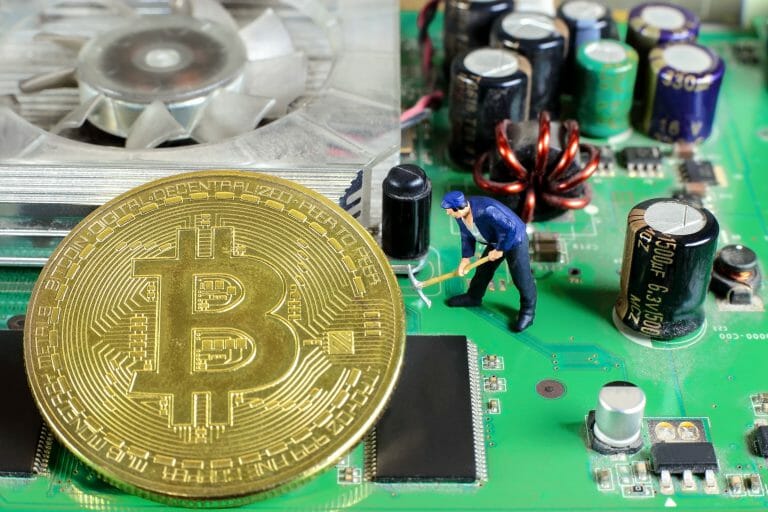
The Most Relevant Facts Concerning Bitcoin Mining during the Last Week

The closure of Chinese mining farms has caused the Bitcoin hash rate to drop and manufacturers of mining equipment to suspend sales. The migration of Chinese miners could change the patterns of CO2 emissions, but they could cause the cost of electricity bills to increase.

The ban by the Chinese government on Bitcoin mining has affected all the activities related to the pioneering cryptocurrency. However, it has mainly harmed its hash rate, which has dropped from 130 EH/s to less than 77 EH/s.

The measures of the Chinese government have also affected the mining of Ether (BTC), the second cryptocurrency on the market. According to graphic cards, the price of the altcoin has suffered significant drops due to such restrictions.

The repression against crypto assets in the Asian country has also forced manufacturers of cryptocurrency mining devices to suspend sales. Additionally, many of them have decided to move abroad as they want to avoid any confrontations with the Chinese authorities.

A Manufacturer of Bitcoin Mining Equipment Suspends Sales

In recent days, the manufacturer of Bitcoin mining equipment Bitmain announced that it would suspend sales. The selling pressure in the secondary market caused a decrease in the price of the devices. Nobody knows yet when the company may resume sales.

However, the impact of Bitmain’s suspension of their sales has not generated too high an impact. For over a year, they have limited themselves to dealing with a group of large mining companies.

The Levels of the Bitcoin Hash Rate Drop to Those of 2019

Last week, the hash rate of the Bitcoin blockchain network fell to levels of 2020. The massive closure of mining farms has led the computing power to drop to 77 EH/s, the lowest level since 2019.

Some analysts are concerned about this decline as it could harm the security of the network. However, this could be just a temporary effect of the disconnections of equipment in China. The only good thing about it is that the prices of cryptocurrency mining machines have fallen considerably. This situation has allowed access to the business to become much cheaper.

Bitfarms Starts Trading on the New York Stock Exchange

The Canadian Bitcoin mining company Bitfarms recently began its operations on Nasdaq. The shares of the company started to trade at USD 3.90 per unit. It is a new firm focusing on cryptocurrency mining that operates on the New York stock exchange.

This year, Bitfarms has earned around 1,000 BTC thanks to the use of renewable energy. In that sense, the increased migration of Chinese miners could change the patterns of CO2 emissions into the atmosphere.

Mining Problems that the Antecedent of Plattsburgh Could Cause

Former mayor of Plattsburgh, Collin Read, recently talked about one of  the most relevant issues related to Bitcoin mining. In a small town located in upstate New York, miners underwent a terrible experience while doing their activity.

Read told CNBC that miners do not contribute much to Plattsburgh as they do not generate enough jobs. He added that the high demand for energy leads to an increase in the costs of electricity bills.

Even though Read is a Cryptocurrency enthusiast, he considers that it is necessary to think carefully before accepting the Chinese diaspora. He also warned that nobody should overvalue Bitcoin mining even if it is an important business.

By Willmen Blanco

While the Pioneering Cryptocurrency Conquers Wall Street, Bobby Lee Predicts Its Price Will Exceed USD 100,000

The popularity of Satoshi Nakamoto’s creation among US banks has grown, confirming that it has conquered Wall Street. Bobby Lee predicted that the price of Bitcoin would exceed USD 100,000 in the fall and then would rise rapidly.

Although Bitcoin is trading at around USD 32,000, it is constantly expanding and developing. The number of companies that offer financial services with the crypto asset is steadily growing.

In recent days, Twitter user DocumentingBTC noted that Bitcoin has become popular with the biggest US banks. Morgan Stanley was the first institution to adopt Bitcoin as the core of some of its financial products.

Other corporations, including Goldman Sachs and JPMorgan, have contributed to Bitcoin conquering Wall Street. Banks have also opened the doors to the pioneering cryptocurrency but not as quickly and confidently as Morgan Stanley.

The Bank of America, among other banking institutions, is adopting Bitcoin less daringly. Although it has been controversial with its criticism of Bitcoin, it allows its clients to speculate on the future performance of the cryptocurrency.

Similarly, Citigroup seems to understand the potential of Bitcoin, but it does not yet offer services related to it. It appears that they will soon join the list of banks adopting the crypto asset.

Despite its current bearish momentum, the pioneering cryptocurrency is so great a phenomenon that no one can stop it. The fact that Bitcoin is within these large companies fully confirms its conquest of Wall Street.

Bobby Lee Predicts the Price of Bitcoin Will Exceed USD 100,000

Bobby Lee, CEO of Crypto Wallet Ballet, predicted that the price of Bitcoin would drop by 50% when it approached USD 70,000. However, he said that it would exceed USD 100,000 in summer or fall and would rise quickly.

Lee considers that it will be possible to start talking about an all-time high when Bitcoin manages to multiply in one to three days. He does not believe that its price has risen fast enough to signal a peak for this cycle.

The executive added that an all-time high does not occur based on FUD (fear, uncertainty, and doubt) and bad news. Likewise, he explained that the peak of the bullish run would coincide with peak euphoria and parabolic price action.

Some Previous Predictions by Bobby Lee

In 2018, Bobby Lee predicted the Bitcoin rally that started in late 2020, took off in early 2021, and peaked in December. Everyone thought that he was crazy to be so specific within two years.

For that reason, he believes that the price of Bitcoin will rise to USD 200,000 or USD 250,000 this year.

Lee’s other long-term predictions include the price of Bitcoin falling in 2022. He believes that will happen before it hits bottom at around USD 41,000 in January 2023.

In March, the CEO of Crypto Wallet Ballet said that Bitcoin could be worth USD 300,000 by the end of 2021. He took into account historical data from previous bullish cycles for that prediction.

The relevance of Bitcoin in the economy and its great potential have led many American financial institutions to adopt it. For that reason, it is possible to say that the pioneering cryptocurrency has conquered Wall Street. Additionally, its ability to recover and exceed its all-time highs has allowed experts to make accurate predictions.

By Willmen Blanco

The UN Wants to Regulate Bitcoin to Stop the Sale of Drugs on the Internet

A study revealed that the narcotics market generates annual sales that surpass USD 315 million. The UN fears that in the future, a globalized drug market would consolidate on the network.

The United Nations (UN) proposed greater regulation on cryptocurrencies to stop the crescent demand in the drug market through the dark web.

This proposal appears during the annual report of the UN Office on Drugs and Crime (UNODC) on June 24 in Austria. The text highlights that the narcotics market creates annual sales that surpass USD 315 million.

The report highlights that the coronavirus pandemic speeds up the digitization of this market, with fewer street sales and more through the internet. This situation increases the purchases of narcotics via the network and the delivery by mail.

The document also highlighted that a globalized market for illegal drugs could find a safe place to operate on the network soon. There are fears that access will be easier and that it will affect the traditional consumption patterns. A good part of these transactions consolidates by using cryptocurrencies as a means of payment.

New Platforms for Drug Trafficking

The publication assures that rapid technological innovation, combined with the agility and adaptability of drug traffickers, who now use new online platforms to sell drugs and other illicit substances, will likely increase the availability of drugs.

The report also highlights many topics about the use of cryptocurrencies in drug trafficking and terrorism. These topics are part of an opinion matrix based on investigations that show that the link between cryptocurrencies and factual crimes is not that strong.

The European Parliament made a recent study denoting a small number of documents and confirmed cases of terrorist financing, which involve crypto assets. However, the international entity does not rule out that the interest of terrorist groups in cryptocurrencies could increase.

The Drug System in Latin America

The world drug problem in Latin America also appears in the UN document. In this section, the document revealed that cocaine trafficking between South America and Europe is the world’s second-largest route for drugs and keeps evolving.

The text also clarified that the area under cultivation of coca decreased globally by 5% in 2019, in large part due to the first significant drop in cultivation in Colombia in the last six years. Despite this, that country remains the largest source of cocaine in the world.

The study warned that the COVID-19 pandemic and the resulting socio-economic consequences could increase the vulnerability among farmers and create incentives for them to keep cultivating coca leaf.

The document ends with a talk about the positive trends that appear in this study. The trends suggest that the increasing use of technology during the pandemic also brought more innovation in drug prevention and treatment services.

By: Jenson Nuñez

Palestinian Monetary Authority is considering the Issuance of Digital Currencies

The governor of the central bank of Palestine said that studies are happening on a CBDC; however, local economic analysts do not consider the project to be possible.

The governor of the central bank of Palestine revealed that a series of studies is at work on a CBDC; however, local economic analysts do not consider the project to be possible.

The Palestinian Monetary Authority (PMA), which serves as the central bank in that state, is studying the possibility of issuing a central bank digital currency (CBDC). Bloomberg reported the news on Thursday, citing the governor of the entity, and stated that the measure would represent a coup of monetary independence for Palestine.

The Palestinians do not have an independent official legal tender due to an agreement that Palestine signed with Israel in the 1990s. The Palestinian economy relies on the Israeli shekel (Israel’s legal tender) for routinary transactions. For their part, the Jordanian dinar (Jordan’s official currency) and the US dollar act as stores of value for its citizens.

Feras Milhem, the governor of the Palestinian Monetary Authority, told Bloomberg that two studies on cryptocurrencies are happening in hopes of finding ways to issue a digital currency. These payments would cover domestic and international needs.

If a CBDC faces its test, Palestine could catch up with major geopolitical players, including China and Sweden, which have already started applying a digital currency. However, there are few challenges that Palestine is facing to develop such a project.

Palestine considers CBDC, But Some Are Skeptical on the Matter

Some regional economic analysts also expressed concern about the viability of a Palestinian digital currency. Barry Topf, a former senior adviser to the governor of the Bank of Israel, agreed that a Palestinian digital currency would never come to be a medium of exchange.

According to the report, Palestinian banks currently manage shekels. The reason is an Israeli law that prohibits large transactions using cash due to anti-money laundering (AML) regulations. Furthermore, Israel limits the amount of fiat currency that Palestinian banks can transfer to Israel every month.

This limitation leads Palestinian banks to borrow to cover foreign exchange payments to third parties, leaving them with a surplus of Israeli banknotes. The issuance of a CBDC could potentially address this inefficient arrangement.

The Israeli Limitations are Harming Palestine Economy

However, this series of limitations imposed by Israel has created a terrible and unprecedented economic situation for Palestine, which depends mainly on donations and remittances. According to Bloomberg, The World Bank estimated in February that the local economy contracted 11.5% last year, in part due to the Covid-19 pandemic.

While local analysts did not seem to share the idea that a digital currency would be viable in Palestine, Khalidi argued that the issuance of some form of digital currency by the PMA would respond more to a question of political symbolism than monetary relief.

By: Jenson Nuñez

Stablecoin Capital is Flowing Back to Bitcoin

The purchasing power of stable coins in circulation would be at an all-time high. Glassnode is noting that purchasing power and higher demand for bitcoins are running in parallel.

The fall in the price of bitcoin has made the purchasing power of stable coins towards the first cryptocurrency in the market reach its highest levels since 2018. This calculation began with a metric published this Friday, June 25 by Glassnode sources.

According to the blockchain analytics firm, the Stablecoin Supply Ratio (SSR) oscillator reached its lowest point since October last year. The firm states in a tweet that this calculation indicates that capital has been flowing back from stablecoins to bitcoin.

This metric shows an increase in the purchasing power of the total supply of stable coins in circulation. When the ratio is high, it means that circulating stablecoins can purchase less BTC.

According to analysts, the current point of this indicator means that the capital that feeds the currencies is flowing towards the bitcoins in the market. This point means more flow of BTC purchases with stablecoins, which indicates that new price increases are coming.

The relationship of stablecoins, or currencies anchored to the dollar value, with the bitcoin market, is very close. These currencies serve on exchanges as substitutes for fiat money for traders, who use them to acquire and sell BTC and other cryptocurrencies in those markets. In theory, the more purchasing power and stable coins circulating, the more solid the demand and purchase for BTC.

A variable Between the BTC’s Price and the Issuance of Stablecoins

Glassnode measures with the oscillator and the SSR the accumulated purchasing power of all stablecoins. In short, the metric studies the relationship between the total capitalization of stablecoins and that of BTC.

Although the higher the price of BTC, the purchasing power of the total stable coins in circulation would decrease, sometimes it can go in a different direction. If the issuance rate of these coins increases its speed, their running total could gain purchasing power even in bullish bitcoin scenarios.

That is why in the Glassnode measures, users can find very different levels of purchasing power of stablecoins at similar BTC price points over time. Bullish scenario for bitcoin.

Glassnode itself highlighted in the weekly report that bitcoin was showing worrying indications of weakness. Precisely, on Tuesday, the cryptocurrency crumbled down for the first time since January below $ 30,000. And although the currency managed to recover quickly, it still struggles between $ 32,000 and $ 35.00 per coin.

Analysts such as Willy Woo and PlanB insist that the bull market cycle has not ended yet. According to both analysts, BTC should set new all-time highs in a range between $ 135,000 and $ 288,000.

By: Jenson Nuñez

El Salvador Intends to be the Second Nation with the Most Bitcoin ATMs in the World

The Athena Bitcoin Company will work in the first phase of setting up an ATM in each department. With the first stage, the Central American country would be among the Latin nations with the most teams.

The bitcoin automated teller machine (ATM) operator, Athena, will start placing 1,500 new equipment in El Salvador at least; there are barely 3 of them. The company is still trying to calculate how long it will take to complete the assembly of all the machines, but once it does, the small Central American nation will rank in the list of countries with the most crypto active ATMs in the entire world.

Anthena states that the speed and dynamism with which the people of El Salvador adopt bitcoin will be vital for this initiative. This Bitcoin Law is something new in the history of the world economy, so there must be adjustments in the expansion according to the speed with which people need these ATMs.

Athena Bitcoin’s initial plan is to put an ATM in each of the 14 departments of El Salvador, for which the company calculates to invest more than 1 million dollars.

As part of this initial plan that came to fruition after the enactment of the Bitcoin Law, the first of this equipment faced its installation on Thursday, June 24, in the La Gran Vía shopping center in the Antiguo Cuscatlán municipality, which belongs to the department of La Libertad in San Salvador.

In February of last year, Athena installed its first equipment in Salvadoran ground. The ATM’s location is at Café Cocoa on El Zonte beach. There is also a third ATM in El Tunco beach, but it belongs to another operator, both in the department of La Libertad.

El Salvador Would have More Bitcoin ATMs than Canada

Although there is no timetable showing when there will be 1,500 bitcoin ATMs in the Salvadoran Nation, if this installation succeeds, El Salvador would be ranking along with countries like Canada, which currently possesses 1,379 ATMs. The United States of America is the only one that surpasses that figure, which has more than 16,000 computers, as shown by the ranking of countries with the most BTC ATMs worldwide, created by the Statista pollster.

Upon completing the first phase of 14 installed bitcoin ATMs, El Salvador will be among the Latin American countries with the highest average of these devices on its territory. It is also vital to consider 28 devices based in Colombia, 18 in Panama, and 16 in the Dominican Republic.

With a territory of just 21,040 km2 and a population of approximately 7 million people, the Central American nation is perhaps one of the smallest countries in the world that would have the biggest bitcoin ATM coverage. The country would have a reach of fewer than 4,000 people per device.

By: Jenson Nuñez