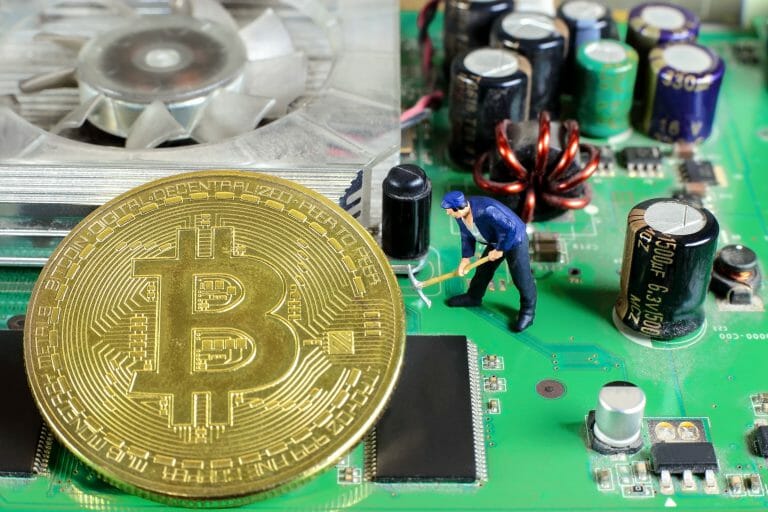
There Has Been a 60% Decrease in Energy Consumption for Bitcoin Mining since May 2021

The lower energy consumption for mining Bitcoin has reduced the chances of carbon dioxide emissions. Chinese mining farms are migrating to settle in places with renewable energy like the United States.

Currently, Bitcoin mining consumes 62 Terawatt per hour (Tw/h), 60% less than its historical peak in May. The Cambridge Bitcoin Electricity Consumption Index (CBECI) reveals that consumption had reached 143 Tw/h during that month.

Massive disconnections in the People’s Republic of China led to that sharp drop in the hash rate. In March, the government of that country took measures to prohibit Bitcoin mining in its territory. Until that moment, the Asian nation concentrated around 65% of the total hash rate of the Bitcoin network.

When the punitive measures against miners took effect, consumption fell to the levels of late November. The process to generate Bitcoin now consumes much less energy, which has reduced the chances of carbon dioxide emissions. Cryptocurrency detractors argue that this is the main reason they are against the cryptocurrency.

Energy Consumption for Bitcoin Mining Pulls Back

New connections with equipment more efficient regarding energy consumption have contributed to this decrease in the hash rate. In other words, the increase in the hash rate in the West is much lower than at other times due to the low consumption by the new ASICs.

The Cambridge Bitcoin Electricity Consumption Index indicates that the decrease for efficiency has gone from 47 to 24 TW/h. That trend became one of the arguments that Bitcoin proponents used the most in the face of criticism.

The amount of energy sustaining the Bitcoin network is currently considerably less, according to the hash-consumption formula. For example, the onset of massive disconnections caused the hash rate to drop by between 40% and 50% from its all-time high.

At the same time, consumption has dropped by 60% on the same scale, which reveals the fundamental role that efficiency plays. These numbers do not include the energy consumption of mining-related processes that indirectly influence the hash rate.

Bitcoin Mining Becomes More Environmentally Friendly

At the beginning of 2020, the price of the pioneering cryptocurrency was close to USD 65,000. However, Tesla CEO Elon Musk said mining was harming the environment, causing its price to plummet. For that reason, the market value of Bitcoin is currently around USD 30,000.

Not everything is negative since the exit of mining from China has given greater strength to the Bitcoin network. Likewise, some provinces where there are no longer any miners now have coal-powered electricity.

Mining farms that emit greenhouse gases are migrating to places with renewable energy. The most prominent destinations include the United States, where Miami Mayor Francis Suárez offered miners to settle.

The Hash Rate Recovers with Less Consumption

New equipment that consumes energy more efficiently has contributed to considerably reducing the emission of greenhouse gases.

Therefore, the recovery of the hash rate to pre-ban levels in China could occur in the medium term. However, the level of consumption will not grow alongside this increase in the hash rate.

The above suggests that the future of Bitcoin mining as a business is promising. However, the activity represented an insignificant part of consumption and pollution compared to other sectors, even at times of highest consumption.

By Alexander Salazar

Banks Are the De Facto Regulators of Cryptocurrencies in Argentina, According to the CEO of Belo

Regarding whether DeFi platforms serve as financial intermediaries, Beaudroit recommends taking care of the consumer rather than regulating the activity. According to Cobos, companies should ensure that they protect users, taking some measures even if the regulators do not require it.

Cryptocurrencies, the regulations on them and the challenges they represent for companies in this sector are matters of debate.

The CEO of financial company Belo, Manuel Beaudroit, said there are no clear regulations on cryptocurrency exchanges operating in Argentina. He noted that this situation led banks to become the de facto regulators of decentralized finance (DeFi) in that country.

He referred to the latter as financial products similar to traditional services but created on a blockchain.

According to Beaudroit, Argentine regulations change at the same time as the governments of the country do. He explained that they had had governments that support innovation while others have tried to control everything much more.

Nobody Wants to Take Responsibility for Regulating DeFi in Argentina

The executive considers that no one in Argentina wants to take responsibility for regulating activities with cryptocurrencies. The main reason for this is that there are political, legal and bureaucratic implications.

Beaudroit commented that each bank decides how far it risks with these types of assets. He highlighted that Argentina has innovative banks that have always sought to support exchanges.

Smaller banks have shown a greater willingness to take risks in this regard, the CEO said. Besides, he emphasized that these institutions have advanced in opening accounts and lending support to DeFi platforms.

He also spoke about the impact of DeFi on the way to manage some financial products, which permeates the public.

Likewise, he reported there arose an alert on whether or not DeFi platforms function as financial intermediaries. Beaudroit believes that it is necessary to take care of the consumer rather than regulate this activity, as the latter poses obstacles for the industry.

In this sense, the Central Bank of Argentina recently issued an alert on the use of Bitcoin and other cryptocurrencies.

Relationship Existing Between Companies in the Cryptocurrency Sector

Abraham Cobos, crypto strategy manager at the Mexican platform Bitso, also spoke about user protection and the relationship between companies in the sector.

Cobos said that the way a company relates to regulators and the industry is an important aspect.

According to the executive, Bitso was the first to obtain a license to operate under the FinTech Law in Mexico. That is a sign of how companies try to be proactive to protect users.

Many issues related to cryptocurrencies can be tricky, Cobos said. For this reason, he believes that companies and specialists must ensure the protection of users.

The Bitso representative considers that the relationship between companies in the cryptocurrency sector is relevant. He stressed that they need to do some things even if the regulators do not require it. He explained that they take those measures to protect users.

By Alexander Salazar

In Argentina, Citizens could Collect their Salaries in Bitcoin if this Bill Proceeds

The law would bring benefits to wage earners and service exporters. Employees could pick whether they want to collect all or just part of their salary in cryptocurrencies.

Workers in a dependency relationship in Argentina and service exporters will gain the right to collect their salary in bitcoin (BTC) and other cryptocurrencies once the statement, presented yesterday, July 6, by the national deputy goes on in all legislative instances.

According to Jose Luis Ramon, the idea is that they can strengthen their autonomy and preserve the purchasing power of their remuneration. The legislator has already presented the plan to the Chamber of Deputies of his country.

The Mendoza politician, a member of the Federal Unity and Equity party, explains that this initiative comes from the need to encourage greater autonomy and governance of wages without implicit loss of rights or situations of possible abuse within the framework of the employment relationship.

According to local press reports, the statement discusses that collecting the salary in cryptocurrencies offers the worker a new mechanism to protect the purchasing power of their remuneration without indicating its conversion into foreign currency as Law 27,541 seeks.

Additionally, because cryptocurrencies are not foreign legal tender, workers who bring services abroad should not transform their income into Argentine pesos according to the official quotation in the Single Exchange Market, as required by law.

The initiative manifests that it will be the employee who, expressly, must enlighten the employer that he wants to receive his payment in digital currencies. In addition, employees will gain the right to decide if they desire to charge all or only a bit of their salary in cryptocurrencies and choose which currency they want to use.

The text of the bill also highlights that the salary receipt will inform the amount in Argentine pesos.

Deputy Ramón’s bill is not the first on cryptocurrencies to appear in the Argentine Chamber of Deputies (HCDN). In November 2020, a deputy from the Frente de Todos presented a bill to set regulations on cryptocurrencies.

Deputy Liliana Schwindt, a member of the Frente de Todos, presented a statement in the National Congress to regulate Bitcoin and other cryptocurrencies. This presentation occurred a day after the Together for Change block entered a project with similar objectives this Friday in the legislative palace.

Like the project of the opposition party, Schwindt’s initiative intended to create a comprehensive regulatory framework that would apply for civil and commercial financial operations with crypto assets as a means of payment, savings, or investment.

The project encouraged the creation of a training program for public officials on the treatment of crypto assets. This program, run by the CNV, was mandatory for all officials in charge of crypto-asset affairs.

That project went to the Finance committees, General Legislation, and Budget and Finance of the HCDN, but it did not arrive at the main hall of the Chamber to receive its vote.

By: Jenson Nuñez

Russia Would Reform its Legislation to Allow the Confiscation of Cryptocurrencies

The authorities intend to make amendments to their criminal legislation. Russia seems to be protecting itself from the possible mass exodus of Bitcoin miners from China.

The Russian authorities are creating a series of improvements to its criminal legislation with the sole intention of allowing the confiscation of cryptocurrencies, which, in the opinion of the entity, have become a new source of income for criminal activities.

The news appeared on July 7, 2021. The Attorney General of the Russian Federation, Igor Krasnov, made the announcement and met a review from the Tass news agency. The official said that the illegal use of cryptocurrencies in Russia is a challenge, so he highlighted the adoption of the “On Digital Assets” law, which is a law that came into effect last January.

The official talked about these matters in a speech at the Conference of Chief Prosecutors of the European States, which took place in St. Petersburg. He noted that cryptocurrencies might serve as tools for corruption, including robbery, money laundering, and other criminal activities.

Krasnov, for whom the exchange of cryptocurrencies is a viable method to launder money stolen from the nation’s budget, said that the law became a great alternative in the fight against these crimes. He also thinks that the new updates to the Penal Code would bring additional protection to the country.

Russia Has Already Legalized Cryptocurrencies

The regulation of cryptocurrencies in Russia took a long time to enter into the discussion. These regulations received the legalization, considering them digital rights that include money claims before the Digital Financial Assets law. This acquisition occurred in January of this year.

In 2020, the president of that nation, Vladimir Putin, issued a decree that forced public officials to declare their bitcoin holdings and other cryptocurrencies.

On that occasion, Russia’s head of state recommended that federal and regional government agencies, the Central Bank, government extra budget funds, and state corporations use the new decree as a tool to guide their income declaration.

The State Duma approved a bill where appears the payment of tax for owning cryptocurrencies.

The initiative highlighted that people or companies that have made transactions of more than 600,000 rubles (USD 8,100) would have to file a declaration about their activities in crypto assets.

Russia is Looking for Greater Regulation As Bitcoin Miners Migrante from China

The news about the regulation of cryptocurrencies in Russia comes right after the repressive behavior of its neighboring country, China, against this industry. Russia is precisely one of the nations that appear on bitcoin miners’ list of options to transfer their operations.

In this way, it seems that the government is legally protecting itself against a possible mass exodus of bitcoin miners from China to its territory. The Asian nation has set a series of restrictions on bitcoin mining because this activity represents a threat to its eco-friendly plans,

A Chinese-American research team is studying the environmental impact of the mining industry. The group estimated that the miners would have withdrawn from Chinese territory in 2024, moving their mining activities to other countries.

By: Jenson Nuñez

Authorities in Brazil Arrested Bitcoin King for Alleged Scam

Bitcoin King and his team received accusations of the theft of some 7,000 BTC in 2019. They also face charges of embezzlement and scams.

Claudio Oliveira, the president of Bitcoin Banco Group and a well-known figure of the crypto ecosystem in Brazil nicknamed “Bitcoin King / Rey Bitcoin, faced an arrest warrant on charges of embezzlement and theft of some 7,000 BTC.

This Information appeared in a press release issued by the local authorities, which have reported that the investigation against Oliveira had been ongoing for around three years, just after Bitcoin Banco Group revealed the alleged theft of some 7,000 BTC after attacking the systems.

Olivieira Was Promoting a Scam

According to the investigation carried out by the authorities, there was evidence pointing out that Bitcoin Banco Group was a scam within the local crypto ecosystem. The scammer team was directly led by Oliveira, with full knowledge and responsibility for the irregularities that took place.

Beyond the alleged theft of the 7,000 BTC, one of the first signs about the scam in question came when the company in charge of Oliveira started forbidding the withdrawal of funds from the platform. This irregularity warned investors, and they claimed that the company prevented them from taking possession of the assets that originally belonged to them.

After the theft of the BTC funds happened, the company agreed with the authorities regarding a compensation plan for those affected users, and a deadline to reorganize their finances. The investigation revealed that Oliveira and his team failed to comply with the tasks they assumed, so they kept offering investment packages and contracts to more victims.

The court in charge of the case froze the accounts of Bitcoin Banco Group since there were 200 lawsuits against the company. In there, the affected users alleged the loss of their funds due to that pack of measures. There were more than 20,000 investors that suffered the scam perpetrated by Oliveira and his working group.

Oliveira had Scammed Other users Before

Concerning Oliveira, he earned the nickname Bitcoin King / Rey Bitcoin after revealing news about his earnings thanks to the digital currency.

But the fact is that the investigation revealed some similar crimes Oliveira had previously committed in the United States of America.  At the time, he managed to organize commercial campaigns to embezzle investors.

The investigation, called Operation Daemon, determined that Oliveira is the perpetrator of crimes associated with embezzlement, money laundering, criminal organization, and other charges.

The legal procedure

After completing the investigations, the authorities initiated an operation to capture Oliveira and his associates, with at least 22 search and seizure warrants.

The police report reads:

The judicial orders focus not only on the cessation of criminal activities but also on clarifying the participation of all those people investigated in the crimes reported. As well as the patrimonial monitoring needed to activate, partially, the reparation of the damages caused to the victims.

By: Jenson Nuñez

Binance Suspends European Bank the Transfer of Securities

The exchange is trying to adapt to regulatory measures in other countries. As compensation, Binance rewards card deposits in euros and even Russian rubles.

Cryptocurrency exchange Binance has temporarily stopped euro deposits through the SEPA network (Single Euro Payment Zone). The reason for the decision appears to run in parallel with events that exceed the exchange house, as they informed their clients. Withdrawals by this means will not be disabled.

As an alternative to this option that is no longer available, users can purchase cryptocurrencies and carry out other types of operations on the platform by paying with credit or debit cards. Even Binance has published a bonus on commissions when depositing euros and rubles using this way. This bonus commission is probably a way to compensate for the cancellation of the bank option.

Binance reported on the suspension of these deposits through an email to its clients, which came from the Financial Times and later published by the Reuters news agency. In the message, Binance details that “any deposit through SEPA will go back within seven business days, but withdrawals through this mean keep functioning normally.

Binance’s operations in Europe seem to be facing a new difficulty. The latest news occurred on Monday, July 5, 2021. The British bank Barclays disallowed its users from using their debit or credit cards on the exchange to protect their money.

Binance Users Might be Subjects of Spying Activities in China

In parallel with this increasing pressure from regulatory entities, Binance has run into other events that will concern its managers as much as its users. According to Chinese journalist Colin Wu, some users of the platform in Sichuan (China) got called by the local police as soon as they opened their Binance accounts.

According to Wu Blockchain, the call from The police department happened with the sole intention to let users know about the risks these platforms would represent for their finances. In addition, the authorities would have warned these investors that they would not accept their claims in cases of suffering money losses from their activities with cryptocurrencies.

More Announcements Coming from Binance

After many untimely waves, Binance announced this Wednesday, July 7, that it managed to hire a new Director of Legal Compliance. This new director is Jonathan Farnell, who previously held the same position at the eToro exchange in the United Kingdom.

Farnell has deep knowledge of financial services and the regulation of electronic money and cryptocurrencies. Farnell explained that he would focus on helping Binance to create disruptive products and achieve better regulatory compliance in Europe.

For his part, the CEO of the exchange house, Changpeng Zhao, published an open letter on Tuesday, July 6. The CEO intends to bring the company’s historical experience and principles in the face of the recent hyper-focus on the regulation of Binance.

In the letter, the CEO focuses on the desire to defend the interests of users. He explained that these principles are something his exchange shares with regulators and explains that clear regulations are “important and necessary” for greater adoption of cryptocurrencies.

By: Jenson Nuñez