Investors Gather More Bitcoin and Strengthen their Price Structure

Once bitcoin reached $ 50,000 in February and noted there was weakness lurking in the market. This time, the little fish, and the whales are already accumulating BTC.

Through the indicator of the Participation Score in the bitcoin accumulation trend, a study led by the analytical firm Ecoinometrics explained how the bitcoin market had fortified itself since the price got to surpass the barrier of USD 50,000 in February of this year.

The indicator compares the accumulation trends of five cohorts of holders and sets a clear difference between the accumulation patterns of that moment and the current ones.

Ecoinometrics uses in this analysis the metric of the Participation Score in the trend of gathering bitcoin. This indicator studies groups of addresses, going from the little fish (addresses with less than 1 BTC) to the whales (addresses with between 1,000 BTC and 10,000 BTC), and it looks at whether or not, on average, they have been accumulating BTC in the last 30 days.

More Cohorts of Holders Accumulate Bitcoin

The study identifies the categories of holders that accumulate bitcoin. A low-value participation score receives its interpretation over the past 30 days most small groups of holders have been accumulating.

Instead, a high participation score means that almost all direction groups, from small fish to whales, are accumulating BTC, according to the study.

Although the mere detection of the addresses that accumulate bitcoins does not allow to predict the price immediately, the fact that most people gather BTC is perceived as a bullish sign, according to the study. This perception relies on both the resulting supply shortage and general market sentiment, the report says.

In this environment governed by market weakness, despite the rising price, any negative event, or association with fear, uncertainty, and doubt, was likely to result in negative price action, the report states.

The report points out that there is a suggestion about some weaknesses in the market. Ecoinometrics points out that it is not the first time that bitcoin has crossed this line since it did so in February and March of this year. However, the report reiterates that market conditions are different today.

The accumulation of BTC by a cohort of holders

From the study of each holder category, it is deduced if it is shedding its BTC or if it is accumulating. In the last two weeks, the emergence of contrast is getting registered, says the study. the author highlighted that addresses that handle less than 10 BTC are piling up satoshis. This situation gets evidenced by these cohorts in the mentioned period.

“The addresses that manage 10 to 1k BTC have become way more neutral,” says the study, as those two categories showed up. The whales have been accumulating more slowly.

By: Jenson Nuñez

Bitcoin ATM Makers and Bitcoin Firms Join Efforts to Improve Regulations

The self-proclaimed CCC wants to improve regulations and protect the consumer. There are more than 42,000 bitcoin ATMs In the United States of America, but how not all of them are KYC compliant.

Bitcoin ATM (BTC) manufacturers and leading blockchain industry companies have announced the creation of a regulatory compliance organization. It will receive the name of the Cryptocurrency Legal Compliance Cooperative (CCC) and has at least 15 founding members.

As detailed in a publication revealed by PR Newswire, the goal of this new team is to set new improvements for regulations around cryptocurrencies, which must be user-centered to “stimulate public protection.” So by creating a more secure place for consumers and adjusting to all legal procedures, it is possible to bring more legal reputation to the industry of exchange between cryptocurrencies and cash, clarified the founders of the CCC.

Another vital aspect to consider is that there are not a few actors who see regulations as sufficient. The ecosystem should receive further regulations. To achieve this goal, the CCC will intend to stay at the forefront of developments and trends to prevent fraud. The application of state-of-the-art forensic technology is vital to achieving this goal, they say.

Currently, the organization consists of the companies Anti-Human Trafficking Intelligence Initiative, Chainalysis, CipherBlade, Coinsource, DigitalMint, Elliptic, Halo Privacy, Maya, Metropolitan Capital Bank, Palmera Consulting, Royal Business Bank, Surety Bank, The Knoble, Titan Bank, and Trust Stamp.

According to the published document, other companies in the cryptocurrency sector, financial institutions, suppliers, non-governmental organizations, and regulatory bodies can also join. Meetings will happen at least quarterly.

Views and Other Statistics

Seth Sattler, director of legal compliance at DigitalMint, a company that fabricates bitcoin ATMs, stated that this peer-to-peer unit would fight against practices such as fraud, elder scams, and drug and even human trafficking.

He also discussed that a smaller group of ATM operators apply to Know Your Customer (KYC) and anti-money laundering (AML) policies. Others just turned a blind eye and supported these criminal practices allowing them to work almost anonymously.

Bo Oney, Coinsource’s executive vice president of operations and chief legal compliance officer, exposed his ideas in the same vein. “Some ATM operators think that asking for a cell phone number is good enough to comply with the KYC.”

One more piece of information that the CCC requires in its statement is that there are currently 42,000 bitcoin ATMs in the United States of America. These ATMs help people effortlessly access the world of cryptocurrencies by purchasing cryptocurrencies with cash.

In Search of Better Regulations for Bitcoin

The founding policies of the Cryptocurrency Legal Compliance Cooperative are running in parallel with what is expressed by the International Financial Action Group (FATF). In May, a report highlighted that this entity would update its guidelines regarding activities with cryptocurrencies. However, its publication got finally postponed to October.

By: Jenson Nuñez

Bitcoin Scammers Come to Dating apps to Hunt their Victims

Lonely people enter these sites looking for love, but instead, they get scammed. Cryptocurrency scams are taking over dating apps to fool unsuspecting users.

Falling in love through the internet is now taking on a whole new dimension due to lonely hearts searching for a soulmate becoming the main targets of crypto scammers. In what appears to be the latest series of crypto scams. Scammers would target unsuspecting users of online dating apps as their victims.

The Bitcoin fraud scheme is acquiring popularity in Japan, where several local media have reported scams of this type in recent months. This week the recent case of a woman “in her 30s” who got deceived by a man, with whom she had a cyber-relationship, to invest in digital currencies.

Claiming to be a successful overseas cryptocurrency trader, the scammer had convinced the victim to put an investment in a fraudulent cryptocurrency platform on the promise of making hefty profits. The man and the trading website then disappeared after she invested at least $ 345,000. Yahoo! Japan covered the sad news.

Crypto Scam Spreads Across Japan Without Control

Another local media had already reported that another 50-year-old woman fell for a very similar scam. According to the report, she also had conversations with a “successful” foreign merchant, through the messaging app Line, who made her purchase at least USD 82,000 in bitcoins from a scam site.

The matter has escalated to become a potential national risk, as some agencies in Japan have started to give warning advice to users. In February, Japan’s National Center for Consumer Affairs (CNAC) launched an advisory targeting men ages 30-49 to be on the lookout for cryptocurrency scammers lurking in dating apps. The men claimed they were international experts in digital assets.

The CNAC further revealed that it was following various cases in which “women looking for someone to love” persuaded male users through dating apps to invest in crypto projects using fake platforms.

A publication of Yahoo! Japan at the beginning of the year highlighted the phenomenon is spreading throughout the entire nation. The report highlighted the particular case of a 40-year-old man who got scammed by a 20-year-old Taiwanese girl with whom he had plans to marry and who would have stolen more than USD 70,000 from him.

Scammers are Everywhere and Could be Everyone

Single people looking for romance in China have also faced similar situations. In April, Hangzhou highlighted the case of a Chinese woman who had been cheated on by her two online boyfriends simultaneously.

The resident of Zhejiang province explained that one of the subjects invited her to join a gambling union. The other man then had persuaded her to set various investments that count on more than $ 2,500 in a cryptocurrency program.

The alleged trading platform also kept his money. Although instead of disappearing, it required a new investment to withdraw its profit, something she had found false after raising the stakes and losing more than $ 10,000.

By: Jenson Nuñez

Family of Director F. F. Coppola Used Technology to Support Independent Cinema

Director Francis Ford Coppola’s family of filmmakers is releasing a democratic Blockchain-based film curation platform that intends to pave new ways for independent productions.

Blockchain technology is becoming the new Hollywood star due to an initiative led by the family of acclaimed film director Francis Ford Coppola.

The famous screenwriter and film producer, Roman Coppola, son of the award-winning director of The Godfather, one of his most iconic films, is leading an initiative that takes advantage of blockchain technology to bring supportive stances to independent cinema.

Co-founded by Roman Coppola, Decentralized Pictures is a non-profit organization that this year will release a Blockchain-based platform that intends to discover and bring more support to underrepresented film artists. Tech and entertainment veteran Leo Matchett and American Zoetrope executive Michael Musante are also among the project’s co-founders list.

The initiative receives the support of a board that includes successful director Sofia Coppola, daughter of the veteran director and famous for productions such as Lost in Translation. Her niece, young director Gia Coppola, Francis’ granddaughter had joined the project too.

The Coppolas Take Blockchain to the Cinema

According to the official website of the project, Decentralized Pictures is ready to make evolve the traditional financing scheme that has been ruling for years over the film industry.

Based on innovative technology that underlies cryptocurrencies, the platform will work through the consensus of a solid community of filmmakers, producers, and fans of the seventh art to decide which projects should receive financing. The goal of the organization is to support independent, and unrepresented filmmakers.

The project would also have its native cryptocurrency: FILMCredits, which will make easier the operation of a transparent curation platform and an autonomous rewards system. The digital token would serve to bring rewards to collaborators, who will be leading the reviewing of scripts, films, and even chatting with filmmakers to vote for the content of their choice.

Musante, one of the co-founders added that the platform would bring a new archetype to the industry, which has been at traditional bank’s hands for years. This project would help empower a whole new generation of artists.

The Community Votes and Chooses the Films

Filmmakers will be able to present their projects to the platform to compete for financing. Financial agreements may include a network of partners, like production companies, agencies, and management firms.

Creators will also be able to take advantage of the platform to participate for recognition from other organizations. They can compete for non-monetary prizes, such as classes or representation.

Along these lines, Matchett explained that anyone could join the community and vote for film projects, but a system will weigh the opinions of those with a history of success in the industry more than others.

By: Jenson Nuñez

Plant vs. Undead Server Crashed, leading to a massive Players’ Euphoria

The project experienced recent growth of over 1,300%. The developers say they are hiring staff to address the failures.

Players who try to log into the Plant vs. Undead platform in the last week have come across a sign that says “farm maintenance.” The fever unleashed around the game Play to earn reached such a point that its servers ended up crashing due to the unexpected, and massive arrival of new digital farmers.

This new version of video games that give rewards for players’ time with tokens has allowed Plant vs. Undead to take advantage of the popularity enjoyed by Axie Infinity. Above all, it offers simpler and affordable alternatives to achieve income in short periods.

With these elements as the first catalysts, Plant vs. Undead marked a 1,300% growth in the number of users in less than a month, given that the developers expected no more than 14,000 players. More than 200,000 addresses have already been contacted with the project, as revealed by the BscScan block explorer.

Such growth happened right after the launch of the beta version of the project, which met its completion on August 2. At that time, the development team informed the community that errors would come, and they would have to shut down the server when needed, due to errors, maintenance, or other upcoming issues.

The game’s native token, the PVU, ranked 10th place among other tokens listed on the decentralized exchange Pancakeswap, while it has now climbed to the 7th box.

After the issues reported by the community, the developers of the project assured them that they are currently working to expand the capacity of the servers with new mechanisms to handle the exponential increase in the number of players. In this sense, they have been introducing changes, while the community keeps expressing discontent.

Players argue they have difficulty logging in. This situation happens because new accounts must wait between 24 and 48 hours to get included in a good list. Others point at obstacles while tending to their crops, as players act as digital farmers who must tend to landowners’ lands and their crops, thereby earning their profits.

Twelve Turns of Watering the Metaverse Plants

In their latest statement, the Plant vs. Undead team reported their choice to organize almost a million users in 12 shifts, but they stated that this situation would only be a short-term solution. Players now gather in groups that coincide by schedules and only have 30 minutes to complete their tasks within the game, depending on the group that corresponds to them.

The developers spoke about the issues regarding the growing community and started hiring staff to address the problems they have faced and improve the gaming experience. They also promised to create more applications for iOS and Android. The same goes for their blockchain since the project gets executed in the Binance Smart Chain (BSC).

In mid-July, a similar situation happened with the Axie Infinity game when users reported slowness and sudden drops in the platform, which ended up affecting the profits granted to its participants.

By: Jenson Nuñez

A Growing Number of People Are Mining Bitcoin from their Homes

Mining Bitcoin on a small scale requires practice, discipline, and knowledge. The residential price of electricity is higher than that of industrial consumption.

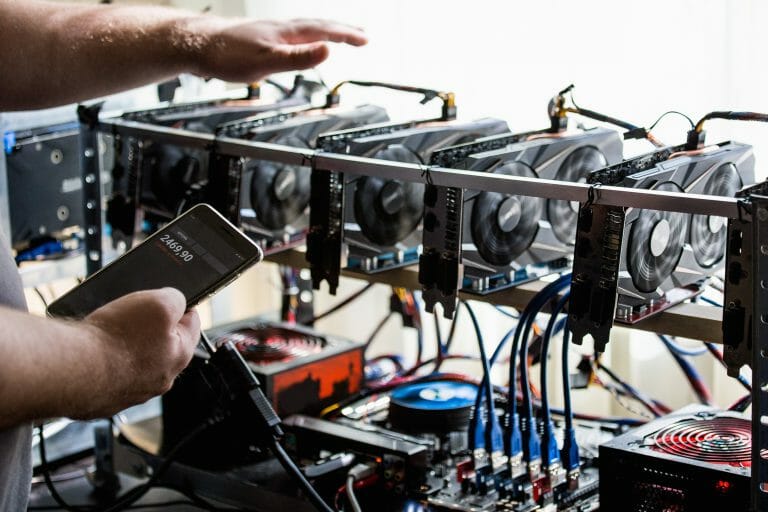
Evermore people are undertaking BTC mining projects from their homes. However, operating a mining farm requires time, skill, dedication, trial, and error.

Several miners shared images of the Bitcoin mining setups they had in their homes. They did it modestly due to the disorder or chaotic arrangement of some equipment. However, there were also plenty of creative and ingenious ideas to mine Bitcoin from home efficiently.

One of the most surprising cases is a startup having several miners in the basement of a house. Besides, it uses the heat generated by the mining equipment to heat a pool located in the courtyard.

There was also a garage with many mining devices submerged in dielectric coolant oil. Their owners connected them to a heat exchanger, which heats the water and redirects it through a system of pipes to the pool.

Another miner connected his equipment to ventilation pipes to extract the generated heat from his house. He removes those tubes in the winter so that the heat does not go out and serves as heating.

Miners Return to the Origins, Mining from their Homes

At first, the Bitcoin Proof-of-Work (PoW) algorithm was not very difficult to solve. For that reason, early users of the protocol could mine Bitcoin from their PCs and laptops.

Currently, Bitcoin mining farms consist of huge storehouses and even commercial containers. They house dozens of devices that generate high levels of noise and heat.

However, Bitcoin mining has required the use of highly specialized equipment for years. People know them as ASIC (Application-Specific Integrated Circuit), hardware made by Bitmain, MicroBT, and Canaan, among other companies.

Furthermore, no one can mine Bitcoin individually as there is enormous competition for hash rate between various players worldwide.

For that reason, miners must join mining pools to take advantage of the power of all participants. That way, they can confirm blocks regularly and get Bitcoin for the activity.

The Price of Bitcoin Makes Home Mining Profitable

The second miner of the Bitcoin network after its creator Satoshi Nakamoto was Hal Finney. The latter was also the first person to receive a transaction with the pioneering cryptocurrency.

They mined from their homes for a while as Bitcoin became popular on Internet forums and mailing lists. At the same time that difficulty increased, the energy expenditure of Bitcoin mining grew.

Finney explained it even in 2009, the year when Nakamoto launched the Bitcoin network. The pioneer raised the need to reduce CO2 emissions that a massive implementation would cause, a debate that is still ongoing.

The industry has already found energy alternatives, which it has used to operate efficiently. Mining can use 100% renewable energy by 2030, experts predict.

Moreover, people approach Bitcoin mining from an energy-sustainable perspective. That makes the energy consumption of their homes more efficient while participating in the most secure monetary network in the world.

Miners must not sell all their funds to pay for their operations as the price of BTC rises. In this way, they can increase their reserves or savings, seeking to continue operating steadily in the future.

By Alexander Salazar