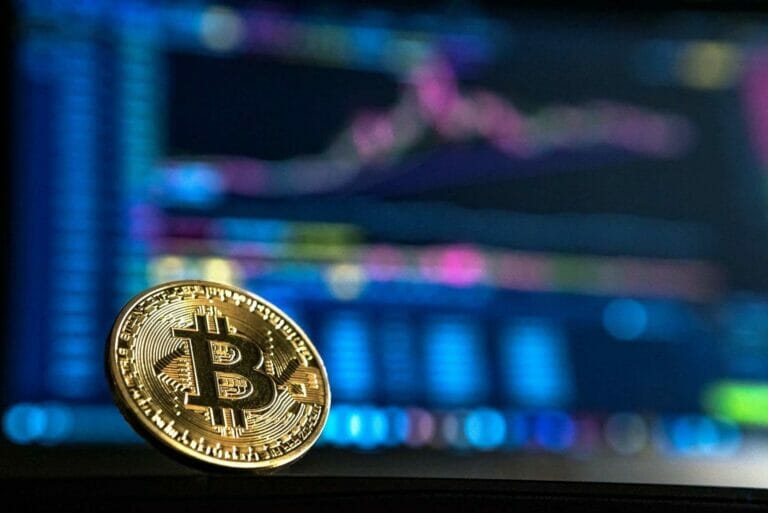
The Whales Accumulate as the Price of Bitcoin Tries to Stay Above USD 50,000

There were transfers between unknown wallets amounting to 208,118 BTC, equivalent to 77.09% of the weekly total. A new bullish wave propelled the price of BTC, which hit a three-and-a-half-month high above USD 50,000.

The price of the pioneering cryptocurrency has been trying to hold the USD 50,000 level in the last week. An analysis of the behavior of the whales would allow understanding their influence on the performance of BTC.

The value of Bitcoin has risen by 2.1% in the last 24 hours and has reached around USD 52,660, according to CoinGecko. At the same time, the Bitcoin whales maintain a trend of accumulation and movement of coins between unknown wallets.

In a context where Bitcoin is trying to break through its resistance level, speculating what the whales might do with their tokens next is possible. That is the purpose of analyzing their activity during the first week of September.

The Activity of the Whales at the Beginning of September

In the last week, the Bitcoin whales moved a total of 269,972 BTC through 80 transactions. The most prominent trend in the movement of coins was the transfer between unknown wallets. That happened with 208,118 BTC, equivalent to 77.09% of the weekly total.

The second most marked trend has been accumulation, with 32,105 BTC transferred through five operations. The latter is equivalent to 11.89% of the total. Similarly, there was an introduction of liquidity to the market with 18,131 BTC transferred from unknown wallets to exchanges, accounting for 6.72% of the weekly total.

The Bitcoin whales also made transfers between exchanges, but in a less obvious way. Specifically, they moved 11,618 BTC from one of those platforms to another, representing 4.30% of the total.

The Performance of Bitcoin in the Last Week

A few days ago, a new bullish wave propelled the cryptocurrency markets higher. The price of BTC rose for four consecutive days to reach a three-and-a-half-month high above USD 50,000. The value of the cryptocurrency is above USD 52,000, and its market capitalization is about USD 990 billion.

A recent report showing low growth in the employment rate in the United States seemed to boost the price of Bitcoin. The document raised speculation about the influence of these weak economic data. They could lead the Federal Reserve to continue buying USD 120 billion worth of bonds per month longer than planned.

A break to the upside would allow the price of Bitcoin to hit USD 55,000 as momentum improves in the short term. The lowest support is at the 200-day moving average, around USD 46,000.

For that reason, the Bitcoin whales may have aimed to accumulate and move coins between unfamiliar wallets. By doing that, a bullish market due to this rally sustained for several days could lead the price to exceed USD 55,000.

The relevance of the pioneering cryptocurrency in the world economy is becoming increasingly apparent. The accumulation of Bitcoin by whales contributes to its price increasing due to the reduction of available coins. It is only a matter of time before the first crypto asset on the market hits USD 60,000 again.

By Alexander Salazar

The Salvadoran Government Celebrates the Entry into Force of the Bitcoin Law

President Nayib Bukele celebrated the milestone and discussed the learning curve that it involves. El Salvador bought 400 bitcoins one day before the Bitcoin Law came into force.

Bitcoin (BTC) is already legal tender in El Salvador, the first country to adopt the first cryptocurrency. The Bitcoin Law entered into force on September 7th, converting BTC into currency within the Central American country.

After the legislation came into force, President Nayib Bukele said the Bitcoin process in El Salvador has a learning curve, like any innovation. He added that every road to the future is like that, and there will not be any achievement in a short period. He said that it is necessary to break the paradigms of the past.

The ruler previously announced that his country had purchased its first 200 bitcoins and then added another 200 coins to that amount. That means that El Salvador currently has 400 bitcoins under its belt, said the president.

Many bitcoiners had marked September 7th in their calendars as a world milestone in adopting the cryptocurrency. In early June, the Legislative Assembly of the country approved the Bitcoin Law previously announced by Bukele.

To make adopting the pioneering cryptocurrency in El Salvador easier, retailers will receive points of sale. The government also announced the installation of Bitcoin ATMs and the creation of its Chivo Wallet. Salvadorans can use the latter to make payments and convert their funds into US dollars, the other legal tender in the country.

President Bukele seeks to encourage the use of BTC by giving a USD 30 bonus with the cryptocurrency to those Salvadorans downloading the Chivo Wallet. Those incentives will come from a USD 150 million fund approved by the Assembly on August 31st.

Some People Accept Bitcoin While Others Reject It

Of course, the approval of the Bitcoin Law has encountered some opposition. From the beginning, the announcement provoked many and varying reactions. Among those who rejected the measure, there have been people from all areas of life. Deputies called for the reform of the Law while people demonstrated to demand its repeal. However, there has been no support for this measure in the Legislative Assembly.

Banks outside El Salvador expressed their rejection or cautious positions on adopting Bitcoin in that country. The International Monetary Fund, the Inter-American Development Bank, JP Morgan, and risk rating agencies were against it. Only the Bank of America stated that the Central American nation would benefit from that decision.

Before the Bitcoin Law entered into force, opinion polls conducted by local media revealed a high rejection of the cryptocurrency among Salvadorans. However, there is no turning back as BTC is a legal currency in El Salvador, the first country to adopt it worldwide.

Bitcoiners outside the Central American country encouraged a collective mass buying to express support for Salvadoran adoption. That seems to have led the cryptocurrency to trade at around USD 46.654,15 after dropping by 11.2% in the last 24 hours.

By Alexander Salazar

Argentine Bitcoiners Tell Martín Redrado about their Preferences between Ethereum and Bitcoin

The economist considers that the most important thing about Bitcoin and other cryptocurrencies is their blockchains. Redrado believes that the pioneering cryptocurrency is a speculative asset only for experienced investors.

Former president of the Central Bank of Argentina (BCRA), Martín Redrado, posted a tweet that received many responses from Bitcoin (BTC) users and experts. The official referred to the pioneering cryptocurrency, besides Ether and blockchains.

The economist wrote that the blockchain technology that underpins the Ethereum cryptocurrency is outpacing Bitcoin. He commented that it is the essential factor that will lead to differentiation in the future.

The politician who led the BCRA between 2004 and 2010 stated that the most important thing is not Bitcoin but blockchains as a unitary technology. In that regard, Redrado quoted the creator of Ethereum Vitalik Buterin, who describes that network as a general-purpose blockchain.

In response to those comments, several bitcoiners sent messages to the person who led the BCRA during the Néstor and Cristina Kirchner administrations.

Franco Amati, a founder of the NGO Bitcoin Argentina, considers that accepting blockchain but not Bitcoin causes delays of at least three years. In 2018, the developer said it was necessary to stop using the word “blockchain” and refer directly to its goal.

A Bitcoiner Responds that Ethereum is More Centralized than the FBI

Finance specialist Adam Dubove sees the conclusion of Redrado regarding the superiority of Ethereum as logic for a central banker. He explained that the former official prefers the Proof-of-Stake (PoS) protocol as it emulates a system that he knows and can control while Bitcoin does not.

After activating its version 2.0, the Ethereum network will adopt PoS to eliminate the need for mining (PoW). In other words, it will not continue using advanced computational resources or consuming high levels of electrical energy to validate transactions and issue new coins.

Some critics think that the lack of mining turns cryptocurrencies using PoS into something very similar to fiat money. That is because those controlling them can issue them at will without consuming too much energy.

When responding to the tweet, Dubove wrote that Ethereum is more centralized than the FBI. Furthermore, he stressed that comparing it to Bitcoin is like “comparing apples and oranges.”

He has explained on other occasions that every aspect of Bitcoin’s design is essential for security, decentralization, and incentive reasons. However, he considers other cryptocurrencies, whose founders are highly influential, highly vulnerable to attack.

The Social Revolution is Greater than the Technological Revolution

Member of the NGO Bitcoin Argentina, Julián Drangosch, responded that Redrado is wrong. The engineer considers that the former president of the BCRA does not understand that “the social revolution is much greater than the technological revolution.” The bitcoiner added that Bitcoin outperforms all altcoins by far.

Several days ago, Drangosch said that blockchains with other synchronization mechanisms such as PoS are unnecessary. He believes the blockchain is still the most important thing, but the PoW must be more efficient.

Bitcoiners Have Confronted Redrado on Other Occasions

Argentine bitcoiners have already had confrontations with Redrado on Twitter on other occasions. He has rated the crypto asset only useful for experienced investors due to its high volatility.

In 2020, the economist suggested creating a digital peso, which several BTC supporters criticized. They criticized him for wanting the State to monitor the financial transactions of citizens.

Many rejected Redrado at the time as he set China as an example to follow. The freedoms of its citizens are not what characterizes the Asian country. They are in the final stage of testing to launch the e-yuan, which will serve as a database for the State.

By Alexander Salazar

The Mexican Securities Commission Reiterates that the Banks of the Country Cannot Trade Bitcoin and other Cryptocurrencies

The head of the CNBV considers that the regulation of cryptocurrencies in Mexico is good. CNBV officials say that they are closely monitoring the stablecoin issue.

The Mexican regulatory authorities still view the adoption of Bitcoin (BTC) and other cryptocurrencies with suspicion.

The president of the National Banking and Securities Commission (CNBV) of Mexico, Juan Pablo Graf, recently made a statement in that regard. The official confirmed that the banks in that Spanish-American country could not operate with crypto assets.

Graf said that the FinTech Law regulates cryptocurrencies well, and he believes there will be no changes.

The FinTech Law establishes that financial intermediaries may operate with cryptocurrencies as determined by the Bank of Mexico. However, they have not decided anything, so clients cannot buy or sell virtual assets.

According to the head of the CNBV, the FinTech Law of Mexico contemplates regulating FinTech platforms and cryptocurrency exchanges. It states that those financial intermediaries must register, comply with some regulations, and report some operations to the Financial Intelligence Unit (FIU).

The President of the CNBV Criticizes the Adoption of Bitcoin as Legal Tender

Graf said that Mexico has not come forward to approve transactions with those assets as in other countries. Although the executive did not specify that he was referring to El Salvador, he has caused a stir over the adoption of Bitcoin as legal tender.

Mexican regulatory agencies have warned that some regulations prohibit financial institutions from operating cryptocurrencies. The Bank of Mexico (Banxico) banned such transactions in June.

The Mexican authorities have had to clarify the matter after the statements of Ricardo Salinas Pliego, president of that financial institution. He had stated that they were working to bridge the gap between their clients and cryptocurrencies.

The CNBV Considers It Necessary to Closely Monitor Stablecoins

Graf also spoke about those cryptocurrencies with a value pegged to an external asset, such as national fiat currencies and precious minerals. In that sense, he said that the Mexican regulatory agency needs to monitor those assets closely.

Stablecoins are very similar to the assets with little market risk in payment FinTechs since they support money well. That also happens in the electronic payments segment, according to the president of the CNBV.

Exchanges in Mexico Must Report on their Operations

The National Banking and Securities Commission of Mexico addressed a notice to providers of services with cryptocurrencies. That warning was about their obligation to present reports on some operations.

A few weeks ago, the Government of Mexico sent a message to businesses that operate with virtual assets. It told them that they had to give information about some transactions. The reminder also included exchanges for Bitcoin and other cryptocurrencies.

The CNBV establishes that they have to report on operations above USD 87,000. That is mandatory even if the technological infrastructure used by those platforms is in the jurisdiction of another country. The same applies to companies incorporated abroad that offer the possibility of making transactions for similar amounts.

By Alexander Salazar

Several Techniques for Users to Identify Fraud Hidden in NFT Projects

Users must submit projects to a verification process before investing in them. Experts have detected NFT market manipulation practices since 2018.

A growing number of new projects emerge in the non-fungible token (NFT) market. Although that makes it hard to identify fraud hidden among so many initiatives, there are some techniques to find out.

Investors can take into account several elements to avoid the traps set by scammers. The objective is to encourage good practices to distinguish promising projects from those that are not.

For that reason, specialists recommend following several verification points before buying, regardless of the NFT.

Why Users Consider the NFT that Interests Them as Valuable

Experts recommend that investors know why they consider the NFT they want to buy to be valuable. That will allow them to assess why they should have it and pay a certain amount of money for it.

They also suggest checking the usefulness of digital assets as many sell crafts and physical sculptures in digital galleries with them.

Another factor to consider is a projection to determine if the price of the NFT may increase or decrease over time. The purpose is to calculate whether the asset will revalue or devalue.

When Assets Really Belong to Investors

Specialists believe that investors should understand when their assets belong to them. They recall the saying that goes if they are not your keys, they are not your coins.

They warn users not to forget to save their crypto assets for themselves. They highlight that if someone else takes custody of them, then they do not belong to them.

Another practice that experts recommend is considering whether the developers can suspend users’ accounts. Likewise, they suggest asking whether they have access to funds stored in investors’ wallets.

How Users Check that an NFT Project is a Scarce Asset

Specialists’ recommendations include checking if there is any risk that developers will launch many of the same projects. If that happens, the asset loses value as a unique product, which characterizes collectible non-fungible tokens.

For example, the first NFT project, the CryptoPunks, consisted of 10,000 24-by-24-pixel images of various punk characters. When they appeared, it was possible to get one only by paying the fee of an Ethereum transaction.

However, upon reaching 10,000 CryptoPunks, there would be no more issuances of those digital characters. In other words, the smart contract restricted the supply to what it was from the beginning, establishing how many punks there could be.

What Users Should Know about the Tornado Technique

Some NFT creators pretend they have a lot of sales using the tornado technique. User 0xA sells an asset at 0xB, but then the sale of the same asset occurs between different wallets. After that, the NFT returns to 0xA once he buys it.

More complex patterns of market manipulation characterize themselves for trading the same NFT between multiple people. However, analysts doubt that those operations happen between various actors by coincidence. However, that does not by itself mean that there is market manipulation.

Other elements like the participation of many wallets do not always mean that there is the same number of people behind them. In any case, safe practices help protect users while operating in the NFT market.

By Alexander Salazar

According to Julián Drangosch, Heating Systems Consume More Energy than Bitcoin, but Nobody Judges them

The analyst sees Canada and the United States as ideal destinations for Bitcoin mining. The researcher is convinced that cybercriminals may attack the PoS consensus mechanism of the network.

The world moves thanks to electricity and money, although the latter is fiat. Electricity is a national security issue in most countries. And so is Bitcoin (BTC) despite not belonging to any particular State.

The security of the network is more valuable than the speed of transactions as power is essential. Personalities who are unaware that most of the energy sources used by Bitcoin are renewable have questioned that.

Electrical engineer, teacher, and participant of the NGO Bitcoin Argentina, Julián Drangosch, reflected on energy and the current situation of Bitcoin. The researcher considers that many misunderstand energy consumption, which has led to criticism about the first cryptocurrency.

The Importance of Energy Use in the Bitcoin Network

One of the parameters to measure the resistance to the censorship of BTC is energy consumption. The use of that commodity allows making payments to guarantee compliance with the rules of the protocol. Cybercriminals will have to pay that same amount of energy if they want to attack the Bitcoin network.

That matches the Zahavian signals explaining that evolution leads to reliable signaling among those seeking to deceive each other. In other words, an energy expenditure not met by any company, nation, or country protects the Bitcoin network.

Other Industries Have a Higher Energy Expenditure than the Bitcoin Network

Drangosch believes that many people misunderstand energy consumption because of their lack of knowledge and misleading articles by the media. The engineer noted that all human activities require electricity, but no one judges them as harshly as they do with Bitcoin.

The engineer considers that many activities consume much more energy than Bitcoin, so no one should do them. Clothes dryers, heating and cooling, copper and aluminum mining, banks, and ATMs use more electricity than Bitcoin worldwide.

He stated that copper and aluminum are necessary for transporting electricity and the aviation industry, respectively. Furthermore, he highlighted that Bitcoin is essential as a new monetary system not regulated by any government or bank.

The Bitcoin Mining Council Noted 56% of Miners Use Sustainable Energy

Bitcoin mining has evolved through the use of CPU, GPU, FPGA, and ASIC. That has also happened regarding their energy consumption since miners initially worked with the energy available at their location.

Of course, Bitcoin mining will migrate to places with access to cheaper and more efficient renewable energy such as hydroelectric power. In addition, it will take place in jurisdictions where there may be laws and predictability in the legal status.

Canada and the United States, with 400 TWh and 285 TWh of hydroelectric power available, seem to be the ideal destinations.

The Massive Migration of Chinese Miners Will Increase the Hash Rate of Some Countries

The ban on Bitcoin mining in China has scared off some inexperienced investors since 2013. On this occasion, many facilities have closed in Sichuan and Xinjiang provinces and are moving elsewhere.

Every time an anti-fragile system receives an attack, it becomes more resistant. As Bitcoin mining leaves China, it will flourish in different countries. The most likely destinations for those facilities are Russia, the United States, Kazakhstan, and Iran.

According to Drangosch, the hash rate of the Bitcoin network will recover its value of 180 Exahashes per second. In addition, the price increase of almost 500% could lead to installing new infrastructure and increasing the network’s security.

By Alexander Salazar