Salvadorans Living Abroad Could Save USD 400 Million Annually by Sending Remittances in Bitcoin

According to the World Bank, remittances constitute 24.1% of the gross domestic product of El Salvador. Two and a half million Salvadorans living abroad will be able to save by sending remittances in Bitcoin.

The adoption of Bitcoin in El Salvador could displace international remittance services such as Western Union and MoneyGram. Those companies would stop getting revenue of up to USD 400 million a year.

President of El Salvador Nayib Bukele believes that Salvadorans would stop paying that amount when making international transfers in Bitcoin. In that way, they would deprive those services of that inflow of money, the CNBC television network reported.

Data from the World Bank indicate that remittances constituted 24.1% of the gross domestic product (GDP) of El Salvador in 2020.

The Central American Country received a GDP of USD 24 billion in 2020, the World Bank noted. Regarding the volume of remittances arriving in El Salvador, they would be equivalent to 24.1% of that amount. Therefore, the country would receive USD 5.78 billion in remittances annually, according to CNBC.

Transactions with Chivo Would Be Free Unlike Those with Other Bitcoin Wallets

Around 2,500,000 Salvadorans living abroad send money to their relatives and friends in El Salvador. In other words, each person would be sending USD 195 per month, equivalent to 50% of the household income. According to official data, remittance companies send about 60% of that money in cash, while banks send 38%.

However, a testimonial explains that remittance services charge high fees, for which Western Union would charge USD 3.41 for every USD 10.

The situation is different regarding Bitcoin wallets, as fees can be as low as a few pennies. The amount transferred would not influence the costs, but the congestion of the network would make them vary. The government of El Salvador said that transactions to send remittances abroad with the Chivo wallet would be free.

Protection against criminals is another factor in which remittances in Bitcoin outperform traditional services. CNBC sources said that robberies against people who withdraw remittances at the physical headquarters of Western Union are common. If Salvadoran families receive the money digitally through Bitcoin, they would also prevent someone from snatching the remittances away from them.

The Experiment of El Salvador May Boost Bitcoin

When the Bitcoin Law came into effect on September 7th, the pioneering cryptocurrency became legal tender in El Salvador. The government has been fixing some hiccups in their Chivo wallet, but it may continue to face privacy issues.

After El Salvador bought 550 BTC, Bukele thanked the International Monetary Fund (IMF) for the decrease in the price of Bitcoin. Although there were protests on the first day, the adoption of Bitcoin in El Salvador can inspire confidence in the rest of the world.

Bitcoin has become a relevant element in the world economy, which has aroused the interest of a growing number of governments. The Salvadoran initiative will serve as an example for other countries that want to adopt the pioneering cryptocurrency as legal tender.

By Alexander Salazar
Low Profitability of the Fees of Bitcoin Does Not Stop Miners

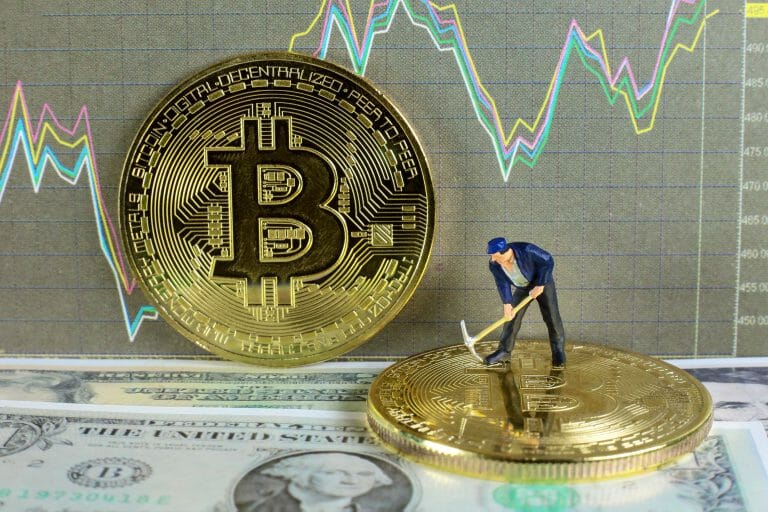
The average transaction fees for Bitcoin were at a minimum level in August. The Bitcoin hash rate and mining difficulty have been steadily increasing.

During August, many Bitcoin miners migrated from China to the United States and elsewhere. The increase in the Bitcoin hash rate and mining difficulty suggests more hardware is connecting to the network.

Fees for Bitcoin transactions were small during June and July due to low congestion on the network. That affected the finances of the miners, whose income decreased compared to the fees paid by users. Meanwhile, they continue to receive the newly created 6.25 BTC with each new block on the chain.

However, there was a rise and stabilization in the price of BTC during July and August at USD 40,000. That could be protecting the investments and businesses of miners since the value of the cryptocurrency exceeds USD 46,000 per unit.

The Bitcoin Mining Difficulty Increases for the Fourth Consecutive Time

Data from Bitcoin Visuals reveals that the Bitcoin mining difficulty is 18T, close to its all-time high of 25T in May.

The latest Bitcoin mining difficulty adjustment occurred at block 699,552. The following adjustment has an estimated date of September 20th.

The hash rate, or the ability of miners to process transactions and confirm them successfully, has been increasing since June. However, its increase has accelerated in some periods, as happened during the first week of September.

Ycharts indicates that the hash rate increased from 119 EH/s on September 1st to 150 EH/s on September 6th. That increase is considerable for such a short period. The current mining power of Bitcoin miners is 129.91 EH/s, according to that same source.

ASIC Equipment Reduces Its Profitability but Increases the Price

The profitability of mining equipment has many variables, such as the cost of electrical service, age, and performance. Besides, miners must pay taxes and operating expenses for labor, maintenance, logistics, and repairs, among others.

For example, the MicroBT Whatsminer M30S generated USD 33.61 daily, but now it generates close to USD 20 daily. Meanwhile, the classic Bitmain AntMiner S9, which is still profitable despite its age, generates USD 2.72 a day. However, it generated USD 6 just two weeks ago.

The prices for mining equipment are rising and will continue to increase. Bitmain would raise the cost of its equipment by 20%, as would leading manufacturers of microprocessors and integrated circuits (chips).

Although the costs are higher, a growing number of people are venturing Bitcoin mining from home. Many of them have installed mining machines, using clever energy-saving and consumption alternatives.

Bitcoin Consumes 0.1% of the Electric Power of the World

Analyst and macroeconomist Lyn Alden argued Bitcoin does not consume the energy levels indicated by some non-specialized media. The electrical engineer noted that Bitcoin consumes less energy than Google, Facebook, or YouTube. In addition, she explained that the security that energy provides to Bitcoin justifies its level of consumption.

Haipo Yang, CEO of ViaBTC mining pool, agreed with the remarks by Alden. He argued that Bitcoin emits less CO2 than the Internet, but its detractors ignore it since the latter is in all areas of life.

By Alexander Salazar

After the Entry into Force of the Bitcoin Law, Salvadoran Protesters Express their Rejection

Students and political organizations participated in the protests against the adoption of Bitcoin as legal tender. Demonstrators argued that the authorities did not consult the people or follow due process before passing the law.

Many Salvadoran citizens protested against the entry into force of the Bitcoin Law in that Central American country. More than 1,000 people approached the Legislative Palace of San Salvador to reject the adoption of Bitcoin as legal tender.

The demonstrators burned tires, blocked the public highway, and attempted to overturn a police barricade in front of that public body. After episodes that did not escalate in magnitude, they sang the National Anthem.

Those people claimed that the Nayib Bukele government did not consult the population before passing the Bitcoin Law and other measures. They added that the authorities did not follow due process of law, which would delegitimize them.

They also stated they were concerned about the volatility of Bitcoin, which they consider risky to the economic and financial integrity of the country. Before the approval of the Bitcoin Law, the cryptocurrency traded at USD 52,000, a price not seen since May. After dropping to USD 45,000, it has recovered slightly to around USD 47,000.

The Budget for Bitcoin Exceeds that for the University of El Salvador

Citizens criticized the government for neglecting employment rates, education, health, and the general situation, among other areas. They said that the authorities of El Salvador were taking care of other matters that were not relevant.

A student protesting against the Bitcoin Law stated that it does not benefit the working class and the oppressed of the country. He believes that the volatility of the cryptocurrency does not guarantee economic stability. In addition, he noted that the initial budget to finance Bitcoin is almost double that allocated to the University of El Salvador annually.

Public employees of the judicial branch also opposed the recently approved reform of the Law of the Legal Profession. It would force judges over 60 with 30 years of service to retire from the career. In addition, it could suppress the role of those officials regarding criminal investigations, allowing only public prosecutors to conduct them.

Deputy Claudia Ortiz of the VAMOS party led the protests against Bitcoin. The official highlighted the rejection that some surveys reflect and said that Bitcoin would not alleviate the cost of food and energy.

Ortiz proposed to the Legislative Assembly to discuss and vote for the repeal of the Bitcoin Law, but her proposal did not receive enough votes. Although the deputies retracted and agreed to discuss and vote on the law, the majority rejected the repeal.

El Zonte Citizens Want to Learn About Bitcoin

Inhabitants of El Zonte, where the Bitcoin movement emerged in El Salvador, want to learn about the cryptocurrency to start using it. Many of them make lines waiting to receive USD 30 exchangeable to Bitcoin that the government is distributing with the Chivo wallet.

More retailers in El Salvador are accepting payments in Bitcoin, as is the case with the Pizza Hut, McDonald’s, and Starbucks franchises, besides the Claro and Movistar telephone operators.

The pioneering cryptocurrency became legal tender while the Chivo wallet of the Salvadoran government started stumbling. However, the government has announced an educational campaign to teach citizens at home to use this wallet.

By Alexander Salazar

Russia is Not Ready to Accept Bitcoin as Legal Tender, Like El Salvador

A response that arrived from a Kremlin representative clarifies the Russian government’s negative position regarding Bitcoin.

Some nations are taking rejective positions regarding crypto. While the world celebrates that El Salvador, a tiny Central American country, became the first country in which Bitcoin is already the official currency, other nations seemed to be concerned, taking a rejective stance on the decision.

Russia is the largest country worldwide when it comes to territory. Recently, the Russian government has released an announcement highlighting its negative stance on a scenario in which BTC could receive acceptance as an official currency.

Dmitry Peskov is the official representative of Russian President Vladimir Putin. The first representative claimed that Russia could not find a reason to recognize Bitcoin as legal tender, according to the RIA Novosti news agency.

The Kremlin representative discussed that placing cryptocurrencies like Bitcoin in the same position as traditional monetary instruments would bring serious harm to the country’s financial and economic structure.

Russia is Not Ready for a Decision of this Kind, According to Peskov

These latest comments from Peskov ran in parallel with the Russian government’s long-standing skeptical stance regarding Bitcoin.

Anatoly Aksakov is currently part of the State Duma and one of the first architects of Russia’s ban on cryptocurrency payments.

The member highlighted back in August that accepting cryptocurrency as payment would essentially mean the inevitable end of the traditional financial system.

Russia had officially banned cryptocurrency payments in the whole country due to its cryptocurrency law. The ban took effect in January 2021. The law does not prohibit Russians from acquiring or trading cryptocurrencies like Bitcoin.

In May 2021, a report arrived highlighting that some Russian lawmakers were talking about a partial repeal of the ban on crypto payments.

The Putin Government Forced Officials to Report on the Crypto they Possess

At least 77% of Russians prefer to invest in Bitcoin than trying other methods like gold or forex. At the same time, both the government and the country’s central bank keep maintaining a rigid stance on cryptocurrencies.

Elvira Nabiullina, the Governor of the Bank of Russia, highlighted in June some thoughts about cryptocurrencies. She described cryptocurrencies as one dangerous investment tool that currently exists.

In addition, the government is currently working on a legislative amendment that allows the confiscation of cryptocurrencies.

But on the other hand, the Russian central bank is currently focusing its efforts on developing the new digital ruble.

The governor said that prices in the cryptocurrency market tend to be volatile. He also stated that the losses due to this sudden volatility might be monumental.

The governor also emphasized that the Bank of Russia does not recommend investments in cryptocurrencies to the public. Russia remains cautious about the development and use of digital currencies as legal tender.

By: Jenson Nuñez

China, World’s Largest CO2 Emitter, Will Start Testings for Blockchain-Based Green Energy Trading

The world’s largest CO2 emitting country is using Blockchain to transition to carbon neutrality.

China’s highest economic planning body gave the green light to trials using Blockchain for green energy trading to begin across the country, the National Development and Reform Commission (NDRC) said on its website.

The information is relevant because China is the most polluting country worldwide. According to various sources, China’s emissions of six heat-trapping gases, including carbon dioxide, methane, and nitrous oxide, reached a high peak in 2021 to an amount that surpassed 14,090 million tons of CO2.

China’s pollution exceeded, by far, the sum that members of the Organization for Economic Cooperation and Development (OECD) registered, which marks about 30 million tonnes, according to the New York-based climate research group.

China accounts for 27% of the planet’s carbon emissions, followed by the United States of America with 11%, and India with 6.6%.

Another point to consider is that in this situation, President Xi Jinping clarified that he believes that he will reach maximum carbon emissions before 2030 and, from there, achieve net-zero emissions in 2060.

Blockchain Can Work with Green Energy

According to the information, the NDRC officially responded about the pilots to China’s two inner grid operators, State Grid Corporation of China and China Southern Power Grid Corporation.

NRDC representative stated during an interview posted on the commission’s site that Blockchain is one of the technologies that can work in green energy trading because it could safely record information of every link of green energy production, its transaction, and subsequent consumption.

The two companies will create two centers. The first center would be in Beijing and the other in Guangzhou, according to information from the state-run daily. According to the commission, State Grid, which is the world’s largest utility operator, has already applied for a patent for blockchain-based certificates of green energy transactions.

The NDRC hopes that this trading system could help China achieve its carbon reduction goals by incentivizing green energy use and become a Chinese solution to global energy problems.

The Project Means a Lot for China

In the interview on the NDRC website, there is an explanation on why this work is being under development. China intends to achieve the multiple goals of low-carbon energy transformation, safety, and reliability at the same time.

China considers there is a need to solidify the reform of the electricity system and develop more improvements in institutional archetypes. There would also be a forge of new markets.

When users carry out green energy transactions, some would be willing to assume more social responsibilities and seal businesses directly with wind and photovoltaic power generation projects to guide green energy consumption in a market-oriented manner.

By: Jenson Nuñez

Teens in the United States of America are Resisting to Invest, but 25% Would Purchase Crypto if they Had Enough Money

Most teens in the US obtain financial information on social media platforms, according to a survey. In general, they were not very enthusiastic about investing.

A recent study stated that a considerable percentage of teenagers in America don’t support investing, regardless of whether it is Bitcoin or traditional stocks.

Researchers at Junior Achievement and RSM led a survey in mid-June that sought to study the perceptions of young citizens around the stock market, cryptocurrencies, and other investments. In particular, they focused on a group of teenagers and their opinions about meme actions in the wake of the events related to GameStop.

With a staggering 37% admitting that they would not move forward to invest at all, the study suggests that overall; a group of Gen Z does not seem to have many financial aspirations. According to a statement, the results arrived from a survey in which more than 1,000 young citizens played a part.

Twenty-five Percent Would Hypothetically Purchase Bitcoin

The study, which sought to understand the behavior regarding investment among US teenagers, found that 94% of them reveal they know only a bit or even nothing at all about the stock market. Only half (51%) agreed that the stock market was a positive feature that could help ordinary people financially.

Forty-three% percent of the young citizens said they would invest in the stock market in the unlikely event they were given money to invest. The second-largest response belonged to cryptocurrencies. 25% of teens made clear that they would purchase digital currencies if they could receive the capital.

The number of young people who would invest in crypto slightly outnumbered those who would choose real estate. The percentage of kids who would not move forward to set an investment still outnumbered those who would tend to buy crypto and those who would invest in real estate.

Among the most notable findings, social media appeared to be the primary source of financial information for teens, with 43% of respondents choosing this option. They also turn to their parents (35%), websites (30%), and school (29%) for information on the stock market, according to the report.

Another group of participants (39%), who had followed the GameStop situation this year, agreed that stocks are the best way to make money faster than traditional mechanisms. Half of them (20%) stated that the stock market is way too risky, and a higher percentage (40%) describe buying stocks as long-term investments.

More and more Respondents Would take the Path of Cryptocurrencies

The researchers noted that recent survey results show that events with meme stocks like GameStop have caused teens to have mixed feelings about the stock market.

The study seeks to change the general impression of the stock market by promoting educational programs that might include simulations of stock market experiences and a curriculum to clarify the basic principles of investing.

Other surveys have also agreed that people tend to search for financial information on social media. An increasing percentage of these people are taking the path of speculative investments to generate short-term profits.

By: Jenson Nuñez