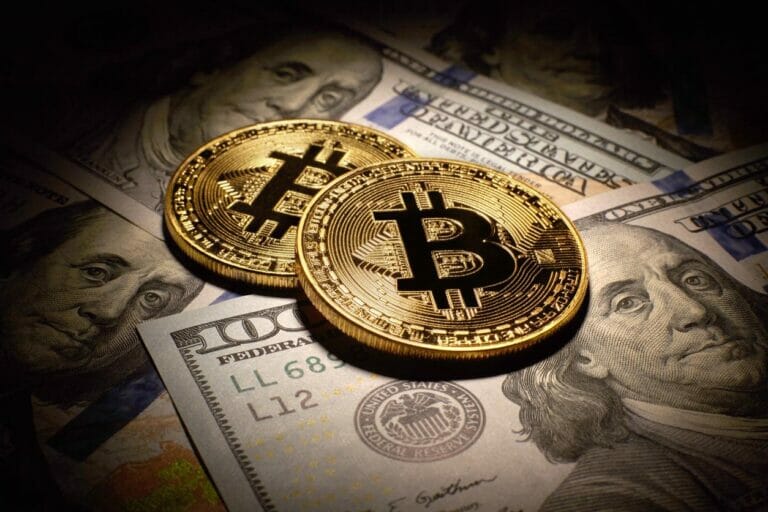
According to an Analysis, Few terrorist Groups Finance their Activities with the Use of Bitcoin and other Cryptocurrencies

The number of Bitcoin transactions that terrorists conduct is below 0.05% of the total. Despite the high returns that the cryptocurrency can generate, terrorist groups seem not to be very interested in it.

A recent study indicates that some terrorist groups have reserves in cryptocurrencies, including Bitcoin (BTC) and Ether (ETH), to finance their activities. However, the transactions with BTC that those groups make only represent less than 0.05% of the total coins traded.

The Coinbase research team, which Heidi Wilder led, published the results on the platform’s blog. For the analysis of the information, they relied on data from Coinbase Analytics. That section of Coinbase focuses on the collection and analysis of data from the blockchains of different cryptocurrencies.

The platform has allowed the flow of funds from different public addresses that supposedly belong to terrorist groups.

Some Terrorist Groups Use Bitcoin and Other Cryptocurrencies

The analysis made it possible to determine that four terrorist groups owned cryptocurrencies as part of their financing methods. They are Al Qaeda, Hamas, ISIS, and the Jihadist Activist Movement that Saudi Arabia leads. A graph from Coinbase indicates that a fifth group identifies the BTC and other cryptocurrencies that Al Qaeda trades.

That last group, known as Hamas, has the most coins, with almost USD 1 million worth of Bitcoin. However, the study indicates that the amount is related to donations directly in BTC that they request through their website.

The study showed that Hamas increased its collection volumes during periods of high turmoil in the Palestinian territory, where it operates.

The Extent to Which Bitcoin Helps Terrorists Finance their Activities

Although the amounts mentioned above seem very large, data from the study reveal that it is only a tiny fraction of the total that these groups mobilize. In that case, less than 1% of Bitcoin transactions correspond to illegal activities, of which 0.05% have to do with terrorism financing.

An analysis by the esglobal website determined that Daesh and Al Qaeda had annual revenues of USD 2 billion and USD 250 million, respectively, in 2016. They acquired those amounts through different activities such as drug trafficking and the illegal sale of oil.

A report that Chainalysis published in May mentioned that collection campaigns through cryptocurrencies do not exceed USD 10,000. That represents a tiny fraction of income compared to that of other activities. That study concluded that there was no direct relationship between Bitcoin and the support for terrorist activities.

In 2017, a prestigious UK think-tank analyzed the alleged relationship between Bitcoin and terrorist groups. Their study revealed that there is not a connection as strong as many regulators assume.

The use of Bitcoin and other cryptocurrencies in the world economy is increasingly significant, which does not go unnoticed by regulators. The authorities of many countries have those crypto assets in their sights because they directly link them to money laundering and terrorism financing. For that reason, they tighten the regulations on their use and even prohibit them within their territories.

By Willmen Blanco

Some Factors to Consider Before Investing in Bitcoin and Other Cryptocurrencies

The investor must start with many small trades to avoid risking more than he is willing to lose. It is necessary to have enough information about the different platforms and wallets to choose the most suitable and secure.

Bitcoin and other cryptocurrencies have created a stir over the multiple benefits that they bring to financial inclusion. However, while investing in such a system is attractive, not all people are ready for the boom behind them. For that reason, it is advisable to consider several factors before investing in these assets to minimize the risks that any investment poses.

Among the many advantages of cryptocurrencies is the high profitability they offer to the investors who bet on them at the right time. However, speculating with them may pose risks due to the high volatility of those assets.

Their price can vary by over 10% in the same session, so speculating according to classic rules can be complex. Besides, if the investor is unwilling to lose, his risk profile suggests that he is not ready for cryptocurrencies.

Preparing to Invest in Cryptocurrencies

Investors should know the basics of blockchain technology, cryptocurrencies, circulating supply, and total supply. It is also crucial they understand concepts like inflation, exchanges, wallets, private keys, and public keys.

Otherwise, those betting on Bitcoin and other cryptocurrencies will have problems when investing in cryptocurrencies. For that reason, they should take the time to prepare and find the cryptocurrency exchange with the best rates.

When starting to invest in cryptocurrencies, the investor must conduct many small trades to make small profits. The number one rule to investing is that the person must not invest more than he is willing to lose.

Cryptocurrencies are Volatile While Their Price is Unpredictable

Cryptocurrencies are very volatile, so their price can rise and fall suddenly, making it difficult to make predictions. Therefore, the person should invest with common sense and caution to prevent heavy losses, especially when starting.

The volatile and unpredictable nature of cryptocurrencies leads to recommend investing a low percentage of personal assets. That represents an amount that the investor is willing to lose and does not destabilize his finances.

There is a Possibility of Theft, Fraud, or Loss

Anyone who wants to invest in the cryptocurrency ecosystem must pay attention to every step and move. In addition, it is necessary to have enough information to choose the most suitable and secure platform and wallet. If someone gets hold of the private key, there may be theft or fraud of the digital wallet.

In addition, losses due to inexperience or distraction can also pose a very high risk. For that reason, the investor should use a wallet as a fundamental security measure.

It is necessary to ensure operating a reliable wallet that allows making purchases and sales of cryptocurrencies safely. The user must make backup copies and keep them in a safe place.

Diversifying the Investment Portfolio

Although Bitcoin is the most famous cryptocurrency worldwide, it is not advisable to bet on it alone. Its high volatility and large movements can generate both handsome profits and huge losses. For that reason, it is necessary to have a diversified investment portfolio to invest safely.

Investing personal funds in an asset is a decision that no one should take lightly. Regardless of being much or little money, it is a valuable product of effort and work, no matter how much.

By Alexander Salazar

The Collapse in the Bank of Venezuela opens a Gate for the Use of Bitcoin

Bitcoin does not depend on a central entity, unlike banks. Although bitcoin is a solution, it is still not a total escape.

Banco de Venezuela, one of the most relevant Venezuelan banking entities, had reached almost five days with its system out of service.

Those affected users, millions of citizens who could not make the slightest payment or even receive funds in their wallets had shown their anger at the situation. Many users had even denounced that, after the re-establishment of the system, there were no funds.

There are always people having an account in more than one bank in Venezuela; this is in addition to the fact that dollars in cash circulate more and more.

The Bank of Venezuela is a state entity with the most expanded portfolio of clients in the country: some 14 million people, according to official statements from 2020.

That institution pays pensions and salaries of a large part of the public administration. And all those people, since Wednesday night, couldn’t use their own money.

The only response from the bank’s page was a failed login attempt, and the points of sale rejected transactions left and right. Meanwhile, the institution did not answer until they released a series of brief statements. They were working to fix the failure, they said. According to them, it was a hack.

Bitcoin Becomes an Option for Venezuela

Venezuelans felt relief when they discovered that they could count on more than one option to deal with the struggle.  Venezuelan citizens discussed that a possible attack on a vital structure of the country took place, leaving a feeling of unprotection.

Many citizens turned their sights to Bitcoin, the first cryptocurrency created about 12 years ago by Satoshi Nakamoto. Nobody knows who he was or who he is. And it doesn’t matter either.

The network of this currency does not depend on its creator or any other person in particular: the Bitcoin network gets distributed in more than 11,600 nodes (computers, phones, devices serving that network) around the world.

The accounting and the confirmation of the transactions (how miners work) get distributed on many computers worldwide. If one computer fails, or at least many of these devices fail, the network continues its operations with the active computers.

In Venezuela, very few businesses receive bitcoin, although they seem to be growing steadily. It is already possible to market this currency in some establishments, pharmacies, or restaurants, and even the real estate sector has been adding.

A scenario in which it seems possible to accept the first cryptocurrency is in the situation of El Salvador, where just two weeks ago, BTC received its adoption as legal tender. And yet, the acceptance of cryptocurrency has been gradually escalated, with many opponents among its citizens.

Avoiding the banks in Venezuela seems to be practically impossible. Although dollars move in cash very regularly in Venezuela, there is a lack of alternatives to exchange bitcoin for cash expeditiously and safely.

There are at least bitcoin ATMs in Caracas, but they limit their services to purchase and do not exchange cash.

By: Jenson Nuñez

The Profitability of Bitcoin Mining Decreases, but that Does Not Prevent Its Growth

The hash rate increases while the difficulty slows down, but Bitcoin mining is moving steadily. The industry is growing financially, while a growing number of countries adopt that activity.

The bans of China on mining have caused inconvenience for months, but the growth of the activity has been evident. The Bitcoin network has reached 700,000 mined blocks, alongside the consecutive increase in mining difficulty and hash rate.

There have been constant acquisitions, business partnerships, and miners’ persistence in their operating model. That suggests that the best times for Bitcoin mining could be ahead despite its low profitability.

The Hash Rate and Mining Difficulty Do Not Decrease

Although it has not been its highest point since July, the Bitcoin hash rate is 113.93 terahashes per second (TH/s). However, there is support at other high points present during September, according to data from YCharts.

The network reached its maximum hash rate of 153.7 TH/s on September 14th, while it hit 150 TH/s on September 20th.

Mining difficulty is the mechanism that ensures that the issuance of Bitcoin blocks is not too fast. It increased for the fifth time in a row on September 21st, reaching 18 T.

It does not fully exceed the levels of July and even less those of June and May when it reached its all-time high. However, it has increased so quickly that more computers may have connected to the network.

The Low Profitability of Miners Stabilizes the Price of Bitcoin

Compared to the effort invested and the rewards obtained, the low profitability of miners has not prevented the industry from growing. The decrease in profitability this week may be related to the pullback in the price of BTC.

Based on the Puell multiple, market cycles may be related to how much miners paid to buy BTC. It may also be associated with the price at which they sell to refinance their operations. These include aspects like electricity, payroll, repairs, and acquisitions, among others.

That indicator consists of dividing the current value in US dollars (USD) of the daily issuance of BTC with the annual average of the price in USD of that emission.

An investor could use that index to discover the periods of higher or lower profitability of their investment in BTC. To do this, he would interpret the red band, where the Puell multiple is close to 10, as an area where it is better to sell (liquidate the position). Also, he would see the green band, where the indicator is less than 1, as a buy area.

If the Puell multiple remains in the intermediate zone, the price of BTC can have a stable behavior or reduce its volatility. In addition to financing, miners can take out loans backed by Bitcoin, so the selling pressure to maintain their operations is lower.

The Puell multiple is an indicator that allows determining when it is the most favorable time to sell Bitcoin. However, it is always advisable to do good market research to make the most sensible decisions.

By Willmen Blanco

Bitcoin ATMs in the World Have Quadrupled Since the First Days of 2020

Since 2016, the annual increase rate of bitcoin ATMs has surpassed 100%. Bitcoin ATMs in the world would be 39,000 by the end of 2021.

Since 2016, bitcoin (BTC) ATMs have been consistently reaching a growth of more than 100% per year. According to ATM Radars statistics, the total ATMs installed has already quadrupled their numbers since the first days of 2020.

On September 22nd2021, ATM Radars reported 27,823 installed bitcoin ATMs. This amount almost doubles the 13,996 ATMs marked for the first day of January of this year.

This year, the growth of bitcoin ATMs has reached 183%, according to ATM Radars. This growth allows users to assume that the current year will approach a percentage higher than 100%.

Users could calculate the numbers of bitcoin ATMs for the fourth quarter, applying an average monthly growth of the last months (8%). If users calculate the number of Bitcoin ATMs this way, then the estimate of ATMs for the end of 2021 could surpass 38,870 installed bitcoin ATMs. A growth of 177% happened this year, while 2020 grew 119% compared to 2019, in ATMs installed worldwide.

The United States of America is the Leader

Regarding the distribution of bitcoin ATMs by country, there is a considerable dominance of the United States of America, with at least 24,428 of the 27,823 bitcoin ATMs installed.

This distribution assigned 87.8% of total ATMs to the United States of America, while Canada ranks second with 1,921 bitcoin ATMs installed or 6.9%. The third place in the world is for El Salvador, with 205 installed ATMs.

Only six countries appear on the list with more than 100 ATMs installed, in addition to those countries that occupy the first three places: Spain, Austria, Switzerland, Hong Kong, United Kingdom, and Poland.  The other countries have around 100 bitcoin ATMs; some of these countries have only 1 ATM installed, including Venezuela.

Latin America Needs More Bitcoin ATMs

Only 12 countries in Latin America currently have bitcoin ATMs installed in their regions. The fact that bitcoin acquired legal tender status in El Salvador on September 7th gave a vital boost to the installation of bitcoin ATMs in that country.

341 bitcoin ATMs are present in Latin American countries, and El Salvador has 205, according to ATM Radar. This amount represents 60% of the total equipment installed in the region. Colombia, with 50 active ATMs is in second place, followed by Brazil (21), Panama (17), and the Dominican Republic (15).

In August, Salvadoran President Nayib Bukele presented the bitcoin ATMs that got installed in the Central American country. El Salvador has also achieved a good position in other areas of ATM Radar statistics.

The country has reached this position due to its outstanding participation regarding Bitcoin in the region and worldwide.

In the section of manufacturers of bitcoin ATMs, Genesis Coin, General Bytes, and BitAcces led the way with an accumulation of more than 20,000 bitcoin ATMs, Chivo ATM, the manufacturer of ATMs in El Salvador, positioned in tenth place, with at least 231 teams.

By: Jenson Nuñez

The Use of Cryptocurrencies in Peru Increased More than 600% in One Year

The volume of money transacted in Peru exceeds 42 million dollars. Almost 65% of the operations took place in Lima, the capital of the country.

The use of cryptocurrencies seems to take hold more and more in Peru. This situation can get deduced from the statistics for the first half of 2021 replicated by national media from an exchange source.

According to information revealed by the Peruvian media La República, the volume of transactions with crypto assets in Peru increased by 613% in the first six months of the year.

This volume of transactions got compared to the same period in 2020. According to the cited source, investments would surpass USD 42 million.

Of all the movements with cryptocurrencies that got registered in the country in that period, at least 64.7% of these movements happened in the city of Lima.

The total of the amounts operated in the capital of the South American country reached a sum of USD 27.5 million.

In addition, La República cited a study by the analytical company Chainalysis that highlighted that Peru is the fourth nation in Latin America among the top 20 countries with the highest adoption of crypto assets worldwide.

For this analysis, the exchange in question took into consideration the operations with the four cryptocurrencies available on its platform: bitcoin (BTC), ether (ETH), litecoin (LTC), and bitcoin cash (BCH).

However, another aspect to consider is that these results come from a statistic provided by a single exchange,  but the results could be even higher.

No other exchange in that country has brought figures on the operations of its users in the year. However, other sources such as Statista.com placed Peru among the countries with the highest adoption in Latin America and the world.

Bitcoin, the Dominant Cryptocurrency in Peru

Another study highlighted that the most relevant cryptocurrency in Peru is bitcoin. At that time, the company’s country manager, Carlos Bernos, clarified that transactions reach a high peak of 20% every week.

This number received its confirmation in the report of the first semester. In this report, there are details of a high peak near 600% in at least six months.

Another analysis highlighted that transactions with bitcoin (BTC) in Peru increase an average of 20% weekly, with an unexpected upward trend that became noticeable in the framework of the presidential elections in that Latin American nation, whose first-round took effect on April 11.

The exchange developed the study between March 29 and April 18, just in the electoral period. Cryptocurrency purchase operations reached more than USD 5 million in the period that was the subject of study. Of these USD 5 million, more than USD 3 million corresponded to bitcoin.

The research, which took place between March and April 2021, highlighted that more than 60% of the USD 5 million that went through operations with cryptocurrencies corresponded to bitcoin.

By: Jenson Nuñez