A Cryptocurrency Expert is the New President of Banco de Venezuela

The Vice President announced that the former Vice Minister of Digital Economy, Banking, Insurance and Securities would be the new President of Banco de Venezuela. Maniglia took over the financial institution after its platform suffered a debacle that left it inoperative for almost five days.

After a debacle that kept its system inoperative for almost five days, Banco de Venezuela (BDV) now has a new president. The new head of the state bank, Román Maniglia, calls himself a specialist in cryptocurrencies, FinTech, and blockchain technology.

Vice President Delcy Rodríguez announced that President Nicolás Maduro appointed Maniglia as head of the Banco de Venezuela. Rodríguez said that the former Vice Minister of Digital Economy, Banking, Insurance and Securities would assume the presidency of BDV. That event happens amid the consolidation of the digital bolivar within the framework of the national monetary reconversion process taking effect on October 1st.

Maniglia thanked the government for trusting him to fulfill the task of promoting digital banking through BDV. According to official figures for 2020, that bank has the most customers in the South American country (around 16 million).

Local specialized media say that Maniglia has related to public banking since 2010 (at Banco del Tesoro). In addition, they note that he has actively participated in the digitization of payments in the country.

According to those sources, Maniglia has attempted to promote greater use of the government’s digital currency Petro. Therefore, he could be a key figure in the creation of a digital bolivar. The currency reconversion included the alleged digitization of money, but there are no details.

The Banco de Venezuela System Was Not Operational for Five Days

Maniglia, who has experience in digital systems for the financial sector, came to BDV after its platform fell. The millions of customers of the financial institution could not access their money for almost five days. That failure did not allow them to send or receive money or make payments in commercial establishments.

Government representatives alleged that it was an attack against the systems of the national banking entity. Meanwhile, users complained about both the platform crash and the time it took to reset it. Maniglia’s task would consist of consolidating the digital platform of BDV to prevent something similar from happening in the future.

Is It Possible to Completely Exit the Banking System in Venezuela?

Venezuelan retailers handle US dollars in cash regularly, but there are not many expeditious and secure options for exchanging Bitcoin for cash. A couple of Bitcoin ATMs in Caracas allow buying but do not sell banknotes, which is worse in other locations.

Although the number of businesses accepting Bitcoin seems to be growing steadily, there are still few. People can buy in some establishments, pharmacies or restaurants, and even in the real estate sector. However, it is not yet possible to cover all aspects of life in this way.

It seems that the only possible scenario is El Salvador, whose government adopted BTC as a legal tender a few weeks ago. However, the acceptance of the pioneering cryptocurrency has been occurring gradually.

By Alexander Salazar

JPMorgan Report Revealed that Ethereum Futures are Acquiring More Popularity than Bitcoin Futures

According to the JPMorgan report, money is coming out of the Bitcoin futures market and would go into the Ethereum market. They also highlighted that investors perceive a considerable opportunity in this digital currency.

A recently published report by the US-based international bank, JPMorgan, points out that more and more institutional investors are now investing in Ethereum futures, which implies that Bitcoin would end up in the background.

According to the report published by JPMorgan, Bitcoin futures got listed as the chosen crypto investment assets for institutional and high-caliber investors.

This relevance appeared because these assets are items that come from regulated platforms. These platforms do not interfere in the direct manipulation of cryptocurrencies because there are many risks behind these actions.

However, the figures evaluated by analysts that Ethereum futures are registering more and more incoming capital, coinciding with the outflow of money from the other market.

According to analysts, the current panorama does not represent a good sign for Bitcoin futures. Instead, it could harm the digital currency.

The analysts sustain the theories in which the investors describe Ethereum as a vital value asset due to its significant growth in recent months.

According to the report, the general belief is that users should seize the opportunity once the cryptocurrency gains the attention of the traditional market.

Ethereum Futures Overvalued

There are high expectations for Ethereum futures, last week, an analyst at JPMorgan highlighted that the prices of the digital currency are overestimated.

A more realistic estimate should bring around USD 1,500 per unit, 55% below its current price.

The possible answer to this aspect resides in the expectations placed on Ethereum in the long term. This currency operates among the networks that host highly demanded use nowadays.

Due to the demand that Ethereum is currently registering and the expectations about the arrival of version 2.0 of the network, analysts and enthusiasts highlighted that the digital currency could reach much higher values, exceeding USD 8,000 per unit provided if the conditions are favorable.

Great expectations for Bitcoin

Although the supremacy of these cryptocurrencies in the markets is somewhat debatable, those users who still support Bitcoin have their expectations around the arrival of a fund traded on the US stock exchange (ETF) based on digital currency.

However, everything is in the hands of the US Securities and Exchange Commission (SEC), which will have the last word to pick up, of all the aspiring companies, the one that will become the launcher of the first Bitcoin ETF in the country.

Analysts and enthusiasts assure that this ETF could arrive very soon because there is a lot of pressure on the entity to approve this product.

Analysts finally estimated that the price of Bitcoin could reach a new high peak and set a new all-time high, surpassing USD 100,000 per unit if it experiences a large inflow of institutional capital through these mechanisms.

By: Jenson Nuñez

Fake Wallet Extension in Firefox Allowed Cryptocurrency Attack

Cryptocurrencies valued at $ 4,000 allegedly disappeared from the user. The extension got removed from Firefox, but a fake address is still active.

A bogus bitcoin and crypto wallet extension, Safepal, on Mozilla Firefox, received accusations from a user allegedly losing thousands of dollars in crypto.

The complaint came from the user named Cali, on September 11, in a Firefox support forum. There, the user explained that after installing the extension and logging in with his data, when he went to check if the cryptocurrencies faced a correct transfer, he saw that his balance, surprisingly, was at zero.

Cali explained that he entered a state of shock when he noticed his last transactions and realized that his cryptocurrencies valued at USD 4,000 went to another wallet.

The user expressed his displeasure, and although he did not reveal which cryptocurrencies disappeared, he did raise several questions regarding the audit department that checks each add-on and tests it before it appears in the official Mozilla Firefox add-on store.

The user also questioned how the entities did not pay enough attention to this plug-in and how many people could get scammed.

Although their questions did not find a response, Caitlin Neiman, Plugin Community Manager at Mozilla, reported that they would discuss what happened.

Finally, the victim of the robbery highlighted that he contacted the police. The authorities told him there is no way they can track down the hacker. The only solution the victim has left was that maybe some users could help him find out who the hacker was and how he can get all his funds back.

Out of Service Extension

The fake wallet extension is not currently available. According to Firefox, the extensions must be submitted to Mozilla for certification before appearing in the release and beta versions.

According to the company, the certification should also grant Firefox users that an extension has not received interference that would Give Mozilla the ability to block suspicious extensions.

Safepal, Not Aware of the Extension

Likewise, Cali assures that it contacted the developers of the Safepaly wallet. They were shocked because no audit department is verifying the add-ons in Firefox.

Safepal appeared for the first time in 2018. It offers hardware and software wallet services and has 2 million users in at least 146 countries.

The company behind the cold wallet has one of its most vital investors, the renowned exchange Binance, and offers services for more than 20,000 cryptocurrencies and tokens.

The address, created by the people behind the malicious extension, is active and, when trying to enter, it asks for the 12-word recovery phrase to pair your SafePal Wallet.

 There is a famous phrase among crypto users: If they are not your keys, they are not your bitcoins. The private keys are those keys that give users access to their addresses in the blockchain, and if they get supplied in apps, or, to a false extension, the user might put their cryptocurrencies at risk.

By: Jenson Nuñez

A Study Indicates that Bitcoin Mining Does Not Pose a Risk to the Environment

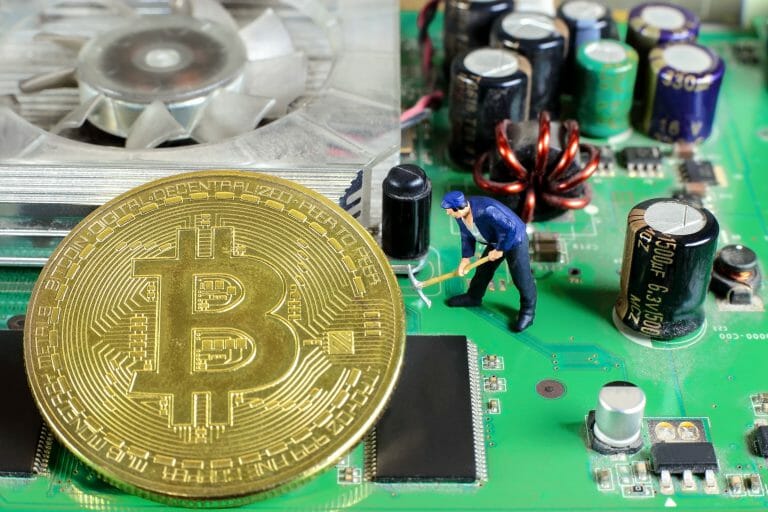
Since the birth of Bitcoin, there has been no increase in global electricity consumption due to its mining. In 2020, the carbon emissions caused by this activity represented 0.01% of the total emissions.

Bitcoin (BTC) mining has received accusations of causing high CO2 emissions into the atmosphere and high electricity consumption. However, a recent study revealed that it would not exceed 1% of total consumption even if BTC costs more than USD 10 trillion per unit.

Bitcoin financial services company NYDIG introduced the Bitcoin Net Zero study last week. Venture capital firm Castle Island Ventures participated in it through its general partner, Nic Carter. The research analyzes the factors that relate Bitcoin to the carbon footprint and global cryptocurrency mining electricity consumption.

The report considered the growth of global electricity consumption and the role that Bitcoin plays in that process. They noted that there had been no spike in electricity consumption since the network’s inception in 2009 due to Bitcoin mining.

The Chinese government considers cryptocurrency mining to have been an energy waste since 2019. In 2021, those arguments materialized when they banned the mining and use of Bitcoin across the country. However, the Asian country has one of the highest levels of pollution in the world.

Provinces like Inner Mongolia and Xinjiang have the highest carbon emission levels in the country. Curiously, they were the first to ban and persecute cryptocurrency mining.

The study indicates that CO2 emissions to the atmosphere fell from 581 gCO2/kWh to 501 gCO2/kWh after the migration of Chinese miners. This decrease is only 12%, which is probably not directly related to the expulsion of miners.

To What Degree Bitcoin Mining Pollutes the Environment

The argument that Bitcoin mining pollutes the environment has led private companies to take a dim view of the cryptocurrency. For example, Elon Musk’s Tesla electric car company said in May that it would not accept payments in BTC due to the carbon footprint.

The Bitcoin Net Zero study seems to prove that Bitcoin does pollute but not as much as many critics state in the media.

Data from the report indicates that Bitcoin mining only accounts for 0.1% of total global emissions. On the contrary, a study by Galaxy Digital says that banks and gold production consume twice as much energy as Bitcoin.

Energy Consumption by Bitcoin Would Reach 0.4% of the Total Consumption in 2030

The study conducted by NYDIG concludes by offering an estimate of the future consumption of the Bitcoin network. It ensures that it remains to see to what extent cryptocurrency mining will reduce its carbon footprint under current conditions. It would also be necessary to consider the new types of renewable energy under development, such as geothermal energy, that El Salvador will use.

The authors predict the energy consumption by 2030, even in scenarios with a price of BTC above USD 1 trillion. They say that it would be over 0.4% of the world’s total consumption while carbon emissions would not exceed 1%.

By Willmen Blanco

Fear Takes Over Crypto Markets Due to US Infrastructure Law

The FUD has already gained strength in the Bitcoin and cryptocurrency environment this week, but traders are too bullish on BTC’s price action.

Bitcoin (BTC) faces a whole new week leaving China’s latest “ban” behind, but its next “FUD” story is already a thing. The US infrastructure bill is striking back, so a final vote would take effect soon, and it would become a game-changer in the crypto world.

Simultaneously, fundamentals and on-chain metrics keep being more bullish than ever, with traders betting on a moderate price drop to a low price that does not surpass USD 36,000.

The day for the Infrastructure Bill will set a margin for the macro narrative shifts from China to the United States of America this week as lawmakers choose the fate of this alleged infrastructure bill. Bill H.R. 3684, which just passed the Senate, should get voted on definitively on Monday, despite rumors that it could face a delay.

The bill might include a controversial description of a “broker,” which could have more implications for crypto companies in the United States of America. There are efforts to change the situation. Figures like Wyoming Senator Cynthia Lummis and advocate Caitlin Long lead the way to set those changes.

The current text describes an intermediary as a person who commits to regularly provide any service related to transfers of digital assets on behalf of another person.

Since September 27, the bill has received at least 539 amendments. While it may be an obstacle to the local crypto industry, H.R.3684 would potentially matter too little to Bitcoin experts.

After the latest debacle of China’s ban, market sentiment has turned sensitive to “FUD” stories. Senator Lummis summed up on Twitter and expressed that Bitcoin is bipartisan, digital assets are apolitical.

A familiar story also appears in the scene regarding BTC spot price action this Monday: The BTC / USD pair returns to at least $ 44,400. That situation indicated the beginning of a resistance level, which finally generated rejection last week after the pair briefly broke above $ 45,000.

Lightning Network Surpasses its Usual Growth

Following last week’s fifth consecutive surge data explains that from now, Bitcoin will face a new difficulty readjustment to the upside. It would be his first six climbs since seven in mid-2019.

The hash rate is currently circling 145 exahas per second (EH / s) and only 23 EH / s from all-time highs. The statistics are the total proof of the conviction of the miners, as well as the extent of their return from the mass exodus from China just four months ago.

Regarding the consumer, the story is also very impressive. The Lightning Network, deprived of its adoption success story in El Salvador, would now be reaching at least 3,000 BTC in capacity. Since the very beginning of 2021, that capacity has almost tripled.

By: Jenson Nuñez

Binance, Kraken, and Other Exchanges pay High Fees on Ethereum for not Migrating to EIP-1559

Binance would pay an additional $ 91 million in fees a year, according to one estimate. Coinbase, FTX, Kucoin, and Huobi, among others, do support the Ethereum upgrade.

EIP-1559, an improvement proposal that sets changes in the way of paying fees in Ethereum, has been in place for almost two months. But various exchanges and crypto custody platforms, including Binance, Kraken, Gate.io, Bitstamp, Gemini, Blockfi, Crypto.com, and Bittrex, do not support this update.

Tylor Monahan, CEO of asset management platform MyCrypto explained that the companies are wasting a considerable amount of money to avoid updating their systems.

In the case of Binance, the businesswoman says she is 100% sure that she is spending at least 13 ethers (ETH) more every day, which equals about USD 42,000. That’s assuming that around 25,000 ETH transactions would happen each day, and she has to pay an average of 0.000542 ETH ($ 1.67) for each transaction.

Monahan also explains her argument by using the Ethereum block 13,272,667 as a sample. It shows two transactions: one is from the Coinbase exchange, which has faced an exchange for EIP-1559, and another is from Binance. The transaction of the first exchange paid USD 4.81 of commissions, while that of Binance paid USD 6.47.

Monahan estimates that Binance is spending at least $ 42,000 more per day. It is only taking into account transactions of ETH, which is the native cryptocurrency of the Ethereum network.

The businesswoman also considered that sending any transaction other than an ETH transfer pays a much higher fee. On the other hand, The CEO of MyCrypto explained the situation using a transaction with the stable coin Tether USD (USDT). That stable coin had an overpayment of USD 15.73.

Even if that price is high and users use an overall average of $ 5 on 50,000 transactions per day, that would be overpaying $ 250,000 per day. If that figure gets multiplied by the 365 days that a year has, the result is an amount that could surpass USD 91 million.

Although the case of Binance stands out for being the exchange with the highest volume of trade, other platforms highlighted a similar situation, having not updated their system to be able to send transactions compatible with EIP-1559.

Among the platforms that have ship compatibility with the Ethereum update are FTX, Kucoin, and Huobi.

EIP-1559 on Ethereum

Ethereum Enhancement Proposal (or EIP) number 1,559 divides the fees paid into two parts. One of them is a standard base commission that gets burned, and the other is a tip that the sender of the transaction gives to the miners.

The reduction of rates is a usual consequence in the medium and long term. This reduction is the case with many transactions.

Other benefits that would arise when the adoption of the new rate scheme gets massively implemented would be a better user experience and better security on the network. These benefits would penetrate even second layer Ethereum solutions such as rollups.

By: Jenson Nuñez