Hackers Extracted Cryptocurrencies from at Least 6,000 Coinbase Customers

Unauthorized third parties took advantage of a failure in the two-factor verification system. The company expressed that it replaced the funds stolen from the attacked accounts.

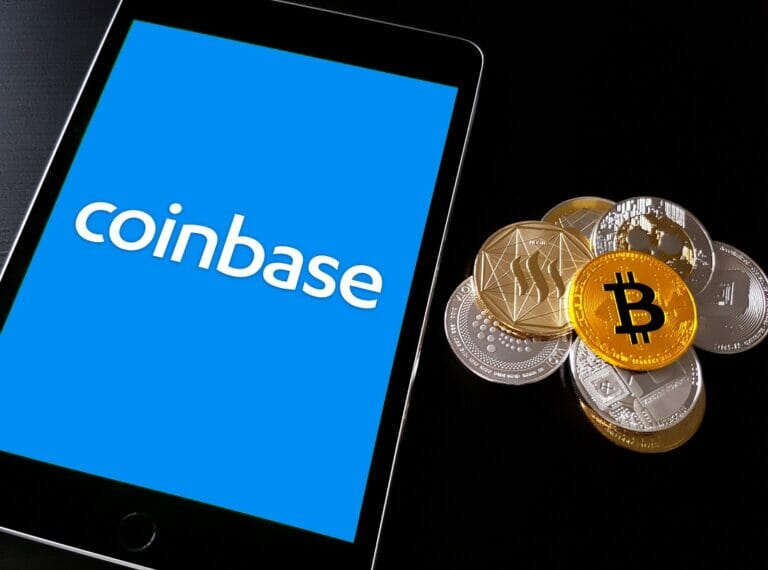
Due to a flaw in the multi-factor authentication system, a hacker, or various ones, managed to enter the accounts and steal cryptocurrencies from at least 6,000 Coinbase customers.

A sophisticated massive social engineering harmed users of the exchange between March and May of this year, as revealed in a breach notification letter sent days ago by Coinbase to its affected customers. A copy of the letter got posted on the California Attorney General’s website.

Unauthorized third parties took advantage of a weakness in the company’s two-factor authentication or SMS account verification system. According to the company, the hackers would have entered customer accounts to migrate funds to wallets controlled by them.

The attackers needed the email address, passwords, and phone numbers of the affected customers to achieve their goals. Coinbase believes that hackers would have aimed at massive phishing attacks to steal their customer’s account credentials.

The company notes in the letter that, between the end of April and the beginning of May 2021, the Coinbase security team noted a large-scale phishing campaign that was particularly successful in bypassing the spam filters of some older email services.

Phishing is a method used by malicious actors to trick users and encourage them to hare their passwords, credit card numbers, and other confidential information. Regarding the situation on Coinbase, the hackers sent emails to make the exchange’s customers believe that these emails came from the company itself.

Coinbase Sends back All the Stolen Funds to its Clients

Two-factor authentication generates a layered defense that makes it difficult for an unauthorized individual to obtain access to a target. However, Coinbase recognizes that there was a weakness in its SMS account recovery system. For that reason, the hackers gained control over the two-factor authentication code necessary to access a secure account.

Through a post revealed on its official blog, the company expresses that identity theft attacks have increased among its customers, achieving success in bypassing the spam filters of certain older email services, it says.

The company highlighted that attackers have been using different subjects, senders, and content.

Coinbase’s guide on account protection has an option to enable multi-factor authentication (MFA) using security keys, unique time-based passwords (TOTP) with an authentication app, or as a last resort, text messages SMS.

The company also highlighted that it included “SMS account recovery protocols” to prevent SMS multi-factor authentication from being bypassed by unauthorized third parties.

Coinbase’s bug allowed attackers to access secure accounts, so the exchange said it would replenish the funds in the affected accounts in proportion to the amount stolen.

Some customers have already received their reimbursement. The company said it would ensure that all affected customers receive the total value of what they lost in the attack. They should see those amounts reflected in their account in at least one day.

By: Jenson Nuñez

Financial Institution Morgan Stanley Increases Its Bet on the Pioneering Cryptocurrency

Morgan Stanley, JPMorgan, Goldman Sachs, and BlackRock have been among the many financial institutions active in the crypto space. Public documents from the U.S. SEC indicate that Morgan Stanley purchased more than one million shares of Grayscale BTC.

Despite the crackdown on cryptocurrencies in China, Morgan Stanley recently doubled its stake in Grayscale BTC (GBTC). With that, the multinational investment bank once again shows its support for cryptocurrencies.

Morgan Stanley Europe Opportunity Fund informed the SEC that it owns 58,116 shares of Grayscale BTC. In that way, they double their exposure to the pioneering cryptocurrency.

Interestingly, Morgan Stanley has increased its Grayscale BTC shares since April.

Similarly, Ark Invest, whose CEO is Cathie Wood, has also invested in Grayscale BTC. In July, they stated that they had purchased more than 450,000 GBTC shares.

In recent months, Morgan Stanley has been among the many financial institutions most active in the crypto space. Other companies that have bet on Bitcoin include JPMorgan, Goldman Sachs, and BlackRock.

Morgan Stanley Doubles Its Exposure to Bitcoin

According to a recent report from the U.S. SEC, Morgan Stanley Europe Opportunity Fund owned 58,116 GBTC shares on July 31st. That represented about 105% more than what it had the month before.

On September 27th, GBTC was trading at USD 34.28. That brings the exposure of the investment bank to about USD 2 million BTC.

Market analyst MacroScope shared the news, basing on the latest filing of the company with the SEC.

The Multinational Investment Bank Bets on Bitcoin

In August, Morgan Stanley had increased its exposure to Bitcoin with a significant investment in Grayscale BTC. Curiously, they showed their first public support for cryptocurrencies earlier this year.

Public documents from the US SEC of August 25th, 2021, indicate that Morgan Stanley increased its exposure to BTC. To do that, they bought more than one million shares of Grayscale BTC.

It is not the first time that Morgan Stanley has invested in Grayscale BTC, as they acquired 28,289 GBTC shares in June. At that time, they bought them at a value of about USD 1.3 million.

Bitcoin Awakens the Interest of Large Global Financial Institutions

Morgan Stanley has also put money in other cryptocurrency-based companies. In June, they invested USD 48 million in a Grayscale platform based on Blockchain Securitize.

The high performance of cryptocurrency mutual funds has led Wells Fargo, JP Morgan, and Goldman Sachs to become interested in them.

The information offered by Morgan Stanley and the U.S. SEC could spark a new wave of positive interest. Something similar drove the price of Bitcoin to unprecedented levels in early 2021.

The importance of the pioneering cryptocurrency in the world economy has led many companies to venture into that sector. For that reason, a growing number of financial institutions have included services that involve those assets.

Companies in other areas, like MicroStrategy and Tesla, have invested in Bitcoin as part of their treasuries. The CEOs of those companies consider that the first cryptocurrency is a better store of value than gold.

By Alexander Salazar

Sixty-Two Percent of Institutional Investors Are Preparing to Invest in Cryptocurrencies in 2022

Facebook announced that it would use its roadmap to build its Metaverse and funding to support research partners. Alibaba will ban the sale of cryptocurrency miners and suspend the sale of crypto assets on its platforms.

Sixty percent of institutional investors and wealth managers in the US, UK, France, Germany and the United Arab Emirates have no exposure to cryptocurrencies. A survey by Nickel Digital Asset Management revealed that 62% of institutional investors expect to put money in them for the first time next year.

Long-term capital growth prospects of cryptocurrencies are the main reason to invest in them for the first time. Forty-seven percent of those surveyed cited that opinion.

Meanwhile, 44% expressed that they trust cryptocurrencies more because many companies and fund managers now invest in them.

For their part, 41% said they wanted to start investing in cryptocurrencies as the regulatory environment is improving. One in three respondents (34%) said that it is a good hedge against inflation.

Facebook Will Invest USD 50 Million to Develop Its Virtual Metaverse

Facebook recently announced that it would allocate USD 50 million to a two-year fund. In that way, they seek to start realizing the company’s vision of a virtual Metaverse.

The company recently announced that they would use their roadmap to build their Metaverse and funding. They said they would use the latter to support research partners and global programs looking to develop the platform and do internal research.

They say that a single company cannot build the Metaverse overnight. For that reason, they stated that they would collaborate with policymakers, experts, and industry partners.

Alibaba to Ban Selling Cryptocurrency Miners Amid Chinese Crackdown

Alibaba officially announced that its platform would ban the sale of cryptocurrency miners. Furthermore, it said that it would suspend the categories for blockchain miners and accessories from its website.

Besides suspending the sale of cryptocurrency mining devices, Alibaba will ban using its platforms to sell leading crypto assets. They will not allow trading Bitcoin (BTC), Ether (ETH), Litecoin (LTC), and weak currencies like Quark (QRK).

The new restrictions include hardware and software related to cryptocurrency mining, relevant tutorials, guides, and strategies.

Morgan Stanley Doubles Its Exposure to Bitcoin

US investment bank Morgan Stanley has doubled its holdings of Grayscale Bitcoin Trust shares since April.

In its latest filing with the U.S. SEC, the bank revealed that the Morgan Stanley Europe Opportunity Fund wants to invest in established and emerging European companies. In addition, it said it had USD 371 million worth of assets and owned 58,116 GBTC shares as of July.

Although the exposure to cryptocurrencies of the European Fund has increased, the investment bank has also invested in GBTC in multiple institutional portfolios.

Chinese Ethereum Mining Group BeePool to Close

Ethereum mining pool BeePool, the fourth largest in terms of hash rate, will suspend its services to miners.

The Chinese mining pool operator has already suspended registrations for new users besides new subsidiary accounts for existing users. That information appears in a notice on the official BeePool website.

The company said it is suspending its services due to regulatory and compliance concerns of the repression by the Chinese government. The People’s Bank of China intensified its crackdown on cryptocurrencies, declaring crypto-related transactions illegal.

By Alexander Salazar

Chilean Senator Juan Castro Uses 10% of His Pension Fund to Buy Bitcoin

Castro made a comparison between the performance of the pension system in Chile with that of Bitcoin. The senator considers that having invested his pension fund in BTC is nothing negative.

The Chilean senator for the National Renovation (RN) party, Juan Castro, said his son suggested he buy Bitcoin (BTC). To do that, the official invested 10% of his pension fund.

Castro said he gave the money to his son, who likes to bet on cryptocurrencies, to see how he would make it grow.

Castro’s decision to invest in cryptocurrencies sparked controversy in Chile. Although the legislator was sincere about his investments, he did not reveal the amount of Bitcoin he bought.

Castro stated that the performance of his money with the cryptocurrency is similar to what Pension Fund Administrators (AFP) achieve.

He stated that he is happy as the investment his son helped him make bore fruit. He added that he is getting a good retirement while they are both learning about cryptocurrencies. He considers that what he has done with his money is nothing negative.

Chile is one of those countries where the pandemic has caused the most severe economic damage. For that reason, the parliament approved of people withdrawing 10% of their pension funds. That would allow them to alleviate the difficult financial situation that the country is going through.

The first official withdrawal of funds in July 2020 benefited 10,408,556 people. The Chilean Superintendency of Pensions said that this generated incentives for USD 19,922 million.

Senator Castro took advantage of that situation to buy Bitcoin, which traded at around USD 11,116 in July 2020.

The price of Bitcoin started October with an increase of almost 8% in the first hours of that day. For the first time since September 20th, the market price of BTC returned above USD 47,400. Therefore, Senator Castro has increased his Bitcoin net worth by more than 76% since July.

Chile’s parliament has approved another three withdrawals of 10% of pensions between 2020 and 2021. That means there has been a disbursement of almost USD 50,000 million. The authorities are currently debating whether to approve the fourth withdrawal of 10% of pensions.

Chilean Pension System

Private companies, under the so-called Chilean AFP Association, have administered the Chilean pension model since 1981. That union organization brings together the Pension Fund Administrators societies.

The people affiliated with the AFP must consign 10% of their monthly income. That deposit will serve as the basis for calculating the amount of pension that people will receive upon reaching retirement age.

More Politicians in the Region Favor Bitcoin

Chilean Senator Castro is not the only one who has acquired Bitcoin, as other politicians in the region say they have bought it. Meanwhile, others have only shown their support for the pioneering cryptocurrency.

Regarding Argentina, economist and politician Javier Milei has repeatedly said that he loves Bitcoin. In addition, he has expressed that he considers that cryptocurrencies emerged as part of the evolution of money. Even former education minister Esteban Bullrich confirmed that he had Bitcoin in his investment portfolio.

The importance of Bitcoin is becoming increasingly evident in the world economy. The interest in it from representatives of the governments of Latin America is just one example of that.

By Alexander Salazar

Two US Senators Have Their Sights on Bitcoin Mining Abroad

The United States Congress wants to study how other countries take advantage of Bitcoin mining. That bill could bring better regulations, as well as greater surveillance of that activity.

US Senators Maggie Hassan and Joni Ernst have their sights on the mining operations of Bitcoin and other cryptocurrencies globally. The legal project of the officials seeks that the Treasury Secretariat prepare reports on how other countries are using and extracting those assets.

Hassan (Democrat, Senator for the state of New Hampshire) and Ernst (Republican, Senator for the state of Iowa) introduced the proposal on September 27th before the US Senate. The senators want to identify the types of cryptocurrencies mined from the fiscal year 2016 to 2022. They also want to know their value in US dollars inside and outside the United States.

They hope to determine how those countries could become stronger or weaker with the use and mining of cryptocurrencies in their territory.

The bill needs a report to evaluate how Bitcoin mining affects the supply chain of components like superconductors and computer chips. In addition, the document states how that activity could improve it if opportunities arise in that regard.

According to Senator Hassan, the government must know the role of cryptocurrencies in the global economy and how other countries take advantage of them. In that way, she expects the competitiveness of the United States to strengthen. She said she was pleased to partner with Ernst to ensure that the Treasury Department stays up to date on the use of cryptocurrencies.

A Better Regulation Could Reduce the Surveillance of Bitcoin Mining

The approval of that law may lead to more initiatives by the US Congress that allow incentives for Bitcoin mining in a regulated way. It could also be a tool to increase the surveillance of that activity worldwide.

Senator Hassan has expressed her skepticism about cryptocurrencies and opposes the anonymity that some of them allow. In a letter, the official called on federal law enforcement agencies to strengthen the know-your-customer (KYC) user identification laws. She says the purpose is to prevent the free trade of cryptocurrencies from theft or illicit activities.

The official sent the letter to the Department of Justice, the Internal Revenue Service, the Department of Homeland Security, the Securities and Exchange Commission (SEC), and the Department of the Treasury.

The United States intends to breach the privacy of users of BTC and other cryptocurrencies. However, the country does not intend to ban them as China has. Some members of Congress even see that ban as an opportunity for the US to do the opposite.

Katie Haun Believes the United States Should Do the Opposite of China

Attorney Katie Haun said the United States should do the exact opposite of China regarding cryptocurrencies. She believes that the regulation is of great importance and cannot be the same for all.

Haun said she is disappointed that the SEC penalizes cryptocurrency companies trying to comply, such as the Coinbase case. She noted that the industry suffers punishment despite good-faith efforts while others who avoid the regulations benefit.

Likewise, she stressed that the industry does not reject the application of regulations. However, she explained that they want clarity without receiving discriminatory treatment.

By Alexander Salazar

Willy Woo Predicts the Bitcoin Price to Be Between USD 39,000 and USD 47,000 in the Next Weeks

Although the price of the first cryptocurrency on the market has fallen, investors continue to accumulate. Woo believes that buyers are entering a zone of maximum accumulation.

Willy Woo reported last week on a bullish on-chain structure for the price of Bitcoin, with expectations of breaking above USD 50,000. The analyst maintains that China’s decision to declare Bitcoin illegal negatively affected the value of the cryptocurrency.

Woo predicts around two weeks of sideways movements between USD 39,000 and USD 47,000. Meanwhile, he argues that it is plausible to wait two or more months of re-accumulation before a bullish rally in the medium term.

The analyst said he adjusted the supply shock curve appearing in the bulletin of September 30th. That shows that a bearish divergence existed when the price of Bitcoin hit USD 53,000 on September 7th. Woo stated that this was evident in that investors were selling as the price rose.

Currently, the price of the cryptocurrency is descending while the supply shock is ascending due to accumulation. That implies that there is less BTC available for sale.

Holders Say that Bitcoin Is on a Discount

A valuation model shows an estimated price at a time when the supply shock had similar values. Blue dots indicate the price for long-term holders, while red dots represent short-term investor valuations.

Long-term investors usually price BTC close to USD 45,000 while short-term buyers value it above USD 50,000. Both values exceed the USD 43,000 price that BTC had at the time of publication of the analysis. That reflects that both groups of investors consider Bitcoin to be at a discount.

Investors Are in an Accumulation Phase

Long-term investors or strong hands currently have two distinctive traits, according to Woo. The first is that they are in a steady accumulation process.

Long-term investors began accumulating after the profit-taking that began with the all-time high in mid-April. Although there is no growth, the flow of accumulated coins remains constant.

The supply shock is a macrocentric metric that tracks coins aged in wallets for more than five months. At that threshold, holders will likely begin to decrease the sale of those coins. Historically, that chart peaks for two months or more before a strong rally occurs, Willy Woo said.

Woo concluded that the fourth quarter of 2021 appears poised for a side accumulation phase. That could happen before a bullish phase later this year and even in 2022.

The analyst said that he would adjust his previous supply shock models. He explained there was an overestimation of some bullish indicators, which will go through adjustments in the future.

The price of Bitcoin recently increased by about 8%, due to statements by the president of the US Federal Reserve, Jerome Powell. The government official stated that the North American country would not ban Bitcoin.

The rally allowed Bitcoin to rise above USD 47,000 again, the level it was on September 20th. The cryptocurrency had that value before the crash of Chinese real estate firm Evergrande took it to USD 43,000. Currently, BTC is trading at around USD 47,914, according to CoinGecko.

By Alexander Salazar